Close Modal

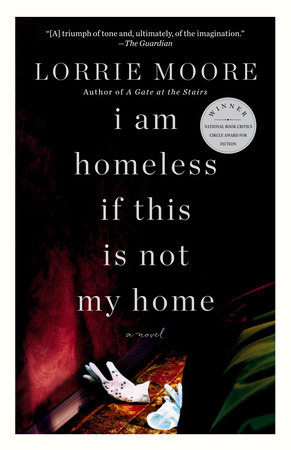
I Am Homeless If This Is Not My Home

A novel

Look inside
Paperback
$18.00 US
5.15"W x 8"H x 0.6"D   (13.1 x 20.3 x 1.5 cm) | 8 oz (215 g) | 24 per carton
On sale May 21, 2024 | 208 Pages | 9780307740878
Sales rights: US, Opn Mkt (no CAN)

A NATIONAL BOOK CRITICS CIRCLE AWARD WINNER
Lorrie Moore’s first novel since A Gate at the Stairs—a daring, meditative exploration of love and death, passion and grief, and what it means to be haunted by the past, both by history and the human heart.


“The prose [of I Am Homeless If This is Not My home] might be her finest.” —Claire Messud, Harper’s

“An exquisite exploration of grief, longing, and our relationship with the past . . . mixing comedy with tragedy, and exploring what it means to be alive.” —Kristyn Kusek Lewis, Real Simple

From “one of the most acute and lasting writers of her generation” (Caryn James; The New York Times)—a ghost story set in the nineteenth and twenty-first centuries, an elegiac consideration of grief, devotion (filial and romantic), and the vanishing and persistence of all things—seen and unseen. 

With her distinctive, irresistible wordplay and singular wry humor and wisdom, Lorrie Moore has given us a magic box of longing and surprise as she writes about love and rebirth and the pull towards life.  Bold, meditative, theatrical, this new novel is an inventive, poetic portrait of lovers and siblings as it questions the stories we have been told which may or may not be true. I Am Homeless If This Is Not My Home takes us through a trap door, into a windswept, imagined journey to the tragic-comic landscape that is, unmistakably, the world of Lorrie Moore.

“Moore’s exhilarating dialogue is acrobatic, her descriptions ravishing.” —Donna Seaman, Booklist (starred review)

“[Moore] manages the impossible in her writing: every other sentence is a gut-punch or the funniest line you’ve ever read, and it coheres into some of the truest writing about life—for what is life if not constantly either hilarious or devastating, and often both? ” LitHub, “Most Anticipated Books of 2023”
Dearest Sister,

The moon has roved away in the sky and I don’t even know what the pleiades are but at last I can sit alone in the dark by this lamp, my truest self, day’s end toasted to the per­fect moment and speak to you. Such peace to have the house quiet—outside I believe I hear the groaning deer. The wild-eyed varmints in the traps are past wailing, and the nightjars whistle their hillbilly tunes. I can momentarily stop pretending to tend to my accounts in the desk cartonnier. The gentleman lodger who is keen to relieve me of my spinsterhood has gone upstairs to bed, clacking his walking stick along the rails of the banister, just to create a bit of tension; now overhead his footfall to and from the basin squeaks the boards. I have a vague affection for him, which is not usable enough for marriage. I cannot see what he offers in that regard, despite some impressively memorized Shakespeare and Lord Byron and some queerly fine mimicry of the other lodgers: Priscilla the plump quakeress, tragically maddened by love. Miriam with her laryngitis and Confederate widow’s weeds (the town has run out of that slimming black silk and resorts to a confused dark Union blue). Or Mick, the old Chickasaw bachelor, who keeps a whole hawk wing pinned to his never-doffed cowboy hat.

Dapper as a finch, the handsome lodger can also recite the bewildering poems of Felicia Hemans, one of which features a virtuous heroine torn from home by pirates—sweet Jesus take the reins. His mustache is black and thick as broom bristle and the words come flying out from beneath like the lines of a play in a theater on fire. He has an intriguing trunk of costumes in his closet—cotton tights, wool tights, a spellbinding number of tights, some wigs he combs out and puts on for amusement, and even some stuffing for a hunchback which he portrays unnerv­ingly and then lets the stuffing fall completely out. I don’t know how he could manage a vigorous sword fight wearing those wigs. If I don’t laugh he puts it all away. He says he suffers stage fright everywhere but the stage. He says he will help me build a plat­form on the side of the house, if I would like to get into wicked show business and put great joy into the hearts of simple men.

“I will certainly think about that,” say I and go about my chores.

“Why, Miss Libby, an Elizabeth should learn Elizabethan.”

“Should she now.”

“I do desire that we be better strangers.” He is bold.

But he has his own straitened circumstances which I hardly need to take on as my own, though he appears always in fine fettle—handsome in the silvery variegated fashion of rabbits and foxes, a pair of pomaded muttonchops which he says hide a bite scar from his boyhood horse, Cola. The muttonchops fetch­ingly collect snow in January, though he limps—some might say imperceptibly but that has the lie built right in, so I don’t say that, not being a good liar. A cork foot from the secesh, he told me. Mounted the real foot and donated it to a Lost Cause Army Medical Museum, he said, and sometimes he goes and visits it just to say hello. Well, everyone got a little too dressed up for that cause, I do not reply, claret-capes and ostrich plumes, as if they were all in a play, when they should instead have noted that causes have reasons they get themselves lost. The smash comes soon enough, as others have declared, and a boy’s adventures know no pity. These dazed old seceshers are like whittlers who take small sticks and chop them away, making nothing but pixie pollen. I find people’s ideas are like their perfume—full of fad­ing then dabbing on again—with no small hint of cidered urine. A good scalawag sticks to the late night cipher of her diary. Also? I myself have taken to whittling and am making your Eliza a doll from some spruce wood. Its body is like a star and I will sew it a dress out of an old Indian blanket and it will look exactly like some doddering namesake aunt made it for her.
From time to time I detect some craftiness about this par­ticular lodger and his less than gallant crumbs of bluster. But he can blow a whistle with his eye—no small matter. He sings, “I Used to Be Lucky but Now I’m Not.” Then does that whistle out his eye.
Ha! He told me all of his people were actors, that a family of actors was not only the best strategy for the future of American drama but would eventually be its greatest subject! at which I scowled. Then he said not really, but some of his kin were in fact politicians who conducted themselves like actors, one of them once banished to a prison ship, though another brother Ned now mingled with high society. I tried to unclench my mind and free my felt scowl into mock surprise. Then he told me the truth: he had spent years in the circus, after his quinine smug­gling for the secesh. Ha again!

“Do I jar you?” he asks with his sly charm.

“No,” I say. “I am braced at every turn for disenchantment.”

“Well that might be just a little too bad,” he says. His look is like last year’s bird’s nest.

“Simply saying.”

“I understand,” he said.

He claims I have inner beauty.

“I wish it would strike outward,” I replied. “It’s best to have things come to the surface.” Among his papers upstairs I have noted letters from female admirers whose signatures he has removed with a razor. A gentlemanly mutilation, I suppose, pre­serving their privacy.
Well, Lucifer himself was surely a gentleman: he would have needed such manners to get around.

My lodger rhymes again with rain—what is the point of that? Still, I am afraid I’m too often glad of his company. Thus he has full board at a kind price, plus my bettermost chamber, the brass bed with the Job-tears quilt, the cabinetted tub, and the window with only the one paper pane, the rest being glass ambrotypes of crippled young men which I found on the curb outside a retired war surgeon’s house. They fit nicely between the cames. When the enlivening light shines through them, in rose and gray, it breaks your heart.

Charity, our mother used to say, is more virtuous than love, and in some languages the same. Desire, of course, on my part has been shooed away by the Lord. Though sometimes I think I see it, raggedy, out back among the mossy pavers, like a child cutting across yards to get to school. One sees a darting through the gum trees and hickories that have come back from the win­ter’s scorching freeze. Oh, yes, I say to the darting thing, the fluff of a dandelion clock or a milkweed puff: I sort of remember you.

Now as I write, a fierce rain has begun to fall on the roof. The owls in the garden will suffer, needing dry wings to fly. Honey, I have sent your Harry a birthday letter and a grayback with pretty Lucy Pickens on the front. I have heard Miss Pickens was mad as a dog and vain as a cat, but every type of money and mindset is still permissible here. If no bank up there will take the grayback he will have to put it in a scrapbook. You never know what will become a collector’s item—words to be carved on my headstone. Also, REST YOUR HORSE AND BUGGY HERE—that one for visitors, there being no graveside ostler. Hold your own horses, if I’m not as ready as I expect to be. I have also sent Harry some old rebel coins for pounding into cufflinks.

Though greenbacks are preferred, I still will take from my lodgers whatever the savings and loan will accept, even the new Canadian money which is coursing about, though I would pre­fer some wampum or a beaver pelt and am not above taking jewelry, since the Union men, and everyone posing as Union men, are having trouble getting their pension pay. I take silver ingots or rhinestone buttons or large sea shells if they are pretty and you can hear the sea. All is tradable somewhere because we live in a forgotten way in some corner of the beginning of the end of the beginning. I don’t know who I really mean by “we.” But it does seem this place has been handed some moment in history then grown fearful and impulsive about hanging on to it. A useless lunge. Sinful even. A good scalawag sticks to her diary. As I said.

Once in a while the river floods, giving us the sense that we have once more got to sacrifice before we can start over yet again. I’m grateful my house is on a hill, high above South Sunken Road and a better place from which to pretend to see you. And why is it pretending? Occasionally I know I do. I am here for you and with you. Transportation to be determined. When the clouds swirl and marble the night sky like meat fat, the antima­cassars on the clothesline, not taken down at night, flip up in the wind and are my fretted firmament and all my stars. I look through them and on up into the trees, which carve the horizon like a jigsaw. Peek through, sister mine.

Someone at the pots and pans store was speaking of a neigh­bor woman who has become a bitter old recluse and I piped up that that was going to be my own fate and no one kindly took it upon themselves to disabuse me. Everyone simply stared in bright-eyed agreement. I fear they have seen me muttering to myself on the street. Once, I swaddled a burn on my arm with a dressing, and then when I was out walking began to swat at it, thinking it was a large moth that had wrapped itself around me. I should wear a duster and one of the new pancake hats that are all the rage. I should take up ornamental farming with guano. When I have my visits with the pastor, our Saturday tea in my own front parlor, it strikes me that he is the lone soul to try to argue me into a more cheerful condition. “What is there to be bitter about?” the pastor asks me. And I say, rudely stitching up a nine-patch quilt right in front of him, “Well, sir, to take the long way around the barn, I don’t always know, but I do feel there’s much: I cannot see life, what it’s supposed to be: I’m stumped and mystified and frozen in place. Yet other times, I realize, regardless, there’s a lot to be thankful for. It’s perplexing! How’s a soul to know?” And he looks sidelong at the floor and chuckles as if I’ve once again accomplished the pointless feat of outsmarting a man of God at cards. But I am the empty-handed one. I am the dummy—a card-playing word I’ve picked up from the courting lodger who has taught me a new game from India or Canada or Australia. He has been to all. I am the partner of the declarer, says lodger Jack with a wink, as he essentially plays the game himself—I prefer Whist or Faro—with me saying, “What do I do now?” Which stands for the whole thing. But also makes me wonder about the pastor’s other calls. They must be dirt-dull and full of pitiful sick people for him to linger with me and my spiritual paralysis. In the afternoon he swirls the tea around and pretends to read the leaves. “God has plans for you.”

“To wash the dishes,” I say, already weary of God’s plans. Once the handsome lodger passed briskly by in a velvet cape, out the door for his walk, touching his wide-brimmed hat in our direction, while the pastor was there in the receiving parlor with me but we paid little heed to one another. Another time the lodger, in a topcoat blue as crab blood, breezed out and I said to the pastor, “He’s a flouncer.”
Or else if the lodger casts a disapproving eye, I say to the pastor, “He’s a Catholic.” But when I have to say nothing at all, all three of us wordlessly and indulgently appear to under­stand everything, and for a moment life has grace. Unlike those moments when the lodger strolls past, finds me alone, and twirls his cane at me then fires it like a shotgun.

People don’t think I know who they are. But as mistress of this house I sometimes have a lead on things.

How I miss you still. The other day I remembered how we would sneak into the match satchel and suck on the blown out ones, getting all the crazy juice out of them, craving some min­eral or other, and then line our eyes with the blackened tips. And so I did it again just to see how it would make me look today and all I can say is this town has no need of yet another home­made Cleopatra. Although I would look right nice with a big old snake dangling from my breast. Done in by the copperheads just says it all. Everything says everything, and all says all.
“Moore . . . is an indisputable genius, her sentences routinely sublime . . . [A] triumph.” —Sally Franson, San Francisco Chronicle

“[Moore] once again wields her wordplay playfully and powerfully, striking a balance between levity and gravity. Such a pliant voice is needed to undertake an exploration of the thin veil between life and death, and between tragedy and comedy, and Moore once again succeeds admirably. . . . [I]t’s hard to find writers ancient or modern who have used language with a music, wit and tenderness comparable to Moore’s.” –Margaret Mitchell, The Spectator

“Who else but Lorrie Moore could make, in razor-sharp, irresistible prose, a ghost story about death buoyant with life?”—People

“[A] literary gem . . . comic and macabre . . . a meditation on love and death which is by turns whimsical and profound, and reveals tantalisingly the complex histories which have made us who we are.” —Paul Perry, Sunday Independent (Ireland)
 
“A poignant and thought-provoking novel that lodges like a shard . . . The worlds created by Moore and the wisdom she imparts over the course of her narrative remain in the memory long after reading. The magic is in watching the threads come together, the nimble structuring and authoritative style that permit the reader to imagine the unimaginable . . . an impressive feat of storytelling that leaves us wondering, in the case of death and grief, who ends up more hollowed out, the dead or those they leave behind.” —Sarah Gilmartin, Irish Times
 
“In I Am Homeless If This Is Not My Home Moore brings all her powers of language, comedy, and narrative to bear on the abject chaos of our days. She does not attempt to subdue or redeem the wreck of reality—a fool’s errand—but rather to craft a work of art that is true to the baleful circumstances that made it possible. . . .” —Justin Taylor, The Sewanee Review
 
“Unexpectedly powerful in its meditations and riffs on love and purgatory as it swerves and skids toward an offbeat finish.” —Taylor Antrim, Vogue

“Weird and wonderful . . . [Moore’s] talent—evident in abundance here—is for using humor and beguilingly odd details to yield grand truths about what it means to be human.” The Economist

“Lorrie Moore is an all-American genius-eccentric. . . . [O]ne of the most singular and affecting on-the-road stories in the American canon.” —Maureen Corrigan, Fresh Air (NPR)
 
“[A] wild, haunted-house ride, powered by linguistic panache, descriptive oomph and her trademark wit. Captivating insights into love, loss and letting go add an elegiac note.” —Hephzibah Anderson, Daily Mail (UK)
 
“There are pleasures here for fans of her wordplay and dark humour . . .  Underneath the jokes runs an achingly poignant reckoning with grief.”—Mia Livithin, The Telegraph
 
“By the end of this wise, tender novel, we can only conclude that everything is pretty damn wonderful, too.”—Catherine Jarvie, Marie Claire (UK)
 
“Moore is after something more mysterious than naturalism. She is operating in the territory of myth. Moore’s fever dream of a world [feels] so relentlessly real.” —David L. Ulin, L.A. Times
 
“Her style is still hers alone . . . this new novel is a reminder to prize every moment we get with her on the page.”—Luke Brown, Independent (UK)
 
“This is a novel about inexorable loss, about how we can’t hold on to anything no matter how hard we try. What a peculiar gift of a novel. This slender ghost story haunts long past the time when the final page is turned.” —Erica Wagner, The Sunday Times (UK)
 
“Deeply empathetic . . .  Moore's latest novel is elegiac and funny, consumed with both the process of dying and the act of remembering.”—Jackie Thomas-Kennedy, Star Tribune
 
“[Moore] assembles her puns and her false mustaches, readies her troupe, and finds a way to rewrite the most inexorably linear story of all. Moore’s ‘radiant turbulence’ will always beckon. You have to stick around for the show.” —Parul Sehgal, The New Yorker
 
“Charming and sly . . . Fluky, fitfully funny and folk-horror-adjacent . . . Moore stretches for deeper themes in this novel, and of course they’re there: It’s a book about loss, and about the patience and endurance it takes to treat the dying with respect, and about the shaggy and multiform varieties of love.” —Dwight Garner, The New York Times
 
“Thoughtful and witty . . .  The author’s fans will love it, and those new to Moore will want to see what else they’ve been missing.” Publishers Weekly
 
“An exquisite exploration of grief, longing, and our relationship with the past . . . mixing comedy with tragedy, and exploring what it means to be alive.” —Kristyn Kusek Lewis, Real Simple

“There is much enjoyment to be had with Moore’s unique style, particularly the extended, loopy dialogue, replete with wordplay, song lyrics, conspiracy theories, literary and pop culture references. By its end, [the novel] becomes a moving tale of longing, grief, and acceptance.” —Christine DeZelar-Tiedman, Library Journal

“The novel includes historical flashbacks – bleak letters to a sister from a Civil War–era woman ‘braced at every turn for disenchantment’ – and reflections on everything from mobile phone obsession to the mentality of a school shooting generation, all in Moore’s gorgeous prose. And Moore’s sharp wit underpins everything. I Am Homeless If This Is Not My Home explores death, grief and the past in a way that is full of wisdom and empathy. I enjoyed so many moments in this novel . . . As with all the best fiction, Moore offers a way of looking at the world that brings a fresh perspective on something well worn.   This is a time trip well worth taking.” —Martin Chilton, Independent (UK)

“Moore’s sterling literary reputation is anchored most firmly to her short stories, but in her long-awaited fourth novel, her prose is just as breathtakingly crystalline, her humor wily and piquant . . . Moore’s exhilarating dialogue is acrobatic, her descriptions ravishing . . .  A curious spin on Faulkner’s As I Lay Dying, with frissons of George Saunders’s Lincoln in the Bardo (2017), Moore’s unnerving, gothic, acutely funny, lyrically metaphysical, and bittersweet tale is an audacious, mind-bending plunge into the mysteries of illness, aberration, death, grief, memory, and love.” —Donna Seaman, Booklist (starred review)
 
“[Moore] manages the impossible in her writing: every other sentence is a gut-punch or the funniest line you’ve ever read, and it coheres into some of the truest writing about life—for what is life if not constantly either hilarious or devastating, and often both? I Am Homeless If This Is Not My Home is a ghost story, a love story, a family elegy, and a search for answers both tangible and ephemeral: it’s the world of Lorrie Moore, beckoning us back in.” LitHub, “Most Anticipated Books of 2023”
 
“Moore’s trademark precision prose works throughout to move the story forward and ensure the reader is both laughing and crying—warning: this is a deeply emotional read.” —Yvonne Garrett, The Brooklyn Rail
 
“Moore has long been an expert at mood-setting, and the plot lines develop an uncanny resonance, Moore’s fear of death, ghost stories and our inability to save people while managing to be, in a very Moore-ian way, weirdly funny.” —Mark Athitakis, L.A. Times
 
“Moore is revered for her wit, and fans will not be disappointed by the novel’s dark humor. The prose might be her finest.” —Claire Messud, Harper’s
 
“The writing is just spectacular. And I think Lorrie Moore really is a magician.” —Front Row, BBC Radio
 
“A wry, shape-shifting meditation on how we might continue to commune with the dead . . . Both playful and poignant, this story of siblings and mental health slips the bonds of time and mortality. It bears Moore’s s trademark psychological depth and humor. At the sentence level, the work is never less than a revelation.” —Rebecca Foster, Shelf Awareness
 
“Is it an allegory? Is it real? It doesn’t matter. Exploring sibling love, death, and longing, it’s a novel with big questions, no answers, and it’s absolutely brilliant.” —Emily Firetog, Lit Hub, “The 28 Novels You Need to Read This Summer”
 
“[A] triumph of tone and, ultimately, of the imagination.” —Abhrajyoti Chakraborty, The Guardian
© John Foley / Opale / Bridgeman Images
LORRIE MOORE is the Gertrude Conaway Vanderbilt Professor of English at Vanderbilt University. She is the recipient of a Lannan Foundation Fellowship, as well as the PEN/Malamud Award and the Rea Award for her achievement in the short story. She is a member of the American Academy of Arts and Letters. She lives in Nashville, Tennessee. View titles by Lorrie Moore
Available for sale exclusive:
•     Guam
•     Minor Outl.Ins.
•     North Mariana
•     Philippines
•     Puerto Rico
•     Samoa,American
•     US Virgin Is.
•     USA

Available for sale non-exclusive:
•     Afghanistan
•     Aland Islands
•     Albania
•     Algeria
•     Andorra
•     Angola
•     Anguilla
•     Antarctica
•     Argentina
•     Armenia
•     Aruba
•     Austria
•     Azerbaijan
•     Bahrain
•     Belarus
•     Belgium
•     Benin
•     Bhutan
•     Bolivia
•     Bonaire, Saba
•     Bosnia Herzeg.
•     Bouvet Island
•     Brazil
•     Bulgaria
•     Burkina Faso
•     Burundi
•     Cambodia
•     Cameroon
•     Cape Verde
•     Centr.Afr.Rep.
•     Chad
•     Chile
•     China
•     Colombia
•     Comoro Is.
•     Congo
•     Cook Islands
•     Costa Rica
•     Croatia
•     Cuba
•     Curacao
•     Czech Republic
•     Dem. Rep. Congo
•     Denmark
•     Djibouti
•     Dominican Rep.
•     Ecuador
•     Egypt
•     El Salvador
•     Equatorial Gui.
•     Eritrea
•     Estonia
•     Ethiopia
•     Faroe Islands
•     Finland
•     France
•     Fren.Polynesia
•     French Guinea
•     Gabon
•     Georgia
•     Germany
•     Greece
•     Greenland
•     Guadeloupe
•     Guatemala
•     Guinea Republic
•     Guinea-Bissau
•     Haiti
•     Heard/McDon.Isl
•     Honduras
•     Hong Kong
•     Hungary
•     Iceland
•     Indonesia
•     Iran
•     Iraq
•     Israel
•     Italy
•     Ivory Coast
•     Japan
•     Jordan
•     Kazakhstan
•     Kuwait
•     Kyrgyzstan
•     Laos
•     Latvia
•     Lebanon
•     Liberia
•     Libya
•     Liechtenstein
•     Lithuania
•     Luxembourg
•     Macau
•     Macedonia
•     Madagascar
•     Maldives
•     Mali
•     Marshall island
•     Martinique
•     Mauritania
•     Mayotte
•     Mexico
•     Micronesia
•     Moldavia
•     Monaco
•     Mongolia
•     Montenegro
•     Morocco
•     Myanmar
•     Nepal
•     Netherlands
•     New Caledonia
•     Nicaragua
•     Niger
•     Niue
•     Norfolk Island
•     North Korea
•     Norway
•     Oman
•     Palau
•     Palestinian Ter
•     Panama
•     Paraguay
•     Peru
•     Poland
•     Portugal
•     Qatar
•     Reunion Island
•     Romania
•     Russian Fed.
•     Rwanda
•     Saint Martin
•     San Marino
•     SaoTome Princip
•     Saudi Arabia
•     Senegal
•     Serbia
•     Singapore
•     Sint Maarten
•     Slovakia
•     Slovenia
•     South Korea
•     South Sudan
•     Spain
•     St Barthelemy
•     St.Pier,Miquel.
•     Sth Terr. Franc
•     Sudan
•     Suriname
•     Svalbard
•     Sweden
•     Switzerland
•     Syria
•     Tadschikistan
•     Taiwan
•     Thailand
•     Timor-Leste
•     Togo
•     Tokelau Islands
•     Tunisia
•     Turkey
•     Turkmenistan
•     Ukraine
•     Unit.Arab Emir.

•     Uruguay
•     Uzbekistan
•     Vatican City
•     Venezuela
•     Vietnam
•     Wallis,Futuna
•     West Saharan
•     Western Samoa
•     Yemen

Not available for sale:
•     Antigua/Barbuda
•     Australia
•     Bahamas
•     Bangladesh
•     Barbados
•     Belize
•     Bermuda
•     Botswana
•     Brit.Ind.Oc.Ter
•     Brit.Virgin Is.
•     Brunei
•     Canada
•     Cayman Islands
•     Christmas Islnd
•     Cocos Islands
•     Cyprus
•     Dominica
•     Falkland Islnds
•     Fiji
•     Gambia
•     Ghana
•     Gibraltar
•     Grenada
•     Guernsey
•     Guyana
•     India
•     Ireland
•     Isle of Man
•     Jamaica
•     Jersey
•     Kenya
•     Kiribati
•     Lesotho
•     Malawi
•     Malaysia
•     Malta
•     Mauritius
•     Montserrat
•     Mozambique
•     Namibia
•     Nauru
•     New Zealand
•     Nigeria
•     Pakistan
•     PapuaNewGuinea
•     Pitcairn Islnds
•     S. Sandwich Ins
•     Seychelles
•     Sierra Leone
•     Solomon Islands
•     Somalia
•     South Africa
•     Sri Lanka
•     St. Helena
•     St. Lucia
•     St. Vincent
•     St.Chr.,Nevis
•     Swaziland
•     Tanzania
•     Tonga
•     Trinidad,Tobago
•     Turks&Caicos Is
•     Tuvalu
•     Uganda
•     United Kingdom
•     Vanuatu
•     Zambia
•     Zimbabwe

About

A NATIONAL BOOK CRITICS CIRCLE AWARD WINNER
Lorrie Moore’s first novel since A Gate at the Stairs—a daring, meditative exploration of love and death, passion and grief, and what it means to be haunted by the past, both by history and the human heart.


“The prose [of I Am Homeless If This is Not My home] might be her finest.” —Claire Messud, Harper’s

“An exquisite exploration of grief, longing, and our relationship with the past . . . mixing comedy with tragedy, and exploring what it means to be alive.” —Kristyn Kusek Lewis, Real Simple

From “one of the most acute and lasting writers of her generation” (Caryn James; The New York Times)—a ghost story set in the nineteenth and twenty-first centuries, an elegiac consideration of grief, devotion (filial and romantic), and the vanishing and persistence of all things—seen and unseen. 

With her distinctive, irresistible wordplay and singular wry humor and wisdom, Lorrie Moore has given us a magic box of longing and surprise as she writes about love and rebirth and the pull towards life.  Bold, meditative, theatrical, this new novel is an inventive, poetic portrait of lovers and siblings as it questions the stories we have been told which may or may not be true. I Am Homeless If This Is Not My Home takes us through a trap door, into a windswept, imagined journey to the tragic-comic landscape that is, unmistakably, the world of Lorrie Moore.

“Moore’s exhilarating dialogue is acrobatic, her descriptions ravishing.” —Donna Seaman, Booklist (starred review)

“[Moore] manages the impossible in her writing: every other sentence is a gut-punch or the funniest line you’ve ever read, and it coheres into some of the truest writing about life—for what is life if not constantly either hilarious or devastating, and often both? ” LitHub, “Most Anticipated Books of 2023”

Excerpt

Dearest Sister,

The moon has roved away in the sky and I don’t even know what the pleiades are but at last I can sit alone in the dark by this lamp, my truest self, day’s end toasted to the per­fect moment and speak to you. Such peace to have the house quiet—outside I believe I hear the groaning deer. The wild-eyed varmints in the traps are past wailing, and the nightjars whistle their hillbilly tunes. I can momentarily stop pretending to tend to my accounts in the desk cartonnier. The gentleman lodger who is keen to relieve me of my spinsterhood has gone upstairs to bed, clacking his walking stick along the rails of the banister, just to create a bit of tension; now overhead his footfall to and from the basin squeaks the boards. I have a vague affection for him, which is not usable enough for marriage. I cannot see what he offers in that regard, despite some impressively memorized Shakespeare and Lord Byron and some queerly fine mimicry of the other lodgers: Priscilla the plump quakeress, tragically maddened by love. Miriam with her laryngitis and Confederate widow’s weeds (the town has run out of that slimming black silk and resorts to a confused dark Union blue). Or Mick, the old Chickasaw bachelor, who keeps a whole hawk wing pinned to his never-doffed cowboy hat.

Dapper as a finch, the handsome lodger can also recite the bewildering poems of Felicia Hemans, one of which features a virtuous heroine torn from home by pirates—sweet Jesus take the reins. His mustache is black and thick as broom bristle and the words come flying out from beneath like the lines of a play in a theater on fire. He has an intriguing trunk of costumes in his closet—cotton tights, wool tights, a spellbinding number of tights, some wigs he combs out and puts on for amusement, and even some stuffing for a hunchback which he portrays unnerv­ingly and then lets the stuffing fall completely out. I don’t know how he could manage a vigorous sword fight wearing those wigs. If I don’t laugh he puts it all away. He says he suffers stage fright everywhere but the stage. He says he will help me build a plat­form on the side of the house, if I would like to get into wicked show business and put great joy into the hearts of simple men.

“I will certainly think about that,” say I and go about my chores.

“Why, Miss Libby, an Elizabeth should learn Elizabethan.”

“Should she now.”

“I do desire that we be better strangers.” He is bold.

But he has his own straitened circumstances which I hardly need to take on as my own, though he appears always in fine fettle—handsome in the silvery variegated fashion of rabbits and foxes, a pair of pomaded muttonchops which he says hide a bite scar from his boyhood horse, Cola. The muttonchops fetch­ingly collect snow in January, though he limps—some might say imperceptibly but that has the lie built right in, so I don’t say that, not being a good liar. A cork foot from the secesh, he told me. Mounted the real foot and donated it to a Lost Cause Army Medical Museum, he said, and sometimes he goes and visits it just to say hello. Well, everyone got a little too dressed up for that cause, I do not reply, claret-capes and ostrich plumes, as if they were all in a play, when they should instead have noted that causes have reasons they get themselves lost. The smash comes soon enough, as others have declared, and a boy’s adventures know no pity. These dazed old seceshers are like whittlers who take small sticks and chop them away, making nothing but pixie pollen. I find people’s ideas are like their perfume—full of fad­ing then dabbing on again—with no small hint of cidered urine. A good scalawag sticks to the late night cipher of her diary. Also? I myself have taken to whittling and am making your Eliza a doll from some spruce wood. Its body is like a star and I will sew it a dress out of an old Indian blanket and it will look exactly like some doddering namesake aunt made it for her.

From time to time I detect some craftiness about this par­ticular lodger and his less than gallant crumbs of bluster. But he can blow a whistle with his eye—no small matter. He sings, “I Used to Be Lucky but Now I’m Not.” Then does that whistle out his eye.

Ha! He told me all of his people were actors, that a family of actors was not only the best strategy for the future of American drama but would eventually be its greatest subject! at which I scowled. Then he said not really, but some of his kin were in fact politicians who conducted themselves like actors, one of them once banished to a prison ship, though another brother Ned now mingled with high society. I tried to unclench my mind and free my felt scowl into mock surprise. Then he told me the truth: he had spent years in the circus, after his quinine smug­gling for the secesh. Ha again!

“Do I jar you?” he asks with his sly charm.

“No,” I say. “I am braced at every turn for disenchantment.”

“Well that might be just a little too bad,” he says. His look is like last year’s bird’s nest.

“Simply saying.”

“I understand,” he said.

He claims I have inner beauty.

“I wish it would strike outward,” I replied. “It’s best to have things come to the surface.” Among his papers upstairs I have noted letters from female admirers whose signatures he has removed with a razor. A gentlemanly mutilation, I suppose, pre­serving their privacy.
Well, Lucifer himself was surely a gentleman: he would have needed such manners to get around.

My lodger rhymes again with rain—what is the point of that? Still, I am afraid I’m too often glad of his company. Thus he has full board at a kind price, plus my bettermost chamber, the brass bed with the Job-tears quilt, the cabinetted tub, and the window with only the one paper pane, the rest being glass ambrotypes of crippled young men which I found on the curb outside a retired war surgeon’s house. They fit nicely between the cames. When the enlivening light shines through them, in rose and gray, it breaks your heart.

Charity, our mother used to say, is more virtuous than love, and in some languages the same. Desire, of course, on my part has been shooed away by the Lord. Though sometimes I think I see it, raggedy, out back among the mossy pavers, like a child cutting across yards to get to school. One sees a darting through the gum trees and hickories that have come back from the win­ter’s scorching freeze. Oh, yes, I say to the darting thing, the fluff of a dandelion clock or a milkweed puff: I sort of remember you.

Now as I write, a fierce rain has begun to fall on the roof. The owls in the garden will suffer, needing dry wings to fly. Honey, I have sent your Harry a birthday letter and a grayback with pretty Lucy Pickens on the front. I have heard Miss Pickens was mad as a dog and vain as a cat, but every type of money and mindset is still permissible here. If no bank up there will take the grayback he will have to put it in a scrapbook. You never know what will become a collector’s item—words to be carved on my headstone. Also, REST YOUR HORSE AND BUGGY HERE—that one for visitors, there being no graveside ostler. Hold your own horses, if I’m not as ready as I expect to be. I have also sent Harry some old rebel coins for pounding into cufflinks.

Though greenbacks are preferred, I still will take from my lodgers whatever the savings and loan will accept, even the new Canadian money which is coursing about, though I would pre­fer some wampum or a beaver pelt and am not above taking jewelry, since the Union men, and everyone posing as Union men, are having trouble getting their pension pay. I take silver ingots or rhinestone buttons or large sea shells if they are pretty and you can hear the sea. All is tradable somewhere because we live in a forgotten way in some corner of the beginning of the end of the beginning. I don’t know who I really mean by “we.” But it does seem this place has been handed some moment in history then grown fearful and impulsive about hanging on to it. A useless lunge. Sinful even. A good scalawag sticks to her diary. As I said.

Once in a while the river floods, giving us the sense that we have once more got to sacrifice before we can start over yet again. I’m grateful my house is on a hill, high above South Sunken Road and a better place from which to pretend to see you. And why is it pretending? Occasionally I know I do. I am here for you and with you. Transportation to be determined. When the clouds swirl and marble the night sky like meat fat, the antima­cassars on the clothesline, not taken down at night, flip up in the wind and are my fretted firmament and all my stars. I look through them and on up into the trees, which carve the horizon like a jigsaw. Peek through, sister mine.

Someone at the pots and pans store was speaking of a neigh­bor woman who has become a bitter old recluse and I piped up that that was going to be my own fate and no one kindly took it upon themselves to disabuse me. Everyone simply stared in bright-eyed agreement. I fear they have seen me muttering to myself on the street. Once, I swaddled a burn on my arm with a dressing, and then when I was out walking began to swat at it, thinking it was a large moth that had wrapped itself around me. I should wear a duster and one of the new pancake hats that are all the rage. I should take up ornamental farming with guano. When I have my visits with the pastor, our Saturday tea in my own front parlor, it strikes me that he is the lone soul to try to argue me into a more cheerful condition. “What is there to be bitter about?” the pastor asks me. And I say, rudely stitching up a nine-patch quilt right in front of him, “Well, sir, to take the long way around the barn, I don’t always know, but I do feel there’s much: I cannot see life, what it’s supposed to be: I’m stumped and mystified and frozen in place. Yet other times, I realize, regardless, there’s a lot to be thankful for. It’s perplexing! How’s a soul to know?” And he looks sidelong at the floor and chuckles as if I’ve once again accomplished the pointless feat of outsmarting a man of God at cards. But I am the empty-handed one. I am the dummy—a card-playing word I’ve picked up from the courting lodger who has taught me a new game from India or Canada or Australia. He has been to all. I am the partner of the declarer, says lodger Jack with a wink, as he essentially plays the game himself—I prefer Whist or Faro—with me saying, “What do I do now?” Which stands for the whole thing. But also makes me wonder about the pastor’s other calls. They must be dirt-dull and full of pitiful sick people for him to linger with me and my spiritual paralysis. In the afternoon he swirls the tea around and pretends to read the leaves. “God has plans for you.”

“To wash the dishes,” I say, already weary of God’s plans. Once the handsome lodger passed briskly by in a velvet cape, out the door for his walk, touching his wide-brimmed hat in our direction, while the pastor was there in the receiving parlor with me but we paid little heed to one another. Another time the lodger, in a topcoat blue as crab blood, breezed out and I said to the pastor, “He’s a flouncer.”

Or else if the lodger casts a disapproving eye, I say to the pastor, “He’s a Catholic.” But when I have to say nothing at all, all three of us wordlessly and indulgently appear to under­stand everything, and for a moment life has grace. Unlike those moments when the lodger strolls past, finds me alone, and twirls his cane at me then fires it like a shotgun.

People don’t think I know who they are. But as mistress of this house I sometimes have a lead on things.

How I miss you still. The other day I remembered how we would sneak into the match satchel and suck on the blown out ones, getting all the crazy juice out of them, craving some min­eral or other, and then line our eyes with the blackened tips. And so I did it again just to see how it would make me look today and all I can say is this town has no need of yet another home­made Cleopatra. Although I would look right nice with a big old snake dangling from my breast. Done in by the copperheads just says it all. Everything says everything, and all says all.

Praise

“Moore . . . is an indisputable genius, her sentences routinely sublime . . . [A] triumph.” —Sally Franson, San Francisco Chronicle

“[Moore] once again wields her wordplay playfully and powerfully, striking a balance between levity and gravity. Such a pliant voice is needed to undertake an exploration of the thin veil between life and death, and between tragedy and comedy, and Moore once again succeeds admirably. . . . [I]t’s hard to find writers ancient or modern who have used language with a music, wit and tenderness comparable to Moore’s.” –Margaret Mitchell, The Spectator

“Who else but Lorrie Moore could make, in razor-sharp, irresistible prose, a ghost story about death buoyant with life?”—People

“[A] literary gem . . . comic and macabre . . . a meditation on love and death which is by turns whimsical and profound, and reveals tantalisingly the complex histories which have made us who we are.” —Paul Perry, Sunday Independent (Ireland)
 
“A poignant and thought-provoking novel that lodges like a shard . . . The worlds created by Moore and the wisdom she imparts over the course of her narrative remain in the memory long after reading. The magic is in watching the threads come together, the nimble structuring and authoritative style that permit the reader to imagine the unimaginable . . . an impressive feat of storytelling that leaves us wondering, in the case of death and grief, who ends up more hollowed out, the dead or those they leave behind.” —Sarah Gilmartin, Irish Times
 
“In I Am Homeless If This Is Not My Home Moore brings all her powers of language, comedy, and narrative to bear on the abject chaos of our days. She does not attempt to subdue or redeem the wreck of reality—a fool’s errand—but rather to craft a work of art that is true to the baleful circumstances that made it possible. . . .” —Justin Taylor, The Sewanee Review
 
“Unexpectedly powerful in its meditations and riffs on love and purgatory as it swerves and skids toward an offbeat finish.” —Taylor Antrim, Vogue

“Weird and wonderful . . . [Moore’s] talent—evident in abundance here—is for using humor and beguilingly odd details to yield grand truths about what it means to be human.” The Economist

“Lorrie Moore is an all-American genius-eccentric. . . . [O]ne of the most singular and affecting on-the-road stories in the American canon.” —Maureen Corrigan, Fresh Air (NPR)
 
“[A] wild, haunted-house ride, powered by linguistic panache, descriptive oomph and her trademark wit. Captivating insights into love, loss and letting go add an elegiac note.” —Hephzibah Anderson, Daily Mail (UK)
 
“There are pleasures here for fans of her wordplay and dark humour . . .  Underneath the jokes runs an achingly poignant reckoning with grief.”—Mia Livithin, The Telegraph
 
“By the end of this wise, tender novel, we can only conclude that everything is pretty damn wonderful, too.”—Catherine Jarvie, Marie Claire (UK)
 
“Moore is after something more mysterious than naturalism. She is operating in the territory of myth. Moore’s fever dream of a world [feels] so relentlessly real.” —David L. Ulin, L.A. Times
 
“Her style is still hers alone . . . this new novel is a reminder to prize every moment we get with her on the page.”—Luke Brown, Independent (UK)
 
“This is a novel about inexorable loss, about how we can’t hold on to anything no matter how hard we try. What a peculiar gift of a novel. This slender ghost story haunts long past the time when the final page is turned.” —Erica Wagner, The Sunday Times (UK)
 
“Deeply empathetic . . .  Moore's latest novel is elegiac and funny, consumed with both the process of dying and the act of remembering.”—Jackie Thomas-Kennedy, Star Tribune
 
“[Moore] assembles her puns and her false mustaches, readies her troupe, and finds a way to rewrite the most inexorably linear story of all. Moore’s ‘radiant turbulence’ will always beckon. You have to stick around for the show.” —Parul Sehgal, The New Yorker
 
“Charming and sly . . . Fluky, fitfully funny and folk-horror-adjacent . . . Moore stretches for deeper themes in this novel, and of course they’re there: It’s a book about loss, and about the patience and endurance it takes to treat the dying with respect, and about the shaggy and multiform varieties of love.” —Dwight Garner, The New York Times
 
“Thoughtful and witty . . .  The author’s fans will love it, and those new to Moore will want to see what else they’ve been missing.” Publishers Weekly
 
“An exquisite exploration of grief, longing, and our relationship with the past . . . mixing comedy with tragedy, and exploring what it means to be alive.” —Kristyn Kusek Lewis, Real Simple

“There is much enjoyment to be had with Moore’s unique style, particularly the extended, loopy dialogue, replete with wordplay, song lyrics, conspiracy theories, literary and pop culture references. By its end, [the novel] becomes a moving tale of longing, grief, and acceptance.” —Christine DeZelar-Tiedman, Library Journal

“The novel includes historical flashbacks – bleak letters to a sister from a Civil War–era woman ‘braced at every turn for disenchantment’ – and reflections on everything from mobile phone obsession to the mentality of a school shooting generation, all in Moore’s gorgeous prose. And Moore’s sharp wit underpins everything. I Am Homeless If This Is Not My Home explores death, grief and the past in a way that is full of wisdom and empathy. I enjoyed so many moments in this novel . . . As with all the best fiction, Moore offers a way of looking at the world that brings a fresh perspective on something well worn.   This is a time trip well worth taking.” —Martin Chilton, Independent (UK)

“Moore’s sterling literary reputation is anchored most firmly to her short stories, but in her long-awaited fourth novel, her prose is just as breathtakingly crystalline, her humor wily and piquant . . . Moore’s exhilarating dialogue is acrobatic, her descriptions ravishing . . .  A curious spin on Faulkner’s As I Lay Dying, with frissons of George Saunders’s Lincoln in the Bardo (2017), Moore’s unnerving, gothic, acutely funny, lyrically metaphysical, and bittersweet tale is an audacious, mind-bending plunge into the mysteries of illness, aberration, death, grief, memory, and love.” —Donna Seaman, Booklist (starred review)
 
“[Moore] manages the impossible in her writing: every other sentence is a gut-punch or the funniest line you’ve ever read, and it coheres into some of the truest writing about life—for what is life if not constantly either hilarious or devastating, and often both? I Am Homeless If This Is Not My Home is a ghost story, a love story, a family elegy, and a search for answers both tangible and ephemeral: it’s the world of Lorrie Moore, beckoning us back in.” LitHub, “Most Anticipated Books of 2023”
 
“Moore’s trademark precision prose works throughout to move the story forward and ensure the reader is both laughing and crying—warning: this is a deeply emotional read.” —Yvonne Garrett, The Brooklyn Rail
 
“Moore has long been an expert at mood-setting, and the plot lines develop an uncanny resonance, Moore’s fear of death, ghost stories and our inability to save people while managing to be, in a very Moore-ian way, weirdly funny.” —Mark Athitakis, L.A. Times
 
“Moore is revered for her wit, and fans will not be disappointed by the novel’s dark humor. The prose might be her finest.” —Claire Messud, Harper’s
 
“The writing is just spectacular. And I think Lorrie Moore really is a magician.” —Front Row, BBC Radio
 
“A wry, shape-shifting meditation on how we might continue to commune with the dead . . . Both playful and poignant, this story of siblings and mental health slips the bonds of time and mortality. It bears Moore’s s trademark psychological depth and humor. At the sentence level, the work is never less than a revelation.” —Rebecca Foster, Shelf Awareness
 
“Is it an allegory? Is it real? It doesn’t matter. Exploring sibling love, death, and longing, it’s a novel with big questions, no answers, and it’s absolutely brilliant.” —Emily Firetog, Lit Hub, “The 28 Novels You Need to Read This Summer”
 
“[A] triumph of tone and, ultimately, of the imagination.” —Abhrajyoti Chakraborty, The Guardian

Author

© John Foley / Opale / Bridgeman Images
LORRIE MOORE is the Gertrude Conaway Vanderbilt Professor of English at Vanderbilt University. She is the recipient of a Lannan Foundation Fellowship, as well as the PEN/Malamud Award and the Rea Award for her achievement in the short story. She is a member of the American Academy of Arts and Letters. She lives in Nashville, Tennessee. View titles by Lorrie Moore

Rights

Available for sale exclusive:
•     Guam
•     Minor Outl.Ins.
•     North Mariana
•     Philippines
•     Puerto Rico
•     Samoa,American
•     US Virgin Is.
•     USA

Available for sale non-exclusive:
•     Afghanistan
•     Aland Islands
•     Albania
•     Algeria
•     Andorra
•     Angola
•     Anguilla
•     Antarctica
•     Argentina
•     Armenia
•     Aruba
•     Austria
•     Azerbaijan
•     Bahrain
•     Belarus
•     Belgium
•     Benin
•     Bhutan
•     Bolivia
•     Bonaire, Saba
•     Bosnia Herzeg.
•     Bouvet Island
•     Brazil
•     Bulgaria
•     Burkina Faso
•     Burundi
•     Cambodia
•     Cameroon
•     Cape Verde
•     Centr.Afr.Rep.
•     Chad
•     Chile
•     China
•     Colombia
•     Comoro Is.
•     Congo
•     Cook Islands
•     Costa Rica
•     Croatia
•     Cuba
•     Curacao
•     Czech Republic
•     Dem. Rep. Congo
•     Denmark
•     Djibouti
•     Dominican Rep.
•     Ecuador
•     Egypt
•     El Salvador
•     Equatorial Gui.
•     Eritrea
•     Estonia
•     Ethiopia
•     Faroe Islands
•     Finland
•     France
•     Fren.Polynesia
•     French Guinea
•     Gabon
•     Georgia
•     Germany
•     Greece
•     Greenland
•     Guadeloupe
•     Guatemala
•     Guinea Republic
•     Guinea-Bissau
•     Haiti
•     Heard/McDon.Isl
•     Honduras
•     Hong Kong
•     Hungary
•     Iceland
•     Indonesia
•     Iran
•     Iraq
•     Israel
•     Italy
•     Ivory Coast
•     Japan
•     Jordan
•     Kazakhstan
•     Kuwait
•     Kyrgyzstan
•     Laos
•     Latvia
•     Lebanon
•     Liberia
•     Libya
•     Liechtenstein
•     Lithuania
•     Luxembourg
•     Macau
•     Macedonia
•     Madagascar
•     Maldives
•     Mali
•     Marshall island
•     Martinique
•     Mauritania
•     Mayotte
•     Mexico
•     Micronesia
•     Moldavia
•     Monaco
•     Mongolia
•     Montenegro
•     Morocco
•     Myanmar
•     Nepal
•     Netherlands
•     New Caledonia
•     Nicaragua
•     Niger
•     Niue
•     Norfolk Island
•     North Korea
•     Norway
•     Oman
•     Palau
•     Palestinian Ter
•     Panama
•     Paraguay
•     Peru
•     Poland
•     Portugal
•     Qatar
•     Reunion Island
•     Romania
•     Russian Fed.
•     Rwanda
•     Saint Martin
•     San Marino
•     SaoTome Princip
•     Saudi Arabia
•     Senegal
•     Serbia
•     Singapore
•     Sint Maarten
•     Slovakia
•     Slovenia
•     South Korea
•     South Sudan
•     Spain
•     St Barthelemy
•     St.Pier,Miquel.
•     Sth Terr. Franc
•     Sudan
•     Suriname
•     Svalbard
•     Sweden
•     Switzerland
•     Syria
•     Tadschikistan
•     Taiwan
•     Thailand
•     Timor-Leste
•     Togo
•     Tokelau Islands
•     Tunisia
•     Turkey
•     Turkmenistan
•     Ukraine
•     Unit.Arab Emir.
•     Uruguay
•     Uzbekistan
•     Vatican City
•     Venezuela
•     Vietnam
•     Wallis,Futuna
•     West Saharan
•     Western Samoa
•     Yemen

Not available for sale:
•     Antigua/Barbuda
•     Australia
•     Bahamas
•     Bangladesh
•     Barbados
•     Belize
•     Bermuda
•     Botswana
•     Brit.Ind.Oc.Ter
•     Brit.Virgin Is.
•     Brunei
•     Canada
•     Cayman Islands
•     Christmas Islnd
•     Cocos Islands
•     Cyprus
•     Dominica
•     Falkland Islnds
•     Fiji
•     Gambia
•     Ghana
•     Gibraltar
•     Grenada
•     Guernsey
•     Guyana
•     India
•     Ireland
•     Isle of Man
•     Jamaica
•     Jersey
•     Kenya
•     Kiribati
•     Lesotho
•     Malawi
•     Malaysia
•     Malta
•     Mauritius
•     Montserrat
•     Mozambique
•     Namibia
•     Nauru
•     New Zealand
•     Nigeria
•     Pakistan
•     PapuaNewGuinea
•     Pitcairn Islnds
•     S. Sandwich Ins
•     Seychelles
•     Sierra Leone
•     Solomon Islands
•     Somalia
•     South Africa
•     Sri Lanka
•     St. Helena
•     St. Lucia
•     St. Vincent
•     St.Chr.,Nevis
•     Swaziland
•     Tanzania
•     Tonga
•     Trinidad,Tobago
•     Turks&Caicos Is
•     Tuvalu
•     Uganda
•     United Kingdom
•     Vanuatu
•     Zambia
•     Zimbabwe

NBCC Announces 2023 Awards Finalists

On January 25, the National Book Critics Circle announced that nine Penguin Random House titles were finalists for its 2023 awards. Additionally, Penguin Random House author Judy Blume has received the Ivan Sandrof Lifetime Achievement Award. “Blume… has inspired generations of young readers by tackling the emotional turbulence of girlhood and adolescence with authenticity, candor

Read more