Close Modal

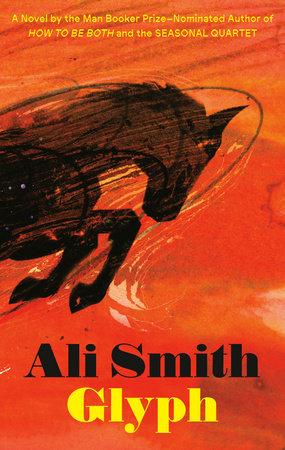
Glyph

A Novel

Author Ali Smith
Look inside
Hardcover
$28.00 US
5.54"W x 8.54"H x 1.1"D   (14.1 x 21.7 x 2.8 cm) | 14 oz (397 g) | 12 per carton
On sale May 19, 2026 | 288 Pages | 9780593701584
Sales rights: US,OpnMkt(no EU/CAN)

From a literary master, a novel of ghosts and history and family legacy, of the unexpected acts of care that shine light into our dark.

Ghosts don't exist. 
They don't. End of.
Story, however. 
It is haunting.
Everything tells it. 

It all starts when Petra and her little sister Patch hear a horrifying story from the past and find themselves making up a ghost. 

Is it imaginary? Is it real?

Then it all starts again thirty years later when Petra, now estranged from Patch, finds a phantom horse kicking the furniture to pieces in her bedroom. 

What to do? She phones her sister.

In a chiarascuro dance through our increasingly antagonistic era, Glyph asks if we’re attending to the history that’s made us and to the history we’re making.  

A funny, warm and clear-eyed take on where we are now, Glyph is about what our imaginations are for and how, in a broken, brutal and divided time, we rekindle care, solidarity, resistance and openness. This anti-war novel, Ali Smith’s most soulful, playful and vital yet, is a work of lightness that goes deep to counter the forces currently flattening the modern world.
Here’s a story our great grandfather kept to himself for most of his life, from back when he was in the Foresters.

Not literal foresters. The Foresters was an army regiment. Our great grandfather when he was a young man enlisted with the Foresters and went to fight in the trenches. Lucky for us he wasn’t in the part of the regiment that got sent to Gallipoli and got mostly massacred or we wouldn’t be here. Lucky he was only a bit gassed, and lucky he met our great grandmother in the military camp hospital, who didn’t know that day she met him that she’d be thumping his back to help him cough up stuff for the rest of his life for the rest of her life.

The story goes that our great grandfather, long dead by the time we were born, only ever spoke about his time in that war once, on his deathbed, and only to one of his grandsons who was then aged about eight, who told nobody either till he told his younger sister, our mother, over a decade later when she was nine or ten, and I only know it because a couple of decades after that, when I was about eight myself, she told me a version of it and eventually our uncle also passed on his version. Not to Patch, just to me. Patch was too little and too sensitive at the time to hear this kind of story. But I am as thick skinned as boot leather as our mother used to say.

Anyway, this is what our great grandfather was said to have said.

The person of the best and highest qualities he ever knew in his life was a young man he met in the First World War.

This young man’s horse went blind, or one of the horses they had out there did, I don’t know now if it was his horse or it was just a horse that happened to be there.

It had been blinded by gas.

The gas had come down, pale yellow, and this type of gas blinded anything with eyes and if it settled on any open skin it burned itself into it. The ­men – the horses ­too – would turn a sort of orange colour with the burns the gas gave them and then they’d blister and the blisters it gave them could kill them. At this point in that war the men had masks, and gas masks of a sort for horses existed too but were scarce. This young man saw that the eyes of the horse had turned to eggwhite and he knew they’d have to shoot it, though the horse was otherwise fine, wasn’t burnt or blistered, just its eyes that were gone.

So he said to someone, I’m going to take that horse out of this since none of it is of its making.

Which he did.

Later that month they frogmarched him back, the young man, more a boy really; same as our great grandfather he’d probably have been nineteen, maybe twenty, early twenties at the most. Anyway they took him away and the authorities ­court-­martialled him and a general who’d involved himself in the case declared an example should be made. So they did this by roping him to a post early one morning, blindfolding him and having a firing squad shoot him dead.

He’d gone over to the horse and unharnessed it, removed its bridle and let all the leather and metal fall to the ground. Then he’d taken off his own uniform jacket. That’s the first thing he did that wasn’t allowed. He’d dropped the jacket and its pouches, his gun and his bayonet belt etc on top of the muddy horse tack and he’d taken the ­horse – it had no bridle or rope on it so what he did was he put his hand to its forehead and took hold of its ­forelock – away from the place where the encampment was, off in the opposite direction of the noise of the fighting, wherever they were, I don’t know where they were, anyway there was woodland still standing somewhere nearby, trees on a patch of land not yet obliterated. He led the blind horse off towards that wood and the horse went with him, it went like a lamb our great grandfather apparently said, though it couldn’t see, and the man and the horse went in among the trees and vanished from view.

Afterwards someone told our great grandfather that the young man they shot had been a pit pony boy back in the day down in the mines with his father and his brothers till they’d enlisted.

Here’s another story, and it’s one that a random person we didn’t know and only ever met the once had also kept to herself for most of her life until she decided to tell us.

At least that’s what she said when she told us it.

And if that’s true, when she did decide to tell anybody, of all people it was two children complete strangers to her she chose to tell it to.

We were at a big family party, a silver wedding celebration for some relatives we didn’t know and also never met again held in a hotel in a town I only remember the name of because there was a model village there we were taken to see the next day where we marauded like small giants above the neatness of the streets, the peopleless cottages and miniature grand houses, the little trees and lawns, a church, another church, some more modern looking additions too like shops whose windows you could bend down and peek into and a sign above a door saying Chinese Restaurant.

At one point at this party someone had placed my sister and me in our matching pink dresses one on each side of a very elderly lady and taken a photograph. Then we were left sitting there with her while the grown ups, who’d crowded round to take photos of us and the lady, danced on the dancefloor to a small band up at the end of the room playing old songs, a song about magic moments, a song about anniversary waltzes; I was watching the people going back and fore in each other’s arms, even our mother and father were doing it. I’d never seen them dance together before, neither of us had; at home our mother could sometimes hardly walk as far as the end of the garden, but there she was, the same as everyone, smiling and dancing the old fashioned dance in among all the people.

Then I felt the lady we were sitting next to reach and take one of my hands.

I looked down at my hand in her very old looking hand then glanced across her lap as politely as I could at my sister. She was looking back at me in a panic because the very old lady we didn’t know had taken one of her hands too.
“Feisty, graceful…Her best work since the lauded Seasonal Trilogy…Anglophone author channels molten rage with her level of skill…I won’t spoil the conclusion except to note the final three pages alone are worth the price of a hardcover. Once again Smith makes her case beautifully: art points the way forward, enduring across millennia, like those Sumerian tablets, yet transforming itself and us each day.”
Hamilton Cain, Boston Globe

"Glyph’s primary power comes from its commitment to excavating the sediments of language; its etymological resonance and inference. . . . Smith’s tonal skill as a writer is also used to great effect when dealing with . . . bureaucratic, authoritarian absurdity. . . . It is a bold move to be so morally unflinching, especially in the face of a perceived aesthetic orthodoxy that so often privileges distance and irony, but in Glyph we see a major British writer answering the call of the day when so many others have equivocated or turned away. There is also something about Smith’s relentless focus on language that makes her particularly well suited to the task. . . . Smith’s sensibility is fine-tuned to grapple with the avalanche of passive-voice headlines, asymmetric categorisations, outright linguistic inversions and semantic absurdities that have accompanied the increasingly desperate attempts to justify the unjustifiable."
The Guardian

"Smith's writing, with its frisky inventiveness, experimentation and wordplay, is the closest thing to living, breathing prose. . . . There's great value in bearing witness, and over the course of the seven novels that Smith has published in the past decade, she's compiled a dynamic and engaging portrait of the way we live. . . . Brilliant."
Financial Times

"Smith embraces angular, fragmented storytelling along with slippery and allegorical messaging, though her characterizations are lively and crystal clear. . . . An abstract and mordant meditation on the long aftereffects of violence."
Kirkus, starred review

"Smith deploys misdirection, humor, and the voice of Patch’s teenage daughter to raise issues of morality, power, and conflict. Described as a modern Virginia Woolf and as a Nobelist-in-waiting, the multi-award-winning and Man Booker–nominated Smith is a modern oracle."
Library Journal

"[Smith is] an exceptionally gifted storyteller. . . . She can bring any sentence alive with the verve of her wordplay, as her characters spark off one another in speech, echoing, patterning and discovering the energy contained in a single moment. . . . Smith's capacity for hope is infectious, and the hope posited by these books is that storytelling can restore not just our humanity but our political responsibility and agency. . . . Between them, Gliff and Glyph offer a world of endlessly proliferating gliffs: slivers of conscience that Smith imbues with a power that is not illusory simply because it is imagined. Indeed, Smith suggests that made-up stories may, at this point, be the least illusory things we have."
New Statesman

"Glyph runs through the present and the past . . . with typically Smithian imaginative flourishes. . . . [and] the playfulness that has always been a big part of her work."
The Times

"A clever and enjoyable companion piece to [Gliff]. . . . Smith effectively deploys narrative devices that will be familiar to readers of her fiction—precocious children, rapturous wordplay, and references to current events. . . . [An] accomplished and gifted writer."
Publishers Weekly

"Rich with [Smith's] sparkling digressions, literary allusion, and social conscience. . . . [Glyph] celebrates the power of civil disobedience through one act of decency at a time."
—Booklist

"Smith shows us that private pain and public violence are not separate systems. It asks whether we are paying attention, not just to our own histories, but to what is happening, very plainly, in front of us. . . . What makes Glyph so compelling is its tonal confidence. It's funny without being flippant, political without being sanctimonious. By the final pages, this feels like one of Smith's most vital novels—restless, tender, angry, and alive to contradiction."
—Irish Independent

"[Glyph] offers the reader an uncanny version of our world, haunted by ghostly voices from the past. . . . Smith teasingly draws attention to the different levels of reality at work in the novel. . . . Although it can be read as a standalone work, Glyph inevitably invites the reader to explore its relationship with Gliff (2024). . . . The duology forms a kind of textual Möbius strip—a mind-bending twisted loop with just one side—perhaps nodding back to the double strands of Smith’s 2014 novel How to be Both. . . . Like all of Smith’s works, Glyph is multifaceted. She is equally adroit at capturing the emotional nuances of family life, mapping out the larger political landscape, or beguiling the reader with joyfully witty metafictional and linguistic games. . . . Irresistible."
The Conversation

"Smart and bleakly funny, Glyph is fuelled by incredulity at the state of contemporary England. . . . The author manages to estrange readers from reality by doing nothing more than describing things exactly as they are."
The Irish Times

"[Glyph is] about paying attention; about noticing the world's horrors around us and using fiction to hold the moment to account."
The Spectator

"A playful, melancholy story of sibling bonds, unreliable memory and the tales we use to keep the dead close. It’s also a powerful anti-war novel, with Palestine firmly in its sights."
The Observer

"A wide, free-wheeling meditation on war, told with Smith's usual punning brio."
The Daily Mail

"It is impossible not to be struck by [Smith's] mastery . . . her clever wordplay, her unapologetically metafictional storytelling and her obvious dedication to the message and the meaning of what it is that she writes. . . . Glyph moves effortlessly back and forth between the past and the present, cleverly playing with E.M. Forster’s observations about 'flat' and 'round' characters in fiction whilst eschewing traditional, realist storytelling conventions. . . . Smith’s metafiction converges and divides, rises and falls, all with a gleeful knowingness and arch humour. . . . [A] remarkable and utterly unique novel from one of the finest writers working today."
The Sydney Morning Herald

"Among contemporary novelists, Ali Smith stands out for her engagement with the political moment, as well as with her fondness for wordplay and what it reveals about the language we use. . . . Glyph engages directly with the wreckage of war, be it in Gallipoli or Gaza, with characters being flattened both literally and symbolically. . . . There are frequent puns and playfulness, pointing out that language can represent reality but also distort it. The surreal is mixed with the real, and characters discuss other stories and books, including—nod, wink—the earlier Gliff. . . . For Smith, the antidote to a 'flattened' world, whether by tanks or by technology, is the enduring, regenerative power of narrative. . . . Within these layers of fiction and memory, her characters find the resilience to remain whole even in a culture that would prefer them shredded. In this sense, Glyph acts as a counterweight to what Frederic Jameson termed the 'depthlessness' of modern life. It indicates that a heightened imagination is not an escape from reality, but an essential tool for truly engaging with it, accompanied by a radical form of care."
The Hindu

"Vital. . . . Smith’s genius lies in her ability to wrap these huge, knotted ideas inside a tender, human story. . . . Powerful, playful with language, fearless with thought, and always alert to what’s possible."
Buzz Magazine

"[Smith's] writing is effervescent with kindness, challenging the violence of a political landscape that seeks to confound, divide and conquer. . . . [Glyph] unpicks how truth is warped in our time of genocides."
Big Issue

"Few writers are as playful as Ali Smith, who seems to delight in the process of putting words onto the page in as artful a way as possible. This is clear before you even begin her latest novel, the title Glyph immediately recalling her previous Gliff. . . . But where Gliff was set in a dystopian future, Glyph looks to the past. It’s a ghost story which is at its heart a treatise on the horrors of war, lamenting that we never seem to learn lessons from what has gone before. . . . Glyph proffers that the stories we tell, and how we tell them, matter greatly."
The Skinny

"Moving between childhood and adulthood, reality and invention, Smith’s latest is a follow-up to 2024’s Gliff but can be read as a stand-alone. As ever with this author, the novel is playful without being slight, and alert to the present moment while committed to imagination."
The i Paper

"Literary modernism meets your not-so-typical ghost story in Ali Smith’s Glyph. . . . Any fan of Virginia Woolf, James Joyce or Jack Kerouac will enjoy Smith’s assimilation of small factual details from history into a spectre for modern times."
The Indiependent

"[Smith's] most urgent and politically resonant book to date. . . . [A] page-turner."
t2ONLINE

"Glyph follows on from Ali Smith's 2024 novel, Gliff, which tells a story hidden in the first. The less you know about it the better as you immerse yourself back into Smith's world."
Radio Times
© Christian Sinibaldi

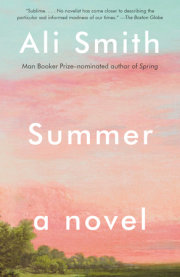
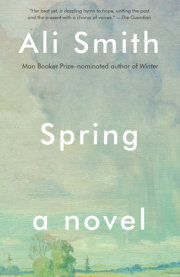
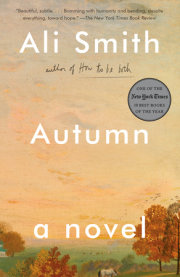
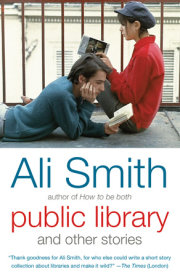
ALI SMITH is the author of many works of fiction, including, most recently, SummerSpring, Winter, Autumn, Public library and other stories, and How to be both, which won the Baileys Women's Prize for Fiction, the Goldsmiths Prize, and the Costa Novel of the Year Award. Her work has four times been short-listed for the Man Booker Prize. Born in Inverness, Scotland, she lives in Cambridge, England.

View titles by Ali Smith
Available for sale exclusive:
•     Guam
•     Minor Outl.Ins.
•     North Mariana
•     Philippines
•     Puerto Rico
•     Samoa,American
•     US Virgin Is.
•     USA

Available for sale non-exclusive:
•     Afghanistan
•     Aland Islands
•     Albania
•     Algeria
•     Angola
•     Antarctica
•     Argentina
•     Armenia
•     Aruba
•     Azerbaijan
•     Bahrain
•     Belarus
•     Benin
•     Bolivia
•     Bonaire, Saba
•     Bosnia Herzeg.
•     Bouvet Island
•     Brazil
•     Burkina Faso
•     Burundi
•     Cambodia
•     Cape Verde
•     Centr.Afr.Rep.
•     Chad
•     Chile
•     China
•     Colombia
•     Comoro Is.
•     Congo
•     Cook Islands
•     Costa Rica
•     Cuba
•     Curacao
•     Dem. Rep. Congo
•     Djibouti
•     Dominican Rep.
•     Ecuador
•     Egypt
•     El Salvador
•     Equatorial Gui.
•     Eritrea
•     Ethiopia
•     French Guinea
•     Gabon
•     Georgia
•     Guadeloupe
•     Guatemala
•     Guinea Republic
•     Guinea-Bissau
•     Haiti
•     Heard/McDon.Isl
•     Honduras
•     Hong Kong
•     Indonesia
•     Israel
•     Ivory Coast
•     Japan
•     Kazakhstan
•     Kyrgyzstan
•     Laos
•     Lebanon
•     Liberia
•     Libya
•     Macau
•     Macedonia
•     Madagascar
•     Maldives
•     Mali
•     Marshall island
•     Martinique
•     Mauritania
•     Mayotte
•     Mexico
•     Micronesia
•     Moldavia
•     Mongolia
•     Montenegro
•     Morocco
•     New Caledonia
•     Nicaragua
•     Niger
•     Niue
•     Norfolk Island
•     North Korea
•     Oman
•     Palau
•     Palestinian Ter
•     Panama
•     Paraguay
•     Peru
•     Qatar
•     Reunion Island
•     Russian Fed.
•     Rwanda
•     Saint Martin
•     San Marino
•     SaoTome Princip
•     Saudi Arabia
•     Senegal
•     Serbia
•     Sint Maarten
•     South Korea
•     South Sudan
•     St Barthelemy
•     St.Pier,Miquel.
•     Sth Terr. Franc
•     Suriname
•     Svalbard
•     Syria
•     Tadschikistan
•     Taiwan
•     Thailand
•     Timor-Leste
•     Togo
•     Tokelau Islands
•     Tunisia
•     Turkmenistan
•     Ukraine
•     Unit.Arab Emir.
•     Uruguay
•     Uzbekistan
•     Venezuela
•     Vietnam
•     Wallis,Futuna
•     West Saharan

Not available for sale:
•     Andorra
•     Anguilla
•     Antigua/Barbuda
•     Australia
•     Austria
•     Bahamas
•     Bangladesh
•     Barbados
•     Belgium
•     Belize
•     Bermuda
•     Bhutan
•     Botswana
•     Brit.Ind.Oc.Ter
•     Brit.Virgin Is.
•     Brunei
•     Bulgaria
•     Cameroon
•     Canada
•     Cayman Islands
•     Christmas Islnd
•     Cocos Islands
•     Croatia
•     Cyprus
•     Czech Republic
•     Denmark
•     Dominica
•     Estonia
•     Falkland Islnds
•     Faroe Islands
•     Fiji
•     Finland
•     France
•     Fren.Polynesia
•     Gambia
•     Germany
•     Ghana
•     Gibraltar
•     Greece
•     Greenland
•     Grenada
•     Guernsey
•     Guyana
•     Hungary
•     Iceland
•     India
•     Iran
•     Iraq
•     Ireland
•     Isle of Man
•     Italy
•     Jamaica
•     Jersey
•     Jordan
•     Kenya
•     Kiribati
•     Kuwait
•     Latvia
•     Lesotho
•     Liechtenstein
•     Lithuania
•     Luxembourg
•     Malawi
•     Malaysia
•     Malta
•     Mauritius
•     Monaco
•     Montserrat
•     Mozambique
•     Myanmar
•     Namibia
•     Nauru
•     Nepal
•     Netherlands
•     New Zealand
•     Nigeria
•     Norway
•     Pakistan
•     PapuaNewGuinea
•     Pitcairn Islnds
•     Poland
•     Portugal
•     Romania
•     S. Sandwich Ins
•     Seychelles
•     Sierra Leone
•     Singapore
•     Slovakia
•     Slovenia
•     Solomon Islands
•     Somalia
•     South Africa
•     Spain
•     Sri Lanka
•     St. Helena
•     St. Lucia
•     St. Vincent
•     St.Chr.,Nevis
•     Sudan
•     Swaziland
•     Sweden
•     Switzerland
•     Tanzania
•     Tonga
•     Trinidad,Tobago
•     Turkey
•     Turks&Caicos Is
•     Tuvalu
•     Uganda
•     United Kingdom
•     Vanuatu
•     Vatican City
•     Western Samoa
•     Yemen
•     Zambia
•     Zimbabwe

About

From a literary master, a novel of ghosts and history and family legacy, of the unexpected acts of care that shine light into our dark.

Ghosts don't exist. 
They don't. End of.
Story, however. 
It is haunting.
Everything tells it. 

It all starts when Petra and her little sister Patch hear a horrifying story from the past and find themselves making up a ghost. 

Is it imaginary? Is it real?

Then it all starts again thirty years later when Petra, now estranged from Patch, finds a phantom horse kicking the furniture to pieces in her bedroom. 

What to do? She phones her sister.

In a chiarascuro dance through our increasingly antagonistic era, Glyph asks if we’re attending to the history that’s made us and to the history we’re making.  

A funny, warm and clear-eyed take on where we are now, Glyph is about what our imaginations are for and how, in a broken, brutal and divided time, we rekindle care, solidarity, resistance and openness. This anti-war novel, Ali Smith’s most soulful, playful and vital yet, is a work of lightness that goes deep to counter the forces currently flattening the modern world.

Excerpt

Here’s a story our great grandfather kept to himself for most of his life, from back when he was in the Foresters.

Not literal foresters. The Foresters was an army regiment. Our great grandfather when he was a young man enlisted with the Foresters and went to fight in the trenches. Lucky for us he wasn’t in the part of the regiment that got sent to Gallipoli and got mostly massacred or we wouldn’t be here. Lucky he was only a bit gassed, and lucky he met our great grandmother in the military camp hospital, who didn’t know that day she met him that she’d be thumping his back to help him cough up stuff for the rest of his life for the rest of her life.

The story goes that our great grandfather, long dead by the time we were born, only ever spoke about his time in that war once, on his deathbed, and only to one of his grandsons who was then aged about eight, who told nobody either till he told his younger sister, our mother, over a decade later when she was nine or ten, and I only know it because a couple of decades after that, when I was about eight myself, she told me a version of it and eventually our uncle also passed on his version. Not to Patch, just to me. Patch was too little and too sensitive at the time to hear this kind of story. But I am as thick skinned as boot leather as our mother used to say.

Anyway, this is what our great grandfather was said to have said.

The person of the best and highest qualities he ever knew in his life was a young man he met in the First World War.

This young man’s horse went blind, or one of the horses they had out there did, I don’t know now if it was his horse or it was just a horse that happened to be there.

It had been blinded by gas.

The gas had come down, pale yellow, and this type of gas blinded anything with eyes and if it settled on any open skin it burned itself into it. The ­men – the horses ­too – would turn a sort of orange colour with the burns the gas gave them and then they’d blister and the blisters it gave them could kill them. At this point in that war the men had masks, and gas masks of a sort for horses existed too but were scarce. This young man saw that the eyes of the horse had turned to eggwhite and he knew they’d have to shoot it, though the horse was otherwise fine, wasn’t burnt or blistered, just its eyes that were gone.

So he said to someone, I’m going to take that horse out of this since none of it is of its making.

Which he did.

Later that month they frogmarched him back, the young man, more a boy really; same as our great grandfather he’d probably have been nineteen, maybe twenty, early twenties at the most. Anyway they took him away and the authorities ­court-­martialled him and a general who’d involved himself in the case declared an example should be made. So they did this by roping him to a post early one morning, blindfolding him and having a firing squad shoot him dead.

He’d gone over to the horse and unharnessed it, removed its bridle and let all the leather and metal fall to the ground. Then he’d taken off his own uniform jacket. That’s the first thing he did that wasn’t allowed. He’d dropped the jacket and its pouches, his gun and his bayonet belt etc on top of the muddy horse tack and he’d taken the ­horse – it had no bridle or rope on it so what he did was he put his hand to its forehead and took hold of its ­forelock – away from the place where the encampment was, off in the opposite direction of the noise of the fighting, wherever they were, I don’t know where they were, anyway there was woodland still standing somewhere nearby, trees on a patch of land not yet obliterated. He led the blind horse off towards that wood and the horse went with him, it went like a lamb our great grandfather apparently said, though it couldn’t see, and the man and the horse went in among the trees and vanished from view.

Afterwards someone told our great grandfather that the young man they shot had been a pit pony boy back in the day down in the mines with his father and his brothers till they’d enlisted.

Here’s another story, and it’s one that a random person we didn’t know and only ever met the once had also kept to herself for most of her life until she decided to tell us.

At least that’s what she said when she told us it.

And if that’s true, when she did decide to tell anybody, of all people it was two children complete strangers to her she chose to tell it to.

We were at a big family party, a silver wedding celebration for some relatives we didn’t know and also never met again held in a hotel in a town I only remember the name of because there was a model village there we were taken to see the next day where we marauded like small giants above the neatness of the streets, the peopleless cottages and miniature grand houses, the little trees and lawns, a church, another church, some more modern looking additions too like shops whose windows you could bend down and peek into and a sign above a door saying Chinese Restaurant.

At one point at this party someone had placed my sister and me in our matching pink dresses one on each side of a very elderly lady and taken a photograph. Then we were left sitting there with her while the grown ups, who’d crowded round to take photos of us and the lady, danced on the dancefloor to a small band up at the end of the room playing old songs, a song about magic moments, a song about anniversary waltzes; I was watching the people going back and fore in each other’s arms, even our mother and father were doing it. I’d never seen them dance together before, neither of us had; at home our mother could sometimes hardly walk as far as the end of the garden, but there she was, the same as everyone, smiling and dancing the old fashioned dance in among all the people.

Then I felt the lady we were sitting next to reach and take one of my hands.

I looked down at my hand in her very old looking hand then glanced across her lap as politely as I could at my sister. She was looking back at me in a panic because the very old lady we didn’t know had taken one of her hands too.

Praise

“Feisty, graceful…Her best work since the lauded Seasonal Trilogy…Anglophone author channels molten rage with her level of skill…I won’t spoil the conclusion except to note the final three pages alone are worth the price of a hardcover. Once again Smith makes her case beautifully: art points the way forward, enduring across millennia, like those Sumerian tablets, yet transforming itself and us each day.”
Hamilton Cain, Boston Globe

"Glyph’s primary power comes from its commitment to excavating the sediments of language; its etymological resonance and inference. . . . Smith’s tonal skill as a writer is also used to great effect when dealing with . . . bureaucratic, authoritarian absurdity. . . . It is a bold move to be so morally unflinching, especially in the face of a perceived aesthetic orthodoxy that so often privileges distance and irony, but in Glyph we see a major British writer answering the call of the day when so many others have equivocated or turned away. There is also something about Smith’s relentless focus on language that makes her particularly well suited to the task. . . . Smith’s sensibility is fine-tuned to grapple with the avalanche of passive-voice headlines, asymmetric categorisations, outright linguistic inversions and semantic absurdities that have accompanied the increasingly desperate attempts to justify the unjustifiable."
The Guardian

"Smith's writing, with its frisky inventiveness, experimentation and wordplay, is the closest thing to living, breathing prose. . . . There's great value in bearing witness, and over the course of the seven novels that Smith has published in the past decade, she's compiled a dynamic and engaging portrait of the way we live. . . . Brilliant."
Financial Times

"Smith embraces angular, fragmented storytelling along with slippery and allegorical messaging, though her characterizations are lively and crystal clear. . . . An abstract and mordant meditation on the long aftereffects of violence."
Kirkus, starred review

"Smith deploys misdirection, humor, and the voice of Patch’s teenage daughter to raise issues of morality, power, and conflict. Described as a modern Virginia Woolf and as a Nobelist-in-waiting, the multi-award-winning and Man Booker–nominated Smith is a modern oracle."
Library Journal

"[Smith is] an exceptionally gifted storyteller. . . . She can bring any sentence alive with the verve of her wordplay, as her characters spark off one another in speech, echoing, patterning and discovering the energy contained in a single moment. . . . Smith's capacity for hope is infectious, and the hope posited by these books is that storytelling can restore not just our humanity but our political responsibility and agency. . . . Between them, Gliff and Glyph offer a world of endlessly proliferating gliffs: slivers of conscience that Smith imbues with a power that is not illusory simply because it is imagined. Indeed, Smith suggests that made-up stories may, at this point, be the least illusory things we have."
New Statesman

"Glyph runs through the present and the past . . . with typically Smithian imaginative flourishes. . . . [and] the playfulness that has always been a big part of her work."
The Times

"A clever and enjoyable companion piece to [Gliff]. . . . Smith effectively deploys narrative devices that will be familiar to readers of her fiction—precocious children, rapturous wordplay, and references to current events. . . . [An] accomplished and gifted writer."
Publishers Weekly

"Rich with [Smith's] sparkling digressions, literary allusion, and social conscience. . . . [Glyph] celebrates the power of civil disobedience through one act of decency at a time."
—Booklist

"Smith shows us that private pain and public violence are not separate systems. It asks whether we are paying attention, not just to our own histories, but to what is happening, very plainly, in front of us. . . . What makes Glyph so compelling is its tonal confidence. It's funny without being flippant, political without being sanctimonious. By the final pages, this feels like one of Smith's most vital novels—restless, tender, angry, and alive to contradiction."
—Irish Independent

"[Glyph] offers the reader an uncanny version of our world, haunted by ghostly voices from the past. . . . Smith teasingly draws attention to the different levels of reality at work in the novel. . . . Although it can be read as a standalone work, Glyph inevitably invites the reader to explore its relationship with Gliff (2024). . . . The duology forms a kind of textual Möbius strip—a mind-bending twisted loop with just one side—perhaps nodding back to the double strands of Smith’s 2014 novel How to be Both. . . . Like all of Smith’s works, Glyph is multifaceted. She is equally adroit at capturing the emotional nuances of family life, mapping out the larger political landscape, or beguiling the reader with joyfully witty metafictional and linguistic games. . . . Irresistible."
The Conversation

"Smart and bleakly funny, Glyph is fuelled by incredulity at the state of contemporary England. . . . The author manages to estrange readers from reality by doing nothing more than describing things exactly as they are."
The Irish Times

"[Glyph is] about paying attention; about noticing the world's horrors around us and using fiction to hold the moment to account."
The Spectator

"A playful, melancholy story of sibling bonds, unreliable memory and the tales we use to keep the dead close. It’s also a powerful anti-war novel, with Palestine firmly in its sights."
The Observer

"A wide, free-wheeling meditation on war, told with Smith's usual punning brio."
The Daily Mail

"It is impossible not to be struck by [Smith's] mastery . . . her clever wordplay, her unapologetically metafictional storytelling and her obvious dedication to the message and the meaning of what it is that she writes. . . . Glyph moves effortlessly back and forth between the past and the present, cleverly playing with E.M. Forster’s observations about 'flat' and 'round' characters in fiction whilst eschewing traditional, realist storytelling conventions. . . . Smith’s metafiction converges and divides, rises and falls, all with a gleeful knowingness and arch humour. . . . [A] remarkable and utterly unique novel from one of the finest writers working today."
The Sydney Morning Herald

"Among contemporary novelists, Ali Smith stands out for her engagement with the political moment, as well as with her fondness for wordplay and what it reveals about the language we use. . . . Glyph engages directly with the wreckage of war, be it in Gallipoli or Gaza, with characters being flattened both literally and symbolically. . . . There are frequent puns and playfulness, pointing out that language can represent reality but also distort it. The surreal is mixed with the real, and characters discuss other stories and books, including—nod, wink—the earlier Gliff. . . . For Smith, the antidote to a 'flattened' world, whether by tanks or by technology, is the enduring, regenerative power of narrative. . . . Within these layers of fiction and memory, her characters find the resilience to remain whole even in a culture that would prefer them shredded. In this sense, Glyph acts as a counterweight to what Frederic Jameson termed the 'depthlessness' of modern life. It indicates that a heightened imagination is not an escape from reality, but an essential tool for truly engaging with it, accompanied by a radical form of care."
The Hindu

"Vital. . . . Smith’s genius lies in her ability to wrap these huge, knotted ideas inside a tender, human story. . . . Powerful, playful with language, fearless with thought, and always alert to what’s possible."
Buzz Magazine

"[Smith's] writing is effervescent with kindness, challenging the violence of a political landscape that seeks to confound, divide and conquer. . . . [Glyph] unpicks how truth is warped in our time of genocides."
Big Issue

"Few writers are as playful as Ali Smith, who seems to delight in the process of putting words onto the page in as artful a way as possible. This is clear before you even begin her latest novel, the title Glyph immediately recalling her previous Gliff. . . . But where Gliff was set in a dystopian future, Glyph looks to the past. It’s a ghost story which is at its heart a treatise on the horrors of war, lamenting that we never seem to learn lessons from what has gone before. . . . Glyph proffers that the stories we tell, and how we tell them, matter greatly."
The Skinny

"Moving between childhood and adulthood, reality and invention, Smith’s latest is a follow-up to 2024’s Gliff but can be read as a stand-alone. As ever with this author, the novel is playful without being slight, and alert to the present moment while committed to imagination."
The i Paper

"Literary modernism meets your not-so-typical ghost story in Ali Smith’s Glyph. . . . Any fan of Virginia Woolf, James Joyce or Jack Kerouac will enjoy Smith’s assimilation of small factual details from history into a spectre for modern times."
The Indiependent

"[Smith's] most urgent and politically resonant book to date. . . . [A] page-turner."
t2ONLINE

"Glyph follows on from Ali Smith's 2024 novel, Gliff, which tells a story hidden in the first. The less you know about it the better as you immerse yourself back into Smith's world."
Radio Times

Author

© Christian Sinibaldi

ALI SMITH is the author of many works of fiction, including, most recently, SummerSpring, Winter, Autumn, Public library and other stories, and How to be both, which won the Baileys Women's Prize for Fiction, the Goldsmiths Prize, and the Costa Novel of the Year Award. Her work has four times been short-listed for the Man Booker Prize. Born in Inverness, Scotland, she lives in Cambridge, England.

View titles by Ali Smith

Rights

Available for sale exclusive:
•     Guam
•     Minor Outl.Ins.
•     North Mariana
•     Philippines
•     Puerto Rico
•     Samoa,American
•     US Virgin Is.
•     USA

Available for sale non-exclusive:
•     Afghanistan
•     Aland Islands
•     Albania
•     Algeria
•     Angola
•     Antarctica
•     Argentina
•     Armenia
•     Aruba
•     Azerbaijan
•     Bahrain
•     Belarus
•     Benin
•     Bolivia
•     Bonaire, Saba
•     Bosnia Herzeg.
•     Bouvet Island
•     Brazil
•     Burkina Faso
•     Burundi
•     Cambodia
•     Cape Verde
•     Centr.Afr.Rep.
•     Chad
•     Chile
•     China
•     Colombia
•     Comoro Is.
•     Congo
•     Cook Islands
•     Costa Rica
•     Cuba
•     Curacao
•     Dem. Rep. Congo
•     Djibouti
•     Dominican Rep.
•     Ecuador
•     Egypt
•     El Salvador
•     Equatorial Gui.
•     Eritrea
•     Ethiopia
•     French Guinea
•     Gabon
•     Georgia
•     Guadeloupe
•     Guatemala
•     Guinea Republic
•     Guinea-Bissau
•     Haiti
•     Heard/McDon.Isl
•     Honduras
•     Hong Kong
•     Indonesia
•     Israel
•     Ivory Coast
•     Japan
•     Kazakhstan
•     Kyrgyzstan
•     Laos
•     Lebanon
•     Liberia
•     Libya
•     Macau
•     Macedonia
•     Madagascar
•     Maldives
•     Mali
•     Marshall island
•     Martinique
•     Mauritania
•     Mayotte
•     Mexico
•     Micronesia
•     Moldavia
•     Mongolia
•     Montenegro
•     Morocco
•     New Caledonia
•     Nicaragua
•     Niger
•     Niue
•     Norfolk Island
•     North Korea
•     Oman
•     Palau
•     Palestinian Ter
•     Panama
•     Paraguay
•     Peru
•     Qatar
•     Reunion Island
•     Russian Fed.
•     Rwanda
•     Saint Martin
•     San Marino
•     SaoTome Princip
•     Saudi Arabia
•     Senegal
•     Serbia
•     Sint Maarten
•     South Korea
•     South Sudan
•     St Barthelemy
•     St.Pier,Miquel.
•     Sth Terr. Franc
•     Suriname
•     Svalbard
•     Syria
•     Tadschikistan
•     Taiwan
•     Thailand
•     Timor-Leste
•     Togo
•     Tokelau Islands
•     Tunisia
•     Turkmenistan
•     Ukraine
•     Unit.Arab Emir.
•     Uruguay
•     Uzbekistan
•     Venezuela
•     Vietnam
•     Wallis,Futuna
•     West Saharan

Not available for sale:
•     Andorra
•     Anguilla
•     Antigua/Barbuda
•     Australia
•     Austria
•     Bahamas
•     Bangladesh
•     Barbados
•     Belgium
•     Belize
•     Bermuda
•     Bhutan
•     Botswana
•     Brit.Ind.Oc.Ter
•     Brit.Virgin Is.
•     Brunei
•     Bulgaria
•     Cameroon
•     Canada
•     Cayman Islands
•     Christmas Islnd
•     Cocos Islands
•     Croatia
•     Cyprus
•     Czech Republic
•     Denmark
•     Dominica
•     Estonia
•     Falkland Islnds
•     Faroe Islands
•     Fiji
•     Finland
•     France
•     Fren.Polynesia
•     Gambia
•     Germany
•     Ghana
•     Gibraltar
•     Greece
•     Greenland
•     Grenada
•     Guernsey
•     Guyana
•     Hungary
•     Iceland
•     India
•     Iran
•     Iraq
•     Ireland
•     Isle of Man
•     Italy
•     Jamaica
•     Jersey
•     Jordan
•     Kenya
•     Kiribati
•     Kuwait
•     Latvia
•     Lesotho
•     Liechtenstein
•     Lithuania
•     Luxembourg
•     Malawi
•     Malaysia
•     Malta
•     Mauritius
•     Monaco
•     Montserrat
•     Mozambique
•     Myanmar
•     Namibia
•     Nauru
•     Nepal
•     Netherlands
•     New Zealand
•     Nigeria
•     Norway
•     Pakistan
•     PapuaNewGuinea
•     Pitcairn Islnds
•     Poland
•     Portugal
•     Romania
•     S. Sandwich Ins
•     Seychelles
•     Sierra Leone
•     Singapore
•     Slovakia
•     Slovenia
•     Solomon Islands
•     Somalia
•     South Africa
•     Spain
•     Sri Lanka
•     St. Helena
•     St. Lucia
•     St. Vincent
•     St.Chr.,Nevis
•     Sudan
•     Swaziland
•     Sweden
•     Switzerland
•     Tanzania
•     Tonga
•     Trinidad,Tobago
•     Turkey
•     Turks&Caicos Is
•     Tuvalu
•     Uganda
•     United Kingdom
•     Vanuatu
•     Vatican City
•     Western Samoa
•     Yemen
•     Zambia
•     Zimbabwe