Close Modal

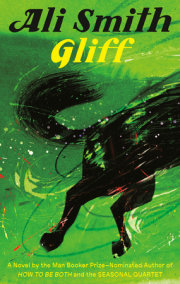
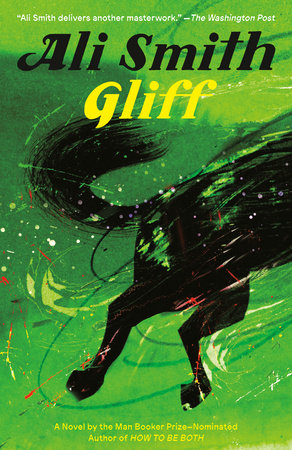
Gliff

A Novel

Author Ali Smith
Look inside
Paperback
$17.00 US
5.11"W x 7.98"H x 0.83"D   (13.0 x 20.3 x 2.1 cm) | 10 oz (278 g) | 24 per carton
On sale May 05, 2026 | 288 Pages | 9780593687864
Sales rights: US,OpnMkt(no EU/CAN)

See Additional Formats
From a literary master, a moving and genre-bending story about our era-spanning search for meaning and knowing

An uncertain near-future. A story of new boundaries drawn between people daily. A not-very brave new world. 

Add two children. And a horse.

From a Scottish word meaning a transient moment, a shock, a faint glimpse, Gliff explores how and why we endeavour to make a mark on the world. In a time when western industry wants to reduce us to algorithms and data—something easily categorizable and predictable—Smith shows us why our humanity, our individual complexities, matter more than ever.
horse

Our mother came down to the docking gate to say cheerio to us. For a moment I didn’t recognize her. I thought she was just a woman working at the hotel. She had her hair scraped back off her face and tied in a ponytail and she was wearing clothes so unlike her and so not quite right for her shape that it took me that moment to work out they were her sister’s work clothes, the uniform they made the women and girls here wear, white shirt, long black pinafore apron/ skirt thing. The men and boys who worked here got to look more casual. Their uniform was designer jeans and white T-shirts made of stuff that was better than what ordinary T-shirts get made of. The women and girls weren’t allowed make up or earrings or necklaces. Our mother looked smaller, duller, scrubbed clean and cloistery, like serving women from humbled countries look in films on TV.

How is she doing today? Leif asked.

How long will she be ill? my own sister asked.

Our mother gave my sister a look for being rude.

Two weeks, Leif said, three? As long as till September?
The far away word September hung in the air round us in the weird tradespeople space. My sister looked at her feet. Leif looked at the walls, concrete and stone, the huge lit candles in the glass jars burning pointless against the daylight.

Christ, he said.

He said it like a question.

Our mother shook her head, nodded her head, nodded from one to the other of the two statues the hotel had on either side of the docking entrance, shook her head again then put her finger to her mouth as if to smooth the place beneath her nose, graceful, but really to quieten Leif and us.

They were life size, the statues, substantial white stone, shining. They looked churchy. They looked related but they were separate. One was of a sad looking beautiful woman with a cloth round her head exactly like a Virgin Mary with her arms cupped, open and empty, one hand upturned and her eyes downturned, closed or gazing down at her own empty lap, at nothing but the folds in her clothes. The other was of the bent body of a man. He was obviously meant to be dead, his head turned to one side, his arms and legs meant to look limp. But the angle he was at on the floor made him look stiff and awkward, sprawled but frozen.

Leif gave him a push and he rocked from side to side. Our mother looked panicked.

Rigor mortis, Leif said. So nowadays this is what passes for pity. And this is what happens to art when you think you can make a hotel of it.

Our mother told Leif in a formal sounding voice, as if she didn’t know us, that she’d be in touch. She did a thing with her head to remind us about the cameras in the corners, she kissed us with her eyes, and then, like we were guests who’d been quite nice to her, she hugged each of us separately, polite, goodbye.

We traced our way back through the crowds of tourists to where we’d left the campervan by using a Google streetmap. It was easier to navigate by the shops than by the streets so we went towards Chanel instead, biggest thing on the map. Now Gucci. Now Nike. Strange when we finally found the far side where Alana’s flat was, a place not even registering on Google as a place, that Leif got in on the driving side, because it was our mother who always drove. She was good at the campervan which was notoriously tricky. He was going to be less good, less sure of it, which is maybe why he made us both sit in the back even though the passenger seat was empty. Maybe this was to stop us fighting over who got to sit up front. Maybe he just didn’t want to have us watching him too close while he was concentrating.

He turned the ignition. It started.

We’ll give it a month then we’ll come back and collect her, whether Alana’s job’s still on the line or not, he said as we left the city.
But it was a good thing. It was all in a good cause. Alana was our mother’s sister. We had only met her once before, back when we were too small to know, and she’d been too ill for us to see much of her this time. But because of our mother she’d keep her job, and we could have our mother all the other summers, we could learn from this summer that this was what family did and what you did for family, and it was a very busy place Alana worked. It needed its staff. We’d seen that when we’d walked past the night before trying to catch a glimpse of our mother working and hoping to wave hello as we passed.
We couldn’t spot her, there were so many people, the inside restaurant full, the outside front courtyard restaurant full too, of people the like of which I had never seen, not in real life. They were so beautiful, coiffed and perfect, the people eating in the restaurant of the place our mother was working. They were smoothed as if airbrushed, as if you really could digitally alter real people.

I saw a table with what looked like a family at it, a woman, the mother presumably, elegant, raising her fork, it had a piece of something on it and she put it to her mouth rather than in her mouth, as if she were automatonic, then her arm and hand put it back down on the plate, then raised it again.

Next to her, a boy, elegant, stirring indifferently at what was on his plate and staring into space. Then the man, the father maybe, rotund but elegant, dressed as if at an awards ceremony off TV and scrolling a phone instead of eating. Then a girl, I couldn’t see what she was doing but she was elegant even though she had her back to me.

It was like they all had their backs to me, even the ones facing me.
Their disconnect was what elegant meant.

Like something vital had been withdrawn from them, for its own protection maybe? maybe surgically, the withdrawal of the too-much-life from people who could afford it by people masked and smelling of cleanness inserting the cannula in a clinic, its reassuring medical smell, one after the other the perfect family offering an arm.

But then where did it go? What did the surgeon do with the carefully removed life-serum? How
could you protect it, wherever you stored it, from everything? the disastrous heat, the gutter dirt, the pollution, the things that changed, the terrible leavetakings, the journeying?

They were so still, so stilled. Was that what endurance was?

Is it still life? I’d said out loud as we passed.

Is what? Leif said.

I’d nodded towards the restaurant we’d never have got into.

Even though they’re breathing and moving they’re like the things in one of those old paintings of globes and skulls and fruits and lutes, I said.

Leif laughed then and winked down at me.

Art hotel, he said.
Longlisted for the Highland Book Prize

A Most Anticipated Book of February from the New York Times and Goodreads
A Most Anticipated Book from Vogue, New York Times Book Review Podcast, Bustle, The Millions, and Literary Hub


“Part of the joy of Gliff is that, while it is a dystopia, there are moments of genuine humor.”
The New Yorker

“This idea of freedom—the possibility of moving through the world unconfined by a single, determinate category, able to swap identities or shed them altogether—is both Smith’s great theme and a description of her methods. Her books are restless, shape-changing, multifarious enterprises, scrambling conventional definitions of genre…Briar’s narrative of bravery and betrayal is interrupted here and there by fables—one about a woman who gives birth to a baby with a horse’s head, another about a tyrant driven mad by vengeance—that point to lessons and supply a glimmer, a gliff, of magic. Smith’s prose, as ever, is the principal enchantment: profane, playful, perpetually alert to the pleasures and serendipity of words, a spark she bestows on Briar and Rose…I don’t want to spoil either the details of Smith’s world-building or the turns of her plot, but I can say that she renders an awakening consciousness and the terrible reality in which it is embedded with faultless grace and dexterity.”
New York Times Book Review

“Ali Smith delivers another masterwork…Brilliantly reimagines Brave New World…The conceit of children in danger is a familiar one, but Smith reinvigorates it…Smith has built a career on postmodern experimentation; here she tweaks typography and punctuation, layers puns and allusions, stutters sentences like speech, lacunae like breath. She deletes or swaps letters to enhance her meaning, much as a deleted or swapped letter of DNA can affect physical traits. Her wordplay astounds…Gliff’s language is sparer than in her famous Quartet, yet she’s still throwing everything—art, literature, social justice, tart humor—against atrocities that damage our moral compasses and cripple our lives. We may be anesthetized to horrors such as ethnic cleansing, but not Smith, no way, no how. A polemical tone punches through the varnish of her prose, a rage that even art can’t soothe…Kindness and beauty flicker amid the bleakness, but there’s a note of grief, too, as Smith bears witness to the death of commonweal. Gliff is a dirge for our civilization, yet a sequel—Glyph, already in the works—may change the tune.”
Washington Post

“Smith scrambles plotlines, upends characters, and flouts chronology—while telling propulsively readable stories…Her books are challenging—experimental and unabashedly literary—yet welcoming to all, eminently readable even when they’re disorienting; they engage the reader, demanding collaboration…She breaks rules with gleeful abandon, mocking convention…[Gliff] thrums with Smith’s urgent need to tell a story about where our divided present could lead us.”
The Atlantic

“In the splendid botanical gardens of Ms. Smith’s fiction…words bloom and flourish in their many definitions, both known and newly invented…The linguistic wildness of Ms. Smith’s writing, always a joyful signature of her books, contrasts effectively with the state’s urge to restrict speech and silo the population into fixed and exclusionary categories…Smith’s great strength is her grasp of the strangeness and multiplicity of language.”
Wall Street Journal

“Smith’s writing always features an almost palpable love of language, which takes a variety of guises here, including other discussions about the multiple meanings of apposite words like trust, rendering, and sublime, as well as whimsical wordplay throughout the text…Gliff is enriched by references to literature, art, and history…While its vision of the future looks even more prescient today, particularly in the United States, hopefully Gliff will remain a cautionary tale and not be revealed as a glimpse into a crystal ball.”
Boston Globe

"Chilling...Orwellian...Strangely compelling...It’s a vivid portrait of a decaying civilization—one snuffed out not with a bang but with a bleak, bureaucratic whimper."
Vogue

“Thought-provoking…Beautiful prose.”
Bon Appetit

Gliff, which blends the speculative, literary and dystopian, feels chilling and fresh…The siblings' fascination with the horse is what makes the otherwise dark story of two of the world’s many abandoned children take on a fairy tale-like quality. While this absurdly timely novel has mostly bad things to say about the state of the world, it encourages the reader to push back the despair and rise to meet a future that feels all too close.”
Minneapolis Star Tribune

“A deeply prescient tale of a possible future—a brilliant warning that we should all heed.”
Brooklyn Rail

“Smith’s book is strangely playful and fable-like, marked by a reverence for childlike wonder and for language and etymology. Like the best of dystopian protagonists, Briar and Rose are children and thus attuned to the artifice and inanities of societal structures…Even amid terror, Gliff reminds us that it is possible to exist outside of state-sanctioned ways of being, and that ‘real realities of living’ are worth teasing out and fighting for.”
Foreign Policy

“It’s rare for a literary novelist to be as skilled as Ali Smith is at responding—sometimes, it seems, at lightning speed—to current political realities…A mysterious, satisfying novel.”
Bookreporter

“Both sinister and whimsical…Gliff is a cautionary tale all too relevant for our current day…The book deals with dark topics—oppression, inequality, prejudice—but it is also about individual resilience, human connection, and meaning. Those are heavy themes, but Smith writes with a light touch, lacing the narration with playful cultural references, humor, puns, double meanings, and whimsical flourishes. Indeed, elements of the book read like a fairy tale or fable.”
Book Browse

“This reminded me of V for Vendetta…These are memorable kids, they’re smart, they’re funny…It’s fantastic.”
Joumana Khatib, New York Times Book Review Podcast

"Ali Smith’s miraculous Gliff is at once a pitch-black take on the authoritarian future and a tender, hilarious and ultimately uplifting portrait of two young siblings as they battle to escape it. Full of jokes and wordplay, kindness and connection…A ray of hope after a year like this one."
Paul Murray, The Irish Times' "Books of the Year"

“An ingenious speculative novel. . . . Smith makes the most of her protagonists’ youthful perspectives to bring a sense of wonder, inquisitiveness, and pathos to the story. . . . The lush narrative doubles as an anthem of resistance, in this case against tyranny and the destruction of the environment. Inspired references to Charles Dickens and Virginia Woolf add to Smith’s literary tapestry. The results are extraordinary.”
Publishers Weekly, starred review

“But that mood [of angst] is frequently lightened by the author’s gift for conveying a fizzily fresh and vibrant young person’s mind. . . . A dark vision brightened by the engaging craft of an inventive writer.”
—Kirkus, starred review

“After a run of inspired novels in which the author drew on some of the most troubling contemporary events to inspire hopeful and defiant narratives, Smith's latest pivots towards a dystopian near-future while retaining all her brilliant insight, wit, and humanity…This fable-like story gradually reveals a Huxleyan society (Smith offers clever riffs on ‘brave new world’) in which the border is at once nowhere and everywhere, and anyone who acts out of line can be wrong-sided. Confronting themes of surveillance and fascism, Orwell Prize for Political Fiction–winner Smith's latest is a timely gift for readers.”
Booklist, starred review

“It would be hard to find a writer whose sensibility is better suited to unsettling times than British novelist Ali Smith. Unsurprisingly, her novel Gliff neatly matches the dominant sentiment of the 2020s. This brief, dystopian tale is both an evocative story of siblings in peril and a glimpse at where some of the trends roiling our world may be taking us…As in much of Smith’s work, there’s a pleasing fascination with language and wordplay.”
BookPage

“If it were not pretty certain that she would hate the idea, you could almost describe Ali Smith as a national treasure…Gliff opens with style and intrigue…Few writers are as good as Smith at reminding us that novels are constructed, brick by brick, from individual words…The language is so rich and dazzling.”
The Times

"As ever, Smith delights in sportive wordplay…In Smith’s refinement of the Orwellian vision, no boots are required. There’s just the computer saying ‘no,’ for ever…Smith’s natural mode of discourse, in the best way, resembles the questing and venturesome learning strategies of children…The cleverness she celebrates is innate and ordinary. It is human, in other words, and Gliff is the mark of just such a native genius.”
The Guardian

“The way those who find themselves on the outer edges of our society are treated has always been a signal theme of Smith’s work…In the end our hope lies in Bri and Rose, in their generation, in outsiders. And if Smith’s recent books were a handbook for 21st-century life, Gliff is a warning as to what will happen if we ignore their lessons.”
The Observer


“As usual with Smith, the gorgeous prose will swirl in your head. Gliff is challenging and enigmatic—and a novel that possibly needs more than one reading to fully appreciate.”
The Independent

“Ali Smith excels at the creation of a lost, curious, intelligent mind adrift in a world of surprises and the unforeseen…She has a glorious line in encounters and incidents, observed strangeness and facts too large to be ignored, too inevitable to be made sense of…Smith is a vivid, alluringly chatty novelist capable of deft and unforeseeable sidesteps. The second book of the pair, set for release next year, will be worth it.”
The Telegraph

“In recent years Ali Smith has mastered a style that is both disconcerting and utterly humane…Gliff is unendingly playful. Even in her 18th book, Smith does not tire of the wonder of language. It is also her most damning critique of Big Tech yet…The meaning and meaninglessness of our words is an overarching theme of Smith’s oeuvre…As Smith makes clear in this typically far-reaching and mind-expanding book, the true meaning of a word is made by those who use it.”
The New Statesman

“Smith once again stakes her claim to be among the most inventive writers—Gliff is another fizzing firework display, with conceptual shenanigans and punning prose put in the service of hot-button social issues.”
Irish Daily Mail

“After the breakneck, up-to-the-minute nature of the seasonal quartet and its epilogue, Gliff's aims are something more fabulist and timeless…Gliff is like a fanfare of the Ali Smith showcase. There are redactions, puns, quick-fire exchanges, malapropisms, neologisms and more. It is replete with cadenzas and the studied impromptu…Gliff, of course, is entertaining and sophisticated and clever.”
The Scotsman

“An altogether thrilling read…A call to arms that, crucially, doesn’t read like one…There is nothing didactic about Smith’s style of storytelling…Smith’s genius is to show us this world—our sudden, chance view—and at the same time ask us to consider how such horrors might be prevented…The siblings are wonderfully drawn…Smith’s command over the story, her ease with the dystopian genre, allows her to play with form throughout the book, with word games that elucidate her themes…With Gliff she delivers a moving, insightful treatise on the overlapping crises affecting the world today…The depressing subject matter is lightened by Smith’s humour and whimsy…Smith’s dystopia, with its mix of light and shade, is reminiscent of the writing of George Saunders.”
The Irish Times

“This is a book huge in scope, its frame of reference enormous…It will leave you breathless, and reaching for a dictionary…But it is also a story about two children who have lost their mother, with moments that are spare and full of powerful feeling.”
The Evening Standard

Gliff demonstrates Ali Smith’s characteristic strengths as a novelist. The narrative is accessible and engaging, yet at the same time complex and subtle.”
The Conversation


“Another magnificent book to be treasured…If the story remains effervescent in spite of this wickedness, that’s because of Ali Smith’s ingenious, warm storytelling. With clever kindness, Smith speaks to the uprisings that are possible, when we collaborate in a divided world. Through defiant wordsmithery, Gliff glimmers with the perennial resistance that storytelling can offer, in mocking the establishment by opposing its tyrannical narratives.”
Big Issue

“This fable is one of the tools Smith uses to enrich and elaborate her central dystopic narrative. Gliff vibrates with citation and allusion, other stories of sudden or slow apocalypse sprouting like weeds among the ruins…Smith’s fiction is also wittily and movingly accessible. Gliff is another tale about a Britain (and not only Britain) bound for environmental ruin, techno-despotism, and a jargon of atrocity—but it’s also filled, like its narrator and their sister, with invention and revolt.”
—4 Columns

“Tantalising stuff, from one of our most playful writers, proving it’s still possible to be genuinely inventive with the novel form…Smith creates these futures with a lightness of touch…It all feels only a few steps from our own time, with anti-immigrant paranoia, willing complicity in technological surveillance, and exploitative capitalism braiding ever-tighter together to create a society both horribly dystopian and perilously close…As such, Gliff seems as much a conduit for Smith’s feelings about the state of our current world as the Seasonal Quartet did: she has a wry eye for the petty absurdities, as well as the cruelties, of how bureaucratic institutions function…Behind everything, is a deep anger at the inhumanity of it all…But this being an Ali Smith book, it’s also all about language. She’s as frisky with it as ever, peppering with puns, and making hay with homonyms…Smith imbues her characters, as she often does, with this linguistic exuberance. It’s a delight to read line-by-line…Gliff is surely one of Smith’s most propulsive stories—a dark adventure, with high stakes, that despite its bleak subject matter is still a sparklingly crisp read.”
iNews
© Christian Sinibaldi

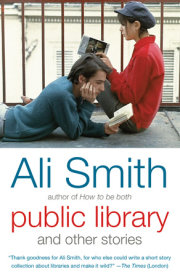
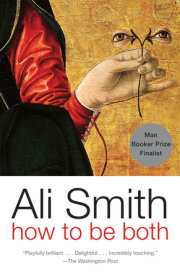
ALI SMITH is the author of many works of fiction, including, most recently, SummerSpring, Winter, Autumn, Public library and other stories, and How to be both, which won the Baileys Women's Prize for Fiction, the Goldsmiths Prize, and the Costa Novel of the Year Award. Her work has four times been short-listed for the Man Booker Prize. Born in Inverness, Scotland, she lives in Cambridge, England.

View titles by Ali Smith
Available for sale exclusive:
•     Guam
•     Minor Outl.Ins.
•     North Mariana
•     Philippines
•     Puerto Rico
•     Samoa,American
•     US Virgin Is.
•     USA

Available for sale non-exclusive:
•     Afghanistan
•     Aland Islands
•     Albania
•     Algeria
•     Angola
•     Antarctica
•     Argentina
•     Armenia
•     Aruba
•     Azerbaijan
•     Bahrain
•     Belarus
•     Benin
•     Bolivia
•     Bonaire, Saba
•     Bosnia Herzeg.
•     Bouvet Island
•     Brazil
•     Burkina Faso
•     Burundi
•     Cambodia
•     Cape Verde
•     Centr.Afr.Rep.
•     Chad
•     Chile
•     China
•     Colombia
•     Comoro Is.
•     Congo
•     Cook Islands
•     Costa Rica
•     Cuba
•     Curacao
•     Dem. Rep. Congo
•     Djibouti
•     Dominican Rep.
•     Ecuador
•     Egypt
•     El Salvador
•     Equatorial Gui.
•     Eritrea
•     Ethiopia
•     French Guinea
•     Gabon
•     Georgia
•     Guadeloupe
•     Guatemala
•     Guinea Republic
•     Guinea-Bissau
•     Haiti
•     Heard/McDon.Isl
•     Honduras
•     Hong Kong
•     Indonesia
•     Israel
•     Ivory Coast
•     Japan
•     Kazakhstan
•     Kyrgyzstan
•     Laos
•     Lebanon
•     Liberia
•     Libya
•     Macau
•     Macedonia
•     Madagascar
•     Maldives
•     Mali
•     Marshall island
•     Martinique
•     Mauritania
•     Mayotte
•     Mexico
•     Micronesia
•     Moldavia
•     Mongolia
•     Montenegro
•     Morocco
•     New Caledonia
•     Nicaragua
•     Niger
•     Niue
•     Norfolk Island
•     North Korea
•     Oman
•     Palau
•     Palestinian Ter
•     Panama
•     Paraguay
•     Peru
•     Qatar
•     Reunion Island
•     Russian Fed.
•     Rwanda
•     Saint Martin
•     San Marino
•     SaoTome Princip
•     Saudi Arabia
•     Senegal
•     Serbia
•     Sint Maarten
•     South Korea
•     South Sudan
•     St Barthelemy
•     St.Pier,Miquel.
•     Sth Terr. Franc
•     Suriname
•     Svalbard
•     Syria
•     Tadschikistan
•     Taiwan
•     Thailand
•     Timor-Leste
•     Togo
•     Tokelau Islands
•     Tunisia
•     Turkmenistan
•     Ukraine
•     Unit.Arab Emir.
•     Uruguay
•     Uzbekistan
•     Venezuela
•     Vietnam
•     Wallis,Futuna
•     West Saharan

Not available for sale:
•     Andorra
•     Anguilla
•     Antigua/Barbuda
•     Australia
•     Austria
•     Bahamas
•     Bangladesh
•     Barbados
•     Belgium
•     Belize
•     Bermuda
•     Bhutan
•     Botswana
•     Brit.Ind.Oc.Ter
•     Brit.Virgin Is.
•     Brunei
•     Bulgaria
•     Cameroon
•     Canada
•     Cayman Islands
•     Christmas Islnd
•     Cocos Islands
•     Croatia
•     Cyprus
•     Czech Republic
•     Denmark
•     Dominica
•     Estonia
•     Falkland Islnds
•     Faroe Islands
•     Fiji
•     Finland
•     France
•     Fren.Polynesia
•     Gambia
•     Germany
•     Ghana
•     Gibraltar
•     Greece
•     Greenland
•     Grenada
•     Guernsey
•     Guyana
•     Hungary
•     Iceland
•     India
•     Iran
•     Iraq
•     Ireland
•     Isle of Man
•     Italy
•     Jamaica
•     Jersey
•     Jordan
•     Kenya
•     Kiribati
•     Kuwait
•     Latvia
•     Lesotho
•     Liechtenstein
•     Lithuania
•     Luxembourg
•     Malawi
•     Malaysia
•     Malta
•     Mauritius
•     Monaco
•     Montserrat
•     Mozambique
•     Myanmar
•     Namibia
•     Nauru
•     Nepal
•     Netherlands
•     New Zealand
•     Nigeria
•     Norway
•     Pakistan
•     PapuaNewGuinea
•     Pitcairn Islnds
•     Poland
•     Portugal
•     Romania
•     S. Sandwich Ins
•     Seychelles
•     Sierra Leone
•     Singapore
•     Slovakia
•     Slovenia
•     Solomon Islands
•     Somalia
•     South Africa
•     Spain
•     Sri Lanka
•     St. Helena
•     St. Lucia
•     St. Vincent
•     St.Chr.,Nevis
•     Sudan
•     Swaziland
•     Sweden
•     Switzerland
•     Tanzania
•     Tonga
•     Trinidad,Tobago
•     Turkey
•     Turks&Caicos Is
•     Tuvalu
•     Uganda
•     United Kingdom
•     Vanuatu
•     Vatican City
•     Western Samoa
•     Yemen
•     Zambia
•     Zimbabwe

About

From a literary master, a moving and genre-bending story about our era-spanning search for meaning and knowing

An uncertain near-future. A story of new boundaries drawn between people daily. A not-very brave new world. 

Add two children. And a horse.

From a Scottish word meaning a transient moment, a shock, a faint glimpse, Gliff explores how and why we endeavour to make a mark on the world. In a time when western industry wants to reduce us to algorithms and data—something easily categorizable and predictable—Smith shows us why our humanity, our individual complexities, matter more than ever.

Excerpt

horse

Our mother came down to the docking gate to say cheerio to us. For a moment I didn’t recognize her. I thought she was just a woman working at the hotel. She had her hair scraped back off her face and tied in a ponytail and she was wearing clothes so unlike her and so not quite right for her shape that it took me that moment to work out they were her sister’s work clothes, the uniform they made the women and girls here wear, white shirt, long black pinafore apron/ skirt thing. The men and boys who worked here got to look more casual. Their uniform was designer jeans and white T-shirts made of stuff that was better than what ordinary T-shirts get made of. The women and girls weren’t allowed make up or earrings or necklaces. Our mother looked smaller, duller, scrubbed clean and cloistery, like serving women from humbled countries look in films on TV.

How is she doing today? Leif asked.

How long will she be ill? my own sister asked.

Our mother gave my sister a look for being rude.

Two weeks, Leif said, three? As long as till September?
The far away word September hung in the air round us in the weird tradespeople space. My sister looked at her feet. Leif looked at the walls, concrete and stone, the huge lit candles in the glass jars burning pointless against the daylight.

Christ, he said.

He said it like a question.

Our mother shook her head, nodded her head, nodded from one to the other of the two statues the hotel had on either side of the docking entrance, shook her head again then put her finger to her mouth as if to smooth the place beneath her nose, graceful, but really to quieten Leif and us.

They were life size, the statues, substantial white stone, shining. They looked churchy. They looked related but they were separate. One was of a sad looking beautiful woman with a cloth round her head exactly like a Virgin Mary with her arms cupped, open and empty, one hand upturned and her eyes downturned, closed or gazing down at her own empty lap, at nothing but the folds in her clothes. The other was of the bent body of a man. He was obviously meant to be dead, his head turned to one side, his arms and legs meant to look limp. But the angle he was at on the floor made him look stiff and awkward, sprawled but frozen.

Leif gave him a push and he rocked from side to side. Our mother looked panicked.

Rigor mortis, Leif said. So nowadays this is what passes for pity. And this is what happens to art when you think you can make a hotel of it.

Our mother told Leif in a formal sounding voice, as if she didn’t know us, that she’d be in touch. She did a thing with her head to remind us about the cameras in the corners, she kissed us with her eyes, and then, like we were guests who’d been quite nice to her, she hugged each of us separately, polite, goodbye.

We traced our way back through the crowds of tourists to where we’d left the campervan by using a Google streetmap. It was easier to navigate by the shops than by the streets so we went towards Chanel instead, biggest thing on the map. Now Gucci. Now Nike. Strange when we finally found the far side where Alana’s flat was, a place not even registering on Google as a place, that Leif got in on the driving side, because it was our mother who always drove. She was good at the campervan which was notoriously tricky. He was going to be less good, less sure of it, which is maybe why he made us both sit in the back even though the passenger seat was empty. Maybe this was to stop us fighting over who got to sit up front. Maybe he just didn’t want to have us watching him too close while he was concentrating.

He turned the ignition. It started.

We’ll give it a month then we’ll come back and collect her, whether Alana’s job’s still on the line or not, he said as we left the city.
But it was a good thing. It was all in a good cause. Alana was our mother’s sister. We had only met her once before, back when we were too small to know, and she’d been too ill for us to see much of her this time. But because of our mother she’d keep her job, and we could have our mother all the other summers, we could learn from this summer that this was what family did and what you did for family, and it was a very busy place Alana worked. It needed its staff. We’d seen that when we’d walked past the night before trying to catch a glimpse of our mother working and hoping to wave hello as we passed.
We couldn’t spot her, there were so many people, the inside restaurant full, the outside front courtyard restaurant full too, of people the like of which I had never seen, not in real life. They were so beautiful, coiffed and perfect, the people eating in the restaurant of the place our mother was working. They were smoothed as if airbrushed, as if you really could digitally alter real people.

I saw a table with what looked like a family at it, a woman, the mother presumably, elegant, raising her fork, it had a piece of something on it and she put it to her mouth rather than in her mouth, as if she were automatonic, then her arm and hand put it back down on the plate, then raised it again.

Next to her, a boy, elegant, stirring indifferently at what was on his plate and staring into space. Then the man, the father maybe, rotund but elegant, dressed as if at an awards ceremony off TV and scrolling a phone instead of eating. Then a girl, I couldn’t see what she was doing but she was elegant even though she had her back to me.

It was like they all had their backs to me, even the ones facing me.
Their disconnect was what elegant meant.

Like something vital had been withdrawn from them, for its own protection maybe? maybe surgically, the withdrawal of the too-much-life from people who could afford it by people masked and smelling of cleanness inserting the cannula in a clinic, its reassuring medical smell, one after the other the perfect family offering an arm.

But then where did it go? What did the surgeon do with the carefully removed life-serum? How
could you protect it, wherever you stored it, from everything? the disastrous heat, the gutter dirt, the pollution, the things that changed, the terrible leavetakings, the journeying?

They were so still, so stilled. Was that what endurance was?

Is it still life? I’d said out loud as we passed.

Is what? Leif said.

I’d nodded towards the restaurant we’d never have got into.

Even though they’re breathing and moving they’re like the things in one of those old paintings of globes and skulls and fruits and lutes, I said.

Leif laughed then and winked down at me.

Art hotel, he said.

Praise

Longlisted for the Highland Book Prize

A Most Anticipated Book of February from the New York Times and Goodreads
A Most Anticipated Book from Vogue, New York Times Book Review Podcast, Bustle, The Millions, and Literary Hub


“Part of the joy of Gliff is that, while it is a dystopia, there are moments of genuine humor.”
The New Yorker

“This idea of freedom—the possibility of moving through the world unconfined by a single, determinate category, able to swap identities or shed them altogether—is both Smith’s great theme and a description of her methods. Her books are restless, shape-changing, multifarious enterprises, scrambling conventional definitions of genre…Briar’s narrative of bravery and betrayal is interrupted here and there by fables—one about a woman who gives birth to a baby with a horse’s head, another about a tyrant driven mad by vengeance—that point to lessons and supply a glimmer, a gliff, of magic. Smith’s prose, as ever, is the principal enchantment: profane, playful, perpetually alert to the pleasures and serendipity of words, a spark she bestows on Briar and Rose…I don’t want to spoil either the details of Smith’s world-building or the turns of her plot, but I can say that she renders an awakening consciousness and the terrible reality in which it is embedded with faultless grace and dexterity.”
New York Times Book Review

“Ali Smith delivers another masterwork…Brilliantly reimagines Brave New World…The conceit of children in danger is a familiar one, but Smith reinvigorates it…Smith has built a career on postmodern experimentation; here she tweaks typography and punctuation, layers puns and allusions, stutters sentences like speech, lacunae like breath. She deletes or swaps letters to enhance her meaning, much as a deleted or swapped letter of DNA can affect physical traits. Her wordplay astounds…Gliff’s language is sparer than in her famous Quartet, yet she’s still throwing everything—art, literature, social justice, tart humor—against atrocities that damage our moral compasses and cripple our lives. We may be anesthetized to horrors such as ethnic cleansing, but not Smith, no way, no how. A polemical tone punches through the varnish of her prose, a rage that even art can’t soothe…Kindness and beauty flicker amid the bleakness, but there’s a note of grief, too, as Smith bears witness to the death of commonweal. Gliff is a dirge for our civilization, yet a sequel—Glyph, already in the works—may change the tune.”
Washington Post

“Smith scrambles plotlines, upends characters, and flouts chronology—while telling propulsively readable stories…Her books are challenging—experimental and unabashedly literary—yet welcoming to all, eminently readable even when they’re disorienting; they engage the reader, demanding collaboration…She breaks rules with gleeful abandon, mocking convention…[Gliff] thrums with Smith’s urgent need to tell a story about where our divided present could lead us.”
The Atlantic

“In the splendid botanical gardens of Ms. Smith’s fiction…words bloom and flourish in their many definitions, both known and newly invented…The linguistic wildness of Ms. Smith’s writing, always a joyful signature of her books, contrasts effectively with the state’s urge to restrict speech and silo the population into fixed and exclusionary categories…Smith’s great strength is her grasp of the strangeness and multiplicity of language.”
Wall Street Journal

“Smith’s writing always features an almost palpable love of language, which takes a variety of guises here, including other discussions about the multiple meanings of apposite words like trust, rendering, and sublime, as well as whimsical wordplay throughout the text…Gliff is enriched by references to literature, art, and history…While its vision of the future looks even more prescient today, particularly in the United States, hopefully Gliff will remain a cautionary tale and not be revealed as a glimpse into a crystal ball.”
Boston Globe

"Chilling...Orwellian...Strangely compelling...It’s a vivid portrait of a decaying civilization—one snuffed out not with a bang but with a bleak, bureaucratic whimper."
Vogue

“Thought-provoking…Beautiful prose.”
Bon Appetit

Gliff, which blends the speculative, literary and dystopian, feels chilling and fresh…The siblings' fascination with the horse is what makes the otherwise dark story of two of the world’s many abandoned children take on a fairy tale-like quality. While this absurdly timely novel has mostly bad things to say about the state of the world, it encourages the reader to push back the despair and rise to meet a future that feels all too close.”
Minneapolis Star Tribune

“A deeply prescient tale of a possible future—a brilliant warning that we should all heed.”
Brooklyn Rail

“Smith’s book is strangely playful and fable-like, marked by a reverence for childlike wonder and for language and etymology. Like the best of dystopian protagonists, Briar and Rose are children and thus attuned to the artifice and inanities of societal structures…Even amid terror, Gliff reminds us that it is possible to exist outside of state-sanctioned ways of being, and that ‘real realities of living’ are worth teasing out and fighting for.”
Foreign Policy

“It’s rare for a literary novelist to be as skilled as Ali Smith is at responding—sometimes, it seems, at lightning speed—to current political realities…A mysterious, satisfying novel.”
Bookreporter

“Both sinister and whimsical…Gliff is a cautionary tale all too relevant for our current day…The book deals with dark topics—oppression, inequality, prejudice—but it is also about individual resilience, human connection, and meaning. Those are heavy themes, but Smith writes with a light touch, lacing the narration with playful cultural references, humor, puns, double meanings, and whimsical flourishes. Indeed, elements of the book read like a fairy tale or fable.”
Book Browse

“This reminded me of V for Vendetta…These are memorable kids, they’re smart, they’re funny…It’s fantastic.”
Joumana Khatib, New York Times Book Review Podcast

"Ali Smith’s miraculous Gliff is at once a pitch-black take on the authoritarian future and a tender, hilarious and ultimately uplifting portrait of two young siblings as they battle to escape it. Full of jokes and wordplay, kindness and connection…A ray of hope after a year like this one."
Paul Murray, The Irish Times' "Books of the Year"

“An ingenious speculative novel. . . . Smith makes the most of her protagonists’ youthful perspectives to bring a sense of wonder, inquisitiveness, and pathos to the story. . . . The lush narrative doubles as an anthem of resistance, in this case against tyranny and the destruction of the environment. Inspired references to Charles Dickens and Virginia Woolf add to Smith’s literary tapestry. The results are extraordinary.”
Publishers Weekly, starred review

“But that mood [of angst] is frequently lightened by the author’s gift for conveying a fizzily fresh and vibrant young person’s mind. . . . A dark vision brightened by the engaging craft of an inventive writer.”
—Kirkus, starred review

“After a run of inspired novels in which the author drew on some of the most troubling contemporary events to inspire hopeful and defiant narratives, Smith's latest pivots towards a dystopian near-future while retaining all her brilliant insight, wit, and humanity…This fable-like story gradually reveals a Huxleyan society (Smith offers clever riffs on ‘brave new world’) in which the border is at once nowhere and everywhere, and anyone who acts out of line can be wrong-sided. Confronting themes of surveillance and fascism, Orwell Prize for Political Fiction–winner Smith's latest is a timely gift for readers.”
Booklist, starred review

“It would be hard to find a writer whose sensibility is better suited to unsettling times than British novelist Ali Smith. Unsurprisingly, her novel Gliff neatly matches the dominant sentiment of the 2020s. This brief, dystopian tale is both an evocative story of siblings in peril and a glimpse at where some of the trends roiling our world may be taking us…As in much of Smith’s work, there’s a pleasing fascination with language and wordplay.”
BookPage

“If it were not pretty certain that she would hate the idea, you could almost describe Ali Smith as a national treasure…Gliff opens with style and intrigue…Few writers are as good as Smith at reminding us that novels are constructed, brick by brick, from individual words…The language is so rich and dazzling.”
The Times

"As ever, Smith delights in sportive wordplay…In Smith’s refinement of the Orwellian vision, no boots are required. There’s just the computer saying ‘no,’ for ever…Smith’s natural mode of discourse, in the best way, resembles the questing and venturesome learning strategies of children…The cleverness she celebrates is innate and ordinary. It is human, in other words, and Gliff is the mark of just such a native genius.”
The Guardian

“The way those who find themselves on the outer edges of our society are treated has always been a signal theme of Smith’s work…In the end our hope lies in Bri and Rose, in their generation, in outsiders. And if Smith’s recent books were a handbook for 21st-century life, Gliff is a warning as to what will happen if we ignore their lessons.”
The Observer


“As usual with Smith, the gorgeous prose will swirl in your head. Gliff is challenging and enigmatic—and a novel that possibly needs more than one reading to fully appreciate.”
The Independent

“Ali Smith excels at the creation of a lost, curious, intelligent mind adrift in a world of surprises and the unforeseen…She has a glorious line in encounters and incidents, observed strangeness and facts too large to be ignored, too inevitable to be made sense of…Smith is a vivid, alluringly chatty novelist capable of deft and unforeseeable sidesteps. The second book of the pair, set for release next year, will be worth it.”
The Telegraph

“In recent years Ali Smith has mastered a style that is both disconcerting and utterly humane…Gliff is unendingly playful. Even in her 18th book, Smith does not tire of the wonder of language. It is also her most damning critique of Big Tech yet…The meaning and meaninglessness of our words is an overarching theme of Smith’s oeuvre…As Smith makes clear in this typically far-reaching and mind-expanding book, the true meaning of a word is made by those who use it.”
The New Statesman

“Smith once again stakes her claim to be among the most inventive writers—Gliff is another fizzing firework display, with conceptual shenanigans and punning prose put in the service of hot-button social issues.”
Irish Daily Mail

“After the breakneck, up-to-the-minute nature of the seasonal quartet and its epilogue, Gliff's aims are something more fabulist and timeless…Gliff is like a fanfare of the Ali Smith showcase. There are redactions, puns, quick-fire exchanges, malapropisms, neologisms and more. It is replete with cadenzas and the studied impromptu…Gliff, of course, is entertaining and sophisticated and clever.”
The Scotsman

“An altogether thrilling read…A call to arms that, crucially, doesn’t read like one…There is nothing didactic about Smith’s style of storytelling…Smith’s genius is to show us this world—our sudden, chance view—and at the same time ask us to consider how such horrors might be prevented…The siblings are wonderfully drawn…Smith’s command over the story, her ease with the dystopian genre, allows her to play with form throughout the book, with word games that elucidate her themes…With Gliff she delivers a moving, insightful treatise on the overlapping crises affecting the world today…The depressing subject matter is lightened by Smith’s humour and whimsy…Smith’s dystopia, with its mix of light and shade, is reminiscent of the writing of George Saunders.”
The Irish Times

“This is a book huge in scope, its frame of reference enormous…It will leave you breathless, and reaching for a dictionary…But it is also a story about two children who have lost their mother, with moments that are spare and full of powerful feeling.”
The Evening Standard

Gliff demonstrates Ali Smith’s characteristic strengths as a novelist. The narrative is accessible and engaging, yet at the same time complex and subtle.”
The Conversation


“Another magnificent book to be treasured…If the story remains effervescent in spite of this wickedness, that’s because of Ali Smith’s ingenious, warm storytelling. With clever kindness, Smith speaks to the uprisings that are possible, when we collaborate in a divided world. Through defiant wordsmithery, Gliff glimmers with the perennial resistance that storytelling can offer, in mocking the establishment by opposing its tyrannical narratives.”
Big Issue

“This fable is one of the tools Smith uses to enrich and elaborate her central dystopic narrative. Gliff vibrates with citation and allusion, other stories of sudden or slow apocalypse sprouting like weeds among the ruins…Smith’s fiction is also wittily and movingly accessible. Gliff is another tale about a Britain (and not only Britain) bound for environmental ruin, techno-despotism, and a jargon of atrocity—but it’s also filled, like its narrator and their sister, with invention and revolt.”
—4 Columns

“Tantalising stuff, from one of our most playful writers, proving it’s still possible to be genuinely inventive with the novel form…Smith creates these futures with a lightness of touch…It all feels only a few steps from our own time, with anti-immigrant paranoia, willing complicity in technological surveillance, and exploitative capitalism braiding ever-tighter together to create a society both horribly dystopian and perilously close…As such, Gliff seems as much a conduit for Smith’s feelings about the state of our current world as the Seasonal Quartet did: she has a wry eye for the petty absurdities, as well as the cruelties, of how bureaucratic institutions function…Behind everything, is a deep anger at the inhumanity of it all…But this being an Ali Smith book, it’s also all about language. She’s as frisky with it as ever, peppering with puns, and making hay with homonyms…Smith imbues her characters, as she often does, with this linguistic exuberance. It’s a delight to read line-by-line…Gliff is surely one of Smith’s most propulsive stories—a dark adventure, with high stakes, that despite its bleak subject matter is still a sparklingly crisp read.”
iNews

Author

© Christian Sinibaldi

ALI SMITH is the author of many works of fiction, including, most recently, SummerSpring, Winter, Autumn, Public library and other stories, and How to be both, which won the Baileys Women's Prize for Fiction, the Goldsmiths Prize, and the Costa Novel of the Year Award. Her work has four times been short-listed for the Man Booker Prize. Born in Inverness, Scotland, she lives in Cambridge, England.

View titles by Ali Smith

Rights

Available for sale exclusive:
•     Guam
•     Minor Outl.Ins.
•     North Mariana
•     Philippines
•     Puerto Rico
•     Samoa,American
•     US Virgin Is.
•     USA

Available for sale non-exclusive:
•     Afghanistan
•     Aland Islands
•     Albania
•     Algeria
•     Angola
•     Antarctica
•     Argentina
•     Armenia
•     Aruba
•     Azerbaijan
•     Bahrain
•     Belarus
•     Benin
•     Bolivia
•     Bonaire, Saba
•     Bosnia Herzeg.
•     Bouvet Island
•     Brazil
•     Burkina Faso
•     Burundi
•     Cambodia
•     Cape Verde
•     Centr.Afr.Rep.
•     Chad
•     Chile
•     China
•     Colombia
•     Comoro Is.
•     Congo
•     Cook Islands
•     Costa Rica
•     Cuba
•     Curacao
•     Dem. Rep. Congo
•     Djibouti
•     Dominican Rep.
•     Ecuador
•     Egypt
•     El Salvador
•     Equatorial Gui.
•     Eritrea
•     Ethiopia
•     French Guinea
•     Gabon
•     Georgia
•     Guadeloupe
•     Guatemala
•     Guinea Republic
•     Guinea-Bissau
•     Haiti
•     Heard/McDon.Isl
•     Honduras
•     Hong Kong
•     Indonesia
•     Israel
•     Ivory Coast
•     Japan
•     Kazakhstan
•     Kyrgyzstan
•     Laos
•     Lebanon
•     Liberia
•     Libya
•     Macau
•     Macedonia
•     Madagascar
•     Maldives
•     Mali
•     Marshall island
•     Martinique
•     Mauritania
•     Mayotte
•     Mexico
•     Micronesia
•     Moldavia
•     Mongolia
•     Montenegro
•     Morocco
•     New Caledonia
•     Nicaragua
•     Niger
•     Niue
•     Norfolk Island
•     North Korea
•     Oman
•     Palau
•     Palestinian Ter
•     Panama
•     Paraguay
•     Peru
•     Qatar
•     Reunion Island
•     Russian Fed.
•     Rwanda
•     Saint Martin
•     San Marino
•     SaoTome Princip
•     Saudi Arabia
•     Senegal
•     Serbia
•     Sint Maarten
•     South Korea
•     South Sudan
•     St Barthelemy
•     St.Pier,Miquel.
•     Sth Terr. Franc
•     Suriname
•     Svalbard
•     Syria
•     Tadschikistan
•     Taiwan
•     Thailand
•     Timor-Leste
•     Togo
•     Tokelau Islands
•     Tunisia
•     Turkmenistan
•     Ukraine
•     Unit.Arab Emir.
•     Uruguay
•     Uzbekistan
•     Venezuela
•     Vietnam
•     Wallis,Futuna
•     West Saharan

Not available for sale:
•     Andorra
•     Anguilla
•     Antigua/Barbuda
•     Australia
•     Austria
•     Bahamas
•     Bangladesh
•     Barbados
•     Belgium
•     Belize
•     Bermuda
•     Bhutan
•     Botswana
•     Brit.Ind.Oc.Ter
•     Brit.Virgin Is.
•     Brunei
•     Bulgaria
•     Cameroon
•     Canada
•     Cayman Islands
•     Christmas Islnd
•     Cocos Islands
•     Croatia
•     Cyprus
•     Czech Republic
•     Denmark
•     Dominica
•     Estonia
•     Falkland Islnds
•     Faroe Islands
•     Fiji
•     Finland
•     France
•     Fren.Polynesia
•     Gambia
•     Germany
•     Ghana
•     Gibraltar
•     Greece
•     Greenland
•     Grenada
•     Guernsey
•     Guyana
•     Hungary
•     Iceland
•     India
•     Iran
•     Iraq
•     Ireland
•     Isle of Man
•     Italy
•     Jamaica
•     Jersey
•     Jordan
•     Kenya
•     Kiribati
•     Kuwait
•     Latvia
•     Lesotho
•     Liechtenstein
•     Lithuania
•     Luxembourg
•     Malawi
•     Malaysia
•     Malta
•     Mauritius
•     Monaco
•     Montserrat
•     Mozambique
•     Myanmar
•     Namibia
•     Nauru
•     Nepal
•     Netherlands
•     New Zealand
•     Nigeria
•     Norway
•     Pakistan
•     PapuaNewGuinea
•     Pitcairn Islnds
•     Poland
•     Portugal
•     Romania
•     S. Sandwich Ins
•     Seychelles
•     Sierra Leone
•     Singapore
•     Slovakia
•     Slovenia
•     Solomon Islands
•     Somalia
•     South Africa
•     Spain
•     Sri Lanka
•     St. Helena
•     St. Lucia
•     St. Vincent
•     St.Chr.,Nevis
•     Sudan
•     Swaziland
•     Sweden
•     Switzerland
•     Tanzania
•     Tonga
•     Trinidad,Tobago
•     Turkey
•     Turks&Caicos Is
•     Tuvalu
•     Uganda
•     United Kingdom
•     Vanuatu
•     Vatican City
•     Western Samoa
•     Yemen
•     Zambia
•     Zimbabwe