Close Modal

It Will Come Back to You

Collected Stories

Author Sigrid Nunez On Tour
Paperback
$19.00 US
5.44"W x 8.21"H x 0.6"D   (13.8 x 20.9 x 1.5 cm) | 7 oz (193 g) | 24 per carton
On sale Jul 14, 2026 | 224 Pages | 9798217433865
Sales rights: US, Canada, Open Mkt
Export Edition

NAMED A BEST BOOK OF THE SUMMER BY LOS ANGELES TIMES, THE BOSTON GLOBE, TIME, HARPER'S BAZAAR, THE MILLIONS, BOOK RIOT, AND TOWN & COUNTRY

“Stories that remind you why Sigrid Nunez is one of our best writers. Her first collection of short fiction, It Will Come Back to You, is threaded with erudition but never pretentious.” —The New York Times

"It Will Come Back To You should make you want to imbibe every word Nunez has ever written." —The Times Literary Supplement (UK)

"One of the great writers of our time." —Los Angeles Times

The first ever collection of short stories from the New York Times bestselling, National Book Award-winning author of The Friend


Over the course of thirty years, Sigrid Nunez has become one of contemporary fiction’s most distinctive voices, producing nine penetrating, profound novels celebrated by fans and critics alike. Revered for their warm, unadorned style, Nunez’s books are “as sophisticated as they are straightforward” (New York Times Magazine), melding a “wry, withering wit” (NPR) with “explosions of pathos” (Washington Post) to conjure “world[s] of insight into death, grief, art, and love” (Wall Street Journal).

But she has not, until now, produced a book of stories. In It Will Come Back to You, Nunez brings together thirteen of her best stories from the decades-long sweep of her career, tracing the origins of her style and her remarkable artistic range. Moving from the momentous to the mundane, Nunez maintains her expert balance between gravity and levity while probing the philosophical questions that illuminate her work.

What New York Times critic Dwight Garner says of Nunez’s novels is true of these stories as well: “They are . . . wise, provocative, funny—good and strong company.”
Philosophers

The whole world can be divided into those who write and those who do not write, wrote Kierkegaard. Not that I've been reading Kierkegaard. I found these words copied down in an old school notebook. The notebook I found while cleaning out the storage space I rent in the basement of my apartment building. Not a chore I enjoy: throwing out stuff I haven't looked at for years to make room for other stuff I know I won't look at for years. When I dump the old stuff in the trash, I am blessed with a moment's elation. But as soon as the empty space is full again, I feel a heave of something like nausea.

I once heard about a woman who watched her house go up in flames from a diner across the street where she sat wrapped in a blanket, drinking coffee. I felt the most amazing sense of freedom, she said. Like I could start my whole life over. In my head this woman sits in a niche alongside another woman I heard about (single, childless) who claimed that, in the space on forms where you're asked whom to call in an emergency, she put "Barack Obama." Women like these are my saints.

Not that I've never read Kierkegaard. The notebook is from a philosophy course I took when I was in college. I still have the books from that course. They belong to the part of my library-the far greater part-that I know I'll probably never read again and plan to get rid of the next time the apartment is painted.

So I have studied Kierkegaard, and the chinless, slope-shouldered professor who to every lecture wore the same tan wide-wale corduroy pants and too-tight navy-blue jacket stands out in memory. But when I think of Søren Kierkegaard, what's the first thing that comes to mind? That Danish mothers used to warn their children not to do something that might make them ridiculous by saying "Don't be a Søren."

In high school I knew a boy who managed to get everyone to call him Ace, who often began sentences with some variant of There are two kinds of people in the world. Mrs. Mint, who was both our homeroom and our senior English teacher, called him "the philosopher."

There were two kinds of people in the world: those you trusted with your car and those you didn't.

Ace was almost two years older than the rest of his class because a near-fatal viral infection in childhood had caused him to start school much later than he should have. He drove a gunmetal Chevy convertible with oxblood interior that made me think of a gutted shark.

There was the kind of person who said, Let's split the check, and the kind who reminded you you'd had the extra beer.

What could have been annoying was charming, or, at least, tolerable, because Ace had the cuteness of a Brat Pack star-though this was many years before The Outsiders. If anything was annoying, it was Mrs. Mint repeating that Ace looked like James Dean, which just wasn't true, even if we knew she was really talking about his aura.

Mrs. Mint was an unhappy woman with tastefully teased hair and large, distracting breasts. Her aura was that of a woman whose husband had married her for those breasts and was now tired of her. She often sat on her desk with her shapely legs crossed, one foot jiggling nonstop. This, too, was distracting-especially if you'd heard it said that a person engaged in this nervous habit was unconsciously masturbating.

Whatever text we happened to be studying, Mrs. Mint seemed able to find an excuse to lecture us on the dangers of marrying too young, or in believing what we saw about love at the movies. She wasn't dislikable-compared to other teachers, she knew her stuff and had a pretty decent sense of humor-but being cooped up with her for a whole period on her darker days could be taxing. When the bell rang, you'd see an unusually large number of kids hitting the water fountain outside the room before moving on to next class.

Mrs. Mint loved her little philosopher, openly flirting with him, her foot going like crazy, and Ace ate it up, not caring how much he got teased for it. He didn't appear to be fazed, either, by the fact that he knew Mr. Mint, who owned Mint Condition, a repair shop that specialized in antique motor vehicles, and for whom Ace worked from time to time, hand-polishing cars. As a boss, Ace reported, Mr. Mint was totally cool, but of course that didn't mean he was a great husband.

Toward the end of the school year, due to what could only have been some act of magic, I got to date Ace, and the classroom flirting started to bother me. In fact, at that time, unhappily married women got on my nerves. They seemed to be everywhere, including at home, and I just wanted to shake them all and scream at them all Who forced you to get married!

Ace came from what used to be called, hushedly, a bad home, one of those nice, simple descriptions-like nervous breakdown, or retarded-which society was about to decide shouldn't be used anymore, even though they expressed perfectly what they meant. The few times I was at his house his foxy, if slovenly, blond mother was usually shut up in her bedroom, sleeping it off. Needless to say, there were two kinds of fathers in the world, and Ace made sure I never met his. There was a chubby, special-needs younger sister and a fluffy, snow-white dog that watched Ace's every move with the melting eyes of a new bride. Their prefab home listed like a houseboat and reeked of vanilla White Owl cigars and unwashed dishes. I once saw a handgun sitting out in plain view in the living room. "It's not loaded," Ace said, whisking it into a drawer, as if that had been my concern.

Unlike the rest of the house, Ace's room was the picture of neatness, the bed so tightly made you could have played jacks on it. That's not what we played on it.

Mrs. Mint was wrong, the movies were right. I was seventeen, and my sweetest dream had come true. I rode in that convertible, kneeling on the seat: a queen in a chariot. One day, in homeroom, I caught Mrs. Mint looking at me as I anxiously watched the door for Ace, who was late that morning. Though her mouth smiled, I saw the wish in her eyes before she could hood it: the woman wanted me dead.

With love come new instincts. When I confronted Ace he shook his head as if he was disappointed in me, then addressed me in the slow, deliberate speech he always used with his sister. He and I were dating. He and I were not engaged. He and I were not even going steady (this with a mocking cringe, for of course he was too old for such crap). And besides, he was leaving.

It was true, pretend all I wanted that it was not. While the rest of us had been filling out college applications or weighing other post-graduation plans, Ace belonged to a group of boys who knew that it was written: They were going to war.

The whole time Ace was explaining, he was stripping off my clothes. I would remember this: how he would undress me like a woman, and later, when it was time for me to go and I was too shaky and clingy to do it myself, he would patiently dress me, head to foot, like a child.

Years later, I would date a man who, as a teenager, had been seduced by one of his mother's friends and who was still brooding about it. When a woman had a story like his to tell, he said, everyone saw her as a victim. But a guy crying rape because an older woman had thrown her hot, experienced body at him ran the risk of being laughed out of the room. (Don't be a Søren.) As for Ace and Mrs. Mint, it was unimaginable that he would ever see himself as anything but insanely lucky, a young stud who'd made a spectacular conquest he would tell the whole world about if he could.

Where we came from, you thought not twice but many times before you'd do anything that would cost someone their job. And, besides, who knew what Mrs. Mint's husband might do to her-and/or to Ace. (I had a pretty good idea what Ace would do to me.) It was fortunate that these were the last days of school. English was my best subject, Mrs. Mint had been one of my favorite teachers, the first person I turned to for a letter of recommendation for college. Now I could not look at her without seeing how Ace must compare us, the mere thought of those breasts in the nude like a knife twisted between mine.

"But she's so old," I said, in a feeble attempt at bitchery. In fact, she wasn't that many years older than Ace. I cried to learn that when they were alone together she didn't call him Ace, she called him Frank. And yet, in my broken heart, I think I knew-cold comfort though it was-that he probably wasn't all that different with her than he was with me. Loving women to death was not the same thing as taking them seriously. A major concern about his future that he'd confided to me was that, although he knew for sure he wanted to be a father someday, he had a hard time picturing himself settling down forevermore with one wife. And that summer, working as a lifeguard at the town pool, he gathered a few more girls and women to his smooth, tanned chest.

It was understood that once he left for basic training it would be over between us. And that's when my own little world divided in two: first love, before and after.

Spring break of my freshman year, I was home from school, so I got to see him one last time. And what kind of girl makes a guy wear a condom the night before he goes off to war?

It didn't matter whether I wanted the baby or not, my body was having none of it. I could not keep one Saltine down. The doctor said mine was the worst case he'd ever seen. My mother, who'd had the same problem in her day, guessed the likely outcome and persuaded me to put off telling Ace. She and my father had finally separated, and she and I had become each other's best friend. Two females bereft of their men, so helpless and abandoned. So scared. She explained that a miscarriage was sometimes Nature's way of getting rid of a baby that, for whatever reason, would not have been normal and healthy if it had survived. I thought of Ace's sister, but instead of relief came atrocious spasms of want and love.

My mother had been fond of Ace. She made me see that to burden him with my own trouble-to lob this particular bomb at a man facing who knew what horrors at war-well, why would I want to do that?

"Tell him later if you have to," she said.

I never told him at all.

He wrote me only once the whole year he was gone, a letter so lacking in information that I was left to imagine for myself what it was like in that burning land with "good soldiers and bad soldiers" and "two kinds of Vietnamese." And though he signed the letter "Love," there was no love-talk in it. The shame I felt because of his misspellings and other mistakes, a shame I hadn't felt before-nothing hurt worse than that.

I'd chosen a school only about a hundred miles from home, but in the way that can happen once you leave it, home-and with it the whole past, as it seemed-felt more and more like a foreign country. Nostalgia is a baffling emotion when you're still just a kid. You have no idea what to do with it. My memories of growing up were mostly happy, but rather than seek out old places and good old friends, I stayed shut in the house whenever I was back, feeling like a stranger in town, a stranger who might not be welcome. The way to live, of course, was to avoid looking back. To look back was to be reminded that all this-whatever you saw and touched and loved-would also change. Would pass. The way to live was as if you had just been born: a person to whom anything might happen. College-mine, anyway-turned out to be a serious, competitive place that asked you to see yourself as one to whom not just anything but something extraordinary could happen. Women, especially, were expected to reach high-for things that women before them could never have. Whenever I did look back, and saw how narrow an escape mine had been, my head swam. By the time I finished college, both my parents would have moved on-he, west; she, south-to new jobs, new spouses, new homes. I would stay where I was, first to attend graduate school, then to teach, and thus-not counting the three years I lived on fellowships abroad-would end up with deeper roots in this university town than in the town where I grew up.

I heard that Ace came back from his tour of duty, but he didn't get in touch with me, and the older, prouder woman I had become would not get in touch with him.

The rest of his story is quickly told. I was told it more than twenty years ago, by Mrs. Mint, in a letter signed "Amelia."

"First of all, I want to say congratulations on your book. I have often wondered what happened to you, and as your former teacher I can't tell you how pleased and proud your being a published author makes me feel. In fact, that was my dream, too, once upon a time, to become a writer. (That and living in Europe.) This was my main reason for writing you today, but I do have something more I'd like to share.

"Do you remember Frank Dugger? I don't know if you're aware that after graduation he joined the Army and was sent to Vietnam. He was lucky, he came back safe and sound, spared both the bodily harm and the emotional devastation suffered by so many others who served, including, it grieves me to say, a number of my own former students. You may be surprised to hear that Frank became my second husband. We had two very happy years together which, besides other great joys, brought us a son, Christopher. Then a terrible thing happened. Frank became ill. He was so young and strong that at first we thought it couldn't be serious, but it turned out to be cancer and at a very advanced stage at that. In fact, from the time of his first symptom to the day of his passing was a mere ten weeks.

“I know this is very sad news for me to be telling you out of the blue. But I remember that you two were friends, and I thought you’d want to know. You might want to know also that although he suffered a lot he never lost his spirit, and he wasn’t bitter about dying before his time. Frank was always a bit of a philosopher, and somehow he found a way to come to terms with how such a bad thing could happen to him. He didn’t believe in God, but in the end, and in spite of all the pain, he died in a state of acceptance. I do believe in God, and for a long time I hated Him for letting Frank survive the war only to take him away like that, when the happiest part of his life had just begun. But over the years I have learned acceptance, too. Mostly now I try to be grateful for the wonderful time that we did have together. And I will always thank God for sending this beautiful young man to save me, by which I mean that, when I was so hopeless I could hardly face the day, he made me believe in love again.”


It was the kind of letter in which you might expect to find inserted a photo or two, but there was none. Instead, the image that haunted me for days afterward sprang out of pure fantasy: Ace holding Mrs. Mint in his arms while she nursed Baby Christopher.


Those who write, according to Kierkegaard, write about despair, and if those who do not write were able to write, they would write about the same thing. “Little Kierkegaard,” people called him. A powerful mind in a weakling’s body. He had a crooked back, comically thin legs, and an ugly, rasping voice. At twenty-four, he fell in love for the first time in his life, and at first sight, with a fourteen-year-old girl, Regina. When she reached seventeen, he proposed, and she, equally ardent, accepted. But to love and be loved proved too much for him. There followed a bedeviled engagement, during which he drove both himself and the poor girl nearly mad. After a year he decided that any marriage of his would be cursed. Over his loving fiancée he chose “my most faithful mistress melancholy.” And, in a scheme that he hoped would let Regina down easier, he pretended that all along he’d only been deceiving her.


Though all of Copenhagen was scandalized at Kierkegaard’s jilting of Regina, it was not this that made the name Søren synonymous with twit throughout Scandinavia. According to my notes, that was the result of something known as the Corsair affair. The Corsair was a popular scandal sheet with which Kierkegaard began a feud after the Corsair’s editor, in an article published in a different journal, wrote something critical of Kierkegaard’s work. Kierkegaard’s response included a scathing attack on the Corsair, in which he went so far as to invite the paper to do him the honor of abusing him, which obliged with a yearlong barrage of lampoons and caricatures so vile that he could not leave his house without being gawked at and taunted, for everything from his writing to his uneven trouser legs.


Despite her declaration that she would die if he failed to marry her, Regina quickly married someone else. This was a blow to Kierkegaard, but his love survived. Once, he had hoped that, as his wife, Regina might save him by bringing him into the fold of ordinary human beings. Instead, she made me a poet, he said. She was his muse, his Beatrice. He never fell in love with anyone else, and he never married. Alone, he begat existentialism. He knew that he was doomed to a short life on earth, and he wrote and he wrote and he wrote.
Praise for It Will Come Back to You

“[Nunez] is one of American fiction’s most crisp and realized voices….It Will Come Back to You is a reminder that she’s among the best we have. I’d rather read one of her books than almost anyone else’s.” Dwight Garner, The New York Times

It Will Come Back To You should make you want to imbibe every word Nunez has ever written. In a publishing landscape ravaged by the cult of celebrity and algorithmic shallowness, the fact that such a profound, quirky writer still garners so much acclaim, not to mention a sizeable readership, is similarly a source of hope.” The Times Literary Supplement (UK)

“One of the great writers of our time…Reading [Nunez's] work feels like having lunch with your smartest, wisest, most empathetic friend.” —Los Angeles Times

“[Nunez] can turn the everyday into something quietly devastating, then slip in a line that makes you laugh despite yourself.” —Oprah Daily

"Each [story] resonates clearly with the warm timbre of her voice: simple, unadorned prose and mundane setups, from which she consistently manages to tease out glimpses of truth, elusive and profound.” —NPR

“Like all of her writing, Nunez injects these stories with a deep tenderness and a wry sense of humor, all the while challenging our conceptions of what it means to live an ordinary life.” Harper's Bazaar

"Nunez dazzles in her debut collection of stories, highlighting characters as they map the contours of their inner lives." The Boston Globe

“Nunez’s fiction doesn’t shy away from embittering things or from confronting grief head-on, even as it offers its readers humor, warmth, sweetness—comfort in the wake of the truth.” The Boston Globe

“Sharp, funny and insightful, these quick-reads make for good company.” Los Angeles Magazine

"[A] masterful career-spanning story collection.… Nunez’s sharp wit remains a steady presence across the collection, roaming freely from one heavy subject to the next without ever slipping into sentimentality. It’s a treasure trove.” —Publishers Weekly (STARRED REVIEW)

“All of the stories in the brilliant It Will Come Back to You employ Nunez’s genius at turning the anodyne into something unex­pected and startling...Nunez is masterfuL...The stories in It Will Come Back to You showcase a writer at her best.”BookPage (STARRED REVIEW)

“Nunez delivers vivid portraits of people living quiet lives of desperation in these sterling short stories… A welcome addition to an already much esteemed body of work.” —Kirkus Reviews (STARRED REVIEW)

“Dazzling…Nunez has a gift for surprise.” Booklist (STARRED REVIEW)

Praise for Sigrid Nunez


“Nunez has a wry, withering wit.” —NPR

“Nunez’s prose itself comforts us. Her confidence and direct style uplifts—the music in her sentences, her deep and varied intelligence.” —The New York Times Book Review

“Nunez has exhibited a gift for storytelling forms that smuggle dark matter into books, which nonetheless, proceed with bright, good humor.” —The New York Times Magazine

“A forceful novel by a writer of uncommon talent.” New York Times
© Adam Lerner
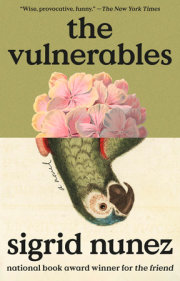
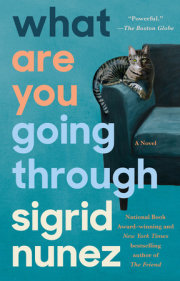
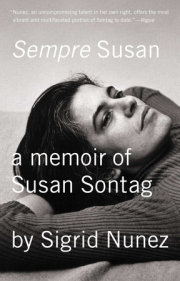
Sigrid Nunez is the author of nine novels, including The Friend, What Are You Going Through, and The Vulnerables. She is also the author of Sempre Susan: A Memoir of Susan Sontag. She has received the National Book Award, the Whiting Award, a Berlin Prize Fellowship, the Rosenthal Family Foundation Award, the Rome Prize in Literature, a Guggenheim Fellowship, and a Windham-Campbell Prize. Her work has been translated into thirty-five languages. She lives in New York City. View titles by Sigrid Nunez

Available for sale exclusive:
•     Guam
•     Minor Outl.Ins.
•     North Mariana
•     Philippines
•     Puerto Rico
•     Samoa,American
•     US Virgin Is.

Available for sale non-exclusive:
•     Afghanistan
•     Aland Islands
•     Albania
•     Algeria
•     Andorra
•     Angola
•     Anguilla
•     Antarctica
•     Argentina
•     Armenia
•     Aruba
•     Austria
•     Azerbaijan
•     Bahrain
•     Belarus
•     Belgium
•     Benin
•     Bhutan
•     Bolivia
•     Bonaire, Saba
•     Bosnia Herzeg.
•     Bouvet Island
•     Brazil
•     Bulgaria
•     Burkina Faso
•     Burundi
•     Cambodia
•     Cape Verde
•     Centr.Afr.Rep.
•     Chad
•     Chile
•     China
•     Colombia
•     Comoro Is.
•     Congo
•     Cook Islands
•     Costa Rica
•     Croatia
•     Cuba
•     Curacao
•     Czech Republic
•     Dem. Rep. Congo
•     Denmark
•     Djibouti
•     Dominican Rep.
•     Ecuador
•     Egypt
•     El Salvador
•     Equatorial Gui.
•     Eritrea
•     Estonia
•     Ethiopia
•     Faroe Islands
•     Finland
•     France
•     Fren.Polynesia
•     French Guinea
•     Gabon
•     Georgia
•     Germany
•     Greece
•     Greenland
•     Guadeloupe
•     Guatemala
•     Guinea Republic
•     Guinea-Bissau
•     Haiti
•     Heard/McDon.Isl
•     Honduras
•     Hong Kong
•     Hungary
•     Iceland
•     Indonesia
•     Iran
•     Iraq
•     Israel
•     Italy
•     Ivory Coast
•     Japan
•     Jordan
•     Kazakhstan
•     Kuwait
•     Kyrgyzstan
•     Laos
•     Latvia
•     Lebanon
•     Liberia
•     Libya
•     Liechtenstein
•     Lithuania
•     Luxembourg
•     Macau
•     Macedonia
•     Madagascar
•     Maldives
•     Mali
•     Marshall island
•     Martinique
•     Mauritania
•     Mayotte
•     Mexico
•     Micronesia
•     Moldavia
•     Monaco
•     Mongolia
•     Montenegro
•     Morocco
•     Myanmar
•     Nepal
•     Netherlands
•     New Caledonia
•     Nicaragua
•     Niger
•     Niue
•     Norfolk Island
•     North Korea
•     Norway
•     Oman
•     Palau
•     Palestinian Ter
•     Panama
•     Paraguay
•     Peru
•     Poland
•     Portugal
•     Qatar
•     Reunion Island
•     Romania
•     Russian Fed.
•     Rwanda
•     Saint Martin
•     San Marino
•     SaoTome Princip
•     Saudi Arabia
•     Senegal
•     Serbia
•     Sint Maarten
•     Slovakia
•     Slovenia
•     South Korea
•     South Sudan
•     Spain
•     St Barthelemy
•     St.Pier,Miquel.
•     Sth Terr. Franc
•     Sudan
•     Suriname
•     Svalbard
•     Sweden
•     Switzerland
•     Syria
•     Tadschikistan
•     Taiwan
•     Thailand
•     Timor-Leste
•     Togo
•     Tokelau Islands
•     Tunisia
•     Turkey
•     Turkmenistan
•     Ukraine
•     Unit.Arab Emir.
•     Uruguay
•     Uzbekistan
•     Vatican City
•     Venezuela
•     Vietnam
•     Wallis,Futuna
•     West Saharan

Not available for sale:
•     Antigua/Barbuda
•     Australia
•     Bahamas
•     Bangladesh
•     Barbados
•     Belize
•     Bermuda
•     Botswana
•     Brit.Ind.Oc.Ter
•     Brit.Virgin Is.
•     Brunei
•     Cameroon
•     Canada
•     Cayman Islands
•     Christmas Islnd
•     Cocos Islands
•     Cyprus
•     Dominica
•     Falkland Islnds
•     Fiji
•     Gambia
•     Ghana
•     Gibraltar
•     Grenada
•     Guernsey
•     Guyana
•     India
•     Ireland
•     Isle of Man
•     Jamaica
•     Jersey
•     Kenya
•     Kiribati
•     Lesotho
•     Malawi
•     Malaysia
•     Malta
•     Mauritius
•     Montserrat
•     Mozambique
•     Namibia
•     Nauru
•     New Zealand
•     Nigeria
•     Pakistan
•     PapuaNewGuinea
•     Pitcairn Islnds
•     S. Sandwich Ins
•     Seychelles
•     Sierra Leone
•     Singapore
•     Solomon Islands
•     Somalia
•     South Africa
•     Sri Lanka
•     St. Helena
•     St. Lucia
•     St. Vincent
•     St.Chr.,Nevis
•     Swaziland
•     Tanzania
•     Tonga
•     Trinidad,Tobago
•     Turks&Caicos Is
•     Tuvalu
•     USA
•     Uganda
•     United Kingdom
•     Vanuatu
•     Western Samoa
•     Yemen
•     Zambia
•     Zimbabwe

About

NAMED A BEST BOOK OF THE SUMMER BY LOS ANGELES TIMES, THE BOSTON GLOBE, TIME, HARPER'S BAZAAR, THE MILLIONS, BOOK RIOT, AND TOWN & COUNTRY

“Stories that remind you why Sigrid Nunez is one of our best writers. Her first collection of short fiction, It Will Come Back to You, is threaded with erudition but never pretentious.” —The New York Times

"It Will Come Back To You should make you want to imbibe every word Nunez has ever written." —The Times Literary Supplement (UK)

"One of the great writers of our time." —Los Angeles Times

The first ever collection of short stories from the New York Times bestselling, National Book Award-winning author of The Friend


Over the course of thirty years, Sigrid Nunez has become one of contemporary fiction’s most distinctive voices, producing nine penetrating, profound novels celebrated by fans and critics alike. Revered for their warm, unadorned style, Nunez’s books are “as sophisticated as they are straightforward” (New York Times Magazine), melding a “wry, withering wit” (NPR) with “explosions of pathos” (Washington Post) to conjure “world[s] of insight into death, grief, art, and love” (Wall Street Journal).

But she has not, until now, produced a book of stories. In It Will Come Back to You, Nunez brings together thirteen of her best stories from the decades-long sweep of her career, tracing the origins of her style and her remarkable artistic range. Moving from the momentous to the mundane, Nunez maintains her expert balance between gravity and levity while probing the philosophical questions that illuminate her work.

What New York Times critic Dwight Garner says of Nunez’s novels is true of these stories as well: “They are . . . wise, provocative, funny—good and strong company.”

Excerpt

Philosophers

The whole world can be divided into those who write and those who do not write, wrote Kierkegaard. Not that I've been reading Kierkegaard. I found these words copied down in an old school notebook. The notebook I found while cleaning out the storage space I rent in the basement of my apartment building. Not a chore I enjoy: throwing out stuff I haven't looked at for years to make room for other stuff I know I won't look at for years. When I dump the old stuff in the trash, I am blessed with a moment's elation. But as soon as the empty space is full again, I feel a heave of something like nausea.

I once heard about a woman who watched her house go up in flames from a diner across the street where she sat wrapped in a blanket, drinking coffee. I felt the most amazing sense of freedom, she said. Like I could start my whole life over. In my head this woman sits in a niche alongside another woman I heard about (single, childless) who claimed that, in the space on forms where you're asked whom to call in an emergency, she put "Barack Obama." Women like these are my saints.

Not that I've never read Kierkegaard. The notebook is from a philosophy course I took when I was in college. I still have the books from that course. They belong to the part of my library-the far greater part-that I know I'll probably never read again and plan to get rid of the next time the apartment is painted.

So I have studied Kierkegaard, and the chinless, slope-shouldered professor who to every lecture wore the same tan wide-wale corduroy pants and too-tight navy-blue jacket stands out in memory. But when I think of Søren Kierkegaard, what's the first thing that comes to mind? That Danish mothers used to warn their children not to do something that might make them ridiculous by saying "Don't be a Søren."

In high school I knew a boy who managed to get everyone to call him Ace, who often began sentences with some variant of There are two kinds of people in the world. Mrs. Mint, who was both our homeroom and our senior English teacher, called him "the philosopher."

There were two kinds of people in the world: those you trusted with your car and those you didn't.

Ace was almost two years older than the rest of his class because a near-fatal viral infection in childhood had caused him to start school much later than he should have. He drove a gunmetal Chevy convertible with oxblood interior that made me think of a gutted shark.

There was the kind of person who said, Let's split the check, and the kind who reminded you you'd had the extra beer.

What could have been annoying was charming, or, at least, tolerable, because Ace had the cuteness of a Brat Pack star-though this was many years before The Outsiders. If anything was annoying, it was Mrs. Mint repeating that Ace looked like James Dean, which just wasn't true, even if we knew she was really talking about his aura.

Mrs. Mint was an unhappy woman with tastefully teased hair and large, distracting breasts. Her aura was that of a woman whose husband had married her for those breasts and was now tired of her. She often sat on her desk with her shapely legs crossed, one foot jiggling nonstop. This, too, was distracting-especially if you'd heard it said that a person engaged in this nervous habit was unconsciously masturbating.

Whatever text we happened to be studying, Mrs. Mint seemed able to find an excuse to lecture us on the dangers of marrying too young, or in believing what we saw about love at the movies. She wasn't dislikable-compared to other teachers, she knew her stuff and had a pretty decent sense of humor-but being cooped up with her for a whole period on her darker days could be taxing. When the bell rang, you'd see an unusually large number of kids hitting the water fountain outside the room before moving on to next class.

Mrs. Mint loved her little philosopher, openly flirting with him, her foot going like crazy, and Ace ate it up, not caring how much he got teased for it. He didn't appear to be fazed, either, by the fact that he knew Mr. Mint, who owned Mint Condition, a repair shop that specialized in antique motor vehicles, and for whom Ace worked from time to time, hand-polishing cars. As a boss, Ace reported, Mr. Mint was totally cool, but of course that didn't mean he was a great husband.

Toward the end of the school year, due to what could only have been some act of magic, I got to date Ace, and the classroom flirting started to bother me. In fact, at that time, unhappily married women got on my nerves. They seemed to be everywhere, including at home, and I just wanted to shake them all and scream at them all Who forced you to get married!

Ace came from what used to be called, hushedly, a bad home, one of those nice, simple descriptions-like nervous breakdown, or retarded-which society was about to decide shouldn't be used anymore, even though they expressed perfectly what they meant. The few times I was at his house his foxy, if slovenly, blond mother was usually shut up in her bedroom, sleeping it off. Needless to say, there were two kinds of fathers in the world, and Ace made sure I never met his. There was a chubby, special-needs younger sister and a fluffy, snow-white dog that watched Ace's every move with the melting eyes of a new bride. Their prefab home listed like a houseboat and reeked of vanilla White Owl cigars and unwashed dishes. I once saw a handgun sitting out in plain view in the living room. "It's not loaded," Ace said, whisking it into a drawer, as if that had been my concern.

Unlike the rest of the house, Ace's room was the picture of neatness, the bed so tightly made you could have played jacks on it. That's not what we played on it.

Mrs. Mint was wrong, the movies were right. I was seventeen, and my sweetest dream had come true. I rode in that convertible, kneeling on the seat: a queen in a chariot. One day, in homeroom, I caught Mrs. Mint looking at me as I anxiously watched the door for Ace, who was late that morning. Though her mouth smiled, I saw the wish in her eyes before she could hood it: the woman wanted me dead.

With love come new instincts. When I confronted Ace he shook his head as if he was disappointed in me, then addressed me in the slow, deliberate speech he always used with his sister. He and I were dating. He and I were not engaged. He and I were not even going steady (this with a mocking cringe, for of course he was too old for such crap). And besides, he was leaving.

It was true, pretend all I wanted that it was not. While the rest of us had been filling out college applications or weighing other post-graduation plans, Ace belonged to a group of boys who knew that it was written: They were going to war.

The whole time Ace was explaining, he was stripping off my clothes. I would remember this: how he would undress me like a woman, and later, when it was time for me to go and I was too shaky and clingy to do it myself, he would patiently dress me, head to foot, like a child.

Years later, I would date a man who, as a teenager, had been seduced by one of his mother's friends and who was still brooding about it. When a woman had a story like his to tell, he said, everyone saw her as a victim. But a guy crying rape because an older woman had thrown her hot, experienced body at him ran the risk of being laughed out of the room. (Don't be a Søren.) As for Ace and Mrs. Mint, it was unimaginable that he would ever see himself as anything but insanely lucky, a young stud who'd made a spectacular conquest he would tell the whole world about if he could.

Where we came from, you thought not twice but many times before you'd do anything that would cost someone their job. And, besides, who knew what Mrs. Mint's husband might do to her-and/or to Ace. (I had a pretty good idea what Ace would do to me.) It was fortunate that these were the last days of school. English was my best subject, Mrs. Mint had been one of my favorite teachers, the first person I turned to for a letter of recommendation for college. Now I could not look at her without seeing how Ace must compare us, the mere thought of those breasts in the nude like a knife twisted between mine.

"But she's so old," I said, in a feeble attempt at bitchery. In fact, she wasn't that many years older than Ace. I cried to learn that when they were alone together she didn't call him Ace, she called him Frank. And yet, in my broken heart, I think I knew-cold comfort though it was-that he probably wasn't all that different with her than he was with me. Loving women to death was not the same thing as taking them seriously. A major concern about his future that he'd confided to me was that, although he knew for sure he wanted to be a father someday, he had a hard time picturing himself settling down forevermore with one wife. And that summer, working as a lifeguard at the town pool, he gathered a few more girls and women to his smooth, tanned chest.

It was understood that once he left for basic training it would be over between us. And that's when my own little world divided in two: first love, before and after.

Spring break of my freshman year, I was home from school, so I got to see him one last time. And what kind of girl makes a guy wear a condom the night before he goes off to war?

It didn't matter whether I wanted the baby or not, my body was having none of it. I could not keep one Saltine down. The doctor said mine was the worst case he'd ever seen. My mother, who'd had the same problem in her day, guessed the likely outcome and persuaded me to put off telling Ace. She and my father had finally separated, and she and I had become each other's best friend. Two females bereft of their men, so helpless and abandoned. So scared. She explained that a miscarriage was sometimes Nature's way of getting rid of a baby that, for whatever reason, would not have been normal and healthy if it had survived. I thought of Ace's sister, but instead of relief came atrocious spasms of want and love.

My mother had been fond of Ace. She made me see that to burden him with my own trouble-to lob this particular bomb at a man facing who knew what horrors at war-well, why would I want to do that?

"Tell him later if you have to," she said.

I never told him at all.

He wrote me only once the whole year he was gone, a letter so lacking in information that I was left to imagine for myself what it was like in that burning land with "good soldiers and bad soldiers" and "two kinds of Vietnamese." And though he signed the letter "Love," there was no love-talk in it. The shame I felt because of his misspellings and other mistakes, a shame I hadn't felt before-nothing hurt worse than that.

I'd chosen a school only about a hundred miles from home, but in the way that can happen once you leave it, home-and with it the whole past, as it seemed-felt more and more like a foreign country. Nostalgia is a baffling emotion when you're still just a kid. You have no idea what to do with it. My memories of growing up were mostly happy, but rather than seek out old places and good old friends, I stayed shut in the house whenever I was back, feeling like a stranger in town, a stranger who might not be welcome. The way to live, of course, was to avoid looking back. To look back was to be reminded that all this-whatever you saw and touched and loved-would also change. Would pass. The way to live was as if you had just been born: a person to whom anything might happen. College-mine, anyway-turned out to be a serious, competitive place that asked you to see yourself as one to whom not just anything but something extraordinary could happen. Women, especially, were expected to reach high-for things that women before them could never have. Whenever I did look back, and saw how narrow an escape mine had been, my head swam. By the time I finished college, both my parents would have moved on-he, west; she, south-to new jobs, new spouses, new homes. I would stay where I was, first to attend graduate school, then to teach, and thus-not counting the three years I lived on fellowships abroad-would end up with deeper roots in this university town than in the town where I grew up.

I heard that Ace came back from his tour of duty, but he didn't get in touch with me, and the older, prouder woman I had become would not get in touch with him.

The rest of his story is quickly told. I was told it more than twenty years ago, by Mrs. Mint, in a letter signed "Amelia."

"First of all, I want to say congratulations on your book. I have often wondered what happened to you, and as your former teacher I can't tell you how pleased and proud your being a published author makes me feel. In fact, that was my dream, too, once upon a time, to become a writer. (That and living in Europe.) This was my main reason for writing you today, but I do have something more I'd like to share.

"Do you remember Frank Dugger? I don't know if you're aware that after graduation he joined the Army and was sent to Vietnam. He was lucky, he came back safe and sound, spared both the bodily harm and the emotional devastation suffered by so many others who served, including, it grieves me to say, a number of my own former students. You may be surprised to hear that Frank became my second husband. We had two very happy years together which, besides other great joys, brought us a son, Christopher. Then a terrible thing happened. Frank became ill. He was so young and strong that at first we thought it couldn't be serious, but it turned out to be cancer and at a very advanced stage at that. In fact, from the time of his first symptom to the day of his passing was a mere ten weeks.

“I know this is very sad news for me to be telling you out of the blue. But I remember that you two were friends, and I thought you’d want to know. You might want to know also that although he suffered a lot he never lost his spirit, and he wasn’t bitter about dying before his time. Frank was always a bit of a philosopher, and somehow he found a way to come to terms with how such a bad thing could happen to him. He didn’t believe in God, but in the end, and in spite of all the pain, he died in a state of acceptance. I do believe in God, and for a long time I hated Him for letting Frank survive the war only to take him away like that, when the happiest part of his life had just begun. But over the years I have learned acceptance, too. Mostly now I try to be grateful for the wonderful time that we did have together. And I will always thank God for sending this beautiful young man to save me, by which I mean that, when I was so hopeless I could hardly face the day, he made me believe in love again.”


It was the kind of letter in which you might expect to find inserted a photo or two, but there was none. Instead, the image that haunted me for days afterward sprang out of pure fantasy: Ace holding Mrs. Mint in his arms while she nursed Baby Christopher.


Those who write, according to Kierkegaard, write about despair, and if those who do not write were able to write, they would write about the same thing. “Little Kierkegaard,” people called him. A powerful mind in a weakling’s body. He had a crooked back, comically thin legs, and an ugly, rasping voice. At twenty-four, he fell in love for the first time in his life, and at first sight, with a fourteen-year-old girl, Regina. When she reached seventeen, he proposed, and she, equally ardent, accepted. But to love and be loved proved too much for him. There followed a bedeviled engagement, during which he drove both himself and the poor girl nearly mad. After a year he decided that any marriage of his would be cursed. Over his loving fiancée he chose “my most faithful mistress melancholy.” And, in a scheme that he hoped would let Regina down easier, he pretended that all along he’d only been deceiving her.


Though all of Copenhagen was scandalized at Kierkegaard’s jilting of Regina, it was not this that made the name Søren synonymous with twit throughout Scandinavia. According to my notes, that was the result of something known as the Corsair affair. The Corsair was a popular scandal sheet with which Kierkegaard began a feud after the Corsair’s editor, in an article published in a different journal, wrote something critical of Kierkegaard’s work. Kierkegaard’s response included a scathing attack on the Corsair, in which he went so far as to invite the paper to do him the honor of abusing him, which obliged with a yearlong barrage of lampoons and caricatures so vile that he could not leave his house without being gawked at and taunted, for everything from his writing to his uneven trouser legs.


Despite her declaration that she would die if he failed to marry her, Regina quickly married someone else. This was a blow to Kierkegaard, but his love survived. Once, he had hoped that, as his wife, Regina might save him by bringing him into the fold of ordinary human beings. Instead, she made me a poet, he said. She was his muse, his Beatrice. He never fell in love with anyone else, and he never married. Alone, he begat existentialism. He knew that he was doomed to a short life on earth, and he wrote and he wrote and he wrote.

Praise

Praise for It Will Come Back to You

“[Nunez] is one of American fiction’s most crisp and realized voices….It Will Come Back to You is a reminder that she’s among the best we have. I’d rather read one of her books than almost anyone else’s.” Dwight Garner, The New York Times

It Will Come Back To You should make you want to imbibe every word Nunez has ever written. In a publishing landscape ravaged by the cult of celebrity and algorithmic shallowness, the fact that such a profound, quirky writer still garners so much acclaim, not to mention a sizeable readership, is similarly a source of hope.” The Times Literary Supplement (UK)

“One of the great writers of our time…Reading [Nunez's] work feels like having lunch with your smartest, wisest, most empathetic friend.” —Los Angeles Times

“[Nunez] can turn the everyday into something quietly devastating, then slip in a line that makes you laugh despite yourself.” —Oprah Daily

"Each [story] resonates clearly with the warm timbre of her voice: simple, unadorned prose and mundane setups, from which she consistently manages to tease out glimpses of truth, elusive and profound.” —NPR

“Like all of her writing, Nunez injects these stories with a deep tenderness and a wry sense of humor, all the while challenging our conceptions of what it means to live an ordinary life.” Harper's Bazaar

"Nunez dazzles in her debut collection of stories, highlighting characters as they map the contours of their inner lives." The Boston Globe

“Nunez’s fiction doesn’t shy away from embittering things or from confronting grief head-on, even as it offers its readers humor, warmth, sweetness—comfort in the wake of the truth.” The Boston Globe

“Sharp, funny and insightful, these quick-reads make for good company.” Los Angeles Magazine

"[A] masterful career-spanning story collection.… Nunez’s sharp wit remains a steady presence across the collection, roaming freely from one heavy subject to the next without ever slipping into sentimentality. It’s a treasure trove.” —Publishers Weekly (STARRED REVIEW)

“All of the stories in the brilliant It Will Come Back to You employ Nunez’s genius at turning the anodyne into something unex­pected and startling...Nunez is masterfuL...The stories in It Will Come Back to You showcase a writer at her best.”BookPage (STARRED REVIEW)

“Nunez delivers vivid portraits of people living quiet lives of desperation in these sterling short stories… A welcome addition to an already much esteemed body of work.” —Kirkus Reviews (STARRED REVIEW)

“Dazzling…Nunez has a gift for surprise.” Booklist (STARRED REVIEW)

Praise for Sigrid Nunez


“Nunez has a wry, withering wit.” —NPR

“Nunez’s prose itself comforts us. Her confidence and direct style uplifts—the music in her sentences, her deep and varied intelligence.” —The New York Times Book Review

“Nunez has exhibited a gift for storytelling forms that smuggle dark matter into books, which nonetheless, proceed with bright, good humor.” —The New York Times Magazine

“A forceful novel by a writer of uncommon talent.” New York Times

Author

© Adam Lerner
Sigrid Nunez is the author of nine novels, including The Friend, What Are You Going Through, and The Vulnerables. She is also the author of Sempre Susan: A Memoir of Susan Sontag. She has received the National Book Award, the Whiting Award, a Berlin Prize Fellowship, the Rosenthal Family Foundation Award, the Rome Prize in Literature, a Guggenheim Fellowship, and a Windham-Campbell Prize. Her work has been translated into thirty-five languages. She lives in New York City. View titles by Sigrid Nunez

Rights

Available for sale exclusive:
•     Guam
•     Minor Outl.Ins.
•     North Mariana
•     Philippines
•     Puerto Rico
•     Samoa,American
•     US Virgin Is.

Available for sale non-exclusive:
•     Afghanistan
•     Aland Islands
•     Albania
•     Algeria
•     Andorra
•     Angola
•     Anguilla
•     Antarctica
•     Argentina
•     Armenia
•     Aruba
•     Austria
•     Azerbaijan
•     Bahrain
•     Belarus
•     Belgium
•     Benin
•     Bhutan
•     Bolivia
•     Bonaire, Saba
•     Bosnia Herzeg.
•     Bouvet Island
•     Brazil
•     Bulgaria
•     Burkina Faso
•     Burundi
•     Cambodia
•     Cape Verde
•     Centr.Afr.Rep.
•     Chad
•     Chile
•     China
•     Colombia
•     Comoro Is.
•     Congo
•     Cook Islands
•     Costa Rica
•     Croatia
•     Cuba
•     Curacao
•     Czech Republic
•     Dem. Rep. Congo
•     Denmark
•     Djibouti
•     Dominican Rep.
•     Ecuador
•     Egypt
•     El Salvador
•     Equatorial Gui.
•     Eritrea
•     Estonia
•     Ethiopia
•     Faroe Islands
•     Finland
•     France
•     Fren.Polynesia
•     French Guinea
•     Gabon
•     Georgia
•     Germany
•     Greece
•     Greenland
•     Guadeloupe
•     Guatemala
•     Guinea Republic
•     Guinea-Bissau
•     Haiti
•     Heard/McDon.Isl
•     Honduras
•     Hong Kong
•     Hungary
•     Iceland
•     Indonesia
•     Iran
•     Iraq
•     Israel
•     Italy
•     Ivory Coast
•     Japan
•     Jordan
•     Kazakhstan
•     Kuwait
•     Kyrgyzstan
•     Laos
•     Latvia
•     Lebanon
•     Liberia
•     Libya
•     Liechtenstein
•     Lithuania
•     Luxembourg
•     Macau
•     Macedonia
•     Madagascar
•     Maldives
•     Mali
•     Marshall island
•     Martinique
•     Mauritania
•     Mayotte
•     Mexico
•     Micronesia
•     Moldavia
•     Monaco
•     Mongolia
•     Montenegro
•     Morocco
•     Myanmar
•     Nepal
•     Netherlands
•     New Caledonia
•     Nicaragua
•     Niger
•     Niue
•     Norfolk Island
•     North Korea
•     Norway
•     Oman
•     Palau
•     Palestinian Ter
•     Panama
•     Paraguay
•     Peru
•     Poland
•     Portugal
•     Qatar
•     Reunion Island
•     Romania
•     Russian Fed.
•     Rwanda
•     Saint Martin
•     San Marino
•     SaoTome Princip
•     Saudi Arabia
•     Senegal
•     Serbia
•     Sint Maarten
•     Slovakia
•     Slovenia
•     South Korea
•     South Sudan
•     Spain
•     St Barthelemy
•     St.Pier,Miquel.
•     Sth Terr. Franc
•     Sudan
•     Suriname
•     Svalbard
•     Sweden
•     Switzerland
•     Syria
•     Tadschikistan
•     Taiwan
•     Thailand
•     Timor-Leste
•     Togo
•     Tokelau Islands
•     Tunisia
•     Turkey
•     Turkmenistan
•     Ukraine
•     Unit.Arab Emir.
•     Uruguay
•     Uzbekistan
•     Vatican City
•     Venezuela
•     Vietnam
•     Wallis,Futuna
•     West Saharan

Not available for sale:
•     Antigua/Barbuda
•     Australia
•     Bahamas
•     Bangladesh
•     Barbados
•     Belize
•     Bermuda
•     Botswana
•     Brit.Ind.Oc.Ter
•     Brit.Virgin Is.
•     Brunei
•     Cameroon
•     Canada
•     Cayman Islands
•     Christmas Islnd
•     Cocos Islands
•     Cyprus
•     Dominica
•     Falkland Islnds
•     Fiji
•     Gambia
•     Ghana
•     Gibraltar
•     Grenada
•     Guernsey
•     Guyana
•     India
•     Ireland
•     Isle of Man
•     Jamaica
•     Jersey
•     Kenya
•     Kiribati
•     Lesotho
•     Malawi
•     Malaysia
•     Malta
•     Mauritius
•     Montserrat
•     Mozambique
•     Namibia
•     Nauru
•     New Zealand
•     Nigeria
•     Pakistan
•     PapuaNewGuinea
•     Pitcairn Islnds
•     S. Sandwich Ins
•     Seychelles
•     Sierra Leone
•     Singapore
•     Solomon Islands
•     Somalia
•     South Africa
•     Sri Lanka
•     St. Helena
•     St. Lucia
•     St. Vincent
•     St.Chr.,Nevis
•     Swaziland
•     Tanzania
•     Tonga
•     Trinidad,Tobago
•     Turks&Caicos Is
•     Tuvalu
•     USA
•     Uganda
•     United Kingdom
•     Vanuatu
•     Western Samoa
•     Yemen
•     Zambia
•     Zimbabwe