Close Modal

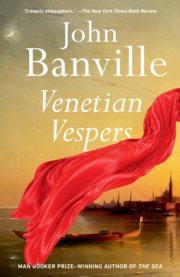
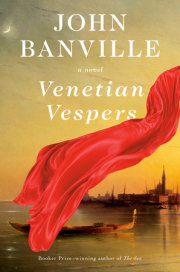
Venetian Vespers

A Novel

Look inside
Large Print (Large Print - Tradepaper)
$32.00 US
6.05"W x 9.19"H x 0.85"D   (15.4 x 23.3 x 2.2 cm) | 14 oz (403 g) | 12 per carton
On sale Oct 07, 2025 | 416 Pages | 9798217170166
Sales rights: US, Canada, Open Mkt

See Additional Formats
A masterful, enthralling new novel from the Booker Prize winner

Everything was a puzzle, everything a trap set to mystify and hinder me . . .

1899. As the new century approaches, struggling English writer Evelyn Dolman—a hack, by his own description—marries Laura Rensselaer, daughter of an American oil tycoon. Evelyn anticipates that he and Laura will inherit a substantial fortune and lead a comfortable, settled life. But his hopes are dashed when a mysterious rift between Laura and her father, just before the patriarch’s death, leads to her disinheritance.

The unhappy newlyweds travel to Venice to celebrate the New Year at the Palazzo Dioscuri, ancestral home of the charming but treacherous Count Barbarigo. From their first moments at the palazzo, a series of seemingly otherworldly occurrences begin to accumulate. Evelyn’s already frayed nerves disintegrate further: could it be the mist blanketing the floating city, or is he losing his mind?

Venetian Vespers is a haunting, atmospheric noir with a surprise around every cobwebbed corner: a fitting return by one of the most sophisticated stylists of our time.
1

† Dusk, a deserted room, a scrap of black silk on a marble table, darkening waters beyond. This was the scene, unpeopled, dim and silent, that I had been dreaming of for months, often on two or three consecutive nights, always the same dream, the same tableau, more or less, more than less. What did it mean, what did it signify? I did not know, could not guess, and the enigma of it troubled me almost as much as did the dream itself. I thought it must be to do in some way with Venice, since it was in Venice that my wife and I were to pass the first months of the new year—­and of the new century, as it happened—­and naturally I was much preoccupied with that mysterious, not to say phantasmal, city set, impossibly, in the midst of a swamp.

The most remarkable aspect of the dream, aside from its repetitiveness, was that the few objects that appeared in it—­the table, the handful of crumpled fabric, the window giving onto what I knew must be the lagoon—­all appeared somehow familiar to me, so much so that when I started awake in bafflement and distress, with a dry mouth and in a tangle of damp bed sheets, I was convinced that the room in the dream was a room in Venice that I had visited, and had more than visited, had lodged in. Yet how could that be, since I did not know the city, had never been there?

But then, I told myself, trying to make sense of it, is that not the case with all of the places, things, and people we dream of, that they seem mundanely familiar and at the same time inexpressibly strange?

Dolman is the name, Evelyn Dolman. I am by trade a man of letters. You might have heard of me in my day, for I had a middling reputation in the period coming to be known, in our increasingly Frenchified age, as the fin de siècle, that is, the 1890s. I choose the word “trade” deliberately. I wrote books, stories, plays, and much journalism besides, with the simple and express purpose of establishing a reputation in the world and making a living from it. If I was successful, however moderately, it wasn’t through inspiration—­whatever that may be—­but by dint of rigid application and dedicated labour. My models were the likes of Henry Mayhew, Bernard Shaw, and, of course, H. G. Wells, whom I met once, or at least bumped into, at the offices of some publisher or other.
I took pride in my work. It was solidly and cleanly done, and polished to the best of my ability. My aim was to entertain the reader and, when the opportunity presented itself, to enliven his mind and improve his character. Also—­

Oh, stop. I sound like Uriah Heep. More, I sound like Uriah Heep’s creator. That’s not me. My moderate aims, my craftsman’s pride—­pah!

The fact is, I set out to be a lord of language who in time would be placed among the immortals. Mayhew? A midget. Shaw? Pshaw! And as for that whoremaster Wells, don’t get me started. No, my targets were the mighty beasts of the literary jungle, the Henry Jameses, the George Eliots, the Conrads and the Hardys and the Ford Madox Fords. Not to mention the Flauberts and the Tolstoys. Not to mention the Shakespeares! There was no giant whose mighty shoulders my ambition would not o’ervault, no polished pard whose eye my pen, that steely poignard, would not pierce. What was it poor half-­mad Kleist said to the great Goethe? I shall tear the laurel wreath from thy brow! Well, there would be a forest of wreathless brows before Dolman was done. I would outwrite them all!

Aye, and look what I became: a Grub Street hack.

Let me list my triumphs. The money-­spinner was my Layman’s Guides to the cathedral cities of the south of England, which somewhat to my surprise were warmly received when they appeared annually in a series throughout the 1890s. These handy little volumes continue to sell, in a small way. I notice that my publisher, spineless weasel that he is, has silently removed my name from the title page of the latest reprints. So now I’m one with old Farringdon, my tame antiquarian, whose vast knowledge of rood screens and rose windows and the rest I drew on extensively in the Guides, without, I regret to say, thanks or attribution. Book reviews, short stories, essays on topical issues were taken by all the popular magazines, such as Punch and the Strand. National newspapers regularly commissioned pieces from me, not always of a lightweight nature. There was talk briefly of my being sent to the Cape Colony to report on the warlike intentions of the Boer, but I thought it prudent not to expose my person to the Anglophobia of those trigger-­happy settlers, especially as the commissioning paper was the Sheffield Evening Herald, and the fee would have been commensurate with its provinciality and its modest circulation figures.

Then there was my novel, Poor Souls, written—­no, seared onto the page—­in a five-­week transport of righteous fury at the wretchedness of the lives of London’s indigent classes. The manuscript did a fruitless round of the publishing houses for the best part of a year. In the end I brought it out at my own expense, and was cheated in the process by a rascally printer with premises in Fetter Lane, which subsequently, to my deep satisfaction, burnt to the ground in a conflagration so intense that it melted most of the printing press. The book attracted a single notice, in the Aberyst­wyth Observer, whose semi-­literate reviewer described me as a faux-­Fourierist—­I looked up this Fourier, and failed to see what my polemic had to do with higher mathematics—­and laughed at my “half-­baked social theories” and “emetic flights of sentimental gush.”

My work, then, was—­

But why do I persist in speaking in the past tense? Am I not still here, am I not scribbling still? Look at this nib, moving across the page, with a tiny secret sound all of its own, setting line upon line upon line. Yet I feel that, like the poet Keats, I am leading a posthumous existence, and that already I have made my final and inevitable awkward bow. What happened? Upon what rock did all my plans and grand ambitions founder? The trouble is, it seems, I never got started properly. Ever the vacillator. I think upon that eager tyro I once was and grieve for him and all he might have done; I grieve as I would for a marvellously talented brother, say, another Keats who died disgracefully young.

Given all these disappointed hopes and aims, all this dismal having to make do, you can easily imagine what a shock, nay, what an outrage, it was to find myself at the centre of the dark and tragic events which took place in the first weeks of that winter and which afterwards were the subject of so much prurient and hysterical attention in the public prints—­I almost wrote “that fateful winter,” but, recalling the jeers of a certain Mr. Jones of Aberystwyth, I am henceforth determined to eschew the all too easy clichés which I confess I was prone to employ in the past. It’s true, a woman died, but through no fault of mine, on that I shall continue to insist while I still have breath in my body. Of course, I was portrayed as an out and out blackguard, the lowest of the low, but now I mean to have my say and put on record the truth of what occurred in those strange days at the start of the century. And I trust that my version of this desperate affair will be accepted at face value, and not mistaken for the greenery-­yallery ravings of some aesthetical absinthe-­imbibing décadent of the kind whose vapourings used to be found splattered across the pages of such degenerate and now happily defunct journals as The Yellow Book and The Savoy. Oh, yes—­see me rubbing my hands, see my vengeful grin. When one has been through hell, the burnt flesh burns on.

Before embarking properly on my sombre tale, before land is out of sight, so to speak, I should give some small account of myself as I was, or perhaps I should say as I conceived myself to be, in those days. An Englishman, certainly, of the dark-­haired, stocky type, broad-­shouldered, with a brow neither high nor low; upright in carriage, brisk in action, and, above everything, straight: straight of glance, straight of speech, straight of demeanour. No Beardsley I, no, nor Wilde, either—­the deuce no! I dressed not ostentatiously but with taste and refinement, and was as heedful of my boots as of my linen. Some who knew me might say I was aloof, even a touch arrogant, and it’s true that although my origins were far from aristocratic, I considered myself as fit as any member of the Athenaeum or the Jockey Club to parade the pavements of St. James’s Street or disport myself on the grands boulevards of Paris. And, I would have demanded, why not? Is there not an aristocracy of spirit that transcends the humble status of one’s antecedents?

So there you have me, as I was then, a stiff-­necked, self-­regarding booby, prinked and pomaded, in bowler hat, bow tie, mustard checks, and spats, on the outside manly and self-­satisfied while the inner midget seethed with unquenchable ressentiment and spleen. I imagine the majority of humankind suffers in the same predicament, but most get away with the pretence of being other than they are. It’s a different matter altogether when you have been found out.

After the Venice débâcle, when the grubby finger of suspicion was pointed unwaveringly in my direction, the press had much sport with me, until it lost interest and moved on to taunt and torment some other poor defenceless wretch. I have forced myself to banish from memory most of the vile calumnies to which I was subjected. However, I do recall, word for word, the judgement of one celebrated contemnor, who gave it as his opinion that there was lacking in me “some final, all-­defining measure of gentility and good breeding.” I don’t know how he could make free to judge me so, since I never met the man, but the barb struck deep, deep as to the bone, and lodged there. He might as well have come straight out and called me a low-­born scoundrel, and I’d have minded less. It’s the mildly delivered verdict that reduces the man in the dock to tears.

Tired, suddenly. These restless days, these sleepless nights. Dusk in particular is a trial. They say that sunset at the equator lasts for moments only, and darkness falls almost at once, softly, like a silken veil. Up here there is only a creeping diminution, the failing light clinging on in ever-­weakening desperation, like a consumptive on his deathbed.

It surprises me still, it astonishes me, that I should have, of my own volition, chosen for a wife Laura Rensselaer, she among all the young women of my acquaintance. If, that is, I did choose her, of my own volition.

She had a reputation—­no, not of that kind of reputation, of course. I mean she was spoken of frequently in the fashionable salons and the better clubs. Vivid, that was a word that was often applied to her. And vivid she was, vivid, yet at the same time as wilfully inscrutable as the heroine in a novel of high romance.
BEST BOOK OF THE YEAR: Sunday Times (London) • Times Literary Supplement • The Tablet • Irish Times

Shortlisted for An Post Irish Book Awards - Novel of the Year


“Creepily atmospheric. . . . Bristles with dramatic fodder: family tensions, a vast fortune, a devastatingly lovely expat accompanied by her hard-drinking, insistently charming brother. But what emerges from the dark shadows of the plot is an even darker psychological portrait of a man forced to grapple with his own inner demons.” New York Times Book Review

“A stylish escapade that even Henry James might relish. . . . [from] a master of shadow and suggestion.” —Anna Mundow, Wall Street Journal

“An intricate thriller that is also a slyly fashioned work of art. . . . Plotted so perfectly that it leaves a cleanly satisfying shape in the mind.” Irish Times

“Memorable and disturbing. . . . Expertly put together. . . . Each vividly evoked moment leads on to the next with a deepening sense of intrigue.” The Guardian

“Each of [Banville’s] books is an event, not just for his exuberant energy and consistent sense of purpose as a writer but also for a depth of perspective. . . . His versatility carries on surprising us, and Venetian Vespers pulls off its own particular tricks with devilish aplomb.” Financial Times

“A master of the twisty-turny plot and an able creator of atmospheric settings, Banville has written a stylish, skillfully crafted noir that is quite simply a pleasure to read, and will keep you guessing till the very end.”BookPage (starred)

“Celebrated and virtuoso novelist Banville entwines his gift for historical crime fiction with his most cunning literary artistry in this fever-dream of a tale. . . . Banville is at his Jamesian finest in this beguiling novel of diabolical gambits.” Booklist (starred)

★ “Banville once again proves himself a master of suspense, and he captures a noir version of Venice perfectly. Evelyn is a fascinating character: monstrous, certainly, but is he really being manipulated? Is he manipulating the reader? . . . Dark, twisty, and consistently smart: vintage Banville.” Kirkus (starred)

“An intricate puzzle investigating the erotic yet toxic relationship between a perfidious woman and her susceptible victim.” Library Journal

“Enthralling and utterly transporting. . . . With a gift for words that raises novel-writing to dizzy heights of literary excellence, Banville is producing some of his best work yet. . . . Overflowing with Banville’s masterful and elegant storytelling, and with an enigma at its heart that spreads its tentacles from first page to last, this edgy and endlessly fascinating winter’s tale is a slice of word wizardry that no discerning reader should miss. Lancaster Guardian

“Banville is in playful and mischievous form, entertaining the reader with wonderfully snarky asides while showing off with literary pyrotechnics as only he can. . . . Evelyn Dolman [is] one of the most striking and unforgettable characters Banville has ever created.” The Gloss

“Haunting new work. . . . Startling. . . . Genuinely fascinating. . . . Isn’t intended to be just a page-turner of a mystery. It is so much more.” Steven Whitton, Anniston Star

“The writing is so seductive that the novel is impossible to resist.” Natasha Cooper, Literary Review

“A gripping story. . . . Events unravel at a dizzying pace.” Ariane Bankes, The Tablet

“The writing is mesmerizing, the characterization full and complicated and the plot unexpected.” Aine Toner, Belfast Telegraph

“I was hooked from the very first moment—that image of the still life, so full of dark promise! —and it was an enormous pleasure to read. It creates a perfect, haunting balance of romance and revulsion, and beautifully evokes a shivery, uncanny world of deception and desire. In fact, it felt just like Venice itself.” Bridget Collins, author of The Binding
© Douglas Banville
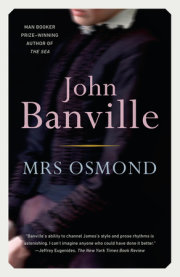
JOHN BANVILLE, the author of seventeen novels, has been the recipient of the Man Booker Prize, the James Tait Black Memorial Prize, the Guardian Fiction Award, the Franz Kafka Prize, a Lannan Literary Award for Fiction, and the Prince of Asturias Award for Literature. He lives in Dublin. View titles by John Banville
Available for sale exclusive:
•     Canada
•     Guam
•     Minor Outl.Ins.
•     North Mariana
•     Philippines
•     Puerto Rico
•     Samoa,American
•     US Virgin Is.
•     USA

Available for sale non-exclusive:
•     Afghanistan
•     Aland Islands
•     Albania
•     Algeria
•     Andorra
•     Angola
•     Antarctica
•     Argentina
•     Armenia
•     Aruba
•     Austria
•     Azerbaijan
•     Bahrain
•     Belarus
•     Belgium
•     Benin
•     Bolivia
•     Bonaire, Saba
•     Bosnia Herzeg.
•     Bouvet Island
•     Brazil
•     Bulgaria
•     Burkina Faso
•     Burundi
•     Cambodia
•     Cameroon
•     Cape Verde
•     Centr.Afr.Rep.
•     Chad
•     Chile
•     China
•     Colombia
•     Comoro Is.
•     Congo
•     Cook Islands
•     Costa Rica
•     Croatia
•     Cuba
•     Curacao
•     Czech Republic
•     Dem. Rep. Congo
•     Denmark
•     Djibouti
•     Dominican Rep.
•     Ecuador
•     Egypt
•     El Salvador
•     Equatorial Gui.
•     Eritrea
•     Estonia
•     Ethiopia
•     Faroe Islands
•     Finland
•     France
•     Fren.Polynesia
•     French Guinea
•     Gabon
•     Georgia
•     Germany
•     Greece
•     Greenland
•     Guadeloupe
•     Guatemala
•     Guinea Republic
•     Guinea-Bissau
•     Haiti
•     Heard/McDon.Isl
•     Honduras
•     Hong Kong
•     Hungary
•     Iceland
•     Indonesia
•     Iran
•     Iraq
•     Israel
•     Italy
•     Ivory Coast
•     Japan
•     Jordan
•     Kazakhstan
•     Kuwait
•     Kyrgyzstan
•     Laos
•     Latvia
•     Lebanon
•     Liberia
•     Libya
•     Liechtenstein
•     Lithuania
•     Luxembourg
•     Macau
•     Macedonia
•     Madagascar
•     Maldives
•     Mali
•     Marshall island
•     Martinique
•     Mauritania
•     Mayotte
•     Mexico
•     Micronesia
•     Moldavia
•     Monaco
•     Mongolia
•     Montenegro
•     Morocco
•     Netherlands
•     New Caledonia
•     Nicaragua
•     Niger
•     Niue
•     Norfolk Island
•     North Korea
•     Norway
•     Oman
•     Palau
•     Palestinian Ter
•     Panama
•     Paraguay
•     Peru
•     Poland
•     Portugal
•     Qatar
•     Reunion Island
•     Romania
•     Russian Fed.
•     Rwanda
•     Saint Martin
•     San Marino
•     SaoTome Princip
•     Saudi Arabia
•     Senegal
•     Serbia
•     Sint Maarten
•     Slovakia
•     Slovenia
•     South Korea
•     South Sudan
•     Spain
•     St Barthelemy
•     St.Pier,Miquel.
•     Sth Terr. Franc
•     Sudan
•     Suriname
•     Svalbard
•     Sweden
•     Switzerland
•     Syria
•     Tadschikistan
•     Taiwan
•     Thailand
•     Timor-Leste
•     Togo
•     Tokelau Islands
•     Tunisia
•     Turkey
•     Turkmenistan
•     Ukraine
•     Unit.Arab Emir.
•     Uruguay
•     Uzbekistan
•     Vatican City
•     Venezuela
•     Vietnam
•     Wallis,Futuna
•     West Saharan
•     Western Samoa

Not available for sale:
•     Anguilla
•     Antigua/Barbuda
•     Australia
•     Bahamas
•     Bangladesh
•     Barbados
•     Belize
•     Bermuda
•     Bhutan
•     Botswana
•     Brit.Ind.Oc.Ter
•     Brit.Virgin Is.
•     Brunei
•     Cayman Islands
•     Christmas Islnd
•     Cocos Islands
•     Cyprus
•     Dominica
•     Falkland Islnds
•     Fiji
•     Gambia
•     Ghana
•     Gibraltar
•     Grenada
•     Guernsey
•     Guyana
•     India
•     Ireland
•     Isle of Man
•     Jamaica
•     Jersey
•     Kenya
•     Kiribati
•     Lesotho
•     Malawi
•     Malaysia
•     Malta
•     Mauritius
•     Montserrat
•     Mozambique
•     Myanmar
•     Namibia
•     Nauru
•     Nepal
•     New Zealand
•     Nigeria
•     Pakistan
•     PapuaNewGuinea
•     Pitcairn Islnds
•     S. Sandwich Ins
•     Seychelles
•     Sierra Leone
•     Singapore
•     Solomon Islands
•     Somalia
•     South Africa
•     Sri Lanka
•     St. Helena
•     St. Lucia
•     St. Vincent
•     St.Chr.,Nevis
•     Swaziland
•     Tanzania
•     Tonga
•     Trinidad,Tobago
•     Turks&Caicos Is
•     Tuvalu
•     Uganda
•     United Kingdom
•     Vanuatu
•     Yemen
•     Zambia
•     Zimbabwe

About

A masterful, enthralling new novel from the Booker Prize winner

Everything was a puzzle, everything a trap set to mystify and hinder me . . .

1899. As the new century approaches, struggling English writer Evelyn Dolman—a hack, by his own description—marries Laura Rensselaer, daughter of an American oil tycoon. Evelyn anticipates that he and Laura will inherit a substantial fortune and lead a comfortable, settled life. But his hopes are dashed when a mysterious rift between Laura and her father, just before the patriarch’s death, leads to her disinheritance.

The unhappy newlyweds travel to Venice to celebrate the New Year at the Palazzo Dioscuri, ancestral home of the charming but treacherous Count Barbarigo. From their first moments at the palazzo, a series of seemingly otherworldly occurrences begin to accumulate. Evelyn’s already frayed nerves disintegrate further: could it be the mist blanketing the floating city, or is he losing his mind?

Venetian Vespers is a haunting, atmospheric noir with a surprise around every cobwebbed corner: a fitting return by one of the most sophisticated stylists of our time.

Excerpt

1

† Dusk, a deserted room, a scrap of black silk on a marble table, darkening waters beyond. This was the scene, unpeopled, dim and silent, that I had been dreaming of for months, often on two or three consecutive nights, always the same dream, the same tableau, more or less, more than less. What did it mean, what did it signify? I did not know, could not guess, and the enigma of it troubled me almost as much as did the dream itself. I thought it must be to do in some way with Venice, since it was in Venice that my wife and I were to pass the first months of the new year—­and of the new century, as it happened—­and naturally I was much preoccupied with that mysterious, not to say phantasmal, city set, impossibly, in the midst of a swamp.

The most remarkable aspect of the dream, aside from its repetitiveness, was that the few objects that appeared in it—­the table, the handful of crumpled fabric, the window giving onto what I knew must be the lagoon—­all appeared somehow familiar to me, so much so that when I started awake in bafflement and distress, with a dry mouth and in a tangle of damp bed sheets, I was convinced that the room in the dream was a room in Venice that I had visited, and had more than visited, had lodged in. Yet how could that be, since I did not know the city, had never been there?

But then, I told myself, trying to make sense of it, is that not the case with all of the places, things, and people we dream of, that they seem mundanely familiar and at the same time inexpressibly strange?

Dolman is the name, Evelyn Dolman. I am by trade a man of letters. You might have heard of me in my day, for I had a middling reputation in the period coming to be known, in our increasingly Frenchified age, as the fin de siècle, that is, the 1890s. I choose the word “trade” deliberately. I wrote books, stories, plays, and much journalism besides, with the simple and express purpose of establishing a reputation in the world and making a living from it. If I was successful, however moderately, it wasn’t through inspiration—­whatever that may be—­but by dint of rigid application and dedicated labour. My models were the likes of Henry Mayhew, Bernard Shaw, and, of course, H. G. Wells, whom I met once, or at least bumped into, at the offices of some publisher or other.

I took pride in my work. It was solidly and cleanly done, and polished to the best of my ability. My aim was to entertain the reader and, when the opportunity presented itself, to enliven his mind and improve his character. Also—­

Oh, stop. I sound like Uriah Heep. More, I sound like Uriah Heep’s creator. That’s not me. My moderate aims, my craftsman’s pride—­pah!

The fact is, I set out to be a lord of language who in time would be placed among the immortals. Mayhew? A midget. Shaw? Pshaw! And as for that whoremaster Wells, don’t get me started. No, my targets were the mighty beasts of the literary jungle, the Henry Jameses, the George Eliots, the Conrads and the Hardys and the Ford Madox Fords. Not to mention the Flauberts and the Tolstoys. Not to mention the Shakespeares! There was no giant whose mighty shoulders my ambition would not o’ervault, no polished pard whose eye my pen, that steely poignard, would not pierce. What was it poor half-­mad Kleist said to the great Goethe? I shall tear the laurel wreath from thy brow! Well, there would be a forest of wreathless brows before Dolman was done. I would outwrite them all!

Aye, and look what I became: a Grub Street hack.

Let me list my triumphs. The money-­spinner was my Layman’s Guides to the cathedral cities of the south of England, which somewhat to my surprise were warmly received when they appeared annually in a series throughout the 1890s. These handy little volumes continue to sell, in a small way. I notice that my publisher, spineless weasel that he is, has silently removed my name from the title page of the latest reprints. So now I’m one with old Farringdon, my tame antiquarian, whose vast knowledge of rood screens and rose windows and the rest I drew on extensively in the Guides, without, I regret to say, thanks or attribution. Book reviews, short stories, essays on topical issues were taken by all the popular magazines, such as Punch and the Strand. National newspapers regularly commissioned pieces from me, not always of a lightweight nature. There was talk briefly of my being sent to the Cape Colony to report on the warlike intentions of the Boer, but I thought it prudent not to expose my person to the Anglophobia of those trigger-­happy settlers, especially as the commissioning paper was the Sheffield Evening Herald, and the fee would have been commensurate with its provinciality and its modest circulation figures.

Then there was my novel, Poor Souls, written—­no, seared onto the page—­in a five-­week transport of righteous fury at the wretchedness of the lives of London’s indigent classes. The manuscript did a fruitless round of the publishing houses for the best part of a year. In the end I brought it out at my own expense, and was cheated in the process by a rascally printer with premises in Fetter Lane, which subsequently, to my deep satisfaction, burnt to the ground in a conflagration so intense that it melted most of the printing press. The book attracted a single notice, in the Aberyst­wyth Observer, whose semi-­literate reviewer described me as a faux-­Fourierist—­I looked up this Fourier, and failed to see what my polemic had to do with higher mathematics—­and laughed at my “half-­baked social theories” and “emetic flights of sentimental gush.”

My work, then, was—­

But why do I persist in speaking in the past tense? Am I not still here, am I not scribbling still? Look at this nib, moving across the page, with a tiny secret sound all of its own, setting line upon line upon line. Yet I feel that, like the poet Keats, I am leading a posthumous existence, and that already I have made my final and inevitable awkward bow. What happened? Upon what rock did all my plans and grand ambitions founder? The trouble is, it seems, I never got started properly. Ever the vacillator. I think upon that eager tyro I once was and grieve for him and all he might have done; I grieve as I would for a marvellously talented brother, say, another Keats who died disgracefully young.

Given all these disappointed hopes and aims, all this dismal having to make do, you can easily imagine what a shock, nay, what an outrage, it was to find myself at the centre of the dark and tragic events which took place in the first weeks of that winter and which afterwards were the subject of so much prurient and hysterical attention in the public prints—­I almost wrote “that fateful winter,” but, recalling the jeers of a certain Mr. Jones of Aberystwyth, I am henceforth determined to eschew the all too easy clichés which I confess I was prone to employ in the past. It’s true, a woman died, but through no fault of mine, on that I shall continue to insist while I still have breath in my body. Of course, I was portrayed as an out and out blackguard, the lowest of the low, but now I mean to have my say and put on record the truth of what occurred in those strange days at the start of the century. And I trust that my version of this desperate affair will be accepted at face value, and not mistaken for the greenery-­yallery ravings of some aesthetical absinthe-­imbibing décadent of the kind whose vapourings used to be found splattered across the pages of such degenerate and now happily defunct journals as The Yellow Book and The Savoy. Oh, yes—­see me rubbing my hands, see my vengeful grin. When one has been through hell, the burnt flesh burns on.

Before embarking properly on my sombre tale, before land is out of sight, so to speak, I should give some small account of myself as I was, or perhaps I should say as I conceived myself to be, in those days. An Englishman, certainly, of the dark-­haired, stocky type, broad-­shouldered, with a brow neither high nor low; upright in carriage, brisk in action, and, above everything, straight: straight of glance, straight of speech, straight of demeanour. No Beardsley I, no, nor Wilde, either—­the deuce no! I dressed not ostentatiously but with taste and refinement, and was as heedful of my boots as of my linen. Some who knew me might say I was aloof, even a touch arrogant, and it’s true that although my origins were far from aristocratic, I considered myself as fit as any member of the Athenaeum or the Jockey Club to parade the pavements of St. James’s Street or disport myself on the grands boulevards of Paris. And, I would have demanded, why not? Is there not an aristocracy of spirit that transcends the humble status of one’s antecedents?

So there you have me, as I was then, a stiff-­necked, self-­regarding booby, prinked and pomaded, in bowler hat, bow tie, mustard checks, and spats, on the outside manly and self-­satisfied while the inner midget seethed with unquenchable ressentiment and spleen. I imagine the majority of humankind suffers in the same predicament, but most get away with the pretence of being other than they are. It’s a different matter altogether when you have been found out.

After the Venice débâcle, when the grubby finger of suspicion was pointed unwaveringly in my direction, the press had much sport with me, until it lost interest and moved on to taunt and torment some other poor defenceless wretch. I have forced myself to banish from memory most of the vile calumnies to which I was subjected. However, I do recall, word for word, the judgement of one celebrated contemnor, who gave it as his opinion that there was lacking in me “some final, all-­defining measure of gentility and good breeding.” I don’t know how he could make free to judge me so, since I never met the man, but the barb struck deep, deep as to the bone, and lodged there. He might as well have come straight out and called me a low-­born scoundrel, and I’d have minded less. It’s the mildly delivered verdict that reduces the man in the dock to tears.

Tired, suddenly. These restless days, these sleepless nights. Dusk in particular is a trial. They say that sunset at the equator lasts for moments only, and darkness falls almost at once, softly, like a silken veil. Up here there is only a creeping diminution, the failing light clinging on in ever-­weakening desperation, like a consumptive on his deathbed.

It surprises me still, it astonishes me, that I should have, of my own volition, chosen for a wife Laura Rensselaer, she among all the young women of my acquaintance. If, that is, I did choose her, of my own volition.

She had a reputation—­no, not of that kind of reputation, of course. I mean she was spoken of frequently in the fashionable salons and the better clubs. Vivid, that was a word that was often applied to her. And vivid she was, vivid, yet at the same time as wilfully inscrutable as the heroine in a novel of high romance.

Praise

BEST BOOK OF THE YEAR: Sunday Times (London) • Times Literary Supplement • The Tablet • Irish Times

Shortlisted for An Post Irish Book Awards - Novel of the Year


“Creepily atmospheric. . . . Bristles with dramatic fodder: family tensions, a vast fortune, a devastatingly lovely expat accompanied by her hard-drinking, insistently charming brother. But what emerges from the dark shadows of the plot is an even darker psychological portrait of a man forced to grapple with his own inner demons.” New York Times Book Review

“A stylish escapade that even Henry James might relish. . . . [from] a master of shadow and suggestion.” —Anna Mundow, Wall Street Journal

“An intricate thriller that is also a slyly fashioned work of art. . . . Plotted so perfectly that it leaves a cleanly satisfying shape in the mind.” Irish Times

“Memorable and disturbing. . . . Expertly put together. . . . Each vividly evoked moment leads on to the next with a deepening sense of intrigue.” The Guardian

“Each of [Banville’s] books is an event, not just for his exuberant energy and consistent sense of purpose as a writer but also for a depth of perspective. . . . His versatility carries on surprising us, and Venetian Vespers pulls off its own particular tricks with devilish aplomb.” Financial Times

“A master of the twisty-turny plot and an able creator of atmospheric settings, Banville has written a stylish, skillfully crafted noir that is quite simply a pleasure to read, and will keep you guessing till the very end.”BookPage (starred)

“Celebrated and virtuoso novelist Banville entwines his gift for historical crime fiction with his most cunning literary artistry in this fever-dream of a tale. . . . Banville is at his Jamesian finest in this beguiling novel of diabolical gambits.” Booklist (starred)

★ “Banville once again proves himself a master of suspense, and he captures a noir version of Venice perfectly. Evelyn is a fascinating character: monstrous, certainly, but is he really being manipulated? Is he manipulating the reader? . . . Dark, twisty, and consistently smart: vintage Banville.” Kirkus (starred)

“An intricate puzzle investigating the erotic yet toxic relationship between a perfidious woman and her susceptible victim.” Library Journal

“Enthralling and utterly transporting. . . . With a gift for words that raises novel-writing to dizzy heights of literary excellence, Banville is producing some of his best work yet. . . . Overflowing with Banville’s masterful and elegant storytelling, and with an enigma at its heart that spreads its tentacles from first page to last, this edgy and endlessly fascinating winter’s tale is a slice of word wizardry that no discerning reader should miss. Lancaster Guardian

“Banville is in playful and mischievous form, entertaining the reader with wonderfully snarky asides while showing off with literary pyrotechnics as only he can. . . . Evelyn Dolman [is] one of the most striking and unforgettable characters Banville has ever created.” The Gloss

“Haunting new work. . . . Startling. . . . Genuinely fascinating. . . . Isn’t intended to be just a page-turner of a mystery. It is so much more.” Steven Whitton, Anniston Star

“The writing is so seductive that the novel is impossible to resist.” Natasha Cooper, Literary Review

“A gripping story. . . . Events unravel at a dizzying pace.” Ariane Bankes, The Tablet

“The writing is mesmerizing, the characterization full and complicated and the plot unexpected.” Aine Toner, Belfast Telegraph

“I was hooked from the very first moment—that image of the still life, so full of dark promise! —and it was an enormous pleasure to read. It creates a perfect, haunting balance of romance and revulsion, and beautifully evokes a shivery, uncanny world of deception and desire. In fact, it felt just like Venice itself.” Bridget Collins, author of The Binding

Author

© Douglas Banville
JOHN BANVILLE, the author of seventeen novels, has been the recipient of the Man Booker Prize, the James Tait Black Memorial Prize, the Guardian Fiction Award, the Franz Kafka Prize, a Lannan Literary Award for Fiction, and the Prince of Asturias Award for Literature. He lives in Dublin. View titles by John Banville

Rights

Available for sale exclusive:
•     Canada
•     Guam
•     Minor Outl.Ins.
•     North Mariana
•     Philippines
•     Puerto Rico
•     Samoa,American
•     US Virgin Is.
•     USA

Available for sale non-exclusive:
•     Afghanistan
•     Aland Islands
•     Albania
•     Algeria
•     Andorra
•     Angola
•     Antarctica
•     Argentina
•     Armenia
•     Aruba
•     Austria
•     Azerbaijan
•     Bahrain
•     Belarus
•     Belgium
•     Benin
•     Bolivia
•     Bonaire, Saba
•     Bosnia Herzeg.
•     Bouvet Island
•     Brazil
•     Bulgaria
•     Burkina Faso
•     Burundi
•     Cambodia
•     Cameroon
•     Cape Verde
•     Centr.Afr.Rep.
•     Chad
•     Chile
•     China
•     Colombia
•     Comoro Is.
•     Congo
•     Cook Islands
•     Costa Rica
•     Croatia
•     Cuba
•     Curacao
•     Czech Republic
•     Dem. Rep. Congo
•     Denmark
•     Djibouti
•     Dominican Rep.
•     Ecuador
•     Egypt
•     El Salvador
•     Equatorial Gui.
•     Eritrea
•     Estonia
•     Ethiopia
•     Faroe Islands
•     Finland
•     France
•     Fren.Polynesia
•     French Guinea
•     Gabon
•     Georgia
•     Germany
•     Greece
•     Greenland
•     Guadeloupe
•     Guatemala
•     Guinea Republic
•     Guinea-Bissau
•     Haiti
•     Heard/McDon.Isl
•     Honduras
•     Hong Kong
•     Hungary
•     Iceland
•     Indonesia
•     Iran
•     Iraq
•     Israel
•     Italy
•     Ivory Coast
•     Japan
•     Jordan
•     Kazakhstan
•     Kuwait
•     Kyrgyzstan
•     Laos
•     Latvia
•     Lebanon
•     Liberia
•     Libya
•     Liechtenstein
•     Lithuania
•     Luxembourg
•     Macau
•     Macedonia
•     Madagascar
•     Maldives
•     Mali
•     Marshall island
•     Martinique
•     Mauritania
•     Mayotte
•     Mexico
•     Micronesia
•     Moldavia
•     Monaco
•     Mongolia
•     Montenegro
•     Morocco
•     Netherlands
•     New Caledonia
•     Nicaragua
•     Niger
•     Niue
•     Norfolk Island
•     North Korea
•     Norway
•     Oman
•     Palau
•     Palestinian Ter
•     Panama
•     Paraguay
•     Peru
•     Poland
•     Portugal
•     Qatar
•     Reunion Island
•     Romania
•     Russian Fed.
•     Rwanda
•     Saint Martin
•     San Marino
•     SaoTome Princip
•     Saudi Arabia
•     Senegal
•     Serbia
•     Sint Maarten
•     Slovakia
•     Slovenia
•     South Korea
•     South Sudan
•     Spain
•     St Barthelemy
•     St.Pier,Miquel.
•     Sth Terr. Franc
•     Sudan
•     Suriname
•     Svalbard
•     Sweden
•     Switzerland
•     Syria
•     Tadschikistan
•     Taiwan
•     Thailand
•     Timor-Leste
•     Togo
•     Tokelau Islands
•     Tunisia
•     Turkey
•     Turkmenistan
•     Ukraine
•     Unit.Arab Emir.
•     Uruguay
•     Uzbekistan
•     Vatican City
•     Venezuela
•     Vietnam
•     Wallis,Futuna
•     West Saharan
•     Western Samoa

Not available for sale:
•     Anguilla
•     Antigua/Barbuda
•     Australia
•     Bahamas
•     Bangladesh
•     Barbados
•     Belize
•     Bermuda
•     Bhutan
•     Botswana
•     Brit.Ind.Oc.Ter
•     Brit.Virgin Is.
•     Brunei
•     Cayman Islands
•     Christmas Islnd
•     Cocos Islands
•     Cyprus
•     Dominica
•     Falkland Islnds
•     Fiji
•     Gambia
•     Ghana
•     Gibraltar
•     Grenada
•     Guernsey
•     Guyana
•     India
•     Ireland
•     Isle of Man
•     Jamaica
•     Jersey
•     Kenya
•     Kiribati
•     Lesotho
•     Malawi
•     Malaysia
•     Malta
•     Mauritius
•     Montserrat
•     Mozambique
•     Myanmar
•     Namibia
•     Nauru
•     Nepal
•     New Zealand
•     Nigeria
•     Pakistan
•     PapuaNewGuinea
•     Pitcairn Islnds
•     S. Sandwich Ins
•     Seychelles
•     Sierra Leone
•     Singapore
•     Solomon Islands
•     Somalia
•     South Africa
•     Sri Lanka
•     St. Helena
•     St. Lucia
•     St. Vincent
•     St.Chr.,Nevis
•     Swaziland
•     Tanzania
•     Tonga
•     Trinidad,Tobago
•     Turks&Caicos Is
•     Tuvalu
•     Uganda
•     United Kingdom
•     Vanuatu
•     Yemen
•     Zambia
•     Zimbabwe