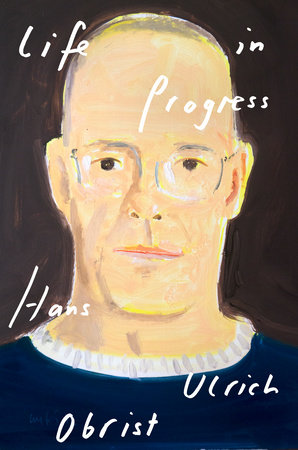
A Childhood on the Border.
The AccidentMay 1968. That’s when I was born.
My parents lived in Weinfelden, in the Swiss canton of Thurgau, but I spent the first few days of my life in Zurich. Then back to Weinfelden, a small town of 8,000 inhabitants, a few kilometers from Lake Constance. It was a kind of dormitory town: many of its inhabitants worked in the larger towns nearby. There was no secondary school, for example, and, to be honest, not a great deal else, at least in terms of culture. I remember a feeling of narrowness: you could see the mountains, not very far away, that blocked the view of the Mediterranean, so to speak. Because of that, from very early on, I had thoughts of a journey, even just a short one, in my head. Weinfelden was very close to Kreuzlingen, as well as to the German university town of Konstanz, both on the shores of that lake where Switzerland, Germany, and Austria meet each other. You can swim from one country to another; or, more simply, cross the borders by car or train. And from my earliest childhood this idea of crossing was a sort of daily routine: my parents liked to buy their eggs and vegetables in Germany because they were cheaper. I soon learned that there were better bookshops and cinemas too; we didn’t really have any cinemas in Thurgau, while in Konstanz they had good film programs for students (it was there that I discovered the films of Andrei Tarkovsky, for example).
So my go-to city was Konstanz, or occasionally St. Gallen, the other university town in the east of Switzerland, famous for its abbey library. My parents took me there when I was six or seven, somewhat at random: this turned out to be a truly fundamental experience, which turned me towards books and a sort of obsession with books. Next to the library were the cloisters; these had been burned down and reconstructed in rococo style, but the library still held manuscripts from the tenth and eleventh centuries. Another interesting aspect of it was the strange experience of space I had in that rococo room with all its vitrines; to walk around in there, you had to wear felt slippers or half soles. The library at St. Gallen is my first memory of a museum, of an encounter with History. That was when it all clicked into place.
And then there was Zurich. My parents often went there on Saturdays to do their shopping. One person there caught my imagination. He was a flower seller on Bahnhofstrasse, a major shopping street. He sold flowers from a kiosk, as well as little drawings for five or ten Swiss francs apiece. The tradition of outsider art in Switzerland—Adolf Wölfli, Aloïse Corbaz—has always fascinated me, and this vagabond street trader was basically one of these outsider artists. He was a sort of Andy Warhol of naive art who went from farm to farm recording all the sounds, conversations, and animal noises of the countryside (perhaps this was the root of my idea of recording everything). Now getting on in years, and clearly unable to make a living from his art, he sold flowers and farm produce in the street and carried on drawing cows. Later, when I was a teenager, his was the second artist’s studio that I visited. He made a kind of cow cinema that showed the Alpine pasture ceremony. By sticking small drawings next to each other, making up a fifty-meter-long reel that he placed in a box with a spooling device, he’d created a low-tech film show. That is just one memory from my childhood, this man selling flowers and drawings, but no doubt an influential one. Even before I spoke to him, he got inside my head; it was a presentiment of things to come. I only glimpsed that at the time.
Another trip I remember well was to Friedrichshafen, in Germany, where I went several times with my parents. This one was important to me because we visited the Zeppelin Museum, another story of travel; we went there by boat from Kreuzlingen, across the great lake of borders.
So all in all, in this Dreiländereck (this place of three countries) borders were part of everyday life. You had to carry your identity card with you at all times—to go to school, or anywhere at all—because you never knew when you might cross over into a neighboring country, Germany or Austria. For me, border checks were a banal fact of life, and as the border was porous I had no fear of customs officials—on the contrary, I was always very excited to cross the border. It wasn’t an obstacle.
In fact, what I was interested in was cities and people. I felt a very strong need to learn, to understand, so much so that I would resist going to bed in order not to lose precious minutes. I saw the city as a place where knowledge abounded—where you might learn and discover new things—which was especially true of Konstanz, with its bookshops and cinemas, and St. Gallen, with its library. Besides, I didn’t have brothers or sisters, and as an only child I felt this urgent need to make connections, establish links, meet people.
My mother was a primary school teacher and my father was an accountant in a building firm. We lived in a typical Swiss middle-class apartment. My grandmothers were both dead, but my mother’s father was still alive. He was very old, in his eighties, and I always loved seeing him, because he had traveled a great deal in his life. As a young man he had suddenly headed off to Madeira, and no one received any news of him for a whole year. He had the traveling bug, and I had obviously inherited it. He had a stamp collection, which I found very impressive; it was his archive, so to speak. He had photo albums, which he would show me, giving a running commentary; he was living proof that it was possible to leave Switzerland, not just to grab a coffee or buy the newspapers, but perhaps never to return. It was clear that his family had forced him to come back, and when he did, he got married. That was the template: a job, a wife, kids, family.
When I was around six, I had an accident that undoubtedly triggered many things in me. I was knocked down by a car that was traveling too fast as I was crossing the street outside school. I was taken to hospital in a serious condition and had the experience of being very near to death. These long weeks in hospital I believe instilled a sense of urgency in me. Hovering between life and death, totally immobilized, I was full of a feeling unfamiliar to a child: that each day could be my last. My mother has always said that I was profoundly altered by the experience. Most people don’t get to rub shoulders with death until later, much later; too late, in a way. It was uncertain whether my condition would improve, or whether I would even survive. Since then, and up until very recently with the exhibition It’s Urgent! organized with Maja Hoffmann at the LUMA Foundation in Arles (2020), I have had this feeling continuously: to get things done. When you are immobilized for months, and for a long time afterwards you can’t do any sport, you develop other interests. In my case, the accident and its aftermath pushed me further towards books.
We are lucky in Switzerland that we get to learn foreign languages from a young age. The concept of multilingualism that Édouard Glissant speaks about is part of the education system. To my childish Swiss German, I added standard German, plus French and Italian. I also learned English, then Spanish, as from the age of eight or nine I saw school as a preparation for traveling abroad. Whenever I had the chance to learn a new language, I jumped at it.
Copyright © 2026 by Hans Ulrich Obrist. All rights reserved. No part of this excerpt may be reproduced or reprinted without permission in writing from the publisher.