From award-winning writer Miljenko Jergović—candid tales that reprise and embroider Bosnia’s rich folklore
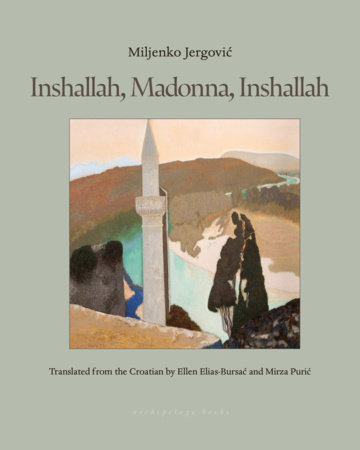
Inshallah, Madonna, Inshallah begins from a point of listening—turning up the radio, dragging a cafe chair closer to the man with the saz, dropping a record needle. In the Sarajevo of Miljenko Jergović’s childhood, folk songs permeated life. Their dusky melodies filled car rides, scored television programs, and echoed down alleyways, hummed drunkenly as daybreak glazed the city’s steeples and minarets. In these nineteen stories, Jergović imagines what might have inspired such wistful tunes, crafting a catalog of source material. The reader is loosed from her contemporary seat as relics of an old world arise. Time slows to an ancient cadence. Here lives become totemic, fate hangs like a scarf over the shoulderblades of heroes and scoundrels alike, while misfortune, hubris, and luck transform individuals into a collective cry. Like an accordion which unfolds to fill a room with sound, the book expands and compresses—by turns bawdy, brutal, funny and wise. Drawn from deep wells of folklore and collective storytelling, Jergovic weaves together an extraordinary ethnography that manages to both critique the imperial domination and strife that has marked the Balkan region for centuries, and to display, carefully and tenderly, the lives of individuals, be they Christian or Muslim. Lives that (inshallah) seem to never end, in that boundless space of myth.
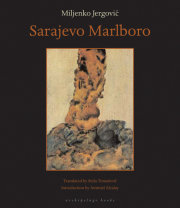
Born in Sarajevo in 1966, Miljenko Jergović is one of the most prolific and widely translated ex-Yugoslav writers. His poetry, fiction, essays, and columns grapple with the legacy of the 1990s Bosnian war, Balkan history, and the tension between personal and official historical narratives. His landmark collection of stories Sarajevo Marlboro received the Erich Maria Remarque Peace Prize. Jergović currently lives and works in Zagreb.
TRANSLATOR BIOS:
Ellen Elias-Bursac translates fiction and non-fiction from Bosnian, Croatian, and Serbian. Her translation of Ivana Bodrožić’s novel Sons, Daughters was given the EBRD Literature Prize in 2025. She has taught in the Harvard University Slavic Department, worked in the language services of the International Criminal Tribunal for the former Yugoslavia.
Mirza Purić is a literary translator, editor, and musician. His recent book-length translations include Marko Pogačar’s Neon South (Sandorf Passage) and Faruk Šehić’s Under Pressure (Istros Books). He has published essays in Agni, Asymptote, Literary Hub, EuropeNow, The Well Review, and elsewhere.
From award-winning writer Miljenko Jergović—candid tales that reprise and embroider Bosnia’s rich folklore
Inshallah, Madonna, Inshallah begins from a point of listening—turning up the radio, dragging a cafe chair closer to the man with the saz, dropping a record needle. In the Sarajevo of Miljenko Jergović’s childhood, folk songs permeated life. Their dusky melodies filled car rides, scored television programs, and echoed down alleyways, hummed drunkenly as daybreak glazed the city’s steeples and minarets. In these nineteen stories, Jergović imagines what might have inspired such wistful tunes, crafting a catalog of source material. The reader is loosed from her contemporary seat as relics of an old world arise. Time slows to an ancient cadence. Here lives become totemic, fate hangs like a scarf over the shoulderblades of heroes and scoundrels alike, while misfortune, hubris, and luck transform individuals into a collective cry. Like an accordion which unfolds to fill a room with sound, the book expands and compresses—by turns bawdy, brutal, funny and wise. Drawn from deep wells of folklore and collective storytelling, Jergovic weaves together an extraordinary ethnography that manages to both critique the imperial domination and strife that has marked the Balkan region for centuries, and to display, carefully and tenderly, the lives of individuals, be they Christian or Muslim. Lives that (inshallah) seem to never end, in that boundless space of myth.
Author
Born in Sarajevo in 1966, Miljenko Jergović is one of the most prolific and widely translated ex-Yugoslav writers. His poetry, fiction, essays, and columns grapple with the legacy of the 1990s Bosnian war, Balkan history, and the tension between personal and official historical narratives. His landmark collection of stories Sarajevo Marlboro received the Erich Maria Remarque Peace Prize. Jergović currently lives and works in Zagreb.
TRANSLATOR BIOS:
Ellen Elias-Bursac translates fiction and non-fiction from Bosnian, Croatian, and Serbian. Her translation of Ivana Bodrožić’s novel Sons, Daughters was given the EBRD Literature Prize in 2025. She has taught in the Harvard University Slavic Department, worked in the language services of the International Criminal Tribunal for the former Yugoslavia.
Mirza Purić is a literary translator, editor, and musician. His recent book-length translations include Marko Pogačar’s Neon South (Sandorf Passage) and Faruk Šehić’s Under Pressure (Istros Books). He has published essays in Agni, Asymptote, Literary Hub, EuropeNow, The Well Review, and elsewhere.