Close Modal

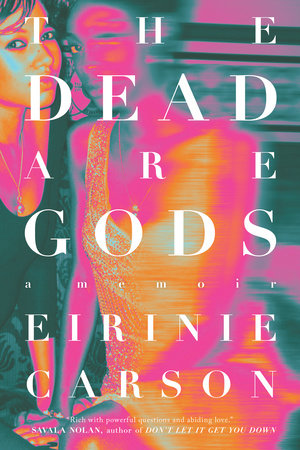
The Dead are Gods

Look inside
Hardcover
$27.99 US
5.65"W x 8.51"H x 0.79"D   (14.4 x 21.6 x 2.0 cm) | 12 oz (352 g) | 12 per carton
On sale Apr 11, 2023 | 240 Pages | 9781685890452
Sales rights: World

An Oprah Daily Spring 2023 Reading List Pick
Zibby Media Award for 'Best Book For the Griever' 2023
A Kirkus Best Book of 2023

"...striking a deeply resonant chord for anyone who has experienced the obsessive self-searching that often accompanies a sudden loss." -- Oprah Daily

"A gorgeous, grief-stricken remembrance... a wise reminder that we all must "weather the storm" of loss." --People Magazine

"Carson captures the pervasive nature of grief with a poetic voice that beautifully resonates." -- Shondaland

"This is raw, heartfelt, beautiful, soul-opening and real." -- Zibby Owens for Good Morning America

From an exciting new literary voice: a memoir that explores grief, Blackness, and recovery after the death of a dear friend.

After an unexpected phone call on an early morning in 2018, writer and model Eirinie Carson learned of her best friend Larissa’s death. In the wake of her shock, Eirinie attempts to make sense of the events leading up to Larissa’s death and uncovers startling secrets about her life in the process. 

THE DEAD ARE GODS is Eirinie’s striking, intimate, and profoundly moving depiction of life after a sudden loss. Amid navigating moments of intense grief, Eirinie is overwhelmed by her love for Larissa. She finds power in pulling moments of joy from the depths of her emotion. Eirinie’s portrayal of what love feels like after death bursts from the page alongside a timely, honest, and personal exploration of Black love and Black life.

Perhaps, Eirinie proposes, “The only way out is through.”
An Introduction

My best friend, Larissa, died three years ago. A sudden death, improbable and unexpected. She died a week after my thirty-first birthday, two weeks after her thirty-second. A vibrant human, also improbable and unexpected: a cool rock and roll type with a love of poetry. An enigma, hard to gain a grip on, a mythical woman, indulgent, reverent. Loved by us all.

But this is not a eulogy. This is not a chapter to describe to you her love of Charlie Parker and Rimbaud and also, somehow, Gilmore Girls. Her deep love of Slipknot and wrestling but also of Baudelaire and good wine. Not a chapter to try to show you, dear stranger, the true person you have lost without even knowing you had her. But, how do we discuss grief without eulogising the people we have lost? 

Roughly 3.5 million people died in 2021 in the United States alone. Think of that. Think of the mothers and fathers, friends, sponsors, colleagues affected by those deaths. Think of the ripple effect from each one. We are all in mourning, all of us, but ironically, the grief feels so personal, so lonely.

If someone you knew and loved has died, you know the echoing sentiments of it all too well. You know the platitudes your friends and family and (if you are lucky) therapists tell you—grief comes in waves, the only way out is through, you have to be strong for your family/their family/yourself, time heals, you must keep busy. All impossible to soak in and even more impossible to imagine implementing.

You know the obsessiveness—weeks spent poring over the minutiae of the days and hours prior to death, as if somewhere, hidden in plain sight, is the answer. Something you missed that could have prevented it all. For me, it was cross-examining our texts, searching for an arrow that would say, “Look, here is her looming death. Here it is.” Dissecting past conversations with mutual friends, searching for anything that would make us understand that it was unavoidable. It is a funny instinct. Why would we want proof that we could not save our loves? Why would we want to feel powerless? Perhaps only to quieten the thoughts that we could have done something, to prove that this was inevitable, that they could not be helped.

Larissa died in the bath. An accident, we were told. The week she died (although at the time we only thought her missing), my toddler had put my husband’s phone in her bath in the split second I turned my back whilst I went to fetch her towels. That week was also the one in which I experienced terrible vertigo for the first time, in which I said to my husband “I’m not exaggerating when I say I might be dying.” I also suddenly desired to listen to 1940s jazz, Thelonious Monk, Dizzy Gillespie, and Bud Powell, some of Larry’s favourites. All of these things are now, in hindsight, signs. Signs she was dead.

The pain of grief is staggering. The sheer depths of it unfathomable. A tightening in the chest, an inescapable flood of sadness, the sudden need to sit up and cry. All-consuming, this pain. True, there are instances in which people claim to be fine, to be processing it all well. You yourself may be thinking, “I haven’t cried once since X died and I went back to work the following day.” Well, let me be your harbinger. Let me stand over you and tell you it is coming. It is un-outrun-able, we cannot be strong against it. It is a tsunami, ready to plow through your life with impunity. Maybe not for months and maybe not for years but it will be here.

Doesn’t that sound terrifying?

Well, I am also here to tell you that to allow yourself to feel it, to stand in its dark waters, to feel the wet and cold seeping through your clothes is to weather the storm. Because when it passes (which it will, it comes in waves, remember?), clarity will come in its place. A calmness, an acceptance. The ability to recall details of your person. The way she laughed perhaps, or stood close and asked, “Are we best friends?” even though she knew the answer.

Nothing has been permanent in these short (but somehow long, how does that work?) months. No feeling, no sentiment. Only her absence, I suppose. We cannot sidestep this pain, only weather it, like love, like life, like it all.

I continue to grieve, and will forever, for as long as I can remember her. Time won’t heal it completely but it will dull the edges of my grief, sharp and jagged and lethal as they are now. For that is what remembrance is—grieving but with the added caveat of acceptance. Hold Death close. Feel the pain and the nuances of your sadness. Remember those you loved. Say their names and tell their stories. 

Her name was Larissa. 

The only way out is through.


Chapter 1

The Day After

A blur. Not just one of those things you say, but really, truly, a blur. My eyes cannot focus on the plate of food Adam pushes towards me, I cannot remember getting dressed but somehow I am. My child tugs me down to the floor to play with her trains and there is some peace in that—clicking the little wooden tracks together, slotting them in place, making sure they bend and turn back towards each other, making a circle. Magnetic trains one after another, tiny hands at my aid.

My phone rings and I am back, back to that gnawing at my chest, back to the dropping of my heart. I pick it up, yet another person urging me to confirm what I can barely look at. I am outside now, sitting on the steps of our LA house looking out onto the front yard. The artichokes, their jagged edges, the green, my mind drifting to harvesting them for dinner, but I suddenly can't remember how to cook them. Back to the voice at the end of the line, they are crying and it makes my tears dry instantly. I listen to them objectively, thinking how sad they sound, how distraught. I enjoy it. I am horrified that I enjoy it. That I like hearing this. Later I will reflect, realise that it was enjoyable to hear someone else in the throes of grief, confirming the worst. It was life-affirming to me at that moment, but at that moment I cannot clearly see this so I vacillate between the joy at their racked sobs and disgust at myself that I can bathe so deeply in someone else's misery.

I find this so addictive that at the end of this call I find myself making another one, and another. I enjoy breaking the news to people, I enjoy hearing their pause, their contention with whether this is fact or fiction, I enjoy being told “I am so sorry, Eirinie.” I want them to be sorry, I want them to pity me because I pity me and I know no other way to be right now.

The sun is setting and Adam comes to tell me there is food inside, if I like. He reassures me he will do our child’s bedtime routine; he wants me to know I can have all the time in the world. Do I want to run, he asks? A walk maybe? I cannot even muster the strength to tell him how tired I am, how I couldn't run even if I wanted to and I do want to, I want to run far and long until my chest aches from something other than sadness, until my legs no longer move from something other than a paralyzing sorrow, until my head is clear and all I can hear is my own breath, in and out, in and out. But I don't. I push past him, back inside. I can't remember if I have answered him but as I fall back into bed I think, let this be my answer. 

I sleep for an hour and when I awake the toddler is asleep, Adam is timid in his question and he seems to be unable to stop himself from asking, “Are you all right?”

“Can I have some wine?” I say, and he is up and pouring a glass immediately, grateful to help.

He knew her too, I think to myself. He knew her well. She was there when we met at the Standard on Sunset, he watched her exhale her cigarette smoke by the pool, her eyes watching us together as if already viewing the future we could not yet see. Mystical. He knew her when he would come to visit me in the UK, stay for three weeks in our small north London apartment, buy us cocktails when we went out, buy us takeout when we stayed in. He knew her. They had gone on walks to the pub alone together, they had discussed music and bands and rock and roll together. He had been the jury to her in-home fashion shows, told her which dress looked best so that she inevitably picked the other dress he hadn't mentioned. He had been blessed with a nickname, “A.” Simple, yes, but an honour from Larissa. A badge of inclusion, a sign that he was down. He knew her too.


And yet I can't think of his pain and loss, there is no fucking space in this house for both of our tears. There is no space. Despite my relishing other people’s sorrow down a phone line I refuse to let Adam cry, I cannot bear witness to that. My grief lives here now and there is no fucking room. 

 I drink a lot that night. I play her voice notes and I cry, too loudly for someone with a young baby in the house. I call her phone even though I know it is in police custody. Somewhere within me, somehow, there is a part that defies logic. I steel myself to hear her voice on the other end, and every time I do not, I am surprised.

You know that burning feeling in your eyes when you have been crying too long? That trite little phrase “I am all cried out”? How true those words ring at three in the morning when I am drunk and forlorn and devastated but unable to muster one single emotion. Adam takes me into bed, I assume, I don't remember how but suddenly that's where I am. Adam’s care of me barely registers. It will only be much later that I will mull it over and think of all the little things he did to keep me alive.

Fragmented sentences to Adam. I am writing a history book with my words; I am relegating her to the past tense. I get out half a tale about her before I stop, I cannot finish it. I cannot finish the story because to finish it would be to set it in stone, to cement her as a relic and a character instead of the flesh-and-blood person I want to keep believing she is.
An Oprah Daily Spring 2023 Reading List Pick
Zibby Media Award for 'Best Book For the Griever' 2023
A Kirkus Best Book of 2023

"...striking a deeply resonant chord for anyone who has experienced the obsessive self-searching that often accompanies a sudden loss." -- Oprah Daily

"A gorgeous, grief-stricken remembrance... a wise reminder that we all must "weather the storm" of loss." --People Magazine

"Carson captures the pervasive nature of grief with a poetic voice that beautifully resonates." -- Shondaland

"Eirinie Carson’s striking debut, The Dead Are Gods, [is a] fervid outpouring of friendship, grief and love. Carson writes as much to come to terms with a sudden, unexpected loss as to celebrate a transformative, unexpected meeting of two people, a blazing stroke of luck that prevailed. ...tender...elegiac, rhythmic prose..." --The Washington Post

"This is raw, heartfelt, beautiful, soul-opening and real." -- Zibby Owens for Good Morning America

"A deeply felt, searching examination of the feelings and memories provoked by the death of a best friend... Carson strikes a deeply resonant chord." -- Kirkus, STARRED REVIEW

"In the early stages of her grief, Carson’s language shines... The memoir ultimately asks us to explore secrets: those that our dearest loved ones keep from us—and the open secrets that are too frightening to acknowledge." -- Booklist

"Cinematic... the book is a portrait of [Carson's] grief, powerful friendship, and Black love..." -- NYLON

The Dead Are Gods is brilliant and beautiful. It’s a love letter, a time capsule and a celebration of the friendships that shape and save us, again and again. It will also no doubt be a light in the dark for the many of us who must also figure out how to navigate grief and proximity to death. A stunning, stunning debut.” -- Beth McColl, How to Come Alive Again: A Guide to Killing Your Monsters

"With ardor and honesty, Carson maps her grief to reckon with complex truths about friendship, including that you cannot fully know anyone no matter how much you care about them.  Written with style and rich with powerful questions and abiding love, The Dead Are Gods will be familiar--and illuminating--to anyone who has grieved." -- Savala Nolan, Don't Let It Get You Down: Essays on Race, Gender and the Body.

“The Dead Are Gods is a dazzling recreation of a cultural moment in time— the 2000s—one told from the perspective of a hip, young Black kid on a scene that was abundantly white." -- Roberto Lovato, author, Unforgetting
 
“In Eirinie Carson’s beautiful ode to her best friend, she shows that love surpasses death. I witnessed the birth of a relationship between two Black women who created and found homes in each other as they navigated the whiteness of alternative rock and modeling spaces in London.” -- Taylor Crumpton, cultural critic and journalist
© Kirby Stenger
Eirinie Carson is a Black British writer, born to a Jamaican father and Scottish mother and raised in South East London. Her work is published in the Sonora Review and she is a frequent contributor to Mother magazine. A member of the San Francisco Writers Grotto, Eirinie writes about motherhood, grief, and relationships. Eirinie lives in Northern California with her musician husband and their one dog and two daughters. The Dead are Gods is her first book. View titles by Eirinie Carson
Available for sale exclusive:
•     Afghanistan
•     Aland Islands
•     Albania
•     Algeria
•     Andorra
•     Angola
•     Anguilla
•     Antarctica
•     Antigua/Barbuda
•     Argentina
•     Armenia
•     Aruba
•     Australia
•     Austria
•     Azerbaijan
•     Bahamas
•     Bahrain
•     Bangladesh
•     Barbados
•     Belarus
•     Belgium
•     Belize
•     Benin
•     Bermuda
•     Bhutan
•     Bolivia
•     Bonaire, Saba
•     Bosnia Herzeg.
•     Botswana
•     Bouvet Island
•     Brazil
•     Brit.Ind.Oc.Ter
•     Brit.Virgin Is.
•     Brunei
•     Bulgaria
•     Burkina Faso
•     Burundi
•     Cambodia
•     Cameroon
•     Canada
•     Cape Verde
•     Cayman Islands
•     Centr.Afr.Rep.
•     Chad
•     Chile
•     China
•     Christmas Islnd
•     Cocos Islands
•     Colombia
•     Comoro Is.
•     Congo
•     Cook Islands
•     Costa Rica
•     Croatia
•     Cuba
•     Curacao
•     Cyprus
•     Czech Republic
•     Dem. Rep. Congo
•     Denmark
•     Djibouti
•     Dominica
•     Dominican Rep.
•     Ecuador
•     Egypt
•     El Salvador
•     Equatorial Gui.
•     Eritrea
•     Estonia
•     Ethiopia
•     Falkland Islnds
•     Faroe Islands
•     Fiji
•     Finland
•     France
•     Fren.Polynesia
•     French Guinea
•     Gabon
•     Gambia
•     Georgia
•     Germany
•     Ghana
•     Gibraltar
•     Greece
•     Greenland
•     Grenada
•     Guadeloupe
•     Guam
•     Guatemala
•     Guernsey
•     Guinea Republic
•     Guinea-Bissau
•     Guyana
•     Haiti
•     Heard/McDon.Isl
•     Honduras
•     Hong Kong
•     Hungary
•     Iceland
•     India
•     Indonesia
•     Iran
•     Iraq
•     Ireland
•     Isle of Man
•     Israel
•     Italy
•     Ivory Coast
•     Jamaica
•     Japan
•     Jersey
•     Jordan
•     Kazakhstan
•     Kenya
•     Kiribati
•     Kuwait
•     Kyrgyzstan
•     Laos
•     Latvia
•     Lebanon
•     Lesotho
•     Liberia
•     Libya
•     Liechtenstein
•     Lithuania
•     Luxembourg
•     Macau
•     Macedonia
•     Madagascar
•     Malawi
•     Malaysia
•     Maldives
•     Mali
•     Malta
•     Marshall island
•     Martinique
•     Mauritania
•     Mauritius
•     Mayotte
•     Mexico
•     Micronesia
•     Minor Outl.Ins.
•     Moldavia
•     Monaco
•     Mongolia
•     Montenegro
•     Montserrat
•     Morocco
•     Mozambique
•     Myanmar
•     Namibia
•     Nauru
•     Nepal
•     Netherlands
•     New Caledonia
•     New Zealand
•     Nicaragua
•     Niger
•     Nigeria
•     Niue
•     Norfolk Island
•     North Korea
•     North Mariana
•     Norway
•     Oman
•     Pakistan
•     Palau
•     Palestinian Ter
•     Panama
•     PapuaNewGuinea
•     Paraguay
•     Peru
•     Philippines
•     Pitcairn Islnds
•     Poland
•     Portugal
•     Puerto Rico
•     Qatar
•     Reunion Island
•     Romania
•     Russian Fed.
•     Rwanda
•     S. Sandwich Ins
•     Saint Martin
•     Samoa,American
•     San Marino
•     SaoTome Princip
•     Saudi Arabia
•     Senegal
•     Serbia
•     Seychelles
•     Sierra Leone
•     Singapore
•     Sint Maarten
•     Slovakia
•     Slovenia
•     Solomon Islands
•     Somalia
•     South Africa
•     South Korea
•     South Sudan
•     Spain
•     Sri Lanka
•     St Barthelemy
•     St. Helena
•     St. Lucia
•     St. Vincent
•     St.Chr.,Nevis
•     St.Pier,Miquel.
•     Sth Terr. Franc
•     Sudan
•     Suriname
•     Svalbard
•     Swaziland
•     Sweden
•     Switzerland
•     Syria
•     Tadschikistan
•     Taiwan
•     Tanzania
•     Thailand
•     Timor-Leste
•     Togo
•     Tokelau Islands
•     Tonga
•     Trinidad,Tobago
•     Tunisia
•     Turkey
•     Turkmenistan
•     Turks&Caicos Is
•     Tuvalu
•     US Virgin Is.
•     USA
•     Uganda
•     Ukraine
•     Unit.Arab Emir.
•     United Kingdom
•     Uruguay
•     Uzbekistan
•     Vanuatu
•     Vatican City
•     Venezuela
•     Vietnam
•     Wallis,Futuna
•     West Saharan
•     Western Samoa
•     Yemen
•     Zambia
•     Zimbabwe

About

An Oprah Daily Spring 2023 Reading List Pick
Zibby Media Award for 'Best Book For the Griever' 2023
A Kirkus Best Book of 2023

"...striking a deeply resonant chord for anyone who has experienced the obsessive self-searching that often accompanies a sudden loss." -- Oprah Daily

"A gorgeous, grief-stricken remembrance... a wise reminder that we all must "weather the storm" of loss." --People Magazine

"Carson captures the pervasive nature of grief with a poetic voice that beautifully resonates." -- Shondaland

"This is raw, heartfelt, beautiful, soul-opening and real." -- Zibby Owens for Good Morning America

From an exciting new literary voice: a memoir that explores grief, Blackness, and recovery after the death of a dear friend.

After an unexpected phone call on an early morning in 2018, writer and model Eirinie Carson learned of her best friend Larissa’s death. In the wake of her shock, Eirinie attempts to make sense of the events leading up to Larissa’s death and uncovers startling secrets about her life in the process. 

THE DEAD ARE GODS is Eirinie’s striking, intimate, and profoundly moving depiction of life after a sudden loss. Amid navigating moments of intense grief, Eirinie is overwhelmed by her love for Larissa. She finds power in pulling moments of joy from the depths of her emotion. Eirinie’s portrayal of what love feels like after death bursts from the page alongside a timely, honest, and personal exploration of Black love and Black life.

Perhaps, Eirinie proposes, “The only way out is through.”

Excerpt

An Introduction

My best friend, Larissa, died three years ago. A sudden death, improbable and unexpected. She died a week after my thirty-first birthday, two weeks after her thirty-second. A vibrant human, also improbable and unexpected: a cool rock and roll type with a love of poetry. An enigma, hard to gain a grip on, a mythical woman, indulgent, reverent. Loved by us all.

But this is not a eulogy. This is not a chapter to describe to you her love of Charlie Parker and Rimbaud and also, somehow, Gilmore Girls. Her deep love of Slipknot and wrestling but also of Baudelaire and good wine. Not a chapter to try to show you, dear stranger, the true person you have lost without even knowing you had her. But, how do we discuss grief without eulogising the people we have lost? 

Roughly 3.5 million people died in 2021 in the United States alone. Think of that. Think of the mothers and fathers, friends, sponsors, colleagues affected by those deaths. Think of the ripple effect from each one. We are all in mourning, all of us, but ironically, the grief feels so personal, so lonely.

If someone you knew and loved has died, you know the echoing sentiments of it all too well. You know the platitudes your friends and family and (if you are lucky) therapists tell you—grief comes in waves, the only way out is through, you have to be strong for your family/their family/yourself, time heals, you must keep busy. All impossible to soak in and even more impossible to imagine implementing.

You know the obsessiveness—weeks spent poring over the minutiae of the days and hours prior to death, as if somewhere, hidden in plain sight, is the answer. Something you missed that could have prevented it all. For me, it was cross-examining our texts, searching for an arrow that would say, “Look, here is her looming death. Here it is.” Dissecting past conversations with mutual friends, searching for anything that would make us understand that it was unavoidable. It is a funny instinct. Why would we want proof that we could not save our loves? Why would we want to feel powerless? Perhaps only to quieten the thoughts that we could have done something, to prove that this was inevitable, that they could not be helped.

Larissa died in the bath. An accident, we were told. The week she died (although at the time we only thought her missing), my toddler had put my husband’s phone in her bath in the split second I turned my back whilst I went to fetch her towels. That week was also the one in which I experienced terrible vertigo for the first time, in which I said to my husband “I’m not exaggerating when I say I might be dying.” I also suddenly desired to listen to 1940s jazz, Thelonious Monk, Dizzy Gillespie, and Bud Powell, some of Larry’s favourites. All of these things are now, in hindsight, signs. Signs she was dead.

The pain of grief is staggering. The sheer depths of it unfathomable. A tightening in the chest, an inescapable flood of sadness, the sudden need to sit up and cry. All-consuming, this pain. True, there are instances in which people claim to be fine, to be processing it all well. You yourself may be thinking, “I haven’t cried once since X died and I went back to work the following day.” Well, let me be your harbinger. Let me stand over you and tell you it is coming. It is un-outrun-able, we cannot be strong against it. It is a tsunami, ready to plow through your life with impunity. Maybe not for months and maybe not for years but it will be here.

Doesn’t that sound terrifying?

Well, I am also here to tell you that to allow yourself to feel it, to stand in its dark waters, to feel the wet and cold seeping through your clothes is to weather the storm. Because when it passes (which it will, it comes in waves, remember?), clarity will come in its place. A calmness, an acceptance. The ability to recall details of your person. The way she laughed perhaps, or stood close and asked, “Are we best friends?” even though she knew the answer.

Nothing has been permanent in these short (but somehow long, how does that work?) months. No feeling, no sentiment. Only her absence, I suppose. We cannot sidestep this pain, only weather it, like love, like life, like it all.

I continue to grieve, and will forever, for as long as I can remember her. Time won’t heal it completely but it will dull the edges of my grief, sharp and jagged and lethal as they are now. For that is what remembrance is—grieving but with the added caveat of acceptance. Hold Death close. Feel the pain and the nuances of your sadness. Remember those you loved. Say their names and tell their stories. 

Her name was Larissa. 

The only way out is through.


Chapter 1

The Day After

A blur. Not just one of those things you say, but really, truly, a blur. My eyes cannot focus on the plate of food Adam pushes towards me, I cannot remember getting dressed but somehow I am. My child tugs me down to the floor to play with her trains and there is some peace in that—clicking the little wooden tracks together, slotting them in place, making sure they bend and turn back towards each other, making a circle. Magnetic trains one after another, tiny hands at my aid.

My phone rings and I am back, back to that gnawing at my chest, back to the dropping of my heart. I pick it up, yet another person urging me to confirm what I can barely look at. I am outside now, sitting on the steps of our LA house looking out onto the front yard. The artichokes, their jagged edges, the green, my mind drifting to harvesting them for dinner, but I suddenly can't remember how to cook them. Back to the voice at the end of the line, they are crying and it makes my tears dry instantly. I listen to them objectively, thinking how sad they sound, how distraught. I enjoy it. I am horrified that I enjoy it. That I like hearing this. Later I will reflect, realise that it was enjoyable to hear someone else in the throes of grief, confirming the worst. It was life-affirming to me at that moment, but at that moment I cannot clearly see this so I vacillate between the joy at their racked sobs and disgust at myself that I can bathe so deeply in someone else's misery.

I find this so addictive that at the end of this call I find myself making another one, and another. I enjoy breaking the news to people, I enjoy hearing their pause, their contention with whether this is fact or fiction, I enjoy being told “I am so sorry, Eirinie.” I want them to be sorry, I want them to pity me because I pity me and I know no other way to be right now.

The sun is setting and Adam comes to tell me there is food inside, if I like. He reassures me he will do our child’s bedtime routine; he wants me to know I can have all the time in the world. Do I want to run, he asks? A walk maybe? I cannot even muster the strength to tell him how tired I am, how I couldn't run even if I wanted to and I do want to, I want to run far and long until my chest aches from something other than sadness, until my legs no longer move from something other than a paralyzing sorrow, until my head is clear and all I can hear is my own breath, in and out, in and out. But I don't. I push past him, back inside. I can't remember if I have answered him but as I fall back into bed I think, let this be my answer. 

I sleep for an hour and when I awake the toddler is asleep, Adam is timid in his question and he seems to be unable to stop himself from asking, “Are you all right?”

“Can I have some wine?” I say, and he is up and pouring a glass immediately, grateful to help.

He knew her too, I think to myself. He knew her well. She was there when we met at the Standard on Sunset, he watched her exhale her cigarette smoke by the pool, her eyes watching us together as if already viewing the future we could not yet see. Mystical. He knew her when he would come to visit me in the UK, stay for three weeks in our small north London apartment, buy us cocktails when we went out, buy us takeout when we stayed in. He knew her. They had gone on walks to the pub alone together, they had discussed music and bands and rock and roll together. He had been the jury to her in-home fashion shows, told her which dress looked best so that she inevitably picked the other dress he hadn't mentioned. He had been blessed with a nickname, “A.” Simple, yes, but an honour from Larissa. A badge of inclusion, a sign that he was down. He knew her too.


And yet I can't think of his pain and loss, there is no fucking space in this house for both of our tears. There is no space. Despite my relishing other people’s sorrow down a phone line I refuse to let Adam cry, I cannot bear witness to that. My grief lives here now and there is no fucking room. 

 I drink a lot that night. I play her voice notes and I cry, too loudly for someone with a young baby in the house. I call her phone even though I know it is in police custody. Somewhere within me, somehow, there is a part that defies logic. I steel myself to hear her voice on the other end, and every time I do not, I am surprised.

You know that burning feeling in your eyes when you have been crying too long? That trite little phrase “I am all cried out”? How true those words ring at three in the morning when I am drunk and forlorn and devastated but unable to muster one single emotion. Adam takes me into bed, I assume, I don't remember how but suddenly that's where I am. Adam’s care of me barely registers. It will only be much later that I will mull it over and think of all the little things he did to keep me alive.

Fragmented sentences to Adam. I am writing a history book with my words; I am relegating her to the past tense. I get out half a tale about her before I stop, I cannot finish it. I cannot finish the story because to finish it would be to set it in stone, to cement her as a relic and a character instead of the flesh-and-blood person I want to keep believing she is.

Praise

An Oprah Daily Spring 2023 Reading List Pick
Zibby Media Award for 'Best Book For the Griever' 2023
A Kirkus Best Book of 2023

"...striking a deeply resonant chord for anyone who has experienced the obsessive self-searching that often accompanies a sudden loss." -- Oprah Daily

"A gorgeous, grief-stricken remembrance... a wise reminder that we all must "weather the storm" of loss." --People Magazine

"Carson captures the pervasive nature of grief with a poetic voice that beautifully resonates." -- Shondaland

"Eirinie Carson’s striking debut, The Dead Are Gods, [is a] fervid outpouring of friendship, grief and love. Carson writes as much to come to terms with a sudden, unexpected loss as to celebrate a transformative, unexpected meeting of two people, a blazing stroke of luck that prevailed. ...tender...elegiac, rhythmic prose..." --The Washington Post

"This is raw, heartfelt, beautiful, soul-opening and real." -- Zibby Owens for Good Morning America

"A deeply felt, searching examination of the feelings and memories provoked by the death of a best friend... Carson strikes a deeply resonant chord." -- Kirkus, STARRED REVIEW

"In the early stages of her grief, Carson’s language shines... The memoir ultimately asks us to explore secrets: those that our dearest loved ones keep from us—and the open secrets that are too frightening to acknowledge." -- Booklist

"Cinematic... the book is a portrait of [Carson's] grief, powerful friendship, and Black love..." -- NYLON

The Dead Are Gods is brilliant and beautiful. It’s a love letter, a time capsule and a celebration of the friendships that shape and save us, again and again. It will also no doubt be a light in the dark for the many of us who must also figure out how to navigate grief and proximity to death. A stunning, stunning debut.” -- Beth McColl, How to Come Alive Again: A Guide to Killing Your Monsters

"With ardor and honesty, Carson maps her grief to reckon with complex truths about friendship, including that you cannot fully know anyone no matter how much you care about them.  Written with style and rich with powerful questions and abiding love, The Dead Are Gods will be familiar--and illuminating--to anyone who has grieved." -- Savala Nolan, Don't Let It Get You Down: Essays on Race, Gender and the Body.

“The Dead Are Gods is a dazzling recreation of a cultural moment in time— the 2000s—one told from the perspective of a hip, young Black kid on a scene that was abundantly white." -- Roberto Lovato, author, Unforgetting
 
“In Eirinie Carson’s beautiful ode to her best friend, she shows that love surpasses death. I witnessed the birth of a relationship between two Black women who created and found homes in each other as they navigated the whiteness of alternative rock and modeling spaces in London.” -- Taylor Crumpton, cultural critic and journalist

Author

© Kirby Stenger
Eirinie Carson is a Black British writer, born to a Jamaican father and Scottish mother and raised in South East London. Her work is published in the Sonora Review and she is a frequent contributor to Mother magazine. A member of the San Francisco Writers Grotto, Eirinie writes about motherhood, grief, and relationships. Eirinie lives in Northern California with her musician husband and their one dog and two daughters. The Dead are Gods is her first book. View titles by Eirinie Carson

Rights

Available for sale exclusive:
•     Afghanistan
•     Aland Islands
•     Albania
•     Algeria
•     Andorra
•     Angola
•     Anguilla
•     Antarctica
•     Antigua/Barbuda
•     Argentina
•     Armenia
•     Aruba
•     Australia
•     Austria
•     Azerbaijan
•     Bahamas
•     Bahrain
•     Bangladesh
•     Barbados
•     Belarus
•     Belgium
•     Belize
•     Benin
•     Bermuda
•     Bhutan
•     Bolivia
•     Bonaire, Saba
•     Bosnia Herzeg.
•     Botswana
•     Bouvet Island
•     Brazil
•     Brit.Ind.Oc.Ter
•     Brit.Virgin Is.
•     Brunei
•     Bulgaria
•     Burkina Faso
•     Burundi
•     Cambodia
•     Cameroon
•     Canada
•     Cape Verde
•     Cayman Islands
•     Centr.Afr.Rep.
•     Chad
•     Chile
•     China
•     Christmas Islnd
•     Cocos Islands
•     Colombia
•     Comoro Is.
•     Congo
•     Cook Islands
•     Costa Rica
•     Croatia
•     Cuba
•     Curacao
•     Cyprus
•     Czech Republic
•     Dem. Rep. Congo
•     Denmark
•     Djibouti
•     Dominica
•     Dominican Rep.
•     Ecuador
•     Egypt
•     El Salvador
•     Equatorial Gui.
•     Eritrea
•     Estonia
•     Ethiopia
•     Falkland Islnds
•     Faroe Islands
•     Fiji
•     Finland
•     France
•     Fren.Polynesia
•     French Guinea
•     Gabon
•     Gambia
•     Georgia
•     Germany
•     Ghana
•     Gibraltar
•     Greece
•     Greenland
•     Grenada
•     Guadeloupe
•     Guam
•     Guatemala
•     Guernsey
•     Guinea Republic
•     Guinea-Bissau
•     Guyana
•     Haiti
•     Heard/McDon.Isl
•     Honduras
•     Hong Kong
•     Hungary
•     Iceland
•     India
•     Indonesia
•     Iran
•     Iraq
•     Ireland
•     Isle of Man
•     Israel
•     Italy
•     Ivory Coast
•     Jamaica
•     Japan
•     Jersey
•     Jordan
•     Kazakhstan
•     Kenya
•     Kiribati
•     Kuwait
•     Kyrgyzstan
•     Laos
•     Latvia
•     Lebanon
•     Lesotho
•     Liberia
•     Libya
•     Liechtenstein
•     Lithuania
•     Luxembourg
•     Macau
•     Macedonia
•     Madagascar
•     Malawi
•     Malaysia
•     Maldives
•     Mali
•     Malta
•     Marshall island
•     Martinique
•     Mauritania
•     Mauritius
•     Mayotte
•     Mexico
•     Micronesia
•     Minor Outl.Ins.
•     Moldavia
•     Monaco
•     Mongolia
•     Montenegro
•     Montserrat
•     Morocco
•     Mozambique
•     Myanmar
•     Namibia
•     Nauru
•     Nepal
•     Netherlands
•     New Caledonia
•     New Zealand
•     Nicaragua
•     Niger
•     Nigeria
•     Niue
•     Norfolk Island
•     North Korea
•     North Mariana
•     Norway
•     Oman
•     Pakistan
•     Palau
•     Palestinian Ter
•     Panama
•     PapuaNewGuinea
•     Paraguay
•     Peru
•     Philippines
•     Pitcairn Islnds
•     Poland
•     Portugal
•     Puerto Rico
•     Qatar
•     Reunion Island
•     Romania
•     Russian Fed.
•     Rwanda
•     S. Sandwich Ins
•     Saint Martin
•     Samoa,American
•     San Marino
•     SaoTome Princip
•     Saudi Arabia
•     Senegal
•     Serbia
•     Seychelles
•     Sierra Leone
•     Singapore
•     Sint Maarten
•     Slovakia
•     Slovenia
•     Solomon Islands
•     Somalia
•     South Africa
•     South Korea
•     South Sudan
•     Spain
•     Sri Lanka
•     St Barthelemy
•     St. Helena
•     St. Lucia
•     St. Vincent
•     St.Chr.,Nevis
•     St.Pier,Miquel.
•     Sth Terr. Franc
•     Sudan
•     Suriname
•     Svalbard
•     Swaziland
•     Sweden
•     Switzerland
•     Syria
•     Tadschikistan
•     Taiwan
•     Tanzania
•     Thailand
•     Timor-Leste
•     Togo
•     Tokelau Islands
•     Tonga
•     Trinidad,Tobago
•     Tunisia
•     Turkey
•     Turkmenistan
•     Turks&Caicos Is
•     Tuvalu
•     US Virgin Is.
•     USA
•     Uganda
•     Ukraine
•     Unit.Arab Emir.
•     United Kingdom
•     Uruguay
•     Uzbekistan
•     Vanuatu
•     Vatican City
•     Venezuela
•     Vietnam
•     Wallis,Futuna
•     West Saharan
•     Western Samoa
•     Yemen
•     Zambia
•     Zimbabwe