Close Modal

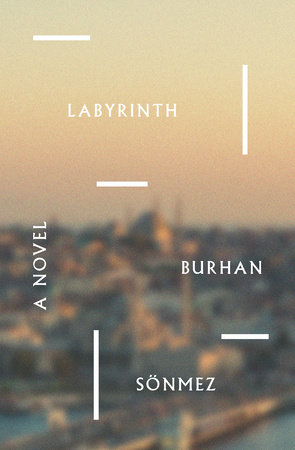
Labyrinth

A Novel

Translated by Umit Hussein
Look inside
Paperback
$15.99 US
5.26"W x 8"H x 0.54"D   (13.4 x 20.3 x 1.4 cm) | 8 oz (215 g) | 24 per carton
On sale Nov 19, 2019 | 192 Pages | 9781590510988
Sales rights: World

Notable International Crime Novel of the Year – Crime Reads / Lit Hub

From a prize-winning Turkish novelist, a heady, political tale of one man’s search for identity and meaning in Istanbul after the loss of his memory.


A blues singer, Boratin, attempts suicide by jumping off the Bosphorus Bridge, but opens his eyes in the hospital. He has lost his memory, and can't recall why he wished to end his life. He remembers only things that are unrelated to himself, but confuses their timing. He knows that the Ottoman Empire fell, and that the last sultan died, but has no idea when. His mind falters when remembering civilizations, while life, like a labyrinth, leads him down different paths.

From the confusion of his social and individual memory, he is faced with two questions. Does physical recognition provide a sense of identity? Which is more liberating for a man, or a society: knowing the past, or forgetting it?

Embroidered with Borgesian micro-stories, Labyrinth flows smoothly on the surface while traversing sharp bends beneath the current.
A Leap Off the Bosphorus Bridge

1  

An alarm clock goes off. It sounds like the bell summoning the weary crew members of a cargo ship to dinner. But who remembers cargo ships? It’s coming from the next apartment, or perhaps from a dream. From the dream of someone sleeping in the next apartment. A breeze blows in through the open balcony door. The net curtain billows. Whatever season this may be, the cool of the morning gives it a certain freshness. As the bottom of the net curtain flutters towards the bed, the sound of the alarm clock grows louder. Without opening his eyes, Boratin reaches out and tries to turn it off. His hand gropes the bedside table. He stops. He pauses for a moment, then tries again. When he fails to locate the clock, he opens his eyes. Outside, the day is dawning. The objects in the room are hazy, silhouetted. Where is he? It doesn’t look like a hospital room. The blanket, the balcony, and the window are different. No, this isn’t a hospital. I think I’ve come home. The sky is visible from the window. There are medicine bottles at the far end of the bedside table. Although the medicine helps him sleep, it doesn’t soothe his headache. His eyes close again. His hand falls onto the pillow. As the leaves of a tree rustle somewhere close to the balcony, the coolness caresses his bare arms.
  
Boratin awakes when the sky is bright and the wind has abated. The net curtain is still. Outside there is a murmur that has gradually built up and intensified since it first started out in distant neighborhoods. He looks around him, trying to ascertain whether he has ever woken up here before. The room is spacious. The walls are a plain ivory color, but the maple veneer of the wardrobe opposite him is too light. A darker shade would have looked better. Who chose that wardrobe, was it me? Boratin questions his own taste. When they brought him here last night he had hoped that this unfamiliar house might trigger some memories in the light of day. The balcony door, the wardrobe, and the bedside table remind him of a hotel room where he is staying for the first time. The only familiar objects are the medicine bottles. He perches on the edge of the bed. He winces at the pain in his chest. He pulls up his undershirt and inspects his ribs. He walks over to the mirror to get a better view. One of his right ribs is broken. He touches it. He feels the burning under his skin. He was lucky, that’s what they said. Only one fracture. His body had suffered no other injuries: Memory loss doesn’t count as a bodily injury. He raises his eyes and looks at his face. The face he met a week ago. It’s that new. Hello stranger, he says. He can tell from its lip movements that the face in the mirror is answering him with the same words. Just like last night. When he came home yesterday everything was silent. He wandered through the rooms with careful footsteps, as though exploring a museum, gingerly picking his way around the ornaments and guitars. He took his medication out of the hospital bag. He drank two glasses of water. He examined his face in the mirror. He removed his shirt, trousers, and socks. He lay down, closed his eyes, and waited without moving. He counted his inhalations and exhalations. He hadn’t forgotten how to count. Forty-one, forty-two, forty-three. Then he drifted off.
At the hospital they had told him to stay calm. You’ve lost your memory, don’t be afraid, you’ll get it back eventually, they had said. First they had dealt with his rib, then they had wanted to know what could have happened to this man who was trying hard to create a whole person out of his broken rib and his blank memory. It’s strange, he had said to his doctor, you’re more interested in me than I am. It’s my job, the doctor had replied. Losing your memory may seem very daunting Boratin Bey, but your situation isn’t that bad, considering. At least we know who you are and where you live, thanks to the cards in your wallet. You may not remember, but those details are part of who you are, just like that tattoo on your back that you don’t know where or why you had done. For now you own things that you can’t explain, things that will take shape over time. Whatever your past story may be, perhaps what you wanted was to get away from some aspect of this world. You were bold enough to attempt it, and you even succeeded. You fulfilled your objective in a way you could never have imagined. By taking a leap off the Bosphorus Bridge From now on you’ll map out a
much better path. Tell me Doctor, do you dispense this much hope to all your patients along with their medication? If so I’ll tell you this: My mind, which hasn’t got a single word about myself in it, is bursting with facts about other things. The names of ancient philosophers, the colors of soccer teams, the words of the first astronaut who went to the moon. I can’t find any clues leading to myself in my cache, I can’t even remember my name. You told me that was my name, and I accepted it.
I search for a comforting sign in my reflection, an expression that will point me in the right direction. I place my ear on the face in the mirror, where its mouth was. It’s smooth. Cool. I hear the roar of a wave that got trapped here many eras ago. Dark desires. The dank odor of a cellar. I’m approaching the time I used to live in but have tumbled out of. I am about to try descending into my memory down a different ladder and lighting the blue lantern in the vault of the past, when I am startled by the sound of ringing. Is it coming from inside or outside? It sounds like the alarm on the clock that rang all night. I follow the sound out into the hallway. I walk past a gloomy painting. I spy a black and red telephone at the opposite end of the lounge. I stop and wonder what to do. The telephone falls silent before I can make up my mind. It has an old-fashioned receiver, with keys that you don’t press but dial. It sits in a holder made of decorative wrought gold metal, the kind that old people like.
The telephone starts ringing again. This time with more determination. If I answer, an unfamiliar voice will ask me how I am. It won’t feel the need to introduce itself. It will simply assume I know it. When I remain silent it will repeat its question. After a moment’s hesitation it will start speaking for me. It will talk about things we have to do. It will remind me of some get-together or meal we’re supposed to be attending. It will prattle on about life’s misfortunes. After a brief show of compassion it will start to reproach me in an aggrieved tone. It will enumerate every evil in existence, naming someone who has fallen victim to each one, and then, without giving me a chance to hang up, heap the blame for the victims’ doom on my head. Because I do not speak, it will jump from topic to topic. When the subject moves on to the good turns I have done it, the voice will soften, it will say it is thanks to me that it has been able to enjoy life’s blessings, but that it doesn’t understand how I ended up this way. I will seize the opportunity to intervene. I will say that I don’t understand how I ended up this way either. I will ask it to help me, and if it knows any secrets about me, to let me in on them right away. As I have lost my memory, I have lost the life I have led all these years too, I’m back at zero. I will plead with it for mercy, as though it were a guardian holding my past in the palm of its hand. I will select the most beseeching words. I will tell the voice on the other end of the telephone a story that has stuck in a corner of my mind. The future is as unattainable as the past. I can’t use the stars to guide me. I can feel an avalanche approaching fast, mingling into the sounds of traffic, plunging and tumbling behind towers and skyscrapers. My heart is telling me I have to hurry. I rush to draw the curtains. I pull the curtains tightly so no light will seep in through any crack. The telephone falls silent.
“Provocative…profound…[Labyrinth], beautifully translated by Ümit Hussein, reads like a fever dream.” —New York Times

“Subtle…stirring…A thoughtful novel that asks many unanswerable questions worth pondering, Labyrinth is a mind-twister.” —NPR

“A cerebral philosophical meditation on memory and what it means to live without it…accessible and profound, bringing to mind Albert Camus and Patrick Modiano…this is a book that will undoubtedly linger in a reader’s mind.” —Publishers Weekly

“As this book opens, a blues singer attempts to take his life by jumping five hundred feet off a bridge into the Bosphorus. He survives but his memory is shattered—he knows the last Sultan has died, but the rest is a maze. This short, elliptical novel by the author of Istanbul, Istanbul follows him into its pathways, conjuring the ineluctable entanglement of place and person.” —John Freeman, Literary Hub

“A provocative examination of memory and loss, of intent and outcome…masterful.” —Shelf Awareness
 
“Compact, thought-provoking, and gently exquisite, Labyrinth…establishes [Sönmez] as one of Europe’s great contemporary authors…The effect of the book’s simple clauses, infused with a continual stream of sensual description, is hypnotic.” —World Literature Today
 
“A bold and entrancing work.” —The National

“This clever, elliptical tale…will linger in your memory long after you have read it.” —Book Riot
 
“[A] many-layered mystery with few answers but all the most interesting, searching questions about identity, memory, and intersecting lives…Labyrinth has been earning comparisons to Borges, and they’re well deserved, as a sense of intrigue and philosophy pervades this excellent, meditative novel.” —CrimeReads
 
“Sönmez brilliantly guides the reader…He uses storytelling—anecdotes, fables, and histories—to describe lessons that are valuable for comprehending life…The setting is vibrant, and though I’ve never been to Istanbul I feel a sense of familiarity with the city having read Sönmez’s novel.” —Literary Review

“A provocative and beautifully written story of the weave and tears of memory and identity worthy of Borges’s own Labyrinths. Long after finishing this marvelous book, I still think every day of the questions it raises.” —Eric Lax, author of Start to Finish

“A novelist with such a sense of both humanity and power is rare. With Labyrinth, Burhan Sönmez adds another important building block to his portrait of life today, with Turkey as the stage for all of our dramas. Underneath it all, he seems to be asking whether societies like ours can survive if we are allowed to remember.” —John Ralston Saul, author of The Collapse of Globalism; President Emeritus of PEN International
© Kaan Saganak
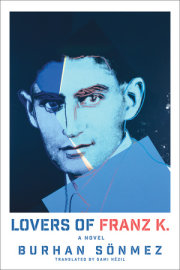
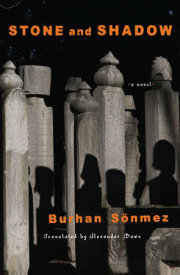
Burhan Sönmez is the author of six novels, which have been published in more than thirty languages. He was born in Turkey and grew up speaking Turkish and Kurdish. He worked as a lawyer in Istanbul before going into political exile in Britain. Sönmez’s writing has appeared in such publications as The Guardian, Der Spiegel, Die Zeit, and La Repubblica. His previous novels include Labyrinth (Other Press, 2019) and Stone and Shadow (Other Press, 2023). He was elected president of PEN International in 2021. View titles by Burhan Sönmez
Available for sale exclusive:
•     Afghanistan
•     Aland Islands
•     Albania
•     Algeria
•     Andorra
•     Angola
•     Anguilla
•     Antarctica
•     Antigua/Barbuda
•     Argentina
•     Armenia
•     Aruba
•     Australia
•     Austria
•     Azerbaijan
•     Bahamas
•     Bahrain
•     Bangladesh
•     Barbados
•     Belarus
•     Belgium
•     Belize
•     Benin
•     Bermuda
•     Bhutan
•     Bolivia
•     Bonaire, Saba
•     Bosnia Herzeg.
•     Botswana
•     Bouvet Island
•     Brazil
•     Brit.Ind.Oc.Ter
•     Brit.Virgin Is.
•     Brunei
•     Bulgaria
•     Burkina Faso
•     Burundi
•     Cambodia
•     Cameroon
•     Canada
•     Cape Verde
•     Cayman Islands
•     Centr.Afr.Rep.
•     Chad
•     Chile
•     China
•     Christmas Islnd
•     Cocos Islands
•     Colombia
•     Comoro Is.
•     Congo
•     Cook Islands
•     Costa Rica
•     Croatia
•     Cuba
•     Curacao
•     Cyprus
•     Czech Republic
•     Dem. Rep. Congo
•     Denmark
•     Djibouti
•     Dominica
•     Dominican Rep.
•     Ecuador
•     Egypt
•     El Salvador
•     Equatorial Gui.
•     Eritrea
•     Estonia
•     Ethiopia
•     Falkland Islnds
•     Faroe Islands
•     Fiji
•     Finland
•     France
•     Fren.Polynesia
•     French Guinea
•     Gabon
•     Gambia
•     Georgia
•     Germany
•     Ghana
•     Gibraltar
•     Greece
•     Greenland
•     Grenada
•     Guadeloupe
•     Guam
•     Guatemala
•     Guernsey
•     Guinea Republic
•     Guinea-Bissau
•     Guyana
•     Haiti
•     Heard/McDon.Isl
•     Honduras
•     Hong Kong
•     Hungary
•     Iceland
•     India
•     Indonesia
•     Iran
•     Iraq
•     Ireland
•     Isle of Man
•     Israel
•     Italy
•     Ivory Coast
•     Jamaica
•     Japan
•     Jersey
•     Jordan
•     Kazakhstan
•     Kenya
•     Kiribati
•     Kuwait
•     Kyrgyzstan
•     Laos
•     Latvia
•     Lebanon
•     Lesotho
•     Liberia
•     Libya
•     Liechtenstein
•     Lithuania
•     Luxembourg
•     Macau
•     Macedonia
•     Madagascar
•     Malawi
•     Malaysia
•     Maldives
•     Mali
•     Malta
•     Marshall island
•     Martinique
•     Mauritania
•     Mauritius
•     Mayotte
•     Mexico
•     Micronesia
•     Minor Outl.Ins.
•     Moldavia
•     Monaco
•     Mongolia
•     Montenegro
•     Montserrat
•     Morocco
•     Mozambique
•     Myanmar
•     Namibia
•     Nauru
•     Nepal
•     Netherlands
•     New Caledonia
•     New Zealand
•     Nicaragua
•     Niger
•     Nigeria
•     Niue
•     Norfolk Island
•     North Korea
•     North Mariana
•     Norway
•     Oman
•     Pakistan
•     Palau
•     Palestinian Ter
•     Panama
•     PapuaNewGuinea
•     Paraguay
•     Peru
•     Philippines
•     Pitcairn Islnds
•     Poland
•     Portugal
•     Puerto Rico
•     Qatar
•     Reunion Island
•     Romania
•     Russian Fed.
•     Rwanda
•     S. Sandwich Ins
•     Saint Martin
•     Samoa,American
•     San Marino
•     SaoTome Princip
•     Saudi Arabia
•     Senegal
•     Serbia
•     Seychelles
•     Sierra Leone
•     Singapore
•     Sint Maarten
•     Slovakia
•     Slovenia
•     Solomon Islands
•     Somalia
•     South Africa
•     South Korea
•     South Sudan
•     Spain
•     Sri Lanka
•     St Barthelemy
•     St. Helena
•     St. Lucia
•     St. Vincent
•     St.Chr.,Nevis
•     St.Pier,Miquel.
•     Sth Terr. Franc
•     Sudan
•     Suriname
•     Svalbard
•     Swaziland
•     Sweden
•     Switzerland
•     Syria
•     Tadschikistan
•     Taiwan
•     Tanzania
•     Thailand
•     Timor-Leste
•     Togo
•     Tokelau Islands
•     Tonga
•     Trinidad,Tobago
•     Tunisia
•     Turkey
•     Turkmenistan
•     Turks&Caicos Is
•     Tuvalu
•     US Virgin Is.
•     USA
•     Uganda
•     Ukraine
•     Unit.Arab Emir.
•     United Kingdom
•     Uruguay
•     Uzbekistan
•     Vanuatu
•     Vatican City
•     Venezuela
•     Vietnam
•     Wallis,Futuna
•     West Saharan
•     Western Samoa
•     Yemen
•     Zambia
•     Zimbabwe

About

Notable International Crime Novel of the Year – Crime Reads / Lit Hub

From a prize-winning Turkish novelist, a heady, political tale of one man’s search for identity and meaning in Istanbul after the loss of his memory.


A blues singer, Boratin, attempts suicide by jumping off the Bosphorus Bridge, but opens his eyes in the hospital. He has lost his memory, and can't recall why he wished to end his life. He remembers only things that are unrelated to himself, but confuses their timing. He knows that the Ottoman Empire fell, and that the last sultan died, but has no idea when. His mind falters when remembering civilizations, while life, like a labyrinth, leads him down different paths.

From the confusion of his social and individual memory, he is faced with two questions. Does physical recognition provide a sense of identity? Which is more liberating for a man, or a society: knowing the past, or forgetting it?

Embroidered with Borgesian micro-stories, Labyrinth flows smoothly on the surface while traversing sharp bends beneath the current.

Excerpt

A Leap Off the Bosphorus Bridge

1  

An alarm clock goes off. It sounds like the bell summoning the weary crew members of a cargo ship to dinner. But who remembers cargo ships? It’s coming from the next apartment, or perhaps from a dream. From the dream of someone sleeping in the next apartment. A breeze blows in through the open balcony door. The net curtain billows. Whatever season this may be, the cool of the morning gives it a certain freshness. As the bottom of the net curtain flutters towards the bed, the sound of the alarm clock grows louder. Without opening his eyes, Boratin reaches out and tries to turn it off. His hand gropes the bedside table. He stops. He pauses for a moment, then tries again. When he fails to locate the clock, he opens his eyes. Outside, the day is dawning. The objects in the room are hazy, silhouetted. Where is he? It doesn’t look like a hospital room. The blanket, the balcony, and the window are different. No, this isn’t a hospital. I think I’ve come home. The sky is visible from the window. There are medicine bottles at the far end of the bedside table. Although the medicine helps him sleep, it doesn’t soothe his headache. His eyes close again. His hand falls onto the pillow. As the leaves of a tree rustle somewhere close to the balcony, the coolness caresses his bare arms.
  
Boratin awakes when the sky is bright and the wind has abated. The net curtain is still. Outside there is a murmur that has gradually built up and intensified since it first started out in distant neighborhoods. He looks around him, trying to ascertain whether he has ever woken up here before. The room is spacious. The walls are a plain ivory color, but the maple veneer of the wardrobe opposite him is too light. A darker shade would have looked better. Who chose that wardrobe, was it me? Boratin questions his own taste. When they brought him here last night he had hoped that this unfamiliar house might trigger some memories in the light of day. The balcony door, the wardrobe, and the bedside table remind him of a hotel room where he is staying for the first time. The only familiar objects are the medicine bottles. He perches on the edge of the bed. He winces at the pain in his chest. He pulls up his undershirt and inspects his ribs. He walks over to the mirror to get a better view. One of his right ribs is broken. He touches it. He feels the burning under his skin. He was lucky, that’s what they said. Only one fracture. His body had suffered no other injuries: Memory loss doesn’t count as a bodily injury. He raises his eyes and looks at his face. The face he met a week ago. It’s that new. Hello stranger, he says. He can tell from its lip movements that the face in the mirror is answering him with the same words. Just like last night. When he came home yesterday everything was silent. He wandered through the rooms with careful footsteps, as though exploring a museum, gingerly picking his way around the ornaments and guitars. He took his medication out of the hospital bag. He drank two glasses of water. He examined his face in the mirror. He removed his shirt, trousers, and socks. He lay down, closed his eyes, and waited without moving. He counted his inhalations and exhalations. He hadn’t forgotten how to count. Forty-one, forty-two, forty-three. Then he drifted off.
At the hospital they had told him to stay calm. You’ve lost your memory, don’t be afraid, you’ll get it back eventually, they had said. First they had dealt with his rib, then they had wanted to know what could have happened to this man who was trying hard to create a whole person out of his broken rib and his blank memory. It’s strange, he had said to his doctor, you’re more interested in me than I am. It’s my job, the doctor had replied. Losing your memory may seem very daunting Boratin Bey, but your situation isn’t that bad, considering. At least we know who you are and where you live, thanks to the cards in your wallet. You may not remember, but those details are part of who you are, just like that tattoo on your back that you don’t know where or why you had done. For now you own things that you can’t explain, things that will take shape over time. Whatever your past story may be, perhaps what you wanted was to get away from some aspect of this world. You were bold enough to attempt it, and you even succeeded. You fulfilled your objective in a way you could never have imagined. By taking a leap off the Bosphorus Bridge From now on you’ll map out a
much better path. Tell me Doctor, do you dispense this much hope to all your patients along with their medication? If so I’ll tell you this: My mind, which hasn’t got a single word about myself in it, is bursting with facts about other things. The names of ancient philosophers, the colors of soccer teams, the words of the first astronaut who went to the moon. I can’t find any clues leading to myself in my cache, I can’t even remember my name. You told me that was my name, and I accepted it.
I search for a comforting sign in my reflection, an expression that will point me in the right direction. I place my ear on the face in the mirror, where its mouth was. It’s smooth. Cool. I hear the roar of a wave that got trapped here many eras ago. Dark desires. The dank odor of a cellar. I’m approaching the time I used to live in but have tumbled out of. I am about to try descending into my memory down a different ladder and lighting the blue lantern in the vault of the past, when I am startled by the sound of ringing. Is it coming from inside or outside? It sounds like the alarm on the clock that rang all night. I follow the sound out into the hallway. I walk past a gloomy painting. I spy a black and red telephone at the opposite end of the lounge. I stop and wonder what to do. The telephone falls silent before I can make up my mind. It has an old-fashioned receiver, with keys that you don’t press but dial. It sits in a holder made of decorative wrought gold metal, the kind that old people like.
The telephone starts ringing again. This time with more determination. If I answer, an unfamiliar voice will ask me how I am. It won’t feel the need to introduce itself. It will simply assume I know it. When I remain silent it will repeat its question. After a moment’s hesitation it will start speaking for me. It will talk about things we have to do. It will remind me of some get-together or meal we’re supposed to be attending. It will prattle on about life’s misfortunes. After a brief show of compassion it will start to reproach me in an aggrieved tone. It will enumerate every evil in existence, naming someone who has fallen victim to each one, and then, without giving me a chance to hang up, heap the blame for the victims’ doom on my head. Because I do not speak, it will jump from topic to topic. When the subject moves on to the good turns I have done it, the voice will soften, it will say it is thanks to me that it has been able to enjoy life’s blessings, but that it doesn’t understand how I ended up this way. I will seize the opportunity to intervene. I will say that I don’t understand how I ended up this way either. I will ask it to help me, and if it knows any secrets about me, to let me in on them right away. As I have lost my memory, I have lost the life I have led all these years too, I’m back at zero. I will plead with it for mercy, as though it were a guardian holding my past in the palm of its hand. I will select the most beseeching words. I will tell the voice on the other end of the telephone a story that has stuck in a corner of my mind. The future is as unattainable as the past. I can’t use the stars to guide me. I can feel an avalanche approaching fast, mingling into the sounds of traffic, plunging and tumbling behind towers and skyscrapers. My heart is telling me I have to hurry. I rush to draw the curtains. I pull the curtains tightly so no light will seep in through any crack. The telephone falls silent.

Praise

“Provocative…profound…[Labyrinth], beautifully translated by Ümit Hussein, reads like a fever dream.” —New York Times

“Subtle…stirring…A thoughtful novel that asks many unanswerable questions worth pondering, Labyrinth is a mind-twister.” —NPR

“A cerebral philosophical meditation on memory and what it means to live without it…accessible and profound, bringing to mind Albert Camus and Patrick Modiano…this is a book that will undoubtedly linger in a reader’s mind.” —Publishers Weekly

“As this book opens, a blues singer attempts to take his life by jumping five hundred feet off a bridge into the Bosphorus. He survives but his memory is shattered—he knows the last Sultan has died, but the rest is a maze. This short, elliptical novel by the author of Istanbul, Istanbul follows him into its pathways, conjuring the ineluctable entanglement of place and person.” —John Freeman, Literary Hub

“A provocative examination of memory and loss, of intent and outcome…masterful.” —Shelf Awareness
 
“Compact, thought-provoking, and gently exquisite, Labyrinth…establishes [Sönmez] as one of Europe’s great contemporary authors…The effect of the book’s simple clauses, infused with a continual stream of sensual description, is hypnotic.” —World Literature Today
 
“A bold and entrancing work.” —The National

“This clever, elliptical tale…will linger in your memory long after you have read it.” —Book Riot
 
“[A] many-layered mystery with few answers but all the most interesting, searching questions about identity, memory, and intersecting lives…Labyrinth has been earning comparisons to Borges, and they’re well deserved, as a sense of intrigue and philosophy pervades this excellent, meditative novel.” —CrimeReads
 
“Sönmez brilliantly guides the reader…He uses storytelling—anecdotes, fables, and histories—to describe lessons that are valuable for comprehending life…The setting is vibrant, and though I’ve never been to Istanbul I feel a sense of familiarity with the city having read Sönmez’s novel.” —Literary Review

“A provocative and beautifully written story of the weave and tears of memory and identity worthy of Borges’s own Labyrinths. Long after finishing this marvelous book, I still think every day of the questions it raises.” —Eric Lax, author of Start to Finish

“A novelist with such a sense of both humanity and power is rare. With Labyrinth, Burhan Sönmez adds another important building block to his portrait of life today, with Turkey as the stage for all of our dramas. Underneath it all, he seems to be asking whether societies like ours can survive if we are allowed to remember.” —John Ralston Saul, author of The Collapse of Globalism; President Emeritus of PEN International

Author

© Kaan Saganak
Burhan Sönmez is the author of six novels, which have been published in more than thirty languages. He was born in Turkey and grew up speaking Turkish and Kurdish. He worked as a lawyer in Istanbul before going into political exile in Britain. Sönmez’s writing has appeared in such publications as The Guardian, Der Spiegel, Die Zeit, and La Repubblica. His previous novels include Labyrinth (Other Press, 2019) and Stone and Shadow (Other Press, 2023). He was elected president of PEN International in 2021. View titles by Burhan Sönmez

Rights

Available for sale exclusive:
•     Afghanistan
•     Aland Islands
•     Albania
•     Algeria
•     Andorra
•     Angola
•     Anguilla
•     Antarctica
•     Antigua/Barbuda
•     Argentina
•     Armenia
•     Aruba
•     Australia
•     Austria
•     Azerbaijan
•     Bahamas
•     Bahrain
•     Bangladesh
•     Barbados
•     Belarus
•     Belgium
•     Belize
•     Benin
•     Bermuda
•     Bhutan
•     Bolivia
•     Bonaire, Saba
•     Bosnia Herzeg.
•     Botswana
•     Bouvet Island
•     Brazil
•     Brit.Ind.Oc.Ter
•     Brit.Virgin Is.
•     Brunei
•     Bulgaria
•     Burkina Faso
•     Burundi
•     Cambodia
•     Cameroon
•     Canada
•     Cape Verde
•     Cayman Islands
•     Centr.Afr.Rep.
•     Chad
•     Chile
•     China
•     Christmas Islnd
•     Cocos Islands
•     Colombia
•     Comoro Is.
•     Congo
•     Cook Islands
•     Costa Rica
•     Croatia
•     Cuba
•     Curacao
•     Cyprus
•     Czech Republic
•     Dem. Rep. Congo
•     Denmark
•     Djibouti
•     Dominica
•     Dominican Rep.
•     Ecuador
•     Egypt
•     El Salvador
•     Equatorial Gui.
•     Eritrea
•     Estonia
•     Ethiopia
•     Falkland Islnds
•     Faroe Islands
•     Fiji
•     Finland
•     France
•     Fren.Polynesia
•     French Guinea
•     Gabon
•     Gambia
•     Georgia
•     Germany
•     Ghana
•     Gibraltar
•     Greece
•     Greenland
•     Grenada
•     Guadeloupe
•     Guam
•     Guatemala
•     Guernsey
•     Guinea Republic
•     Guinea-Bissau
•     Guyana
•     Haiti
•     Heard/McDon.Isl
•     Honduras
•     Hong Kong
•     Hungary
•     Iceland
•     India
•     Indonesia
•     Iran
•     Iraq
•     Ireland
•     Isle of Man
•     Israel
•     Italy
•     Ivory Coast
•     Jamaica
•     Japan
•     Jersey
•     Jordan
•     Kazakhstan
•     Kenya
•     Kiribati
•     Kuwait
•     Kyrgyzstan
•     Laos
•     Latvia
•     Lebanon
•     Lesotho
•     Liberia
•     Libya
•     Liechtenstein
•     Lithuania
•     Luxembourg
•     Macau
•     Macedonia
•     Madagascar
•     Malawi
•     Malaysia
•     Maldives
•     Mali
•     Malta
•     Marshall island
•     Martinique
•     Mauritania
•     Mauritius
•     Mayotte
•     Mexico
•     Micronesia
•     Minor Outl.Ins.
•     Moldavia
•     Monaco
•     Mongolia
•     Montenegro
•     Montserrat
•     Morocco
•     Mozambique
•     Myanmar
•     Namibia
•     Nauru
•     Nepal
•     Netherlands
•     New Caledonia
•     New Zealand
•     Nicaragua
•     Niger
•     Nigeria
•     Niue
•     Norfolk Island
•     North Korea
•     North Mariana
•     Norway
•     Oman
•     Pakistan
•     Palau
•     Palestinian Ter
•     Panama
•     PapuaNewGuinea
•     Paraguay
•     Peru
•     Philippines
•     Pitcairn Islnds
•     Poland
•     Portugal
•     Puerto Rico
•     Qatar
•     Reunion Island
•     Romania
•     Russian Fed.
•     Rwanda
•     S. Sandwich Ins
•     Saint Martin
•     Samoa,American
•     San Marino
•     SaoTome Princip
•     Saudi Arabia
•     Senegal
•     Serbia
•     Seychelles
•     Sierra Leone
•     Singapore
•     Sint Maarten
•     Slovakia
•     Slovenia
•     Solomon Islands
•     Somalia
•     South Africa
•     South Korea
•     South Sudan
•     Spain
•     Sri Lanka
•     St Barthelemy
•     St. Helena
•     St. Lucia
•     St. Vincent
•     St.Chr.,Nevis
•     St.Pier,Miquel.
•     Sth Terr. Franc
•     Sudan
•     Suriname
•     Svalbard
•     Swaziland
•     Sweden
•     Switzerland
•     Syria
•     Tadschikistan
•     Taiwan
•     Tanzania
•     Thailand
•     Timor-Leste
•     Togo
•     Tokelau Islands
•     Tonga
•     Trinidad,Tobago
•     Tunisia
•     Turkey
•     Turkmenistan
•     Turks&Caicos Is
•     Tuvalu
•     US Virgin Is.
•     USA
•     Uganda
•     Ukraine
•     Unit.Arab Emir.
•     United Kingdom
•     Uruguay
•     Uzbekistan
•     Vanuatu
•     Vatican City
•     Venezuela
•     Vietnam
•     Wallis,Futuna
•     West Saharan
•     Western Samoa
•     Yemen
•     Zambia
•     Zimbabwe