Close Modal

A Perfect Hand

A Novel

Paperback
$20.00 US
6-1/8"W x 9-1/4"H (15.6 x 23.5 cm) | 13 oz (364 g) | 24 per carton
On sale May 19, 2026 | 304 Pages | 9781524712990
Sales rights: US, Canada, Open Mkt
Export Edition

See Additional Formats
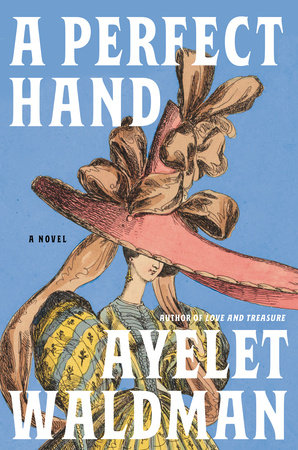
A richly drawn, captivating, and endlessly amusing novel of love and subterfuge between a lady’s maid and her clandestine lover, set in the country estates of nineteenth-century England.

"Ayelet Waldman’s clever, fast-paced historical romp turned out to be not only great fun but also surprisingly stirring. This book is a pleasure."
—Meg Wolitzer, New York Times bestselling author of The Female Persuasion


Miss Alice Lockey, daughter of a tenant farmer, has by dint of hard work, innate intelligence, and a cunning ability to predict the moods of her betters, raised herself to the lofty status of lady’s maid at Alderwick Park. Though her mother has advised Alice to work only until marriage, Alice has thus far resisted the temptations of matrimony among the neighboring widowers and pig farmers, more content to enjoy the fruits of her labor—or at least the portion of it her father will share after it is paid to him. Alice spends her days arranging Lady Jemima Alderwick’s blond hair into the latest French styles, chignons and plaits, laundering her lady’s surprisingly malodorous petticoats and drawers, and carefully sewing all manner of fripperies, ribbons, lace, and silk flowers, to her lady’s bonnets and gowns.

But when a visiting servant, a valet named Charlie Wells, catches her eye, Alice begins to understand the constraints of her position. In a ploy to spend time with the object of her affection, Alice attempts to arrange a romance between Lady Jemima Alderwick and Charlie’s employer, one Baronet Sir Nigel Wynstowe. If only they would fall in love—then Alice and Charlie might live together as man and wife! Challenged by Lady Jemima’s love for another and Sir Wynstowe’s eccentric personality, Alice must use all of her cunning to bring about this unlikely romantic union. Will this low-born servant successfully manipulate the hearts of these lords and ladies? Will Charlie and Alice ever improve their stations? Or, as the beginning of women’s suffrage begins to percolate in the drawing rooms and salons of London, will Alice discover a different sort of path for herself?

A deliciously funny, gorgeously detailed, utter enthralling novel, A Perfect Hand is a glorious novel of class, gender, and England on the cusp of enormous change.
Chapter One

The heroine of our story was neither the daughter of a bankrupted gentleman, nor of a dissolute younger son. She had no wellborn ancestor to make her interesting to the discerning reader, nor was she brought up in such penurious circumstances as to be an object of the tenderhearted compassion of a sentimental one. Miss Alice Lockey was the eldest of three daughters and two sons of a tenant farmer on the estate of Bevil Marle­combe, fourth Earl Alderwick, in ——­shire. Her father worked the same twelve and a half acres as his father before him, and as his father’s father, and as all the Lockeys inked in their dozen generations on the flyleaf of the family Bible. Prior to her marriage, Alice’s mother had been happily employed at Marle­combe Park, rising to the rank of upper housemaid, and had encouraged her daughter to follow her example and pursue a career in service, but only until marriage. The daughter’s aspirations exceeded the mother’s, however, and at the time of our telling, Alice had, by dint of hard work, innate intelligence, a skillful hand with the needle, and a sense of style and color in clothing unusual for a girl of her birth, raised herself to the lofty status of lady’s maid to Lady Jemima Alderwick, eldest daughter of Lord and Lady Alderwick. Alice had thus far resisted the temptations of matrimony, preferring to enjoy the fruits of her own labor, or at least that part of it her father returned to her when it was paid to him by the steward at the end of each quarter.

Alice possessed a stature so fine-­formed, a bearing so dignified, and features so fair that those prejudiced in favor of the superiority of birth and breeding might resent these qualities as inappropriate to her station. She had thus learned to dress simply, to maintain a self-­effacing expression, and as much as possible to hide her light under the proverbial bushel.

I have described a charming young woman, but, no matter her qualities, both physical and of character, I fear my gentle reader might wonder whether a servant, no matter how exemplary, is not beneath her notice and concern. In response, I ask, do not the travails of ladies and lords eventually become wearying to the devotee of novels such as this one? How often can we trouble ourselves with the comings and goings of tiresome young creatures whose sole occupations are taking incessant turns about the room and producing heaps of embroidered silk cushions and painted fire screens? Let us for once immerse ourselves in the narrative of a vigorous young woman, an exemplary servant in a house that boasted no fewer than twenty-­two members of this invisible class. A young woman who rose before six, worked without rest the day long, and slept only once her lady was safe abed. For does not such a young woman, despite days full of menial tasks and concerns, nonetheless deserve the joys and agonies of romance? Does she not experience ambition, delight, and sadness, all subjects captivating to you, dear Reader?

Let us begin our story not during Alice’s first days at Marle­combe as an under-­housemaid, when she learned how to whiten the manor’s front step with lime donkey-­stone, to carry coal in a heavy scuttle from the basement heap up to the rooms in which the family did their living, to polish grates and beat carpets, and to engage in all the tasks too myriad and dull to take up even one more moment of our time. Let us instead skip to the 10th day of September, in the year of our Lord 1879, as the peal of the dressing gong reverberated through Marle­combe Park, and the dozen guests of Lord Alderwick and Lady Alderwick returned to their rooms to dress for dinner. We find Lady Jemima in fine fettle in her room, Alice patiently listening to a tirade of the sort all too typical of her lady.

“Mr. Smythe-­Roberts was just about to seat himself next to me on the settee when that insipid Miss Mountjoy positively slithered by me and took the seat herself. I nearly flew at her!”

Alice helped Lady Jemima out of her gown, sniffed her camisole for odors, and checked her petticoats and drawers for stains. The results of her inspection unsatisfactory, she helped the young lady change into a clean pair of drawers, and bundled up the discolored and malodorous undergarments for the laundress. Then she loosened Lady Jemima’s corset, and unwound her blond tresses from their simple chignon. Alice took up a jar of pomade of her own concoction—­a mixture of palm oil and castor oil, scented with a generous dash of rose water—­and smoothed Lady Jemima’s hair into place.

“A Eugénie coiffure, this evening?” Alice queried.

Lady Jemima considered. “But with a Grecian plait. And a bow.”

“Both?”

“Yes, and ribbons.”

“Too much, my lady.”

Lady Jemima looked about to object, then shrugged her shoulders. “Just make it look original. You know I must be original, Alice. Always.” That Lady Jemima called her abigail by her first name was unusual, and had at first troubled Alice. Once raised to the level of lady’s maid Alice had assumed that she would graduate to be known by her surname, as the other personal servants were. But Lady Jemima was used to calling her Alice, and so Alice she remained.

“Yes, ma’am.”

Alice, upon assuming her role as Lady Jemima’s maid, had sacrificed a month of half-­days to a course of study at the London salon of Monsieur Jean-­Luc Autié, and she now expertly rolled the young lady’s hair into a bandeau coiffure, complete with four smooth loops arranged in a bow at the nape of her neck. She pinned a braided rat she had made from hair harvested from Lady Jemima’s brushes and combs around the bow, and decorated it not with ribbons but with a handful of delicate seed pearls, strategically placed where they would catch the candlelight to best effect. Lady Jemima’s face she treated with only the lightest dusting of Saunders’s roseate face powder, because the girl was so pretty she needed little embellishment, certainly not the red lip salve to which her mother too often resorted.

After that, she relaced Lady Jemima’s corset, assisted her into a silk petticoat and horsehair crinoline, dressed her in a shimmering satin gown of a pink so pale it looked nearly white, and helped her to pull on a pair of pink silk gloves that daringly reached up over her elbows. Lady Jemima’s hands were well formed and strong, shapely in their way, but not the tapered-­fingered, blue-­veined, and rosy-­nailed ideal. Ironically, but for years of rough labor, Alice herself might have had a perfect hand.

Alice then slipped a pair of gold-­embroidered kidskin slippers on Lady Jemima’s feet. The slippers were the only element of the ensemble with which Alice was not entirely satisfied. She had spent upwards of an hour scrubbing, powdering, and perfuming them, but the delicate young lady’s feet had an overpowering odor that took a tremendous amount of Alice’s creativity and industry to suppress, and she worried the slippers might yet stink. Shoes that might last Lady Jemima’s far more homely and stout sister an entire season needed to be replaced after no more than two or three wearings, and by then their reek was such that Alice could not sell them on, and would not have saved them for herself even if they shared the same size. She passed them to the housemaids, who were glad enough to receive them, though even they winced at their odor.

More than once, Alice had wondered whether the unpleasant stains and stinks lurking beneath Lady Jemima’s fetching façade might not be an apt metaphor for the girl’s person. Lady Jemima was pretty, even beautiful, and during her first season had been considered among the finest young ladies presented to the Queen. Even three years after that triumph, with the first blush off the rose, she continued to be sought after. She was lively and gay, charming in company, an excellent horsewoman, an accomplished archer, and, unusually, an expert falconer. She was a young lady whose company was much desired, both among the eight and forty families with whom the Alderwicks regularly dined in the country, and among their much more expansive London society. Lady Jemima’s character, however, did less honor to her lineaments than one might have hoped. Indulged by a doting father, raised on a pedestal by a vain and shallow mother concerned with appearance to the detriment of temperament, Lady Jemima was coquettish and selfish, imperious and quarrelsome, and too indolent to nurture any innate intelligence she might have possessed.

The finest quality of Lady Jemima’s character was her fondness for and loyalty to our heroine, whom she had raised from the position of housemaid directly to that of lady’s maid, despite her mother’s exhortations that she employ a German girl as was all the rage now, a Parisienne like her own maid, or at the very least a girl experienced in the position.

“No gentlewoman would release a decent maid from her service,” Lady Jemima told her mother before her first season, when she had been (finally, she grumbled) granted the service of her own maid. “Any maid with ‘experience’ will inevitably have been sent away for either incompetence or stealing. I won’t employ a ninny or a jewel thief. I refuse!”

“Oh, Jemima!” Lady Alderwick murmured. “Why must you answer every suggestion with an opera?”

This conversation took place with Alice standing, hands folded, in Lady Alderwick’s sitting room. Rather than look at the ladies, she gazed about the place. She had never before been granted access to this sanctum. It was a wildly over-­ornamented excrescence, each wall decorated in a different Chinese wallpaper printed with a riot of exotic plants and birds, pagodas presided over by haloed buddhas, aubergine-­faced monkeys squatting on crimson petals, and gold leaf enough to adorn all the buddhas of the Orient. Carbuncles of Sèvres porcelain figurines crowded the occasional tables, and vast heaps of garish cushions made sitting on the sofas and chairs an impossibility. The predominant hues were rose, salmon, shell, carnation, mauve, fuchsia—­every shade of pink, that favorite color of Madame de Pompadour, once mistress of Louis XV, whom Lady Alderwick believed herself to resemble. This fancy was engendered by an article about the infamous Parisienne that Lady Alderwick had read decades previous in Le Journal des dames et des modes. Unfortunately, as Lady Alderwick’s French was poor, her vision limited, and her reading rudimentary, she mistook the illustration. It was not in fact of Madame de Pompadour but, rather, of Madame de Pouderoux, an infamous Parisienne murderess, relieved of her head by the guillotine. Interestingly, the anniversary of that diabolical lady’s death was the same as Lady Alderwick’s birthday, so perhaps the feeling of commonality was not entirely misplaced.

As mother and daughter debated Alice’s future, a blush in a hue matching the room stained Alice’s cheeks—­not, as one would imagine, because of the torment inspired by the cacophony of dreadful taste, but because she was herself as interested in Lady Jemima’s petition as was the young lady in employing her.

Lady Alderwick sighed. “Perhaps Lefebvre might be prevailed upon to give her some instruction.” She turned to Alice. “Do you speak any French at all?”

“Some, my lady.”

Another sigh. A terrible thought struck her. “You can read, can you not? Oh, that would be too dreadful, Jemima, to have an abigail who can’t read.”

“I can read, ma’am.”

Better than Lady Alderwick, in fact. Alice had been the most sharp-­witted scholar in her parish school. Amiable and witty in addition to intelligent, Alice was a great favorite of her teacher, the former governess of a great house who had in her retirement founded a small institution dedicated to the tuition of the girls of the parish. Alice had received an excellent education, even learning a serviceable French, Miss Elliott having taught her scholars the basic grammatical rules of the language, as well as a not inconsiderable vocabulary. Alice had furthered her fluency by studying the leather-­bound French grammar that was among the small stack of books her teacher had given her as a parting gift when she took up her position at the Park. Whenever she had the opportunity, she listened closely to the conversation between Lady Alderwick and her own maid, though Jeanette Lefebvre, having grown up on a pig farm in the southern department of Tarn-­et-­Garonne, was far more fluent in her native dialect than in the pure French her ignorant lady believed her to speak.

Lady Alderwick had collapsed, as she always did, in the face of Lady Jemima’s insistence, and Alice had embraced her new position. Every night before bed, she studied—­by the light of the stub of candle permitted her by Mrs. Platt, Marle­combe Park’s stern but kindly housekeeper—­a small volume called The Duties of a Lady’s Maid: With Directions for Conduct, and Numerous Receipts for the Toilette.

Alice was proud of the speed and efficiency with which she worked, and that evening, Lady Jemima’s toilette took her no more than the allotted half-­hour between the dressing gong and the expected appearance of the guests in the drawing room. Because of Alice’s competence, Lady Jemima was generally among the first ladies to make an appearance downstairs, which she relished, as it allowed her the unimpeded attention of the men in the party.
"A Perfect Hand is an absolute delight and a joy to read. This novel showcases Ayelet Waldman’s many gifts—her humor, her storytelling prowess, her wisdom about human nature, and her passion for social justice. All wrapped up in an irresistible love story. I couldn’t put it down."
—J. Courtney Sullivan, New York Times bestselling author of The Cliffs

"I tore through this clever, big-hearted upstairs-downstairs novel about ambition, desire, and women’s place in the world, charmed and delighted on every page. With a voice that feels both borrowed from the 19th century and entirely her own, Ayelet Waldman gives us a servant’s story full of wit, yearning, and moral bite. Inventive, sparkling, and slyly subversive."
—Christina Baker Kline, New York Times bestselling author of The Exiles

"I was in want of a captivating book, and I found one in A Perfect Hand. Ayelet Waldman’s clever, fast-paced historical romp turned out to be not only great fun but also surprisingly stirring. This book is a pleasure."
—Meg Wolitzer, New York Times bestselling author of The Female Persuasion

"An amuse bouche of a novel with an astringent feminist bite. Waldman twists the conventions of the 19th century novel for a result that is part homage, part satire, entirely fun."
—Geraldine Brooks, New York Times bestselling author of Memorial Days

“If Jane Austen and Nora Ephron collaborated, they might produce something close to this new novel by Waldman. . . . Witty, frothy, and ultimately wise. . . . Sometimes a Victorian-era caper, replete with crinolines and coiffures, carries a shockingly important purpose beneath its skirts.”
Kirkus (starred review)

“Jane Austen–esque . . . . Rollicking. . . . Waldman speaks in a graceful, authentic voice about Victorian England’s lifestyles, horrors, and frivolities. She honors women’s empowerment while relishing the tropes of the romance genre. . . . She has dealt readers a truly winning hand.”
Library Journal
Ayelet Waldman is the author of A Really Good Day, Love and Treasure, Red Hook Road, Love and Other Impossible Pursuits, Daughter's Keeper, Bad Mother and the Mommy-Track Mystery series. She co-developed and was an Executive Producer on the Netflix series Unbelievable, which received a Peabody Award and Best Limited Series nominations at the Critics’ Choice Awards, the Golden Globes, and the Primetime Emmys in 2020. Waldman lives in Berkeley, California with her husband Michael Chabon. View titles by Ayelet Waldman
Available for sale exclusive:
•     Guam
•     Minor Outl.Ins.
•     North Mariana
•     Philippines
•     Puerto Rico
•     Samoa,American
•     US Virgin Is.

Available for sale non-exclusive:
•     Afghanistan
•     Aland Islands
•     Albania
•     Algeria
•     Andorra
•     Angola
•     Anguilla
•     Antarctica
•     Argentina
•     Armenia
•     Aruba
•     Austria
•     Azerbaijan
•     Bahrain
•     Belarus
•     Belgium
•     Benin
•     Bhutan
•     Bolivia
•     Bonaire, Saba
•     Bosnia Herzeg.
•     Bouvet Island
•     Brazil
•     Bulgaria
•     Burkina Faso
•     Burundi
•     Cambodia
•     Cameroon
•     Cape Verde
•     Centr.Afr.Rep.
•     Chad
•     Chile
•     China
•     Colombia
•     Comoro Is.
•     Congo
•     Cook Islands
•     Costa Rica
•     Croatia
•     Cuba
•     Curacao
•     Czech Republic
•     Dem. Rep. Congo
•     Denmark
•     Djibouti
•     Dominican Rep.
•     Ecuador
•     Egypt
•     El Salvador
•     Equatorial Gui.
•     Eritrea
•     Estonia
•     Ethiopia
•     Faroe Islands
•     Finland
•     France
•     Fren.Polynesia
•     French Guinea
•     Gabon
•     Georgia
•     Germany
•     Greece
•     Greenland
•     Guadeloupe
•     Guatemala
•     Guinea Republic
•     Guinea-Bissau
•     Haiti
•     Heard/McDon.Isl
•     Honduras
•     Hong Kong
•     Hungary
•     Iceland
•     Indonesia
•     Iran
•     Israel
•     Italy
•     Ivory Coast
•     Japan
•     Kazakhstan
•     Kyrgyzstan
•     Laos
•     Latvia
•     Lebanon
•     Liberia
•     Libya
•     Liechtenstein
•     Lithuania
•     Luxembourg
•     Macau
•     Macedonia
•     Madagascar
•     Maldives
•     Mali
•     Marshall island
•     Martinique
•     Mauritania
•     Mayotte
•     Mexico
•     Micronesia
•     Moldavia
•     Monaco
•     Mongolia
•     Montenegro
•     Morocco
•     Myanmar
•     Nepal
•     Netherlands
•     New Caledonia
•     Nicaragua
•     Niger
•     Niue
•     Norfolk Island
•     North Korea
•     Norway
•     Oman
•     Palau
•     Palestinian Ter
•     Panama
•     Paraguay
•     Peru
•     Poland
•     Portugal
•     Qatar
•     Reunion Island
•     Romania
•     Russian Fed.
•     Rwanda
•     Saint Martin
•     San Marino
•     SaoTome Princip
•     Saudi Arabia
•     Senegal
•     Serbia
•     Singapore
•     Sint Maarten
•     Slovakia
•     Slovenia
•     South Korea
•     South Sudan
•     Spain
•     St Barthelemy
•     St.Pier,Miquel.
•     Sth Terr. Franc
•     Suriname
•     Svalbard
•     Sweden
•     Switzerland
•     Syria
•     Tadschikistan
•     Taiwan
•     Thailand
•     Timor-Leste
•     Togo
•     Tokelau Islands
•     Tunisia
•     Turkey
•     Turkmenistan
•     Ukraine
•     Unit.Arab Emir.
•     Uruguay
•     Uzbekistan
•     Vatican City
•     Venezuela
•     Vietnam
•     Wallis,Futuna
•     West Saharan
•     Yemen

Not available for sale:
•     Antigua/Barbuda
•     Australia
•     Bahamas
•     Bangladesh
•     Barbados
•     Belize
•     Bermuda
•     Botswana
•     Brit.Ind.Oc.Ter
•     Brit.Virgin Is.
•     Brunei
•     Canada
•     Cayman Islands
•     Christmas Islnd
•     Cocos Islands
•     Cyprus
•     Dominica
•     Falkland Islnds
•     Fiji
•     Gambia
•     Ghana
•     Gibraltar
•     Grenada
•     Guernsey
•     Guyana
•     India
•     Iraq
•     Ireland
•     Isle of Man
•     Jamaica
•     Jersey
•     Jordan
•     Kenya
•     Kiribati
•     Kuwait
•     Lesotho
•     Malawi
•     Malaysia
•     Malta
•     Mauritius
•     Montserrat
•     Mozambique
•     Namibia
•     Nauru
•     New Zealand
•     Nigeria
•     Pakistan
•     PapuaNewGuinea
•     Pitcairn Islnds
•     S. Sandwich Ins
•     Seychelles
•     Sierra Leone
•     Solomon Islands
•     Somalia
•     South Africa
•     Sri Lanka
•     St. Helena
•     St. Lucia
•     St. Vincent
•     St.Chr.,Nevis
•     Sudan
•     Swaziland
•     Tanzania
•     Tonga
•     Trinidad,Tobago
•     Turks&Caicos Is
•     Tuvalu
•     USA
•     Uganda
•     United Kingdom
•     Vanuatu
•     Western Samoa
•     Zambia
•     Zimbabwe

About

A richly drawn, captivating, and endlessly amusing novel of love and subterfuge between a lady’s maid and her clandestine lover, set in the country estates of nineteenth-century England.

"Ayelet Waldman’s clever, fast-paced historical romp turned out to be not only great fun but also surprisingly stirring. This book is a pleasure."
—Meg Wolitzer, New York Times bestselling author of The Female Persuasion


Miss Alice Lockey, daughter of a tenant farmer, has by dint of hard work, innate intelligence, and a cunning ability to predict the moods of her betters, raised herself to the lofty status of lady’s maid at Alderwick Park. Though her mother has advised Alice to work only until marriage, Alice has thus far resisted the temptations of matrimony among the neighboring widowers and pig farmers, more content to enjoy the fruits of her labor—or at least the portion of it her father will share after it is paid to him. Alice spends her days arranging Lady Jemima Alderwick’s blond hair into the latest French styles, chignons and plaits, laundering her lady’s surprisingly malodorous petticoats and drawers, and carefully sewing all manner of fripperies, ribbons, lace, and silk flowers, to her lady’s bonnets and gowns.

But when a visiting servant, a valet named Charlie Wells, catches her eye, Alice begins to understand the constraints of her position. In a ploy to spend time with the object of her affection, Alice attempts to arrange a romance between Lady Jemima Alderwick and Charlie’s employer, one Baronet Sir Nigel Wynstowe. If only they would fall in love—then Alice and Charlie might live together as man and wife! Challenged by Lady Jemima’s love for another and Sir Wynstowe’s eccentric personality, Alice must use all of her cunning to bring about this unlikely romantic union. Will this low-born servant successfully manipulate the hearts of these lords and ladies? Will Charlie and Alice ever improve their stations? Or, as the beginning of women’s suffrage begins to percolate in the drawing rooms and salons of London, will Alice discover a different sort of path for herself?

A deliciously funny, gorgeously detailed, utter enthralling novel, A Perfect Hand is a glorious novel of class, gender, and England on the cusp of enormous change.

Excerpt

Chapter One

The heroine of our story was neither the daughter of a bankrupted gentleman, nor of a dissolute younger son. She had no wellborn ancestor to make her interesting to the discerning reader, nor was she brought up in such penurious circumstances as to be an object of the tenderhearted compassion of a sentimental one. Miss Alice Lockey was the eldest of three daughters and two sons of a tenant farmer on the estate of Bevil Marle­combe, fourth Earl Alderwick, in ——­shire. Her father worked the same twelve and a half acres as his father before him, and as his father’s father, and as all the Lockeys inked in their dozen generations on the flyleaf of the family Bible. Prior to her marriage, Alice’s mother had been happily employed at Marle­combe Park, rising to the rank of upper housemaid, and had encouraged her daughter to follow her example and pursue a career in service, but only until marriage. The daughter’s aspirations exceeded the mother’s, however, and at the time of our telling, Alice had, by dint of hard work, innate intelligence, a skillful hand with the needle, and a sense of style and color in clothing unusual for a girl of her birth, raised herself to the lofty status of lady’s maid to Lady Jemima Alderwick, eldest daughter of Lord and Lady Alderwick. Alice had thus far resisted the temptations of matrimony, preferring to enjoy the fruits of her own labor, or at least that part of it her father returned to her when it was paid to him by the steward at the end of each quarter.

Alice possessed a stature so fine-­formed, a bearing so dignified, and features so fair that those prejudiced in favor of the superiority of birth and breeding might resent these qualities as inappropriate to her station. She had thus learned to dress simply, to maintain a self-­effacing expression, and as much as possible to hide her light under the proverbial bushel.

I have described a charming young woman, but, no matter her qualities, both physical and of character, I fear my gentle reader might wonder whether a servant, no matter how exemplary, is not beneath her notice and concern. In response, I ask, do not the travails of ladies and lords eventually become wearying to the devotee of novels such as this one? How often can we trouble ourselves with the comings and goings of tiresome young creatures whose sole occupations are taking incessant turns about the room and producing heaps of embroidered silk cushions and painted fire screens? Let us for once immerse ourselves in the narrative of a vigorous young woman, an exemplary servant in a house that boasted no fewer than twenty-­two members of this invisible class. A young woman who rose before six, worked without rest the day long, and slept only once her lady was safe abed. For does not such a young woman, despite days full of menial tasks and concerns, nonetheless deserve the joys and agonies of romance? Does she not experience ambition, delight, and sadness, all subjects captivating to you, dear Reader?

Let us begin our story not during Alice’s first days at Marle­combe as an under-­housemaid, when she learned how to whiten the manor’s front step with lime donkey-­stone, to carry coal in a heavy scuttle from the basement heap up to the rooms in which the family did their living, to polish grates and beat carpets, and to engage in all the tasks too myriad and dull to take up even one more moment of our time. Let us instead skip to the 10th day of September, in the year of our Lord 1879, as the peal of the dressing gong reverberated through Marle­combe Park, and the dozen guests of Lord Alderwick and Lady Alderwick returned to their rooms to dress for dinner. We find Lady Jemima in fine fettle in her room, Alice patiently listening to a tirade of the sort all too typical of her lady.

“Mr. Smythe-­Roberts was just about to seat himself next to me on the settee when that insipid Miss Mountjoy positively slithered by me and took the seat herself. I nearly flew at her!”

Alice helped Lady Jemima out of her gown, sniffed her camisole for odors, and checked her petticoats and drawers for stains. The results of her inspection unsatisfactory, she helped the young lady change into a clean pair of drawers, and bundled up the discolored and malodorous undergarments for the laundress. Then she loosened Lady Jemima’s corset, and unwound her blond tresses from their simple chignon. Alice took up a jar of pomade of her own concoction—­a mixture of palm oil and castor oil, scented with a generous dash of rose water—­and smoothed Lady Jemima’s hair into place.

“A Eugénie coiffure, this evening?” Alice queried.

Lady Jemima considered. “But with a Grecian plait. And a bow.”

“Both?”

“Yes, and ribbons.”

“Too much, my lady.”

Lady Jemima looked about to object, then shrugged her shoulders. “Just make it look original. You know I must be original, Alice. Always.” That Lady Jemima called her abigail by her first name was unusual, and had at first troubled Alice. Once raised to the level of lady’s maid Alice had assumed that she would graduate to be known by her surname, as the other personal servants were. But Lady Jemima was used to calling her Alice, and so Alice she remained.

“Yes, ma’am.”

Alice, upon assuming her role as Lady Jemima’s maid, had sacrificed a month of half-­days to a course of study at the London salon of Monsieur Jean-­Luc Autié, and she now expertly rolled the young lady’s hair into a bandeau coiffure, complete with four smooth loops arranged in a bow at the nape of her neck. She pinned a braided rat she had made from hair harvested from Lady Jemima’s brushes and combs around the bow, and decorated it not with ribbons but with a handful of delicate seed pearls, strategically placed where they would catch the candlelight to best effect. Lady Jemima’s face she treated with only the lightest dusting of Saunders’s roseate face powder, because the girl was so pretty she needed little embellishment, certainly not the red lip salve to which her mother too often resorted.

After that, she relaced Lady Jemima’s corset, assisted her into a silk petticoat and horsehair crinoline, dressed her in a shimmering satin gown of a pink so pale it looked nearly white, and helped her to pull on a pair of pink silk gloves that daringly reached up over her elbows. Lady Jemima’s hands were well formed and strong, shapely in their way, but not the tapered-­fingered, blue-­veined, and rosy-­nailed ideal. Ironically, but for years of rough labor, Alice herself might have had a perfect hand.

Alice then slipped a pair of gold-­embroidered kidskin slippers on Lady Jemima’s feet. The slippers were the only element of the ensemble with which Alice was not entirely satisfied. She had spent upwards of an hour scrubbing, powdering, and perfuming them, but the delicate young lady’s feet had an overpowering odor that took a tremendous amount of Alice’s creativity and industry to suppress, and she worried the slippers might yet stink. Shoes that might last Lady Jemima’s far more homely and stout sister an entire season needed to be replaced after no more than two or three wearings, and by then their reek was such that Alice could not sell them on, and would not have saved them for herself even if they shared the same size. She passed them to the housemaids, who were glad enough to receive them, though even they winced at their odor.

More than once, Alice had wondered whether the unpleasant stains and stinks lurking beneath Lady Jemima’s fetching façade might not be an apt metaphor for the girl’s person. Lady Jemima was pretty, even beautiful, and during her first season had been considered among the finest young ladies presented to the Queen. Even three years after that triumph, with the first blush off the rose, she continued to be sought after. She was lively and gay, charming in company, an excellent horsewoman, an accomplished archer, and, unusually, an expert falconer. She was a young lady whose company was much desired, both among the eight and forty families with whom the Alderwicks regularly dined in the country, and among their much more expansive London society. Lady Jemima’s character, however, did less honor to her lineaments than one might have hoped. Indulged by a doting father, raised on a pedestal by a vain and shallow mother concerned with appearance to the detriment of temperament, Lady Jemima was coquettish and selfish, imperious and quarrelsome, and too indolent to nurture any innate intelligence she might have possessed.

The finest quality of Lady Jemima’s character was her fondness for and loyalty to our heroine, whom she had raised from the position of housemaid directly to that of lady’s maid, despite her mother’s exhortations that she employ a German girl as was all the rage now, a Parisienne like her own maid, or at the very least a girl experienced in the position.

“No gentlewoman would release a decent maid from her service,” Lady Jemima told her mother before her first season, when she had been (finally, she grumbled) granted the service of her own maid. “Any maid with ‘experience’ will inevitably have been sent away for either incompetence or stealing. I won’t employ a ninny or a jewel thief. I refuse!”

“Oh, Jemima!” Lady Alderwick murmured. “Why must you answer every suggestion with an opera?”

This conversation took place with Alice standing, hands folded, in Lady Alderwick’s sitting room. Rather than look at the ladies, she gazed about the place. She had never before been granted access to this sanctum. It was a wildly over-­ornamented excrescence, each wall decorated in a different Chinese wallpaper printed with a riot of exotic plants and birds, pagodas presided over by haloed buddhas, aubergine-­faced monkeys squatting on crimson petals, and gold leaf enough to adorn all the buddhas of the Orient. Carbuncles of Sèvres porcelain figurines crowded the occasional tables, and vast heaps of garish cushions made sitting on the sofas and chairs an impossibility. The predominant hues were rose, salmon, shell, carnation, mauve, fuchsia—­every shade of pink, that favorite color of Madame de Pompadour, once mistress of Louis XV, whom Lady Alderwick believed herself to resemble. This fancy was engendered by an article about the infamous Parisienne that Lady Alderwick had read decades previous in Le Journal des dames et des modes. Unfortunately, as Lady Alderwick’s French was poor, her vision limited, and her reading rudimentary, she mistook the illustration. It was not in fact of Madame de Pompadour but, rather, of Madame de Pouderoux, an infamous Parisienne murderess, relieved of her head by the guillotine. Interestingly, the anniversary of that diabolical lady’s death was the same as Lady Alderwick’s birthday, so perhaps the feeling of commonality was not entirely misplaced.

As mother and daughter debated Alice’s future, a blush in a hue matching the room stained Alice’s cheeks—­not, as one would imagine, because of the torment inspired by the cacophony of dreadful taste, but because she was herself as interested in Lady Jemima’s petition as was the young lady in employing her.

Lady Alderwick sighed. “Perhaps Lefebvre might be prevailed upon to give her some instruction.” She turned to Alice. “Do you speak any French at all?”

“Some, my lady.”

Another sigh. A terrible thought struck her. “You can read, can you not? Oh, that would be too dreadful, Jemima, to have an abigail who can’t read.”

“I can read, ma’am.”

Better than Lady Alderwick, in fact. Alice had been the most sharp-­witted scholar in her parish school. Amiable and witty in addition to intelligent, Alice was a great favorite of her teacher, the former governess of a great house who had in her retirement founded a small institution dedicated to the tuition of the girls of the parish. Alice had received an excellent education, even learning a serviceable French, Miss Elliott having taught her scholars the basic grammatical rules of the language, as well as a not inconsiderable vocabulary. Alice had furthered her fluency by studying the leather-­bound French grammar that was among the small stack of books her teacher had given her as a parting gift when she took up her position at the Park. Whenever she had the opportunity, she listened closely to the conversation between Lady Alderwick and her own maid, though Jeanette Lefebvre, having grown up on a pig farm in the southern department of Tarn-­et-­Garonne, was far more fluent in her native dialect than in the pure French her ignorant lady believed her to speak.

Lady Alderwick had collapsed, as she always did, in the face of Lady Jemima’s insistence, and Alice had embraced her new position. Every night before bed, she studied—­by the light of the stub of candle permitted her by Mrs. Platt, Marle­combe Park’s stern but kindly housekeeper—­a small volume called The Duties of a Lady’s Maid: With Directions for Conduct, and Numerous Receipts for the Toilette.

Alice was proud of the speed and efficiency with which she worked, and that evening, Lady Jemima’s toilette took her no more than the allotted half-­hour between the dressing gong and the expected appearance of the guests in the drawing room. Because of Alice’s competence, Lady Jemima was generally among the first ladies to make an appearance downstairs, which she relished, as it allowed her the unimpeded attention of the men in the party.

Praise

"A Perfect Hand is an absolute delight and a joy to read. This novel showcases Ayelet Waldman’s many gifts—her humor, her storytelling prowess, her wisdom about human nature, and her passion for social justice. All wrapped up in an irresistible love story. I couldn’t put it down."
—J. Courtney Sullivan, New York Times bestselling author of The Cliffs

"I tore through this clever, big-hearted upstairs-downstairs novel about ambition, desire, and women’s place in the world, charmed and delighted on every page. With a voice that feels both borrowed from the 19th century and entirely her own, Ayelet Waldman gives us a servant’s story full of wit, yearning, and moral bite. Inventive, sparkling, and slyly subversive."
—Christina Baker Kline, New York Times bestselling author of The Exiles

"I was in want of a captivating book, and I found one in A Perfect Hand. Ayelet Waldman’s clever, fast-paced historical romp turned out to be not only great fun but also surprisingly stirring. This book is a pleasure."
—Meg Wolitzer, New York Times bestselling author of The Female Persuasion

"An amuse bouche of a novel with an astringent feminist bite. Waldman twists the conventions of the 19th century novel for a result that is part homage, part satire, entirely fun."
—Geraldine Brooks, New York Times bestselling author of Memorial Days

“If Jane Austen and Nora Ephron collaborated, they might produce something close to this new novel by Waldman. . . . Witty, frothy, and ultimately wise. . . . Sometimes a Victorian-era caper, replete with crinolines and coiffures, carries a shockingly important purpose beneath its skirts.”
Kirkus (starred review)

“Jane Austen–esque . . . . Rollicking. . . . Waldman speaks in a graceful, authentic voice about Victorian England’s lifestyles, horrors, and frivolities. She honors women’s empowerment while relishing the tropes of the romance genre. . . . She has dealt readers a truly winning hand.”
Library Journal

Author

Ayelet Waldman is the author of A Really Good Day, Love and Treasure, Red Hook Road, Love and Other Impossible Pursuits, Daughter's Keeper, Bad Mother and the Mommy-Track Mystery series. She co-developed and was an Executive Producer on the Netflix series Unbelievable, which received a Peabody Award and Best Limited Series nominations at the Critics’ Choice Awards, the Golden Globes, and the Primetime Emmys in 2020. Waldman lives in Berkeley, California with her husband Michael Chabon. View titles by Ayelet Waldman

Rights

Available for sale exclusive:
•     Guam
•     Minor Outl.Ins.
•     North Mariana
•     Philippines
•     Puerto Rico
•     Samoa,American
•     US Virgin Is.

Available for sale non-exclusive:
•     Afghanistan
•     Aland Islands
•     Albania
•     Algeria
•     Andorra
•     Angola
•     Anguilla
•     Antarctica
•     Argentina
•     Armenia
•     Aruba
•     Austria
•     Azerbaijan
•     Bahrain
•     Belarus
•     Belgium
•     Benin
•     Bhutan
•     Bolivia
•     Bonaire, Saba
•     Bosnia Herzeg.
•     Bouvet Island
•     Brazil
•     Bulgaria
•     Burkina Faso
•     Burundi
•     Cambodia
•     Cameroon
•     Cape Verde
•     Centr.Afr.Rep.
•     Chad
•     Chile
•     China
•     Colombia
•     Comoro Is.
•     Congo
•     Cook Islands
•     Costa Rica
•     Croatia
•     Cuba
•     Curacao
•     Czech Republic
•     Dem. Rep. Congo
•     Denmark
•     Djibouti
•     Dominican Rep.
•     Ecuador
•     Egypt
•     El Salvador
•     Equatorial Gui.
•     Eritrea
•     Estonia
•     Ethiopia
•     Faroe Islands
•     Finland
•     France
•     Fren.Polynesia
•     French Guinea
•     Gabon
•     Georgia
•     Germany
•     Greece
•     Greenland
•     Guadeloupe
•     Guatemala
•     Guinea Republic
•     Guinea-Bissau
•     Haiti
•     Heard/McDon.Isl
•     Honduras
•     Hong Kong
•     Hungary
•     Iceland
•     Indonesia
•     Iran
•     Israel
•     Italy
•     Ivory Coast
•     Japan
•     Kazakhstan
•     Kyrgyzstan
•     Laos
•     Latvia
•     Lebanon
•     Liberia
•     Libya
•     Liechtenstein
•     Lithuania
•     Luxembourg
•     Macau
•     Macedonia
•     Madagascar
•     Maldives
•     Mali
•     Marshall island
•     Martinique
•     Mauritania
•     Mayotte
•     Mexico
•     Micronesia
•     Moldavia
•     Monaco
•     Mongolia
•     Montenegro
•     Morocco
•     Myanmar
•     Nepal
•     Netherlands
•     New Caledonia
•     Nicaragua
•     Niger
•     Niue
•     Norfolk Island
•     North Korea
•     Norway
•     Oman
•     Palau
•     Palestinian Ter
•     Panama
•     Paraguay
•     Peru
•     Poland
•     Portugal
•     Qatar
•     Reunion Island
•     Romania
•     Russian Fed.
•     Rwanda
•     Saint Martin
•     San Marino
•     SaoTome Princip
•     Saudi Arabia
•     Senegal
•     Serbia
•     Singapore
•     Sint Maarten
•     Slovakia
•     Slovenia
•     South Korea
•     South Sudan
•     Spain
•     St Barthelemy
•     St.Pier,Miquel.
•     Sth Terr. Franc
•     Suriname
•     Svalbard
•     Sweden
•     Switzerland
•     Syria
•     Tadschikistan
•     Taiwan
•     Thailand
•     Timor-Leste
•     Togo
•     Tokelau Islands
•     Tunisia
•     Turkey
•     Turkmenistan
•     Ukraine
•     Unit.Arab Emir.
•     Uruguay
•     Uzbekistan
•     Vatican City
•     Venezuela
•     Vietnam
•     Wallis,Futuna
•     West Saharan
•     Yemen

Not available for sale:
•     Antigua/Barbuda
•     Australia
•     Bahamas
•     Bangladesh
•     Barbados
•     Belize
•     Bermuda
•     Botswana
•     Brit.Ind.Oc.Ter
•     Brit.Virgin Is.
•     Brunei
•     Canada
•     Cayman Islands
•     Christmas Islnd
•     Cocos Islands
•     Cyprus
•     Dominica
•     Falkland Islnds
•     Fiji
•     Gambia
•     Ghana
•     Gibraltar
•     Grenada
•     Guernsey
•     Guyana
•     India
•     Iraq
•     Ireland
•     Isle of Man
•     Jamaica
•     Jersey
•     Jordan
•     Kenya
•     Kiribati
•     Kuwait
•     Lesotho
•     Malawi
•     Malaysia
•     Malta
•     Mauritius
•     Montserrat
•     Mozambique
•     Namibia
•     Nauru
•     New Zealand
•     Nigeria
•     Pakistan
•     PapuaNewGuinea
•     Pitcairn Islnds
•     S. Sandwich Ins
•     Seychelles
•     Sierra Leone
•     Solomon Islands
•     Somalia
•     South Africa
•     Sri Lanka
•     St. Helena
•     St. Lucia
•     St. Vincent
•     St.Chr.,Nevis
•     Sudan
•     Swaziland
•     Tanzania
•     Tonga
•     Trinidad,Tobago
•     Turks&Caicos Is
•     Tuvalu
•     USA
•     Uganda
•     United Kingdom
•     Vanuatu
•     Western Samoa
•     Zambia
•     Zimbabwe

Books That Give Bridgerton

New year, new Bridgerton season. Following continuous success since its first launch in 2020, Bridgerton released season four of the series last Thursday (Jan. 29). As we fall into another season of masquerade balls, sizzling romances, and grandeur dresses, here are ten titles set in the Regency Era for readers who want more.

Read more