Close Modal

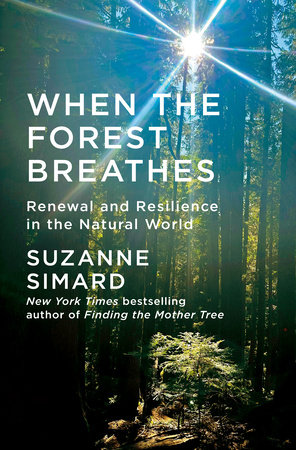
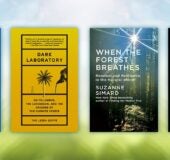
When the Forest Breathes

Renewal and Resilience in the Natural World

Author Suzanne Simard On Tour
Paperback
$20.00 US
6-1/8"W x 9-1/4"H (15.6 x 23.5 cm) | 15 oz (429 g) | 24 per carton
On sale Mar 31, 2026 | 336 Pages | 9781524712976
Sales rights: US, Opn Mkt (no CAN)
Export Edition

See Additional Formats
The author of Finding the Mother Tree and scientist who pioneered the concept of sophisticated communication between trees, Suzanne Simard now offers a powerful vision for saving our forests based on nature’s deep-rooted cycles of renewal.

"A masterclass on the inner workings of forests. . . . This is science as an act of love for the world.” —Zoë Schlanger, author of The Light Eaters


Raised in a family of loggers committed to sensible forest stewardship, trailblazing ecologist Suzanne Simard has watched as timber companies leave forests at higher risk for wildfires, water crises, and plant and animal extinction. But her research has the potential to chart a new course. The forest, she reveals, is a symphony of finely honed cycles of regeneration—from mushrooms breaking down logs to dying elder trees passing their genetic knowledge to younger ones—that hold the key to protecting our forests. Working closely with local Indigenous communities, whose models of responsible forestry have been largely dismissed, Simard examines how human interventions—particularly destruction of the overstory's mother trees—endanger new growth and longevity. If we can honor the tools that trees have honed for sharing intergenerational wisdom, she argues, we can protect these sacred places for many years to come.

As she considers how older living things facilitate the conditions for new growth to flourish, Simard faces parallel rhythms of loss and regeneration in her own life, watching her two daughters grow into adults and savoring her final days with her ailing mother. Animated by wonder for our forests and the intricate practices of caretaking that have long sustained them, When the Forest Breathes is a vital reminder of all the natural world has to teach us about adaptability, resilience, and community.
Chapter 1: Can’t Get Away from Your Roots

It was late afternoon and the August sun was slanting crimson through the trunks of the Douglas firs. The forest felt eerily still. The trees seemed to flag. I heard a tree fall in the distance, and I shivered and looked over my shoulder. Just tired, I thought. Every inch of my body was aching from two solid weeks measuring every tree, log, and soil layer in this forest. I loved the work, but the heat and exertion were taking a toll.

We were working in the Cariboo Mountains, a short drive from Likely, British Columbia, and an eleven-hour commute from our hometown of Nelson, establishing the boundaries for one of the Mother Tree Project plots. If all went according to plan, this plot would be logged three months later, in November 2018, and replanted with our special mix of seedlings the following spring. I banged a foot-long piece of rebar into the ground with my axe, marking the center of the plot, and ran the end of the tape due north fifteen meters through the tangle of creamy honeysuckles and ivory snowberries. The warm, woody air drew streams of sweat through my hair that soaked my ball cap. A red-breasted nuthatch sang a high-pitched neen neen neen, as though playing a tin trumpet in rhythm with our work. I closed my eyes for a moment, feeling the embrace of the mountains. I could hear the ringing thump of Jean’s axe as she established the other end smackdab south, completing the thirty-meter north-south transect.

For the past forty years, Jean and I had worked side by side in the bush, studying how forests responded to the many ways prospecting foresters had cut them down and tried to grow them back. In our early twenties, we’d scrambled up trees to escape grizzlies in the Lillooet Mountains and scaled the craggiest peaks carrying twenty-kilogram packs on our backs. We were bound by our shared love for the woods, by our triumphs and our stumbles. When my daughters were born, I’d plopped them down in the middle of lush thimbleberry bushes to play while we worked. “Can I eat this, Jean?” Hannah would ask, her chubby cheeks and dark hair already smeared with the scrumptious maroon berries. Now both daughters had grown lean and perceptive, their childhoods mostly a memory, while Jean and I were older and more experienced, and more resolved than ever to finding a solution to the ecological crisis that threatened us all.

Peering through the stand of Douglas firs, I could make out Hannah and Nava, eighteen and sixteen years old, briskly laying down a line perpendicular to ours. The heat didn’t seem to bother the girls much. They were scaling over rotting logs, ducking under scarlet-stemmed Douglas maples, and threading the tape directly through plumb fir and feathery cedar saplings to ensure it was dead straight.

Beautiful, I thought. I was proud of my daughters.

At one end of the east-west tape, I spied Nava poking her graduated trowel into the ground every two meters to measure the depth and substance of the forest floor. Her nut-brown hair tied back with a shoelace and a sprig of willow, she pushed at the duff, gently separating the fibers and roots with the metal blade. My younger daughter was pensive and curious. I could hear her whispering thanks to Mother Earth for showing her these hidden secrets.

Hannah had started along the north-south line, calling out forest floor depths as Jean jotted down the numbers. At five foot two, Hannah was a good five inches shorter than Nava and just as fast, her legs lithe from leaping over creeks, arms muscled from packing field gear. Both girls knew just where the greasy black humus, the deepest layer of the forest floor, stopped and the gritty mineral soil started, signifying the depth to which organic carbon could easily be counted.

The two girls raced each other down the lines, their bodies agile, carrying the genes of French scieurs de bois from my side of the family dating back generations. The forests of Europe had provided for our family and prepared them for the woods of North America when our ancestors emigrated five centuries back. The carbon-rich trees and waters of the world’s forests were knitted in the sisters’ blood and bones. Even though they had planned to veer in different directions, one toward human health and the other to the orcas in the Salish Sea, the forest always called my daughters back. “Can’t get away from your roots,” my mum, Granny Junebug, would say, as they sat on her back porch sipping lemonade in the forest-clad valley of the Kootenays where our family had settled. Mum grew up on the edge of the woods in the dirty thirties, didn’t suffer fools gladly, and knew how to get out of a pickle fast. “Git yer stuff and let’s get the hell outta here!” she would say when confronted with a wildfire or an irate bear. She’d instilled in her granddaughters an instinct for survival and a passion for tending the soil and growing a garden, as well as the knowledge that they’d better get a darned good education if they valued their independence.

After ten minutes, the four of us had established the two line transects, each pinned at the middle to the center point, forming a cross in the forest. The ends demarcated the quarter chimes of the circular plot, which looked half the size of a hockey rink. Next, we would methodically record every detail of the plot: the large trees, the small trees, the plant community, the woody debris on the ground, the forest floor, and the layers of mineral soil beneath.

I glanced over at the forest within the plot, seeing trees young and old, shrubs laden with berries purple and red, paintbrushes and arnicas glowing scarlet and yellow. Gaps had opened where some trees had fallen, allowing new light to reach the leaves of willows and alders. Old trees at the edges of the gaps had produced a multitude of cones, spawning new seedlings that were enlivened by the shafts of sunlight. Large decaying logs on the forest floor stored carbon and water while providing homes for shrews and salamanders as well as new conifer seedlings. In the duff, chocolate brown humus was cycling carbon and nutrients to deeper, more protected horizons beneath. The bed of an ephemeral stream meandered through the center. A snag shedding graying bark stood leaning, a pileated woodpecker foraging its cambium for insects and sapwells.

I envisioned layer upon layer of stomata, the very lungs of the trees, in this highly structured woodland, with foliage folded under and over itself in brilliant strata from the forest floor to the treetops. Life felt capable here. Solutions were wired into this place. Our experimental plot, which was split into four segments, aimed to capture the teachings of a medicine wheel, a symbol that has been used for generations by Indigenous cultures around the world. Among its many interpretations, the medicine wheel embodies a worldview of interconnection and the cyclical nature of life: birth, youth, elder, death. Air, water, earth, and fire. Winter, spring, summer, fall. Anyone with a metal detector would be able to find the center pin of this plot, the heart of the medicine wheel, even if the forest burned and found new life again.

Jean and I got busy recording details about the trees while Hannah and Nava turned to measuring downed wood along the transects. Sweat trickled down my spine as I squinted through my laser at the leader of the tallest Douglas fir and shouted its height: “Forty-two point six meters!” This tree was a good two meters taller than the green shoots of its neighbors, and its girth thicker. Jean measured its diameter at 1.3 meters above the ground. The chunky, corky bark was scarred on the north side from a ground fire a century ago, and on the east side by another fire decades earlier. I imagined its massive roots tapping into underground rivulets of water, enabling it to resist the flames. I heard Jean cranking the increment borer, then calling the tree’s age. “Two hundred and fifty-three!”

“Is it a mother tree, Mum?” Hannah glanced up from her meter-long calipers clutching a rotten log.

“More like a grandmother.” This tree was not only a giant, she was the oldest in the patch.

I shifted my laser to measure the height of another elder tree as a black-and-yellow swallowtail butterfly fluttered down through the branches, then wafted up again in the soft, warm air. A mirage of carbon dioxide and water molecules from photosynthesis and transpiration was hovering in the downdrafts and updrafts. I blinked, paused to take a drink of water, looked again. The molecules were splitting into their bare elements: carbon, hydrogen, and oxygen. Carbon, with six each of protons, neutrons, and electrons, was forming covalent bonds and joining into long-chain organic polymers. Then it was flipping between its two stable states, 12C and 13C, and its natural radioactive species, 14C. Forming graphite and diamonds, right before my eyes. Heat will do that to a person, I thought.

Carbon is the element of beauty, essential to life on Earth. Carbon dioxide is fixed by plants into sugars by photosynthesis, and this food is used for growth and development. The plants in turn serve as food for the herbivores, who are eaten by carnivores, and this places plants at the base of the food chain. Photosynthesis is the finely evolved process that makes all life on Earth possible, by converting light from the sun into chemical energy, which then becomes biomass and habitat, abundance and biodiversity. All that we were measuring today in this plot.

Carbon is thus an essential element of life in forests. It is sequestered and stored in the trees and plants, and transformed, transmuted, and stored in the soils and animals. Indeed, about half of the biomass of a tree is carbon alone, and when we measure the size of a tree, we can easily document how much carbon is contained in its great body. Scientists have estimated how much carbon is stored in forests globally—including the trees, plants, and soils—and what the size of these pools is relative to those in the atmosphere and oceans. When we log a forest, we can easily count how much carbon remains behind in the ecosystem, and how much is transferred to the atmosphere, into streams, or into forest products. We can measure the impact of our actions on the carbon pools, and how quickly it takes a forest to recover its stocks.

Sitting down in the shade, I picked up a fallen Douglas fir branch, the soft needles coated with a milky wax protecting them against water loss in this arid climate. I could use some of that, I thought. I pulled my cap lower over my sweaty brow. The glaucous sheath had turned the needles to sage green, the light wavelength reflected by chlorophyll. Chlorophyll is the compound—a pigmented protein—that makes photosynthesis possible. It’s composed of a brilliant assortment of carbon, oxygen, hydrogen, nitrogen, and magnesium molecules, in a structure similar to human blood. The magnesium in the chlorophyll reflects green light, just as the iron in hemoglobin makes blood run red. Chlorophyll captures sunlight, just as blood captures oxygen. I rubbed some needles on my flushed cheeks, inhaling the tart essence, and was immediately refreshed.

I reflected on the way trees and humans are intimately interdependent, breathing in and out each other’s essence in rhyme. The trees (the autotrophs, the producers) breathe in the carbon dioxide that we (the heterotrophs, the consumers) breathe out. In turn, trees breathe out pure oxygen that humans breathe in. Photosynthesis and respiration, performed by plants, algae, and cyanobacteria, are the foundation of life. These processes provide the food and energy for the rest of the food chain: insects, eagles, wolves, and humans. The products of photosynthesis—carbon, water, and oxygen—are stored in global pools including plants, soils, the oceans, and the atmosphere.

Hannah and Nava came and flopped down next to me, and Jean joined us to take a break in the shade of the old trees. Nava took a swig of water as she settled among the flowers, then passed the jug around. The understory was rich with dozens of species, some common, others that thrive particularly well under closed forest canopies. My daughters had been seeing and touching these plants since they were babies. I brushed my hand against a Saskatoon berry, also known as serviceberry or juneberry. The shrub was taller than me, with blue-sage serrated leaves and white papery flowers that turn to deep purple berries by midsummer. The plants had flowered around my house in April, the same month Hannah was born. By the time she could hold her head up a few months later, the Saskatoons had fruited in abundance, and my beautiful baby girl reached in delight for their juicy indigo berries.

Not far away was a specimen of Rosa gymnocarpa, the baldhip rose, which loves shade and blooms pink and lavender flowers that give way to brilliant orange-scarlet hips that provide food for birds and other small forest creatures.

“You can make tea from the stems and leaves,” Hannah said. She remembered making it in a pail in the forest with her cousin Kelly Rose when she was little.

I spotted some Shepherdia canadensis, or soopolallie, its leathery opposite leaves lit with bright-red bitter berries, beloved by humans and bears alike. In late summer, a single grizzly will eat thousands of these berries a day. I’d sat around a fire with an elder from the Xatśūll Nation who’d whipped them together with huckleberries and water to make a foamy dessert called Indian ice cream, or sxusem. Jean told us that soopolallie could also be used as an astringent by rubbing the berry juice over one’s face.

We were sitting on a mound of Hylocomium splendens, or step moss, also known by the fairy-tale name of glittering woodmoss. The hardy souls who live off-grid in log cabins in northernmost Canada used to use step moss—and maybe still do—to fill the gaps between logs and keep the bitter cold at bay. Nava counted the number of “steps” in the moss nearest her, telling its age in years.

When we had finished our break, my daughters retraced the transects once more, this time to measure all of the small wood, the branches and twigs, lying on the ground that intersected the crisscrossed tapes. I was glad the girls were taking care of these measurements because it required constant bending over, and my back was sore. I could hear the twigs crunching under the girls’ boots as they worked, and I started to worry about fire danger. The flammable little pieces of wood on the ground are called fine fuels, and this kind of heat could whip up an intense ground fire in a thunderstorm.
“A masterclass on the inner workings of forests—a lush glimpse at the symphonic mutualisms and intergenerational cascades that sustain life at every scale. Simard, one of the boundary-pushing scientists of our time, is also a resplendent storyteller. Through her, new threads of connection between Indigenous knowledge and Western science are formed. The experiments and ideas in When the Forest Breathes are quietly revolutionary. This is science as an act of love for the world.”
—Zoë Schlanger, author of The Light Eaters

"Simard’s latest investigates the many and beautiful ways in which forests regenerate themselves, existing as they do in overlapping cycles of life and death. . . . As she meditates on the incipient adulthood of her two daughters, just as her own mother’s life is winding down, Simard comes to understand that human life is not all that different."
—LitHub

"In this fervent follow-up to Finding the Mother Tree, forest ecologist Simard delivers a potent mix of superb science writing, environmental advocacy, and a sense of spirituality inspired by her close connection to the natural world . . . . Throughout these pages, one mighty message reverberates: protect the trees and save the forests."
—Booklist (starred review)

“This passionate study from ecologist Simard reveals how preserving forests’ natural cycles of death and renewal is key to their longevity . . . . Throughout, Simard artfully highlights the importance of honoring natural cycles by reflecting on her daughter’s coming-of-age and her mother’s reaching the end of her life. The result is a resonant and urgent call for change.”
—Publishers Weekly

A captivating journey into the deep woods . . . . Simard clearly conveys the excitement of planning and carrying out her experiments, as well as the many obstacles to be conquered….Her gratitude toward and appreciation for [her] students . . . is touching, as they follow in her footsteps and come up with enticing new projects of their own . . . . Simard’s lyrical tributes to the creatures large and small that make up an ecological system, from fungi and moss to squirrels and bears to the largest and oldest of trees, add a dimension of heart . . . . A determinedly hopeful tribute to natural regeneration.”
—Kirkus


"lluminating and deeply personal. . . .The knowledge that Simard derives from her research is as much about resilience . . . as it is about scientific discovery. . . . Genuinely fascinating . . . Simard is a clear and engaging narrator."
—Library Journal
© Brendan Ko
DR. SUZANNE SIMARD is a professor of forest ecology at the University of British Columbia, where she currently leads the Mother Tree Project and co-directs the Belowground Ecosystem Group. Her work has been published widely, with more than 170 scientific articles in peer-reviewed journals. Her research has been communicated broadly through three TED Talks, TED Experiences, and articles and interviews in The New Yorker, National Geographic, NPR, CNN, and many more. She lives with her family in the mountains around Nelson, British Columbia. View titles by Suzanne Simard
Available for sale exclusive:
•     Guam
•     Minor Outl.Ins.
•     North Mariana
•     Philippines
•     Puerto Rico
•     Samoa,American
•     US Virgin Is.

Available for sale non-exclusive:
•     Afghanistan
•     Aland Islands
•     Albania
•     Algeria
•     Andorra
•     Angola
•     Antarctica
•     Argentina
•     Armenia
•     Aruba
•     Austria
•     Azerbaijan
•     Bahrain
•     Belarus
•     Belgium
•     Benin
•     Bolivia
•     Bonaire, Saba
•     Bosnia Herzeg.
•     Bouvet Island
•     Brazil
•     Bulgaria
•     Burkina Faso
•     Burundi
•     Cambodia
•     Cape Verde
•     Centr.Afr.Rep.
•     Chad
•     Chile
•     China
•     Colombia
•     Comoro Is.
•     Congo
•     Cook Islands
•     Costa Rica
•     Croatia
•     Cuba
•     Curacao
•     Czech Republic
•     Dem. Rep. Congo
•     Denmark
•     Djibouti
•     Dominican Rep.
•     Ecuador
•     Egypt
•     El Salvador
•     Equatorial Gui.
•     Eritrea
•     Estonia
•     Ethiopia
•     Faroe Islands
•     Finland
•     France
•     Fren.Polynesia
•     French Guinea
•     Gabon
•     Georgia
•     Germany
•     Greece
•     Greenland
•     Guadeloupe
•     Guatemala
•     Guinea Republic
•     Guinea-Bissau
•     Haiti
•     Heard/McDon.Isl
•     Honduras
•     Hong Kong
•     Hungary
•     Iceland
•     Indonesia
•     Iran
•     Israel
•     Italy
•     Ivory Coast
•     Japan
•     Kazakhstan
•     Kyrgyzstan
•     Laos
•     Latvia
•     Lebanon
•     Liberia
•     Libya
•     Liechtenstein
•     Lithuania
•     Luxembourg
•     Macau
•     Macedonia
•     Madagascar
•     Maldives
•     Mali
•     Marshall island
•     Martinique
•     Mauritania
•     Mayotte
•     Mexico
•     Micronesia
•     Moldavia
•     Monaco
•     Mongolia
•     Montenegro
•     Morocco
•     Myanmar
•     Nepal
•     Netherlands
•     New Caledonia
•     Nicaragua
•     Niger
•     Niue
•     Norfolk Island
•     North Korea
•     Norway
•     Oman
•     Palau
•     Palestinian Ter
•     Panama
•     Paraguay
•     Peru
•     Poland
•     Portugal
•     Qatar
•     Reunion Island
•     Romania
•     Russian Fed.
•     Rwanda
•     Saint Martin
•     San Marino
•     SaoTome Princip
•     Saudi Arabia
•     Senegal
•     Serbia
•     Sint Maarten
•     Slovakia
•     Slovenia
•     South Korea
•     South Sudan
•     Spain
•     St Barthelemy
•     St.Pier,Miquel.
•     Sth Terr. Franc
•     Suriname
•     Svalbard
•     Sweden
•     Switzerland
•     Syria
•     Tadschikistan
•     Taiwan
•     Thailand
•     Timor-Leste
•     Togo
•     Tokelau Islands
•     Tunisia
•     Turkey
•     Turkmenistan
•     Ukraine
•     Unit.Arab Emir.
•     Uruguay
•     Uzbekistan
•     Vatican City
•     Venezuela
•     Vietnam
•     Wallis,Futuna
•     West Saharan
•     Yemen

Not available for sale:
•     Anguilla
•     Antigua/Barbuda
•     Australia
•     Bahamas
•     Bangladesh
•     Barbados
•     Belize
•     Bermuda
•     Bhutan
•     Botswana
•     Brit.Ind.Oc.Ter
•     Brit.Virgin Is.
•     Brunei
•     Cameroon
•     Canada
•     Cayman Islands
•     Christmas Islnd
•     Cocos Islands
•     Cyprus
•     Dominica
•     Falkland Islnds
•     Fiji
•     Gambia
•     Ghana
•     Gibraltar
•     Grenada
•     Guernsey
•     Guyana
•     India
•     Iraq
•     Ireland
•     Isle of Man
•     Jamaica
•     Jersey
•     Jordan
•     Kenya
•     Kiribati
•     Kuwait
•     Lesotho
•     Malawi
•     Malaysia
•     Malta
•     Mauritius
•     Montserrat
•     Mozambique
•     Namibia
•     Nauru
•     New Zealand
•     Nigeria
•     Pakistan
•     PapuaNewGuinea
•     Pitcairn Islnds
•     S. Sandwich Ins
•     Seychelles
•     Sierra Leone
•     Singapore
•     Solomon Islands
•     Somalia
•     South Africa
•     Sri Lanka
•     St. Helena
•     St. Lucia
•     St. Vincent
•     St.Chr.,Nevis
•     Sudan
•     Swaziland
•     Tanzania
•     Tonga
•     Trinidad,Tobago
•     Turks&Caicos Is
•     Tuvalu
•     USA
•     Uganda
•     United Kingdom
•     Vanuatu
•     Western Samoa
•     Zambia
•     Zimbabwe

About

The author of Finding the Mother Tree and scientist who pioneered the concept of sophisticated communication between trees, Suzanne Simard now offers a powerful vision for saving our forests based on nature’s deep-rooted cycles of renewal.

"A masterclass on the inner workings of forests. . . . This is science as an act of love for the world.” —Zoë Schlanger, author of The Light Eaters


Raised in a family of loggers committed to sensible forest stewardship, trailblazing ecologist Suzanne Simard has watched as timber companies leave forests at higher risk for wildfires, water crises, and plant and animal extinction. But her research has the potential to chart a new course. The forest, she reveals, is a symphony of finely honed cycles of regeneration—from mushrooms breaking down logs to dying elder trees passing their genetic knowledge to younger ones—that hold the key to protecting our forests. Working closely with local Indigenous communities, whose models of responsible forestry have been largely dismissed, Simard examines how human interventions—particularly destruction of the overstory's mother trees—endanger new growth and longevity. If we can honor the tools that trees have honed for sharing intergenerational wisdom, she argues, we can protect these sacred places for many years to come.

As she considers how older living things facilitate the conditions for new growth to flourish, Simard faces parallel rhythms of loss and regeneration in her own life, watching her two daughters grow into adults and savoring her final days with her ailing mother. Animated by wonder for our forests and the intricate practices of caretaking that have long sustained them, When the Forest Breathes is a vital reminder of all the natural world has to teach us about adaptability, resilience, and community.

Excerpt

Chapter 1: Can’t Get Away from Your Roots

It was late afternoon and the August sun was slanting crimson through the trunks of the Douglas firs. The forest felt eerily still. The trees seemed to flag. I heard a tree fall in the distance, and I shivered and looked over my shoulder. Just tired, I thought. Every inch of my body was aching from two solid weeks measuring every tree, log, and soil layer in this forest. I loved the work, but the heat and exertion were taking a toll.

We were working in the Cariboo Mountains, a short drive from Likely, British Columbia, and an eleven-hour commute from our hometown of Nelson, establishing the boundaries for one of the Mother Tree Project plots. If all went according to plan, this plot would be logged three months later, in November 2018, and replanted with our special mix of seedlings the following spring. I banged a foot-long piece of rebar into the ground with my axe, marking the center of the plot, and ran the end of the tape due north fifteen meters through the tangle of creamy honeysuckles and ivory snowberries. The warm, woody air drew streams of sweat through my hair that soaked my ball cap. A red-breasted nuthatch sang a high-pitched neen neen neen, as though playing a tin trumpet in rhythm with our work. I closed my eyes for a moment, feeling the embrace of the mountains. I could hear the ringing thump of Jean’s axe as she established the other end smackdab south, completing the thirty-meter north-south transect.

For the past forty years, Jean and I had worked side by side in the bush, studying how forests responded to the many ways prospecting foresters had cut them down and tried to grow them back. In our early twenties, we’d scrambled up trees to escape grizzlies in the Lillooet Mountains and scaled the craggiest peaks carrying twenty-kilogram packs on our backs. We were bound by our shared love for the woods, by our triumphs and our stumbles. When my daughters were born, I’d plopped them down in the middle of lush thimbleberry bushes to play while we worked. “Can I eat this, Jean?” Hannah would ask, her chubby cheeks and dark hair already smeared with the scrumptious maroon berries. Now both daughters had grown lean and perceptive, their childhoods mostly a memory, while Jean and I were older and more experienced, and more resolved than ever to finding a solution to the ecological crisis that threatened us all.

Peering through the stand of Douglas firs, I could make out Hannah and Nava, eighteen and sixteen years old, briskly laying down a line perpendicular to ours. The heat didn’t seem to bother the girls much. They were scaling over rotting logs, ducking under scarlet-stemmed Douglas maples, and threading the tape directly through plumb fir and feathery cedar saplings to ensure it was dead straight.

Beautiful, I thought. I was proud of my daughters.

At one end of the east-west tape, I spied Nava poking her graduated trowel into the ground every two meters to measure the depth and substance of the forest floor. Her nut-brown hair tied back with a shoelace and a sprig of willow, she pushed at the duff, gently separating the fibers and roots with the metal blade. My younger daughter was pensive and curious. I could hear her whispering thanks to Mother Earth for showing her these hidden secrets.

Hannah had started along the north-south line, calling out forest floor depths as Jean jotted down the numbers. At five foot two, Hannah was a good five inches shorter than Nava and just as fast, her legs lithe from leaping over creeks, arms muscled from packing field gear. Both girls knew just where the greasy black humus, the deepest layer of the forest floor, stopped and the gritty mineral soil started, signifying the depth to which organic carbon could easily be counted.

The two girls raced each other down the lines, their bodies agile, carrying the genes of French scieurs de bois from my side of the family dating back generations. The forests of Europe had provided for our family and prepared them for the woods of North America when our ancestors emigrated five centuries back. The carbon-rich trees and waters of the world’s forests were knitted in the sisters’ blood and bones. Even though they had planned to veer in different directions, one toward human health and the other to the orcas in the Salish Sea, the forest always called my daughters back. “Can’t get away from your roots,” my mum, Granny Junebug, would say, as they sat on her back porch sipping lemonade in the forest-clad valley of the Kootenays where our family had settled. Mum grew up on the edge of the woods in the dirty thirties, didn’t suffer fools gladly, and knew how to get out of a pickle fast. “Git yer stuff and let’s get the hell outta here!” she would say when confronted with a wildfire or an irate bear. She’d instilled in her granddaughters an instinct for survival and a passion for tending the soil and growing a garden, as well as the knowledge that they’d better get a darned good education if they valued their independence.

After ten minutes, the four of us had established the two line transects, each pinned at the middle to the center point, forming a cross in the forest. The ends demarcated the quarter chimes of the circular plot, which looked half the size of a hockey rink. Next, we would methodically record every detail of the plot: the large trees, the small trees, the plant community, the woody debris on the ground, the forest floor, and the layers of mineral soil beneath.

I glanced over at the forest within the plot, seeing trees young and old, shrubs laden with berries purple and red, paintbrushes and arnicas glowing scarlet and yellow. Gaps had opened where some trees had fallen, allowing new light to reach the leaves of willows and alders. Old trees at the edges of the gaps had produced a multitude of cones, spawning new seedlings that were enlivened by the shafts of sunlight. Large decaying logs on the forest floor stored carbon and water while providing homes for shrews and salamanders as well as new conifer seedlings. In the duff, chocolate brown humus was cycling carbon and nutrients to deeper, more protected horizons beneath. The bed of an ephemeral stream meandered through the center. A snag shedding graying bark stood leaning, a pileated woodpecker foraging its cambium for insects and sapwells.

I envisioned layer upon layer of stomata, the very lungs of the trees, in this highly structured woodland, with foliage folded under and over itself in brilliant strata from the forest floor to the treetops. Life felt capable here. Solutions were wired into this place. Our experimental plot, which was split into four segments, aimed to capture the teachings of a medicine wheel, a symbol that has been used for generations by Indigenous cultures around the world. Among its many interpretations, the medicine wheel embodies a worldview of interconnection and the cyclical nature of life: birth, youth, elder, death. Air, water, earth, and fire. Winter, spring, summer, fall. Anyone with a metal detector would be able to find the center pin of this plot, the heart of the medicine wheel, even if the forest burned and found new life again.

Jean and I got busy recording details about the trees while Hannah and Nava turned to measuring downed wood along the transects. Sweat trickled down my spine as I squinted through my laser at the leader of the tallest Douglas fir and shouted its height: “Forty-two point six meters!” This tree was a good two meters taller than the green shoots of its neighbors, and its girth thicker. Jean measured its diameter at 1.3 meters above the ground. The chunky, corky bark was scarred on the north side from a ground fire a century ago, and on the east side by another fire decades earlier. I imagined its massive roots tapping into underground rivulets of water, enabling it to resist the flames. I heard Jean cranking the increment borer, then calling the tree’s age. “Two hundred and fifty-three!”

“Is it a mother tree, Mum?” Hannah glanced up from her meter-long calipers clutching a rotten log.

“More like a grandmother.” This tree was not only a giant, she was the oldest in the patch.

I shifted my laser to measure the height of another elder tree as a black-and-yellow swallowtail butterfly fluttered down through the branches, then wafted up again in the soft, warm air. A mirage of carbon dioxide and water molecules from photosynthesis and transpiration was hovering in the downdrafts and updrafts. I blinked, paused to take a drink of water, looked again. The molecules were splitting into their bare elements: carbon, hydrogen, and oxygen. Carbon, with six each of protons, neutrons, and electrons, was forming covalent bonds and joining into long-chain organic polymers. Then it was flipping between its two stable states, 12C and 13C, and its natural radioactive species, 14C. Forming graphite and diamonds, right before my eyes. Heat will do that to a person, I thought.

Carbon is the element of beauty, essential to life on Earth. Carbon dioxide is fixed by plants into sugars by photosynthesis, and this food is used for growth and development. The plants in turn serve as food for the herbivores, who are eaten by carnivores, and this places plants at the base of the food chain. Photosynthesis is the finely evolved process that makes all life on Earth possible, by converting light from the sun into chemical energy, which then becomes biomass and habitat, abundance and biodiversity. All that we were measuring today in this plot.

Carbon is thus an essential element of life in forests. It is sequestered and stored in the trees and plants, and transformed, transmuted, and stored in the soils and animals. Indeed, about half of the biomass of a tree is carbon alone, and when we measure the size of a tree, we can easily document how much carbon is contained in its great body. Scientists have estimated how much carbon is stored in forests globally—including the trees, plants, and soils—and what the size of these pools is relative to those in the atmosphere and oceans. When we log a forest, we can easily count how much carbon remains behind in the ecosystem, and how much is transferred to the atmosphere, into streams, or into forest products. We can measure the impact of our actions on the carbon pools, and how quickly it takes a forest to recover its stocks.

Sitting down in the shade, I picked up a fallen Douglas fir branch, the soft needles coated with a milky wax protecting them against water loss in this arid climate. I could use some of that, I thought. I pulled my cap lower over my sweaty brow. The glaucous sheath had turned the needles to sage green, the light wavelength reflected by chlorophyll. Chlorophyll is the compound—a pigmented protein—that makes photosynthesis possible. It’s composed of a brilliant assortment of carbon, oxygen, hydrogen, nitrogen, and magnesium molecules, in a structure similar to human blood. The magnesium in the chlorophyll reflects green light, just as the iron in hemoglobin makes blood run red. Chlorophyll captures sunlight, just as blood captures oxygen. I rubbed some needles on my flushed cheeks, inhaling the tart essence, and was immediately refreshed.

I reflected on the way trees and humans are intimately interdependent, breathing in and out each other’s essence in rhyme. The trees (the autotrophs, the producers) breathe in the carbon dioxide that we (the heterotrophs, the consumers) breathe out. In turn, trees breathe out pure oxygen that humans breathe in. Photosynthesis and respiration, performed by plants, algae, and cyanobacteria, are the foundation of life. These processes provide the food and energy for the rest of the food chain: insects, eagles, wolves, and humans. The products of photosynthesis—carbon, water, and oxygen—are stored in global pools including plants, soils, the oceans, and the atmosphere.

Hannah and Nava came and flopped down next to me, and Jean joined us to take a break in the shade of the old trees. Nava took a swig of water as she settled among the flowers, then passed the jug around. The understory was rich with dozens of species, some common, others that thrive particularly well under closed forest canopies. My daughters had been seeing and touching these plants since they were babies. I brushed my hand against a Saskatoon berry, also known as serviceberry or juneberry. The shrub was taller than me, with blue-sage serrated leaves and white papery flowers that turn to deep purple berries by midsummer. The plants had flowered around my house in April, the same month Hannah was born. By the time she could hold her head up a few months later, the Saskatoons had fruited in abundance, and my beautiful baby girl reached in delight for their juicy indigo berries.

Not far away was a specimen of Rosa gymnocarpa, the baldhip rose, which loves shade and blooms pink and lavender flowers that give way to brilliant orange-scarlet hips that provide food for birds and other small forest creatures.

“You can make tea from the stems and leaves,” Hannah said. She remembered making it in a pail in the forest with her cousin Kelly Rose when she was little.

I spotted some Shepherdia canadensis, or soopolallie, its leathery opposite leaves lit with bright-red bitter berries, beloved by humans and bears alike. In late summer, a single grizzly will eat thousands of these berries a day. I’d sat around a fire with an elder from the Xatśūll Nation who’d whipped them together with huckleberries and water to make a foamy dessert called Indian ice cream, or sxusem. Jean told us that soopolallie could also be used as an astringent by rubbing the berry juice over one’s face.

We were sitting on a mound of Hylocomium splendens, or step moss, also known by the fairy-tale name of glittering woodmoss. The hardy souls who live off-grid in log cabins in northernmost Canada used to use step moss—and maybe still do—to fill the gaps between logs and keep the bitter cold at bay. Nava counted the number of “steps” in the moss nearest her, telling its age in years.

When we had finished our break, my daughters retraced the transects once more, this time to measure all of the small wood, the branches and twigs, lying on the ground that intersected the crisscrossed tapes. I was glad the girls were taking care of these measurements because it required constant bending over, and my back was sore. I could hear the twigs crunching under the girls’ boots as they worked, and I started to worry about fire danger. The flammable little pieces of wood on the ground are called fine fuels, and this kind of heat could whip up an intense ground fire in a thunderstorm.

Praise

“A masterclass on the inner workings of forests—a lush glimpse at the symphonic mutualisms and intergenerational cascades that sustain life at every scale. Simard, one of the boundary-pushing scientists of our time, is also a resplendent storyteller. Through her, new threads of connection between Indigenous knowledge and Western science are formed. The experiments and ideas in When the Forest Breathes are quietly revolutionary. This is science as an act of love for the world.”
—Zoë Schlanger, author of The Light Eaters

"Simard’s latest investigates the many and beautiful ways in which forests regenerate themselves, existing as they do in overlapping cycles of life and death. . . . As she meditates on the incipient adulthood of her two daughters, just as her own mother’s life is winding down, Simard comes to understand that human life is not all that different."
—LitHub

"In this fervent follow-up to Finding the Mother Tree, forest ecologist Simard delivers a potent mix of superb science writing, environmental advocacy, and a sense of spirituality inspired by her close connection to the natural world . . . . Throughout these pages, one mighty message reverberates: protect the trees and save the forests."
—Booklist (starred review)

“This passionate study from ecologist Simard reveals how preserving forests’ natural cycles of death and renewal is key to their longevity . . . . Throughout, Simard artfully highlights the importance of honoring natural cycles by reflecting on her daughter’s coming-of-age and her mother’s reaching the end of her life. The result is a resonant and urgent call for change.”
—Publishers Weekly

A captivating journey into the deep woods . . . . Simard clearly conveys the excitement of planning and carrying out her experiments, as well as the many obstacles to be conquered….Her gratitude toward and appreciation for [her] students . . . is touching, as they follow in her footsteps and come up with enticing new projects of their own . . . . Simard’s lyrical tributes to the creatures large and small that make up an ecological system, from fungi and moss to squirrels and bears to the largest and oldest of trees, add a dimension of heart . . . . A determinedly hopeful tribute to natural regeneration.”
—Kirkus


"lluminating and deeply personal. . . .The knowledge that Simard derives from her research is as much about resilience . . . as it is about scientific discovery. . . . Genuinely fascinating . . . Simard is a clear and engaging narrator."
—Library Journal

Author

© Brendan Ko
DR. SUZANNE SIMARD is a professor of forest ecology at the University of British Columbia, where she currently leads the Mother Tree Project and co-directs the Belowground Ecosystem Group. Her work has been published widely, with more than 170 scientific articles in peer-reviewed journals. Her research has been communicated broadly through three TED Talks, TED Experiences, and articles and interviews in The New Yorker, National Geographic, NPR, CNN, and many more. She lives with her family in the mountains around Nelson, British Columbia. View titles by Suzanne Simard

Rights

Available for sale exclusive:
•     Guam
•     Minor Outl.Ins.
•     North Mariana
•     Philippines
•     Puerto Rico
•     Samoa,American
•     US Virgin Is.

Available for sale non-exclusive:
•     Afghanistan
•     Aland Islands
•     Albania
•     Algeria
•     Andorra
•     Angola
•     Antarctica
•     Argentina
•     Armenia
•     Aruba
•     Austria
•     Azerbaijan
•     Bahrain
•     Belarus
•     Belgium
•     Benin
•     Bolivia
•     Bonaire, Saba
•     Bosnia Herzeg.
•     Bouvet Island
•     Brazil
•     Bulgaria
•     Burkina Faso
•     Burundi
•     Cambodia
•     Cape Verde
•     Centr.Afr.Rep.
•     Chad
•     Chile
•     China
•     Colombia
•     Comoro Is.
•     Congo
•     Cook Islands
•     Costa Rica
•     Croatia
•     Cuba
•     Curacao
•     Czech Republic
•     Dem. Rep. Congo
•     Denmark
•     Djibouti
•     Dominican Rep.
•     Ecuador
•     Egypt
•     El Salvador
•     Equatorial Gui.
•     Eritrea
•     Estonia
•     Ethiopia
•     Faroe Islands
•     Finland
•     France
•     Fren.Polynesia
•     French Guinea
•     Gabon
•     Georgia
•     Germany
•     Greece
•     Greenland
•     Guadeloupe
•     Guatemala
•     Guinea Republic
•     Guinea-Bissau
•     Haiti
•     Heard/McDon.Isl
•     Honduras
•     Hong Kong
•     Hungary
•     Iceland
•     Indonesia
•     Iran
•     Israel
•     Italy
•     Ivory Coast
•     Japan
•     Kazakhstan
•     Kyrgyzstan
•     Laos
•     Latvia
•     Lebanon
•     Liberia
•     Libya
•     Liechtenstein
•     Lithuania
•     Luxembourg
•     Macau
•     Macedonia
•     Madagascar
•     Maldives
•     Mali
•     Marshall island
•     Martinique
•     Mauritania
•     Mayotte
•     Mexico
•     Micronesia
•     Moldavia
•     Monaco
•     Mongolia
•     Montenegro
•     Morocco
•     Myanmar
•     Nepal
•     Netherlands
•     New Caledonia
•     Nicaragua
•     Niger
•     Niue
•     Norfolk Island
•     North Korea
•     Norway
•     Oman
•     Palau
•     Palestinian Ter
•     Panama
•     Paraguay
•     Peru
•     Poland
•     Portugal
•     Qatar
•     Reunion Island
•     Romania
•     Russian Fed.
•     Rwanda
•     Saint Martin
•     San Marino
•     SaoTome Princip
•     Saudi Arabia
•     Senegal
•     Serbia
•     Sint Maarten
•     Slovakia
•     Slovenia
•     South Korea
•     South Sudan
•     Spain
•     St Barthelemy
•     St.Pier,Miquel.
•     Sth Terr. Franc
•     Suriname
•     Svalbard
•     Sweden
•     Switzerland
•     Syria
•     Tadschikistan
•     Taiwan
•     Thailand
•     Timor-Leste
•     Togo
•     Tokelau Islands
•     Tunisia
•     Turkey
•     Turkmenistan
•     Ukraine
•     Unit.Arab Emir.
•     Uruguay
•     Uzbekistan
•     Vatican City
•     Venezuela
•     Vietnam
•     Wallis,Futuna
•     West Saharan
•     Yemen

Not available for sale:
•     Anguilla
•     Antigua/Barbuda
•     Australia
•     Bahamas
•     Bangladesh
•     Barbados
•     Belize
•     Bermuda
•     Bhutan
•     Botswana
•     Brit.Ind.Oc.Ter
•     Brit.Virgin Is.
•     Brunei
•     Cameroon
•     Canada
•     Cayman Islands
•     Christmas Islnd
•     Cocos Islands
•     Cyprus
•     Dominica
•     Falkland Islnds
•     Fiji
•     Gambia
•     Ghana
•     Gibraltar
•     Grenada
•     Guernsey
•     Guyana
•     India
•     Iraq
•     Ireland
•     Isle of Man
•     Jamaica
•     Jersey
•     Jordan
•     Kenya
•     Kiribati
•     Kuwait
•     Lesotho
•     Malawi
•     Malaysia
•     Malta
•     Mauritius
•     Montserrat
•     Mozambique
•     Namibia
•     Nauru
•     New Zealand
•     Nigeria
•     Pakistan
•     PapuaNewGuinea
•     Pitcairn Islnds
•     S. Sandwich Ins
•     Seychelles
•     Sierra Leone
•     Singapore
•     Solomon Islands
•     Somalia
•     South Africa
•     Sri Lanka
•     St. Helena
•     St. Lucia
•     St. Vincent
•     St.Chr.,Nevis
•     Sudan
•     Swaziland
•     Tanzania
•     Tonga
•     Trinidad,Tobago
•     Turks&Caicos Is
•     Tuvalu
•     USA
•     Uganda
•     United Kingdom
•     Vanuatu
•     Western Samoa
•     Zambia
•     Zimbabwe

March Picks For Higher Education

Our March Picks for Higher Education feature a range of fiction and nonfiction curated to resonate with college students, professors, and lifelong learners. These selections are ideal for seminar discussions and independent exploration. For the complete list of March Picks for Higher Education, click here. Check out all our February collections using these links below.

Read more