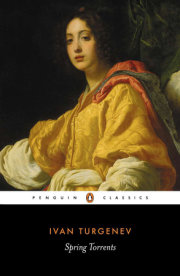
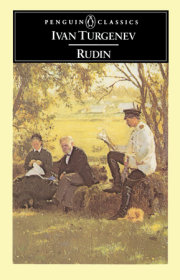
Ivan Turgenev's three classic tales of youthful passion and folly open up vistas of tragic complexity and psychological insight into the secrets of the heart.
"First Love" is one of the finest of Turgenev's creations. The story of an adolescent boy and his father who are entranced by the same woman, it weaves together twin mysteries: the secret romantic entanglement that propels its plot and the drama of a young mind awakening to the bittersweet experience of love and loss.
"Spring Torrents," one of Turgenev's most beloved stories, features an impulsive Russian youth traveling abroad who is spurred by his infatuation with a baker's sweet young daughter to sell his estates back home and start a new life with her, only to fall instead under the sway of a seductive married woman.
"A Fire at Sea" was inspired by an incident very early in the author's life when his courage failed during a harrowing disaster aboard a ship. Haunted by his own reaction and that of his fellow passengers, Turgenev was inspired to write this raw and honest exploration of human weakness in the face of catastrophe.
Turgenev's work as a whole is crucial to understanding the social currents of nineteenth-century Russia, but it is in his stories—fluid, lyrical, evocative, and timeless—that he most fully demonstrates his universality as a writer.
Ivan Sergeyevich Turgenev was born in 1818 in the Province of Orel, and suffered during his childhood from a tyrannical mother. After the family had moved to Moscow in 1827 he entered Petersburg University where he studied philosophy. When he was nineteen he published his first poems and, convinced that Europe contained the source of real knowledge, went to the University of Berlin. After two years he returned to Russia and took his degree at the University of Moscow. In 1843 he fell in love with Pauline Garcia-Viardot, a young Spanish singer, who influenced the rest of his life; he followed her on her singing tours in Europe and spent long periods in the French house of herself and her husband, both of whom accepted him as a family friend. He sent his daughter by a sempstress to be brought up among the Viardot children. After 1856 he lived mostly abroad, and he became the first Russian writer to gain a wide reputation in Europe; he was a well-known figure in Parisian literary circles, where his friends included Flaubert and the Goncourt brothers, and an honorary degree was conferred on him at Oxford. His series of six novels reflect a period of Russian life from 1830s to the 1870s: they are Rudin (1855), A House of Gentlefolk (1858), On the Eve (1859; a Penguin Classic), Fathers and Sons (1861), Smoke (1867) and Virgin Soil (1876). He also wrote plays, which include the comedy A Month in the Country; short stories and Sketches from a Hunter’s Album (a Penguin Classic); and literary essays and memoirs. He died in Paris in 1883 after being ill for a year, and was buried in Russia.
View titles by Ivan Turgenev
Ivan Turgenev's three classic tales of youthful passion and folly open up vistas of tragic complexity and psychological insight into the secrets of the heart.
"First Love" is one of the finest of Turgenev's creations. The story of an adolescent boy and his father who are entranced by the same woman, it weaves together twin mysteries: the secret romantic entanglement that propels its plot and the drama of a young mind awakening to the bittersweet experience of love and loss.
"Spring Torrents," one of Turgenev's most beloved stories, features an impulsive Russian youth traveling abroad who is spurred by his infatuation with a baker's sweet young daughter to sell his estates back home and start a new life with her, only to fall instead under the sway of a seductive married woman.
"A Fire at Sea" was inspired by an incident very early in the author's life when his courage failed during a harrowing disaster aboard a ship. Haunted by his own reaction and that of his fellow passengers, Turgenev was inspired to write this raw and honest exploration of human weakness in the face of catastrophe.
Turgenev's work as a whole is crucial to understanding the social currents of nineteenth-century Russia, but it is in his stories—fluid, lyrical, evocative, and timeless—that he most fully demonstrates his universality as a writer.
Author
Ivan Sergeyevich Turgenev was born in 1818 in the Province of Orel, and suffered during his childhood from a tyrannical mother. After the family had moved to Moscow in 1827 he entered Petersburg University where he studied philosophy. When he was nineteen he published his first poems and, convinced that Europe contained the source of real knowledge, went to the University of Berlin. After two years he returned to Russia and took his degree at the University of Moscow. In 1843 he fell in love with Pauline Garcia-Viardot, a young Spanish singer, who influenced the rest of his life; he followed her on her singing tours in Europe and spent long periods in the French house of herself and her husband, both of whom accepted him as a family friend. He sent his daughter by a sempstress to be brought up among the Viardot children. After 1856 he lived mostly abroad, and he became the first Russian writer to gain a wide reputation in Europe; he was a well-known figure in Parisian literary circles, where his friends included Flaubert and the Goncourt brothers, and an honorary degree was conferred on him at Oxford. His series of six novels reflect a period of Russian life from 1830s to the 1870s: they are Rudin (1855), A House of Gentlefolk (1858), On the Eve (1859; a Penguin Classic), Fathers and Sons (1861), Smoke (1867) and Virgin Soil (1876). He also wrote plays, which include the comedy A Month in the Country; short stories and Sketches from a Hunter’s Album (a Penguin Classic); and literary essays and memoirs. He died in Paris in 1883 after being ill for a year, and was buried in Russia.
View titles by Ivan Turgenev