Close Modal

Fairfield County

A Novel

Look inside
Hardcover
$28.00 US
5.75"W x 8.54"H x 1.11"D   (14.6 x 21.7 x 2.8 cm) | 14 oz (391 g) | 12 per carton
On sale Jun 09, 2026 | 320 Pages | 9780593977811
Grades 9-12 + AP/IB
Sales rights: World

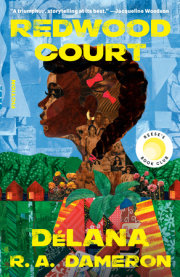
A sweeping family saga about inheritance and the enduring legacy of Southern Black cowboy culture, from the acclaimed author of Redwood Court, a Reese’s Book Club Pick

“Epic . . . a family saga in the finest tradition.”—Charmaine Wilkerson, New York Times bestselling author of Good Dirt


A sprawling landscape of sand, red clay, and pine trees, South Carolina’s Fairfield County is the only place the Bolton family has ever called home. For more than a century, they have cultivated this land, expertly raising horses to compete in derbies and rodeos and passing their knowledge from generation to generation.

But after a devastating tragedy, Dwayne, the next inheritor of the Bolton legacy, buries his family history—particularly from his daughter. Unlike her father, Nikki is a proud, burgeoning horsewoman with no knowledge of her family’s connection to the part of her life she’s most passionate about. But when a series of events threatens to sever father and daughter from the only land they’ve ever known, Dwayne is forced to confront his past so that Nikki can step into her future.

With nuance and care, DéLana R. A. Dameron deftly examines her most beloved subjects: the intricacies of family and the powerful forces that shape who we are. Fairfield County is at once a moving exploration of the ties that bind us and a bold reclamation of the American Cowboy—taking this iconic image out of the whitewashed Old West and deep into the heart of the Black South, where it has always resided.
Chapter 1

The dust had settled from the Great War long enough for folks like Moses to see a few feet into tomorrow’s horizon and think there might still be a future for Fairfield County.

In the years after the war, farmers fought the boll weevil off their cotton plantations and lost; sold the used-­up land for pennies on the acre. The land was useless, terrorized, plundered.

White farmers figured they’d rather have cut their losses and move on. So they did. They say that’s how Fairfield County came to be populated by so many Black folks: day laborers who saved up enough to buy the land their family worked on for generations—­first as slaves, then as sharecroppers. White landowners had just up and left the land for ruin, looking for a new industry.

Word was granite was growing. Managing a quarry took less manpower, fewer natural disasters to have to survive in order to pull a profit. Fewer variables in God’s hand: mercy or otherwise. Figured, land management was easier than raising cattle, so buying them at least fifty years of use.

So came the availability of land, and years later with President Roosevelt’s New Deal, loans and capital, and right on the other side of the property line from Moses’s parcel, a new parcel had come up for sale. He had watched the surveyors: trying to figure if it could be a viable location for more granite excavation. But that was the thing about this part of the Piedmont: one foot could stand on sand, one foot could stand on bedrock, and there could be a dividing line of red clay. No rhyme or reason. It was why when cotton ran its way through the soils, the land was then turned to pine for harvest. When the pines were logged and processed, then time came for pastures and so the cattle came.

For folks who never thought they’d own much of anything, the land was a timer: about seven years from a return on any investment. Moses didn’t mind; he had learned to think in generations like the white folks who brought his people here centuries ago. Whatever evils lay in their hearts to round up whole humans like livestock, ship them across an ocean, and craft a whole country identity, a whole economy—­whatever they had deep within themselves that gave them the ability to devise such an operation was thinking with the longest vision.

Not to say Moses had wanted to think like them, but he saw value in the idea of trying to make decisions and “investments” with an eye towards a future so far ahead of him he might never see it to fruition, but that maybe his offspring might reap. That alone filled him with purpose towards enlarging his territory. For the things that are seen are transient, but the things that are unseen are eternal, according to 2 Corinthians.

That’s how he got ninety-­eight acres of land—­an increase from his inherited thirty-­eight. Whenever anyone asked how he came upon the additional sixty acres, his response would be some version of “they practically gave ’em away.” And it was true.

On the property, there was a small creek near the back pine parcel. It curved just enough that when the pines were logged and the land to pasture, he could have a water source for other livestock outside of horses he might want to keep. With almost a hundred acres, Moses could raise a drove of cattle and he’d have enough space for rotational grazing, providing a constant supply of roughage, and with time the bovines would sow nutrients back into the soil for whatever riches might spring up next. And then, he’d repeat the cycle for as long as God saw fit to keep him upright on his two feet and above the ground. And then, again God willing, one day he would have someone to take it on. He didn’t know who or how, but he held his mustard-­seed faith like a talisman to keep marching towards the future’s horizon.

He was born just a few steps outside of a life of bondage; the inherited scar tissue showed up in Moses’s rush to create a self-­governed life: Marry publicly, and in a church. Have children and get to keep them. Buy a house if you want it—­things his grandfather could only imagine.

Going through the motions, he came to wonder if that was supposed to be his life. Moses had found himself unevenly yoked with someone who wanted different things than him. He knew deep down he should pursue the family way. Losing two infants in such quick succession made his first marriage as short as a winter’s day. He had wanted to do right by her, but he also wanted to be his own man. Make his own decisions. Not rush into wedded bondage—­how he was seeing the weight of his wife and her desires.

What other way was there to pursue a life? Moses wanted freedom and land and horses in pastures. The life he fought for. He wanted to reap the bounty of his struggle, despite being born a Black man in 1888 in Fairfield County, South Carolina, on the land he would die on. He was the son of slaves who had transitioned to sharecropping after Lincoln signed them papers declaring all men free.

For eleven years as freed people, his parents worked the land, worked horses, sold horses, trained horses—­just as they had done when they were owned by the Boltons—­but now they were armed with their own enterprise and dreams. Ones that they could see and taste. Eventually, Moses’s parents had earned enough from this work to make a land purchase of one acre not long after Moses was born. Inheritance making, Ezekiel had said each time he handed over the cash for the first parcels. Then later, five more. Then more until they came to own twenty-­two acres in total.

His parents were the lucky ones. After manumission, his Aunt Hagar made her way back to Fairfield County having walked the whole way from Hopkins. Like salmon swimming back to the place they were born, many blood Boltons of their time saw the town of Ridgeway as their homeland, and no other dirt to lay their heads until their last breaths would suffice. She never did find any of the twelve children she birthed. But she was able to live out the rest of her life with family again. When she finally laid down to her eternal rest, her ten acres reverted to Moses, who she saw as a son. So then he had enough land for the horses he’d keep, and enough land to farm, and enough land to live and breathe the clean, free air.

In the new world made by emancipation, white horsemen found themselves having to now pay for the services readily available to them. Having to step into the gap made when the once enslaved went about manifesting their own destiny. For some of those men who decided to stay in the business of Thoroughbred racing, they knew their chances of remaining in the winner’s circle relied heavily on the skilled Black horsemen and their descendants who helped build the industry. They would cross the increasing color-­line boundaries if it meant a wreath of roses and a fine payout.

Word was that Moses was an exceptional horseman. He had only just set out his shingle when his father retired, and folks came like a steam engine—­tick by tick—­looking for his expertise. A man had come by once, inquiring about his services, took one look at his herd, and exclaimed, “I tell you, there’s nothing like a horse trained by a nigger!” The man slipped his hands into his pockets. He knew what he said. Meant it exactly like he had said it. Twirled the piece of hay he was chewing. Moses nodded. He was free to live his life, sure, but he knew there was only so much one could do under the thumb of white men who feel their whole lives been turned upside down, having found themselves in the embarrassing position of needing a nigger’s help. But Moses knew that won’t no one for miles of here that had his seat. The word went around by mouth. Moses could put his hands on the withers of a bronc’ing horse—­that couldn’t no one get to not be a kite in the sky—­and have the horse bending his neck around him in a hug, almost purring.

At first Moses had traveled to their plantations, or their parcels, back into the bellies of the beast, so to say, to do his work. He’d wake up and travel day after day. Sometimes for two seasons, staying at each post as long as he could. Every descendant of former slave masters being varying degrees of sufferable until it just made sense for him to start his own operation on his terms on his land: folks—­whoever wanted to do business with him—­would bring their horses and he’d make of the horses what they wanted in the off-­season. On his time. On their dime. (That was how he described the new setup to Lillie.) During the racing season, well, he was back on the backstretch of the racecourse like a young man again, bunking with his ward until he couldn’t handle the hard ground for long stretches anymore.

As he aged, and his body started to fail, Moses took on apprentices, his son Lloyd being one. Lloyd, his only child with Lillie, the one who lived after so many years swearing off trying to have children. Moses believed Lloyd would be the one to bring the work of the Black Bolton horsemen forward. Moses counted on it. If you had asked Lillie, she’d say he counted too much on it. All your eggs in the tail of your shirt. She loved that turn of phrase, since that’s how Moses collected the eggs, and not in a basket. Moses had put so much weight on Lloyd’s back he hadn’t considered how easily Lloyd could break.
“Epic . . . With her ear for language and a penchant for historic storytelling, DéLana R. A. Dameron follows a family of legendary Black horse breeders, trainers, and riders in South Carolina through love, heartbreak, ambition, and triumph. Fairfield County is a family saga in the finest tradition.”—Charmaine Wilkerson, New York Times bestselling author of Good Dirt

“A luminous and unforgettable novel. Fairfield County is an Afro-Carolina story, one about people who have held onto the land, raised horses, and embraced the noblest of American inheritances despite facing injustice and cruelty. Vivid, cinematic, and soul-stirring, Fairfield County will resonate with readers far and wide.”—Imani Perry, National Book Award winner and author of Black in Blues

“The captivating story of a Black Southern family of horse trainers is expertly and gracefully told by late poet and novelist [DéLana R. A.] Dameron. . . . Dameron writes about family relationships with insight and elegance, and her characters are layered and empathetic. The author clearly understands the Southern equestrian world, and her writing is evocative and transportive. Give to fans of De’Shawn Charles Winslow and Jacqueline Woodson.”Booklist

“The year’s most anticipated local release . . . The poet, writer and horsewoman was a lynchpin in the local scene for Black writers and poets, and her voice was just emerging as one of the strongest in the Southeast.”—The Post and Courier
© Laurent B. Chevalier
DéLana R. A. Dameron is the author of Fairfield County and Redwood Court, a Reese’s Book Club pick and a New York Times Book Review Editors’ Choice. She is also the author of two poetry books, How God Ends Us, selected by Elizabeth Alexander for the South Carolina Poetry Book Prize, and Weary Kingdom, chose by Nikky Finney for the Palmetto Poetry Prize. Dameron’s work has appeared in Kweli Journal, Los Angeles Review of Books, The Rumpus, and elsewhere. Dameron is also the founder of Saloma Acres, an equestrian and cultural space in her home state of South Carolina. She passed away in 2025. View titles by DéLana R. A. Dameron
Available for sale exclusive:
•     Afghanistan
•     Aland Islands
•     Albania
•     Algeria
•     Andorra
•     Angola
•     Anguilla
•     Antarctica
•     Antigua/Barbuda
•     Argentina
•     Armenia
•     Aruba
•     Australia
•     Austria
•     Azerbaijan
•     Bahamas
•     Bahrain
•     Bangladesh
•     Barbados
•     Belarus
•     Belgium
•     Belize
•     Benin
•     Bermuda
•     Bhutan
•     Bolivia
•     Bonaire, Saba
•     Bosnia Herzeg.
•     Botswana
•     Bouvet Island
•     Brazil
•     Brit.Ind.Oc.Ter
•     Brit.Virgin Is.
•     Brunei
•     Bulgaria
•     Burkina Faso
•     Burundi
•     Cambodia
•     Cameroon
•     Canada
•     Cape Verde
•     Cayman Islands
•     Centr.Afr.Rep.
•     Chad
•     Chile
•     China
•     Christmas Islnd
•     Cocos Islands
•     Colombia
•     Comoro Is.
•     Congo
•     Cook Islands
•     Costa Rica
•     Croatia
•     Cuba
•     Curacao
•     Cyprus
•     Czech Republic
•     Dem. Rep. Congo
•     Denmark
•     Djibouti
•     Dominica
•     Dominican Rep.
•     Ecuador
•     Egypt
•     El Salvador
•     Equatorial Gui.
•     Eritrea
•     Estonia
•     Ethiopia
•     Falkland Islnds
•     Faroe Islands
•     Fiji
•     Finland
•     France
•     Fren.Polynesia
•     French Guinea
•     Gabon
•     Gambia
•     Georgia
•     Germany
•     Ghana
•     Gibraltar
•     Greece
•     Greenland
•     Grenada
•     Guadeloupe
•     Guam
•     Guatemala
•     Guernsey
•     Guinea Republic
•     Guinea-Bissau
•     Guyana
•     Haiti
•     Heard/McDon.Isl
•     Honduras
•     Hong Kong
•     Hungary
•     Iceland
•     India
•     Indonesia
•     Iran
•     Iraq
•     Ireland
•     Isle of Man
•     Israel
•     Italy
•     Ivory Coast
•     Jamaica
•     Japan
•     Jersey
•     Jordan
•     Kazakhstan
•     Kenya
•     Kiribati
•     Kuwait
•     Kyrgyzstan
•     Laos
•     Latvia
•     Lebanon
•     Lesotho
•     Liberia
•     Libya
•     Liechtenstein
•     Lithuania
•     Luxembourg
•     Macau
•     Macedonia
•     Madagascar
•     Malawi
•     Malaysia
•     Maldives
•     Mali
•     Malta
•     Marshall island
•     Martinique
•     Mauritania
•     Mauritius
•     Mayotte
•     Mexico
•     Micronesia
•     Minor Outl.Ins.
•     Moldavia
•     Monaco
•     Mongolia
•     Montenegro
•     Montserrat
•     Morocco
•     Mozambique
•     Myanmar
•     Namibia
•     Nauru
•     Nepal
•     Netherlands
•     New Caledonia
•     New Zealand
•     Nicaragua
•     Niger
•     Nigeria
•     Niue
•     Norfolk Island
•     North Korea
•     North Mariana
•     Norway
•     Oman
•     Pakistan
•     Palau
•     Palestinian Ter
•     Panama
•     PapuaNewGuinea
•     Paraguay
•     Peru
•     Philippines
•     Pitcairn Islnds
•     Poland
•     Portugal
•     Puerto Rico
•     Qatar
•     Reunion Island
•     Romania
•     Russian Fed.
•     Rwanda
•     S. Sandwich Ins
•     Saint Martin
•     Samoa,American
•     San Marino
•     SaoTome Princip
•     Saudi Arabia
•     Senegal
•     Serbia
•     Seychelles
•     Sierra Leone
•     Singapore
•     Sint Maarten
•     Slovakia
•     Slovenia
•     Solomon Islands
•     Somalia
•     South Africa
•     South Korea
•     South Sudan
•     Spain
•     Sri Lanka
•     St Barthelemy
•     St. Helena
•     St. Lucia
•     St. Vincent
•     St.Chr.,Nevis
•     St.Pier,Miquel.
•     Sth Terr. Franc
•     Sudan
•     Suriname
•     Svalbard
•     Swaziland
•     Sweden
•     Switzerland
•     Syria
•     Tadschikistan
•     Taiwan
•     Tanzania
•     Thailand
•     Timor-Leste
•     Togo
•     Tokelau Islands
•     Tonga
•     Trinidad,Tobago
•     Tunisia
•     Turkey
•     Turkmenistan
•     Turks&Caicos Is
•     Tuvalu
•     US Virgin Is.
•     USA
•     Uganda
•     Ukraine
•     Unit.Arab Emir.
•     United Kingdom
•     Uruguay
•     Uzbekistan
•     Vanuatu
•     Vatican City
•     Venezuela
•     Vietnam
•     Wallis,Futuna
•     West Saharan
•     Western Samoa
•     Yemen
•     Zambia
•     Zimbabwe

About

A sweeping family saga about inheritance and the enduring legacy of Southern Black cowboy culture, from the acclaimed author of Redwood Court, a Reese’s Book Club Pick

“Epic . . . a family saga in the finest tradition.”—Charmaine Wilkerson, New York Times bestselling author of Good Dirt


A sprawling landscape of sand, red clay, and pine trees, South Carolina’s Fairfield County is the only place the Bolton family has ever called home. For more than a century, they have cultivated this land, expertly raising horses to compete in derbies and rodeos and passing their knowledge from generation to generation.

But after a devastating tragedy, Dwayne, the next inheritor of the Bolton legacy, buries his family history—particularly from his daughter. Unlike her father, Nikki is a proud, burgeoning horsewoman with no knowledge of her family’s connection to the part of her life she’s most passionate about. But when a series of events threatens to sever father and daughter from the only land they’ve ever known, Dwayne is forced to confront his past so that Nikki can step into her future.

With nuance and care, DéLana R. A. Dameron deftly examines her most beloved subjects: the intricacies of family and the powerful forces that shape who we are. Fairfield County is at once a moving exploration of the ties that bind us and a bold reclamation of the American Cowboy—taking this iconic image out of the whitewashed Old West and deep into the heart of the Black South, where it has always resided.

Excerpt

Chapter 1

The dust had settled from the Great War long enough for folks like Moses to see a few feet into tomorrow’s horizon and think there might still be a future for Fairfield County.

In the years after the war, farmers fought the boll weevil off their cotton plantations and lost; sold the used-­up land for pennies on the acre. The land was useless, terrorized, plundered.

White farmers figured they’d rather have cut their losses and move on. So they did. They say that’s how Fairfield County came to be populated by so many Black folks: day laborers who saved up enough to buy the land their family worked on for generations—­first as slaves, then as sharecroppers. White landowners had just up and left the land for ruin, looking for a new industry.

Word was granite was growing. Managing a quarry took less manpower, fewer natural disasters to have to survive in order to pull a profit. Fewer variables in God’s hand: mercy or otherwise. Figured, land management was easier than raising cattle, so buying them at least fifty years of use.

So came the availability of land, and years later with President Roosevelt’s New Deal, loans and capital, and right on the other side of the property line from Moses’s parcel, a new parcel had come up for sale. He had watched the surveyors: trying to figure if it could be a viable location for more granite excavation. But that was the thing about this part of the Piedmont: one foot could stand on sand, one foot could stand on bedrock, and there could be a dividing line of red clay. No rhyme or reason. It was why when cotton ran its way through the soils, the land was then turned to pine for harvest. When the pines were logged and processed, then time came for pastures and so the cattle came.

For folks who never thought they’d own much of anything, the land was a timer: about seven years from a return on any investment. Moses didn’t mind; he had learned to think in generations like the white folks who brought his people here centuries ago. Whatever evils lay in their hearts to round up whole humans like livestock, ship them across an ocean, and craft a whole country identity, a whole economy—­whatever they had deep within themselves that gave them the ability to devise such an operation was thinking with the longest vision.

Not to say Moses had wanted to think like them, but he saw value in the idea of trying to make decisions and “investments” with an eye towards a future so far ahead of him he might never see it to fruition, but that maybe his offspring might reap. That alone filled him with purpose towards enlarging his territory. For the things that are seen are transient, but the things that are unseen are eternal, according to 2 Corinthians.

That’s how he got ninety-­eight acres of land—­an increase from his inherited thirty-­eight. Whenever anyone asked how he came upon the additional sixty acres, his response would be some version of “they practically gave ’em away.” And it was true.

On the property, there was a small creek near the back pine parcel. It curved just enough that when the pines were logged and the land to pasture, he could have a water source for other livestock outside of horses he might want to keep. With almost a hundred acres, Moses could raise a drove of cattle and he’d have enough space for rotational grazing, providing a constant supply of roughage, and with time the bovines would sow nutrients back into the soil for whatever riches might spring up next. And then, he’d repeat the cycle for as long as God saw fit to keep him upright on his two feet and above the ground. And then, again God willing, one day he would have someone to take it on. He didn’t know who or how, but he held his mustard-­seed faith like a talisman to keep marching towards the future’s horizon.

He was born just a few steps outside of a life of bondage; the inherited scar tissue showed up in Moses’s rush to create a self-­governed life: Marry publicly, and in a church. Have children and get to keep them. Buy a house if you want it—­things his grandfather could only imagine.

Going through the motions, he came to wonder if that was supposed to be his life. Moses had found himself unevenly yoked with someone who wanted different things than him. He knew deep down he should pursue the family way. Losing two infants in such quick succession made his first marriage as short as a winter’s day. He had wanted to do right by her, but he also wanted to be his own man. Make his own decisions. Not rush into wedded bondage—­how he was seeing the weight of his wife and her desires.

What other way was there to pursue a life? Moses wanted freedom and land and horses in pastures. The life he fought for. He wanted to reap the bounty of his struggle, despite being born a Black man in 1888 in Fairfield County, South Carolina, on the land he would die on. He was the son of slaves who had transitioned to sharecropping after Lincoln signed them papers declaring all men free.

For eleven years as freed people, his parents worked the land, worked horses, sold horses, trained horses—­just as they had done when they were owned by the Boltons—­but now they were armed with their own enterprise and dreams. Ones that they could see and taste. Eventually, Moses’s parents had earned enough from this work to make a land purchase of one acre not long after Moses was born. Inheritance making, Ezekiel had said each time he handed over the cash for the first parcels. Then later, five more. Then more until they came to own twenty-­two acres in total.

His parents were the lucky ones. After manumission, his Aunt Hagar made her way back to Fairfield County having walked the whole way from Hopkins. Like salmon swimming back to the place they were born, many blood Boltons of their time saw the town of Ridgeway as their homeland, and no other dirt to lay their heads until their last breaths would suffice. She never did find any of the twelve children she birthed. But she was able to live out the rest of her life with family again. When she finally laid down to her eternal rest, her ten acres reverted to Moses, who she saw as a son. So then he had enough land for the horses he’d keep, and enough land to farm, and enough land to live and breathe the clean, free air.

In the new world made by emancipation, white horsemen found themselves having to now pay for the services readily available to them. Having to step into the gap made when the once enslaved went about manifesting their own destiny. For some of those men who decided to stay in the business of Thoroughbred racing, they knew their chances of remaining in the winner’s circle relied heavily on the skilled Black horsemen and their descendants who helped build the industry. They would cross the increasing color-­line boundaries if it meant a wreath of roses and a fine payout.

Word was that Moses was an exceptional horseman. He had only just set out his shingle when his father retired, and folks came like a steam engine—­tick by tick—­looking for his expertise. A man had come by once, inquiring about his services, took one look at his herd, and exclaimed, “I tell you, there’s nothing like a horse trained by a nigger!” The man slipped his hands into his pockets. He knew what he said. Meant it exactly like he had said it. Twirled the piece of hay he was chewing. Moses nodded. He was free to live his life, sure, but he knew there was only so much one could do under the thumb of white men who feel their whole lives been turned upside down, having found themselves in the embarrassing position of needing a nigger’s help. But Moses knew that won’t no one for miles of here that had his seat. The word went around by mouth. Moses could put his hands on the withers of a bronc’ing horse—­that couldn’t no one get to not be a kite in the sky—­and have the horse bending his neck around him in a hug, almost purring.

At first Moses had traveled to their plantations, or their parcels, back into the bellies of the beast, so to say, to do his work. He’d wake up and travel day after day. Sometimes for two seasons, staying at each post as long as he could. Every descendant of former slave masters being varying degrees of sufferable until it just made sense for him to start his own operation on his terms on his land: folks—­whoever wanted to do business with him—­would bring their horses and he’d make of the horses what they wanted in the off-­season. On his time. On their dime. (That was how he described the new setup to Lillie.) During the racing season, well, he was back on the backstretch of the racecourse like a young man again, bunking with his ward until he couldn’t handle the hard ground for long stretches anymore.

As he aged, and his body started to fail, Moses took on apprentices, his son Lloyd being one. Lloyd, his only child with Lillie, the one who lived after so many years swearing off trying to have children. Moses believed Lloyd would be the one to bring the work of the Black Bolton horsemen forward. Moses counted on it. If you had asked Lillie, she’d say he counted too much on it. All your eggs in the tail of your shirt. She loved that turn of phrase, since that’s how Moses collected the eggs, and not in a basket. Moses had put so much weight on Lloyd’s back he hadn’t considered how easily Lloyd could break.

Praise

“Epic . . . With her ear for language and a penchant for historic storytelling, DéLana R. A. Dameron follows a family of legendary Black horse breeders, trainers, and riders in South Carolina through love, heartbreak, ambition, and triumph. Fairfield County is a family saga in the finest tradition.”—Charmaine Wilkerson, New York Times bestselling author of Good Dirt

“A luminous and unforgettable novel. Fairfield County is an Afro-Carolina story, one about people who have held onto the land, raised horses, and embraced the noblest of American inheritances despite facing injustice and cruelty. Vivid, cinematic, and soul-stirring, Fairfield County will resonate with readers far and wide.”—Imani Perry, National Book Award winner and author of Black in Blues

“The captivating story of a Black Southern family of horse trainers is expertly and gracefully told by late poet and novelist [DéLana R. A.] Dameron. . . . Dameron writes about family relationships with insight and elegance, and her characters are layered and empathetic. The author clearly understands the Southern equestrian world, and her writing is evocative and transportive. Give to fans of De’Shawn Charles Winslow and Jacqueline Woodson.”Booklist

“The year’s most anticipated local release . . . The poet, writer and horsewoman was a lynchpin in the local scene for Black writers and poets, and her voice was just emerging as one of the strongest in the Southeast.”—The Post and Courier

Author

© Laurent B. Chevalier
DéLana R. A. Dameron is the author of Fairfield County and Redwood Court, a Reese’s Book Club pick and a New York Times Book Review Editors’ Choice. She is also the author of two poetry books, How God Ends Us, selected by Elizabeth Alexander for the South Carolina Poetry Book Prize, and Weary Kingdom, chose by Nikky Finney for the Palmetto Poetry Prize. Dameron’s work has appeared in Kweli Journal, Los Angeles Review of Books, The Rumpus, and elsewhere. Dameron is also the founder of Saloma Acres, an equestrian and cultural space in her home state of South Carolina. She passed away in 2025. View titles by DéLana R. A. Dameron

Rights

Available for sale exclusive:
•     Afghanistan
•     Aland Islands
•     Albania
•     Algeria
•     Andorra
•     Angola
•     Anguilla
•     Antarctica
•     Antigua/Barbuda
•     Argentina
•     Armenia
•     Aruba
•     Australia
•     Austria
•     Azerbaijan
•     Bahamas
•     Bahrain
•     Bangladesh
•     Barbados
•     Belarus
•     Belgium
•     Belize
•     Benin
•     Bermuda
•     Bhutan
•     Bolivia
•     Bonaire, Saba
•     Bosnia Herzeg.
•     Botswana
•     Bouvet Island
•     Brazil
•     Brit.Ind.Oc.Ter
•     Brit.Virgin Is.
•     Brunei
•     Bulgaria
•     Burkina Faso
•     Burundi
•     Cambodia
•     Cameroon
•     Canada
•     Cape Verde
•     Cayman Islands
•     Centr.Afr.Rep.
•     Chad
•     Chile
•     China
•     Christmas Islnd
•     Cocos Islands
•     Colombia
•     Comoro Is.
•     Congo
•     Cook Islands
•     Costa Rica
•     Croatia
•     Cuba
•     Curacao
•     Cyprus
•     Czech Republic
•     Dem. Rep. Congo
•     Denmark
•     Djibouti
•     Dominica
•     Dominican Rep.
•     Ecuador
•     Egypt
•     El Salvador
•     Equatorial Gui.
•     Eritrea
•     Estonia
•     Ethiopia
•     Falkland Islnds
•     Faroe Islands
•     Fiji
•     Finland
•     France
•     Fren.Polynesia
•     French Guinea
•     Gabon
•     Gambia
•     Georgia
•     Germany
•     Ghana
•     Gibraltar
•     Greece
•     Greenland
•     Grenada
•     Guadeloupe
•     Guam
•     Guatemala
•     Guernsey
•     Guinea Republic
•     Guinea-Bissau
•     Guyana
•     Haiti
•     Heard/McDon.Isl
•     Honduras
•     Hong Kong
•     Hungary
•     Iceland
•     India
•     Indonesia
•     Iran
•     Iraq
•     Ireland
•     Isle of Man
•     Israel
•     Italy
•     Ivory Coast
•     Jamaica
•     Japan
•     Jersey
•     Jordan
•     Kazakhstan
•     Kenya
•     Kiribati
•     Kuwait
•     Kyrgyzstan
•     Laos
•     Latvia
•     Lebanon
•     Lesotho
•     Liberia
•     Libya
•     Liechtenstein
•     Lithuania
•     Luxembourg
•     Macau
•     Macedonia
•     Madagascar
•     Malawi
•     Malaysia
•     Maldives
•     Mali
•     Malta
•     Marshall island
•     Martinique
•     Mauritania
•     Mauritius
•     Mayotte
•     Mexico
•     Micronesia
•     Minor Outl.Ins.
•     Moldavia
•     Monaco
•     Mongolia
•     Montenegro
•     Montserrat
•     Morocco
•     Mozambique
•     Myanmar
•     Namibia
•     Nauru
•     Nepal
•     Netherlands
•     New Caledonia
•     New Zealand
•     Nicaragua
•     Niger
•     Nigeria
•     Niue
•     Norfolk Island
•     North Korea
•     North Mariana
•     Norway
•     Oman
•     Pakistan
•     Palau
•     Palestinian Ter
•     Panama
•     PapuaNewGuinea
•     Paraguay
•     Peru
•     Philippines
•     Pitcairn Islnds
•     Poland
•     Portugal
•     Puerto Rico
•     Qatar
•     Reunion Island
•     Romania
•     Russian Fed.
•     Rwanda
•     S. Sandwich Ins
•     Saint Martin
•     Samoa,American
•     San Marino
•     SaoTome Princip
•     Saudi Arabia
•     Senegal
•     Serbia
•     Seychelles
•     Sierra Leone
•     Singapore
•     Sint Maarten
•     Slovakia
•     Slovenia
•     Solomon Islands
•     Somalia
•     South Africa
•     South Korea
•     South Sudan
•     Spain
•     Sri Lanka
•     St Barthelemy
•     St. Helena
•     St. Lucia
•     St. Vincent
•     St.Chr.,Nevis
•     St.Pier,Miquel.
•     Sth Terr. Franc
•     Sudan
•     Suriname
•     Svalbard
•     Swaziland
•     Sweden
•     Switzerland
•     Syria
•     Tadschikistan
•     Taiwan
•     Tanzania
•     Thailand
•     Timor-Leste
•     Togo
•     Tokelau Islands
•     Tonga
•     Trinidad,Tobago
•     Tunisia
•     Turkey
•     Turkmenistan
•     Turks&Caicos Is
•     Tuvalu
•     US Virgin Is.
•     USA
•     Uganda
•     Ukraine
•     Unit.Arab Emir.
•     United Kingdom
•     Uruguay
•     Uzbekistan
•     Vanuatu
•     Vatican City
•     Venezuela
•     Vietnam
•     Wallis,Futuna
•     West Saharan
•     Western Samoa
•     Yemen
•     Zambia
•     Zimbabwe

June 2026 Picks for Higher Education

Our June picks for Higher Education feature a range of fiction and nonfiction curated to resonate with college students, professors, and lifelong learners. These selections are ideal for seminar discussions and independent exploration. For the complete list of June 2026 Higher Education Picks, click here. In case you missed them, check out our May higher

Read more