Close Modal

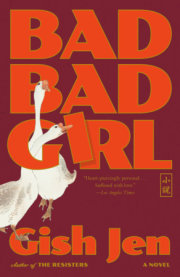
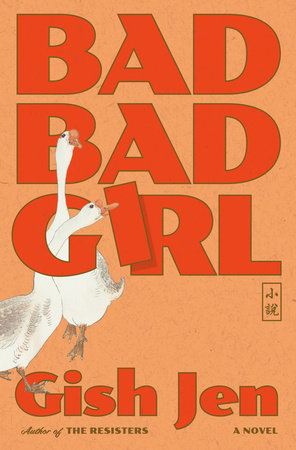
Bad Bad Girl

A Novel

Author Gish Jen
Look inside
Hardcover
$30.00 US
6.33"W x 9.61"H x 1.4"D   (16.1 x 24.4 x 3.6 cm) | 21 oz (601 g) | 12 per carton
On sale Oct 21, 2025 | 352 Pages | 9780593803738
Sales rights: US, Canada, Open Mkt

See Additional Formats
L.A. TIMES 15 BEST BOOKS OF THE YEAR • TIME "100 BEST" • RUPAUL'S BOOK CLUB PICK • An engrossing, blisteringly funny-sad autobiographical novel tracing a tumultuous mother-daughter relationship.

“A transcendent work of art.” —Boston Globe

“Gish Jen has written the multigenerational mother-daughter epic of our new century.” —Junot Díaz

“Heart-piercingly personal. . . . Suffused with love.” —Los Angeles Times

My mother had died, but still I heard her voice. . .

Gish’s mother, Loo Shu-hsin, is born in 1924 to a wealthy Shanghai family whose girls are expected to restrain themselves. Her beloved nursemaid—far closer to her than her real mother—is torn from her even as she is constantly reprimanded: “Bad bad girl! You don’t know how to talk!” Sent to a modern Catholic school by her progressive father, she receives not only an English name—Agnes—but a first-rate education. To his delight, she excels. But proud as he is, he can only sigh, “Too bad. If you were a boy, you could accomplish a lot.” Agnes finds solace in books and in 1947 announces her intention to pursue a PhD in America. As the Communist revolution looms, she sets sail—never to return.

Lonely and adrift in New York, she begins dating Jen Chao-pe, an engineering student. They do their best to block out the increasingly dire plight of their families back home and successfully establish a new American life: Marriage! A house in the suburbs! A number one son! By the time Gish is born, though, the news from China is proving inescapable; their marriage is foundering; and Agnes, confronted with a strong-willed, outspoken daughter distinctly reminiscent of herself, is repeating the refrain—“Bad bad girl!”—as she recapitulates the harshness of her own childhood.

Spanning continents, generations, and cultures, Bad Bad Girl is a novel only Gish Jen could have written: genre-bending, courageous, wise, and as incisive as it is compassionate.
Chapter I

A Daughter

My mother had died, but still I heard her voice.

Your grandmother was a Suzhou beauty, she says. Do you know where is Suzhou?

Of course, I say. West of Shanghai.

For I do know: Suzhou is where the classic Chinese gardens are—the Humble Administrator’s Garden. The Lingering Garden. The Garden of the Master of the Fishing Nets. West of Shanghai is the correct answer. But my mother does not say so. She is the same now as she was when she was alive—a master of the art of withholding.

Your grandmother was a Suzhou beauty, my mother says again. She spoke Suzhou dialect, Chinese people say it is like singing. And she was tall and thin. By the standards of 1920s Shanghai, that is.

Meaning thin but maybe not so tall, I think. As was my mother in her youth, too, although I mostly picture her in her late-life, big-bellied stage, when she had the bulbous shape of a snake that has swallowed a large animal. Her stomach was so perfectly spherical that had she not been in her nineties, you might have thought her pregnant, and indeed it was likely the result of her five children, the second of whom was me.

But whatever.

Go on, I say.

All my life, after all, I have wanted to know how our relationship went wrong—how I became her nemesis, her bête noire, her lightning rod, a scapegoat.

You look like her, she says. Only not so tall, not so thin, not so beautiful.

Oh, I laugh. Now, this is the mother I remember, tactful as a sledgehammer. You are too kind.

When I see you, I see her, she says.

Oh no. Your mother? I say. Because of all the possible misfortunes of birth, to remind your mother of a mother who had rejected her is surely one of the worst—as well as, it seems, a great unmentionable. For what does she immediately say but: Bad bad girl! You don’t know how to talk!

Well, she wasn’t exactly the mother of your heart, was she? I say. That was your nursemaid, the one you called “Nǎi‑mā”—milk mother—right? The one who was sent away.

She neither agrees nor disagrees. But then she repeats, Nai‑ma. And as dead as she is, she begins to cry.

My grandmother was twenty-two and my grandfather forty-eight when they married, and for all I know, he was a ringer then for James Bond. But in the only picture I have of him, he is short and rotund. He is wearing a padded Chinese gown; his arms splay in a way that might put one in mind of a penguin. And then there are his porthole glasses, thick and black as Mr. Magoo’s. Actually, he was a crack Chinese banker up to whose porte cochere chauffeured cars would roll, their shiny doors opening to reveal the gigantic shoes of foreigners. At one point, he saved China’s rural banks from collapse by convincing the Shanghai bankers to back them—or so the family story goes, at least—holding the meeting at his house because his was the only driveway big enough to handle so many cars. My aunt remembers coming downstairs and asking what was going on. To which my grandmother answered, Baba has just saved banking in China. But in the photograph, he mostly looks earthquake-proof—as if, were there to be a big one, he would be the last to topple.

His first wife having died—“of natural causes,” my mother always hastened to say, as if we might suspect foul play—my grandfather needed to replace her. He had had two children by that first wife, after all; someone had to take charge of them. And so: enter a matchmaker with a photo of my grandmother the Suzhou beauty. Would I more truly resemble her if I painted my cheeks and coiffed my hair and could squeeze into that dauntingly columnar qípáo? Could I, had I been born in China, with enough powdering and pampering and corseting, have exuded her just-possibly-attainable unattainability? One wants to say it’s hard to know, but in truth it’s easy enough. My grandmother’s beauty only throws into relief my plainness, with that uniquely inescapable unkindness of so many family resemblances. It’s a good thing that I have had, here in America, options besides attracting widowed bankers.

My father would boom, “Hello, hello!” to the foreigners as they filled up the garden, my mother says now. It was the only English he knew. And so it was always “Hello, hello!”

What about your mother? What did she say? I ask.

My mother was always sort of like in the background, she says. You do not see her too much; she does not have too much to say.

People said she never even laughed out loud. Is that true?

She was a real lady. Very proper.

She had self-control.

Not like you.

Always talking, you mean.

You have no self-control! she says. Too much to say.

Proper though she might have been, my grandmother did smoke opium. She was not an addict. She was a social smoker, as most society women were—a smoker of expensive Persian opium, beautifully prepared for her and her friends by an opium sous-chef. Never mind the price, opium was so good for cramps, they agreed, and oh! How bright the opium-smoker’s world, how bright and sharp and glorious! It was all the world should be, a world in which a woman might make demands—demands! can you imagine?—and even laugh out loud, keeping a hand over her mouth as a giggle bubbled up through her fingers.

Another world, indeed.

My grandmother could not read, but she was hardly alone. Never mind most women, most people in China couldn’t, not even in modern Shanghai. What with its neon lights and dance clubs and exciting crossroads style—its hǎipài, as people called it—Shanghai was known as “the Paris of the East.” But alongside its cars and trams and double-decker buses rolled ox-drawn carts and rickshaws and wheelbarrows. The British racecourse boasted the largest grandstand in the world; its clubhouse featured so much teak and marble, it could have been a land-bound Titanic. But cheek by jowl with its splendors sprawled the sort of shantytowns for which words like “destitute” and “squalor” were coined. Many of the shanties did not even boast bamboo-pole walls; many were straw-mat lean-tos. This “Paris” was no Paris.

Even rickshaw pullers mobbed the schools and libraries that had been opened for them, though. Everyone hungered for an education, and my grandmother was no exception. Having taught herself a few characters, she had a newspaper delivered, so that she could practice. Then it was two papers; and then three. She went to the storytelling theaters as well, listening raptly as scenes from Dream of the Red Chamber were read and performed—how she loved them. The poetry! The romance! No middle-aged widowers in that story. Instead, there was true love, enduring love, in a garden outside society. Was this what novels were? They were like opium fantasies.

In real life, meanwhile, she dutifully produced five children, one every two and a half years, as if meeting the terms of a contract. My mother was the first and a disappointment.

I should have been a boy, she explains now. I should have been a number one son.

Because? I say.

Because that’s how Chinese people think, she says. The number one son carries on the family line.

And people might not live forever but the family line does?

That’s right.

And only boys carry it on, so what use is a girl? Except to bear sons?

If my mother did not have a son, there would be a new wife soon, my mother says.

As for the good news: at least my mother lived to feel everyone’s disappointment. In the China of her childhood, after all, families like my father’s, with five boys and no girls, were hardly unknown.

Why didn’t Dad have any sisters? I ask now. Do you think they were drowned?

Bad bad girl! You don’t know how to talk! she says. But then she says, Families in Shanghai did not do such things.

How about in Yixing? I ask—Yixing having been my father’s hometown, a prosperous town on the far shore of Lake Tai, a bit west of both Shanghai and Suzhou.

She does not answer.

In any event, everyone agreed: it was too bad she was a girl. And on top of it, when my grandmother threw my mother’s placenta into the Huangpu River, it floated far away. Shēng háizi bèilǎo, people said—to have a child is to prepare for old age—but the placenta was an augury. My mother was destined to be raised and fed, only to drift away. Not only would she help carry on some other family’s line, she would be of no help to my grandmother as she aged, either. In short, she would be of no use at all.

And children were supposed to be of use, I say now.

Of course, says my mother.

They weren’t ends in themselves as they are here, at least theoretically.

I don’t know what you are talking, she says.

Anyway, there would be other children to rely on, and at least my grandmother would not have to raise any of them. That was what nursemaids were for.

...

My mother loved her nursemaid. Nai‑ma nursed her and slept with her; Nai‑ma was always there to dress her and pick her up and carry her around on her back. Nai‑ma laughed and teased; she tickled my mother and chased her. She was lively and naughty—what my mother would later call “mis-cheevous”—a girl herself, in truth, who had been fired from her last job, although no one knew that but my mother. For stealing, Nai‑ma once said (talking to herself, really; my mother was just a baby), which she did not do anymore, she said. She had learned her lesson. And anyway, it was such a small thing she took, just a pin—a tiny phoenix made of kingfisher feathers. She took it out and showed it to my mother and pinned it on her. Its feathers were blue and iridescent, like a glimpse of bright sky in a rain puddle; it had a beady red eye. The mistress who had owned it never wore it because the tip of one of its wings was bent. But Nai‑ma had felt sorry for it—an abandoned thing no one wanted until it was gone. Then suddenly it was important! Suddenly it was valuable! My mother laughed to hear the story, if only because of the face Nai‑ma made—her eyes opened wide, and her mouth, too, with its chipped front tooth.

Nai‑ma was soft and lopsided and good-natured. When my mother was very little, Nai‑ma let her play with her mouth, opening it wide and putting her fingers inside to feel her chipped tooth, and whenever she wanted to nurse, Nai‑ma would untie her tunic and let her nurse. Of course, that was her job. But when it was time to wean my mother, that was her job, too, yet somehow she could not do it.

“She is too big to nurse anymore,” my grandmother told Nai‑ma, her voice soft on the outside but hard on the inside, like a lychee nut.

And Nai‑ma soberly agreed. “She is not a baby,” she said with her most pious look. “Not a baby anymore, no. She is not a baby.” She shook her head in that funny way she had, half shake and half wag.

But soon my mother was four years old, then five, and still unweaned.

“This cannot go on,” my grandmother said. “You must stop.”

With company, my grandmother might hardly speak, but with the servants, her voice had grown less timorous all the time, especially with Nai‑ma.

“Stop,” she said. “You must stop.”

And Nai‑ma agreed and agreed—Nai‑ma was the very picture of agreement. “We will stop. We will. We will stop,” she promised, my mother hiding behind her. My mother held quiet until my grandmother left. Then she echoed, laughing, “We will stop! We will! We will stop!”—tickling Nai‑ma until she laughed, too, and opened her tunic and let my mother nurse anyway.

Of all the babies she’d ever taken care of, my mother was Nai‑ma’s favorite. So hungry all the time! And who cared about this girl who was going to drift away? My mother was nothing, like the kingfisher phoenix pin before people knew it was gone, and that was even before her brother was born. A boy, a boy, a boy! The new baby was everything to my grandmother—a little emperor from his first cry. His umbilical cord was cut with scissors made of solid gold; so obviously more important was he than my mother that she was summarily moved out of her south-facing room, into a room that faced east. And my grandmother’s distress when he caught a cold! Was he breathing? Why was he snorting? Was there a way of clearing his nose? He had his own nursemaid, of course—an experienced nursemaid from Suzhou, who knew how to suck the mucus out with her mouth, and who spoke the same dialect as my grandmother besides.

“Look how cute he looks!” she said when he sneezed.

And so successful was she in getting my grandmother to enjoy his sneezes that my mother and Nai‑ma were soon attending them, too, laughing delightedly as if at a show. They kept watch so as not to miss any, though really what Nai‑ma was watching was how this nursemaid charmed my grandmother.

“Shrimp have their way, and crabs have theirs,” she said sometimes, and shrugged.

But other times she complained about how rich people hired as many nursemaids as they liked, gossiping with their friends about which they liked best, while all the nursemaids could do was express some extra milk, have it put into a cake for their own babies, and hope that when the time came, they would be recommended to another family. Nai‑ma’s husband said she should try to stay as long as she could in this job, in part because it was such a good one. New clothes every year!

And so much food, and a room in the main house, a house with toilets, my mother puts in now.

Meaning no “honeypots”? I say.

That’s right.

At a time when pretty much every lane in Shanghai stank.

You cannot imagine the smell, she says.

But Nai‑ma’s husband also thought she should try to stay because my grandmother, it seemed, was not going to recommend Nai‑ma to anyone.

And so even after her little brother had stopped nursing, my mother and Nai‑ma would sneak away. Then it was the new baby, my mother’s little sister, to whom my grandmother would point, saying, “Look! How can you still be nursing when even Little Sister has stopped?”
“The story of what it means to be American in an era of sweeping demographic change enlarges Bad Bad Girl, sweetened by comic touches and a final note of grace.” Hamilton Cain, Washington Post

“Trigger warning for any daughter who has ever had a fraught relationship with their mother: Bad Bad Girl may prompt a flood of feelings not felt since adolescence. . . . A heart-piercingly personal work that also imparts universal truths about the immigrant experience—and what it is to be a daughter, a mother and a woman. . . . Suffused with love and a desire to finally understand. . . . How rich this book is, and how humane. . . . A marvel.” —Los Angeles Times

“Moving and healing.” —Boston Globe

“Funny, sad and poignant.” —People

“A gimlet-eyed account of a difficult mother-daughter relationship. . . . Jen has applied [her] candid but big-hearted style once described by Fresh Air’s Maureen Corrigan as ‘Frank Capra-esque’ to one of the central dramas of her own life.” Colin Dwyer, NPR.org

"A poignant, genre-bending novel. . . . Inventive, empathetic.” —San Francisco Chronicle

“What an amazing f***ing novel, wild like love and twice as revealing. Gish Jen has written the multigenerational mother-daughter epic of our new century. Bad Bad Girl spans decades, oceans, continents, generations, languages, showing us we can escape almost anything—except the voices of our parents. Intergenerational mother-daughter mayhem of the absolute best smartest vexing most moving kind.” —Junot Díaz, author of The Brief Wondrous Life of Oscar Wao

“An unsentimental, insightful, and brutally honest account of Chinese family relationships, in China and the West.” —Jung Chang, author of Wild Swans

“The difference between the mother we had and the mother we may have wanted is at the heart of Gish Jen’s novel-cum-memoir. . . . Her compassion for Agnes is as voluminous as her hurt. Families are spaces of burning complexity, parents are ever flawed, ever human, grappling with their private heartbreaks. This book is not a forgiveness, but an acknowledgment that it was hard.” Diana Evans, Financial Times

★ “Astute and revelatory.” —Publishers Weekly (starred)

★ "As portraits of tough mother-daughter relationships go, it’s as moving as they come.” Kirkus Reviews (starred)

★ “Heartbreaking and stunning.” Library Journal (starred)

“A uniquely faceted, cross-cultural mother-daughter drama of anguish, fracture, determination, humor, loyalty, and love. . . . Ravishingly vivid.” Booklist (starred)

“Standout. . . . What makes Bad Bad Girl a pleasure is the deft plotting and the sympathetic portraits of the main characters, even when they’re behaving their worst. It’s one of the best tales of mother-daughter relationships you’ll encounter.” —BookPage (starred)

“Singular. . . . Extraordinary. . . . Strikingly authentic. . . . Both deeply personal and universally resonant. . . . This book is imperative for anyone interested in immigrant experiences, the complexities of family, and the art of writing personal history.” Shelf Awareness (starred)

“Gish Jen is the absolute master of extremely funny devastation.” LitHub

“A stunningly executed genre-bending book. . . . Forthright and profound. . . . Because of [Jen’s] courage, Bad Bad Girl is an extraordinary book.” Carol Iaciofano Aucoin, WBUR

“Playful, witty. . . . Jen imagines her mother as a young woman full of dreams, with a rich inner life, who approached the world with awe. . . . In the novel’s closing pages, the writer’s grief—not only for her dead mother, but for the relationship they never had—erupts on the page. . . . Strikingly poignant.” —Rhoda Kwan, Times Literary Supplement

“Unflinching yet compassionate. . . . Courageous and brimming with emotional intelligence. . . . She spans continents and decades without ever losing sight of the beating hearts at the story’s center.” Kaitlin Jefferys, Voice Magazine (U.K.)

“Reading Bad Bad Girl, I felt a deep ache for mothers and daughters divided by culture and silence. Gish Jen writes tenderly about a woman carrying old China in her bones while raising a child in America. This story shows how quiet courage can be, and how a ‘bad girl’ is often just a woman who refuses to vanish. Many will find comfort and recognition in these pages.” —Xinran Xue, author of The Good Women of China

“A tender, poignant family history, laced with sharp insight and quiet humour. Bad Bad Girl is not just the story of women who journeyed from the old world to the new, but also of the luminous, deeply personal world they carried within.” —Yan Ge, author of Strange Beasts of China
© Basso Cannarsa

GISH JEN’s most recent novel is THE RESISTERS; she also has a new book coming out in January 2022 entitled THANK YOU, MR. NIXON. She is a fellow of the American Academy of Arts and Sciences, and a recipient of fellowships from the Radcliffe Institute and the Guggenheim Foundation as well as of a Lannan Literary Award for Fiction and of a Mildred and Harold Strauss Living Award from the American Academy of Arts and Letters. Her short work has appeared in the New Yorker and other magazines, and have been chosen for The Best American Short Stories five times, including The Best American Short Stories of the Century. She delivered the William E. Massey Sr. Lectures in American Studies at Harvard University, where she is currently a visiting professor.

gishjen.com

View titles by Gish Jen
Available for sale exclusive:
•     Canada
•     Guam
•     Minor Outl.Ins.
•     North Mariana
•     Philippines
•     Puerto Rico
•     Samoa,American
•     US Virgin Is.
•     USA

Available for sale non-exclusive:
•     Afghanistan
•     Aland Islands
•     Albania
•     Algeria
•     Andorra
•     Angola
•     Antarctica
•     Argentina
•     Armenia
•     Aruba
•     Austria
•     Azerbaijan
•     Bahrain
•     Belarus
•     Belgium
•     Benin
•     Bolivia
•     Bonaire, Saba
•     Bosnia Herzeg.
•     Bouvet Island
•     Brazil
•     Bulgaria
•     Burkina Faso
•     Burundi
•     Cambodia
•     Cameroon
•     Cape Verde
•     Centr.Afr.Rep.
•     Chad
•     Chile
•     China
•     Colombia
•     Comoro Is.
•     Congo
•     Cook Islands
•     Costa Rica
•     Croatia
•     Cuba
•     Curacao
•     Czech Republic
•     Dem. Rep. Congo
•     Denmark
•     Djibouti
•     Dominican Rep.
•     Ecuador
•     Egypt
•     El Salvador
•     Equatorial Gui.
•     Eritrea
•     Estonia
•     Ethiopia
•     Faroe Islands
•     Finland
•     France
•     Fren.Polynesia
•     French Guinea
•     Gabon
•     Georgia
•     Germany
•     Greece
•     Greenland
•     Guadeloupe
•     Guatemala
•     Guinea Republic
•     Guinea-Bissau
•     Haiti
•     Heard/McDon.Isl
•     Honduras
•     Hong Kong
•     Hungary
•     Iceland
•     Indonesia
•     Iran
•     Iraq
•     Israel
•     Italy
•     Ivory Coast
•     Japan
•     Jordan
•     Kazakhstan
•     Kuwait
•     Kyrgyzstan
•     Laos
•     Latvia
•     Lebanon
•     Liberia
•     Libya
•     Liechtenstein
•     Lithuania
•     Luxembourg
•     Macau
•     Macedonia
•     Madagascar
•     Mali
•     Marshall island
•     Martinique
•     Mauritania
•     Mayotte
•     Mexico
•     Micronesia
•     Moldavia
•     Monaco
•     Mongolia
•     Montenegro
•     Morocco
•     Netherlands
•     New Caledonia
•     Nicaragua
•     Niger
•     Niue
•     Norfolk Island
•     North Korea
•     Norway
•     Oman
•     Palau
•     Palestinian Ter
•     Panama
•     Paraguay
•     Peru
•     Poland
•     Portugal
•     Qatar
•     Reunion Island
•     Romania
•     Russian Fed.
•     Rwanda
•     Saint Martin
•     San Marino
•     SaoTome Princip
•     Saudi Arabia
•     Senegal
•     Serbia
•     Sint Maarten
•     Slovakia
•     Slovenia
•     South Korea
•     South Sudan
•     Spain
•     St Barthelemy
•     St.Pier,Miquel.
•     Sth Terr. Franc
•     Sudan
•     Suriname
•     Svalbard
•     Sweden
•     Switzerland
•     Syria
•     Tadschikistan
•     Taiwan
•     Thailand
•     Timor-Leste
•     Togo
•     Tokelau Islands
•     Tunisia
•     Turkey
•     Turkmenistan
•     Ukraine
•     Unit.Arab Emir.
•     Uruguay
•     Uzbekistan
•     Vatican City
•     Venezuela
•     Vietnam
•     Wallis,Futuna
•     West Saharan
•     Western Samoa

Not available for sale:
•     Anguilla
•     Antigua/Barbuda
•     Australia
•     Bahamas
•     Bangladesh
•     Barbados
•     Belize
•     Bermuda
•     Bhutan
•     Botswana
•     Brit.Ind.Oc.Ter
•     Brit.Virgin Is.
•     Brunei
•     Cayman Islands
•     Christmas Islnd
•     Cocos Islands
•     Cyprus
•     Dominica
•     Falkland Islnds
•     Fiji
•     Gambia
•     Ghana
•     Gibraltar
•     Grenada
•     Guernsey
•     Guyana
•     India
•     Ireland
•     Isle of Man
•     Jamaica
•     Jersey
•     Kenya
•     Kiribati
•     Lesotho
•     Malawi
•     Malaysia
•     Maldives
•     Malta
•     Mauritius
•     Montserrat
•     Mozambique
•     Myanmar
•     Namibia
•     Nauru
•     Nepal
•     New Zealand
•     Nigeria
•     Pakistan
•     PapuaNewGuinea
•     Pitcairn Islnds
•     S. Sandwich Ins
•     Seychelles
•     Sierra Leone
•     Singapore
•     Solomon Islands
•     Somalia
•     South Africa
•     Sri Lanka
•     St. Helena
•     St. Lucia
•     St. Vincent
•     St.Chr.,Nevis
•     Swaziland
•     Tanzania
•     Tonga
•     Trinidad,Tobago
•     Turks&Caicos Is
•     Tuvalu
•     Uganda
•     United Kingdom
•     Vanuatu
•     Yemen
•     Zambia
•     Zimbabwe

About

L.A. TIMES 15 BEST BOOKS OF THE YEAR • TIME "100 BEST" • RUPAUL'S BOOK CLUB PICK • An engrossing, blisteringly funny-sad autobiographical novel tracing a tumultuous mother-daughter relationship.

“A transcendent work of art.” —Boston Globe

“Gish Jen has written the multigenerational mother-daughter epic of our new century.” —Junot Díaz

“Heart-piercingly personal. . . . Suffused with love.” —Los Angeles Times

My mother had died, but still I heard her voice. . .

Gish’s mother, Loo Shu-hsin, is born in 1924 to a wealthy Shanghai family whose girls are expected to restrain themselves. Her beloved nursemaid—far closer to her than her real mother—is torn from her even as she is constantly reprimanded: “Bad bad girl! You don’t know how to talk!” Sent to a modern Catholic school by her progressive father, she receives not only an English name—Agnes—but a first-rate education. To his delight, she excels. But proud as he is, he can only sigh, “Too bad. If you were a boy, you could accomplish a lot.” Agnes finds solace in books and in 1947 announces her intention to pursue a PhD in America. As the Communist revolution looms, she sets sail—never to return.

Lonely and adrift in New York, she begins dating Jen Chao-pe, an engineering student. They do their best to block out the increasingly dire plight of their families back home and successfully establish a new American life: Marriage! A house in the suburbs! A number one son! By the time Gish is born, though, the news from China is proving inescapable; their marriage is foundering; and Agnes, confronted with a strong-willed, outspoken daughter distinctly reminiscent of herself, is repeating the refrain—“Bad bad girl!”—as she recapitulates the harshness of her own childhood.

Spanning continents, generations, and cultures, Bad Bad Girl is a novel only Gish Jen could have written: genre-bending, courageous, wise, and as incisive as it is compassionate.

Excerpt

Chapter I

A Daughter

My mother had died, but still I heard her voice.

Your grandmother was a Suzhou beauty, she says. Do you know where is Suzhou?

Of course, I say. West of Shanghai.

For I do know: Suzhou is where the classic Chinese gardens are—the Humble Administrator’s Garden. The Lingering Garden. The Garden of the Master of the Fishing Nets. West of Shanghai is the correct answer. But my mother does not say so. She is the same now as she was when she was alive—a master of the art of withholding.

Your grandmother was a Suzhou beauty, my mother says again. She spoke Suzhou dialect, Chinese people say it is like singing. And she was tall and thin. By the standards of 1920s Shanghai, that is.

Meaning thin but maybe not so tall, I think. As was my mother in her youth, too, although I mostly picture her in her late-life, big-bellied stage, when she had the bulbous shape of a snake that has swallowed a large animal. Her stomach was so perfectly spherical that had she not been in her nineties, you might have thought her pregnant, and indeed it was likely the result of her five children, the second of whom was me.

But whatever.

Go on, I say.

All my life, after all, I have wanted to know how our relationship went wrong—how I became her nemesis, her bête noire, her lightning rod, a scapegoat.

You look like her, she says. Only not so tall, not so thin, not so beautiful.

Oh, I laugh. Now, this is the mother I remember, tactful as a sledgehammer. You are too kind.

When I see you, I see her, she says.

Oh no. Your mother? I say. Because of all the possible misfortunes of birth, to remind your mother of a mother who had rejected her is surely one of the worst—as well as, it seems, a great unmentionable. For what does she immediately say but: Bad bad girl! You don’t know how to talk!

Well, she wasn’t exactly the mother of your heart, was she? I say. That was your nursemaid, the one you called “Nǎi‑mā”—milk mother—right? The one who was sent away.

She neither agrees nor disagrees. But then she repeats, Nai‑ma. And as dead as she is, she begins to cry.

My grandmother was twenty-two and my grandfather forty-eight when they married, and for all I know, he was a ringer then for James Bond. But in the only picture I have of him, he is short and rotund. He is wearing a padded Chinese gown; his arms splay in a way that might put one in mind of a penguin. And then there are his porthole glasses, thick and black as Mr. Magoo’s. Actually, he was a crack Chinese banker up to whose porte cochere chauffeured cars would roll, their shiny doors opening to reveal the gigantic shoes of foreigners. At one point, he saved China’s rural banks from collapse by convincing the Shanghai bankers to back them—or so the family story goes, at least—holding the meeting at his house because his was the only driveway big enough to handle so many cars. My aunt remembers coming downstairs and asking what was going on. To which my grandmother answered, Baba has just saved banking in China. But in the photograph, he mostly looks earthquake-proof—as if, were there to be a big one, he would be the last to topple.

His first wife having died—“of natural causes,” my mother always hastened to say, as if we might suspect foul play—my grandfather needed to replace her. He had had two children by that first wife, after all; someone had to take charge of them. And so: enter a matchmaker with a photo of my grandmother the Suzhou beauty. Would I more truly resemble her if I painted my cheeks and coiffed my hair and could squeeze into that dauntingly columnar qípáo? Could I, had I been born in China, with enough powdering and pampering and corseting, have exuded her just-possibly-attainable unattainability? One wants to say it’s hard to know, but in truth it’s easy enough. My grandmother’s beauty only throws into relief my plainness, with that uniquely inescapable unkindness of so many family resemblances. It’s a good thing that I have had, here in America, options besides attracting widowed bankers.

My father would boom, “Hello, hello!” to the foreigners as they filled up the garden, my mother says now. It was the only English he knew. And so it was always “Hello, hello!”

What about your mother? What did she say? I ask.

My mother was always sort of like in the background, she says. You do not see her too much; she does not have too much to say.

People said she never even laughed out loud. Is that true?

She was a real lady. Very proper.

She had self-control.

Not like you.

Always talking, you mean.

You have no self-control! she says. Too much to say.

Proper though she might have been, my grandmother did smoke opium. She was not an addict. She was a social smoker, as most society women were—a smoker of expensive Persian opium, beautifully prepared for her and her friends by an opium sous-chef. Never mind the price, opium was so good for cramps, they agreed, and oh! How bright the opium-smoker’s world, how bright and sharp and glorious! It was all the world should be, a world in which a woman might make demands—demands! can you imagine?—and even laugh out loud, keeping a hand over her mouth as a giggle bubbled up through her fingers.

Another world, indeed.

My grandmother could not read, but she was hardly alone. Never mind most women, most people in China couldn’t, not even in modern Shanghai. What with its neon lights and dance clubs and exciting crossroads style—its hǎipài, as people called it—Shanghai was known as “the Paris of the East.” But alongside its cars and trams and double-decker buses rolled ox-drawn carts and rickshaws and wheelbarrows. The British racecourse boasted the largest grandstand in the world; its clubhouse featured so much teak and marble, it could have been a land-bound Titanic. But cheek by jowl with its splendors sprawled the sort of shantytowns for which words like “destitute” and “squalor” were coined. Many of the shanties did not even boast bamboo-pole walls; many were straw-mat lean-tos. This “Paris” was no Paris.

Even rickshaw pullers mobbed the schools and libraries that had been opened for them, though. Everyone hungered for an education, and my grandmother was no exception. Having taught herself a few characters, she had a newspaper delivered, so that she could practice. Then it was two papers; and then three. She went to the storytelling theaters as well, listening raptly as scenes from Dream of the Red Chamber were read and performed—how she loved them. The poetry! The romance! No middle-aged widowers in that story. Instead, there was true love, enduring love, in a garden outside society. Was this what novels were? They were like opium fantasies.

In real life, meanwhile, she dutifully produced five children, one every two and a half years, as if meeting the terms of a contract. My mother was the first and a disappointment.

I should have been a boy, she explains now. I should have been a number one son.

Because? I say.

Because that’s how Chinese people think, she says. The number one son carries on the family line.

And people might not live forever but the family line does?

That’s right.

And only boys carry it on, so what use is a girl? Except to bear sons?

If my mother did not have a son, there would be a new wife soon, my mother says.

As for the good news: at least my mother lived to feel everyone’s disappointment. In the China of her childhood, after all, families like my father’s, with five boys and no girls, were hardly unknown.

Why didn’t Dad have any sisters? I ask now. Do you think they were drowned?

Bad bad girl! You don’t know how to talk! she says. But then she says, Families in Shanghai did not do such things.

How about in Yixing? I ask—Yixing having been my father’s hometown, a prosperous town on the far shore of Lake Tai, a bit west of both Shanghai and Suzhou.

She does not answer.

In any event, everyone agreed: it was too bad she was a girl. And on top of it, when my grandmother threw my mother’s placenta into the Huangpu River, it floated far away. Shēng háizi bèilǎo, people said—to have a child is to prepare for old age—but the placenta was an augury. My mother was destined to be raised and fed, only to drift away. Not only would she help carry on some other family’s line, she would be of no help to my grandmother as she aged, either. In short, she would be of no use at all.

And children were supposed to be of use, I say now.

Of course, says my mother.

They weren’t ends in themselves as they are here, at least theoretically.

I don’t know what you are talking, she says.

Anyway, there would be other children to rely on, and at least my grandmother would not have to raise any of them. That was what nursemaids were for.

...

My mother loved her nursemaid. Nai‑ma nursed her and slept with her; Nai‑ma was always there to dress her and pick her up and carry her around on her back. Nai‑ma laughed and teased; she tickled my mother and chased her. She was lively and naughty—what my mother would later call “mis-cheevous”—a girl herself, in truth, who had been fired from her last job, although no one knew that but my mother. For stealing, Nai‑ma once said (talking to herself, really; my mother was just a baby), which she did not do anymore, she said. She had learned her lesson. And anyway, it was such a small thing she took, just a pin—a tiny phoenix made of kingfisher feathers. She took it out and showed it to my mother and pinned it on her. Its feathers were blue and iridescent, like a glimpse of bright sky in a rain puddle; it had a beady red eye. The mistress who had owned it never wore it because the tip of one of its wings was bent. But Nai‑ma had felt sorry for it—an abandoned thing no one wanted until it was gone. Then suddenly it was important! Suddenly it was valuable! My mother laughed to hear the story, if only because of the face Nai‑ma made—her eyes opened wide, and her mouth, too, with its chipped front tooth.

Nai‑ma was soft and lopsided and good-natured. When my mother was very little, Nai‑ma let her play with her mouth, opening it wide and putting her fingers inside to feel her chipped tooth, and whenever she wanted to nurse, Nai‑ma would untie her tunic and let her nurse. Of course, that was her job. But when it was time to wean my mother, that was her job, too, yet somehow she could not do it.

“She is too big to nurse anymore,” my grandmother told Nai‑ma, her voice soft on the outside but hard on the inside, like a lychee nut.

And Nai‑ma soberly agreed. “She is not a baby,” she said with her most pious look. “Not a baby anymore, no. She is not a baby.” She shook her head in that funny way she had, half shake and half wag.

But soon my mother was four years old, then five, and still unweaned.

“This cannot go on,” my grandmother said. “You must stop.”

With company, my grandmother might hardly speak, but with the servants, her voice had grown less timorous all the time, especially with Nai‑ma.

“Stop,” she said. “You must stop.”

And Nai‑ma agreed and agreed—Nai‑ma was the very picture of agreement. “We will stop. We will. We will stop,” she promised, my mother hiding behind her. My mother held quiet until my grandmother left. Then she echoed, laughing, “We will stop! We will! We will stop!”—tickling Nai‑ma until she laughed, too, and opened her tunic and let my mother nurse anyway.

Of all the babies she’d ever taken care of, my mother was Nai‑ma’s favorite. So hungry all the time! And who cared about this girl who was going to drift away? My mother was nothing, like the kingfisher phoenix pin before people knew it was gone, and that was even before her brother was born. A boy, a boy, a boy! The new baby was everything to my grandmother—a little emperor from his first cry. His umbilical cord was cut with scissors made of solid gold; so obviously more important was he than my mother that she was summarily moved out of her south-facing room, into a room that faced east. And my grandmother’s distress when he caught a cold! Was he breathing? Why was he snorting? Was there a way of clearing his nose? He had his own nursemaid, of course—an experienced nursemaid from Suzhou, who knew how to suck the mucus out with her mouth, and who spoke the same dialect as my grandmother besides.

“Look how cute he looks!” she said when he sneezed.

And so successful was she in getting my grandmother to enjoy his sneezes that my mother and Nai‑ma were soon attending them, too, laughing delightedly as if at a show. They kept watch so as not to miss any, though really what Nai‑ma was watching was how this nursemaid charmed my grandmother.

“Shrimp have their way, and crabs have theirs,” she said sometimes, and shrugged.

But other times she complained about how rich people hired as many nursemaids as they liked, gossiping with their friends about which they liked best, while all the nursemaids could do was express some extra milk, have it put into a cake for their own babies, and hope that when the time came, they would be recommended to another family. Nai‑ma’s husband said she should try to stay as long as she could in this job, in part because it was such a good one. New clothes every year!

And so much food, and a room in the main house, a house with toilets, my mother puts in now.

Meaning no “honeypots”? I say.

That’s right.

At a time when pretty much every lane in Shanghai stank.

You cannot imagine the smell, she says.

But Nai‑ma’s husband also thought she should try to stay because my grandmother, it seemed, was not going to recommend Nai‑ma to anyone.

And so even after her little brother had stopped nursing, my mother and Nai‑ma would sneak away. Then it was the new baby, my mother’s little sister, to whom my grandmother would point, saying, “Look! How can you still be nursing when even Little Sister has stopped?”

Praise

“The story of what it means to be American in an era of sweeping demographic change enlarges Bad Bad Girl, sweetened by comic touches and a final note of grace.” Hamilton Cain, Washington Post

“Trigger warning for any daughter who has ever had a fraught relationship with their mother: Bad Bad Girl may prompt a flood of feelings not felt since adolescence. . . . A heart-piercingly personal work that also imparts universal truths about the immigrant experience—and what it is to be a daughter, a mother and a woman. . . . Suffused with love and a desire to finally understand. . . . How rich this book is, and how humane. . . . A marvel.” —Los Angeles Times

“Moving and healing.” —Boston Globe

“Funny, sad and poignant.” —People

“A gimlet-eyed account of a difficult mother-daughter relationship. . . . Jen has applied [her] candid but big-hearted style once described by Fresh Air’s Maureen Corrigan as ‘Frank Capra-esque’ to one of the central dramas of her own life.” Colin Dwyer, NPR.org

"A poignant, genre-bending novel. . . . Inventive, empathetic.” —San Francisco Chronicle

“What an amazing f***ing novel, wild like love and twice as revealing. Gish Jen has written the multigenerational mother-daughter epic of our new century. Bad Bad Girl spans decades, oceans, continents, generations, languages, showing us we can escape almost anything—except the voices of our parents. Intergenerational mother-daughter mayhem of the absolute best smartest vexing most moving kind.” —Junot Díaz, author of The Brief Wondrous Life of Oscar Wao

“An unsentimental, insightful, and brutally honest account of Chinese family relationships, in China and the West.” —Jung Chang, author of Wild Swans

“The difference between the mother we had and the mother we may have wanted is at the heart of Gish Jen’s novel-cum-memoir. . . . Her compassion for Agnes is as voluminous as her hurt. Families are spaces of burning complexity, parents are ever flawed, ever human, grappling with their private heartbreaks. This book is not a forgiveness, but an acknowledgment that it was hard.” Diana Evans, Financial Times

★ “Astute and revelatory.” —Publishers Weekly (starred)

★ "As portraits of tough mother-daughter relationships go, it’s as moving as they come.” Kirkus Reviews (starred)

★ “Heartbreaking and stunning.” Library Journal (starred)

“A uniquely faceted, cross-cultural mother-daughter drama of anguish, fracture, determination, humor, loyalty, and love. . . . Ravishingly vivid.” Booklist (starred)

“Standout. . . . What makes Bad Bad Girl a pleasure is the deft plotting and the sympathetic portraits of the main characters, even when they’re behaving their worst. It’s one of the best tales of mother-daughter relationships you’ll encounter.” —BookPage (starred)

“Singular. . . . Extraordinary. . . . Strikingly authentic. . . . Both deeply personal and universally resonant. . . . This book is imperative for anyone interested in immigrant experiences, the complexities of family, and the art of writing personal history.” Shelf Awareness (starred)

“Gish Jen is the absolute master of extremely funny devastation.” LitHub

“A stunningly executed genre-bending book. . . . Forthright and profound. . . . Because of [Jen’s] courage, Bad Bad Girl is an extraordinary book.” Carol Iaciofano Aucoin, WBUR

“Playful, witty. . . . Jen imagines her mother as a young woman full of dreams, with a rich inner life, who approached the world with awe. . . . In the novel’s closing pages, the writer’s grief—not only for her dead mother, but for the relationship they never had—erupts on the page. . . . Strikingly poignant.” —Rhoda Kwan, Times Literary Supplement

“Unflinching yet compassionate. . . . Courageous and brimming with emotional intelligence. . . . She spans continents and decades without ever losing sight of the beating hearts at the story’s center.” Kaitlin Jefferys, Voice Magazine (U.K.)

“Reading Bad Bad Girl, I felt a deep ache for mothers and daughters divided by culture and silence. Gish Jen writes tenderly about a woman carrying old China in her bones while raising a child in America. This story shows how quiet courage can be, and how a ‘bad girl’ is often just a woman who refuses to vanish. Many will find comfort and recognition in these pages.” —Xinran Xue, author of The Good Women of China

“A tender, poignant family history, laced with sharp insight and quiet humour. Bad Bad Girl is not just the story of women who journeyed from the old world to the new, but also of the luminous, deeply personal world they carried within.” —Yan Ge, author of Strange Beasts of China

Author

© Basso Cannarsa

GISH JEN’s most recent novel is THE RESISTERS; she also has a new book coming out in January 2022 entitled THANK YOU, MR. NIXON. She is a fellow of the American Academy of Arts and Sciences, and a recipient of fellowships from the Radcliffe Institute and the Guggenheim Foundation as well as of a Lannan Literary Award for Fiction and of a Mildred and Harold Strauss Living Award from the American Academy of Arts and Letters. Her short work has appeared in the New Yorker and other magazines, and have been chosen for The Best American Short Stories five times, including The Best American Short Stories of the Century. She delivered the William E. Massey Sr. Lectures in American Studies at Harvard University, where she is currently a visiting professor.

gishjen.com

View titles by Gish Jen

Rights

Available for sale exclusive:
•     Canada
•     Guam
•     Minor Outl.Ins.
•     North Mariana
•     Philippines
•     Puerto Rico
•     Samoa,American
•     US Virgin Is.
•     USA

Available for sale non-exclusive:
•     Afghanistan
•     Aland Islands
•     Albania
•     Algeria
•     Andorra
•     Angola
•     Antarctica
•     Argentina
•     Armenia
•     Aruba
•     Austria
•     Azerbaijan
•     Bahrain
•     Belarus
•     Belgium
•     Benin
•     Bolivia
•     Bonaire, Saba
•     Bosnia Herzeg.
•     Bouvet Island
•     Brazil
•     Bulgaria
•     Burkina Faso
•     Burundi
•     Cambodia
•     Cameroon
•     Cape Verde
•     Centr.Afr.Rep.
•     Chad
•     Chile
•     China
•     Colombia
•     Comoro Is.
•     Congo
•     Cook Islands
•     Costa Rica
•     Croatia
•     Cuba
•     Curacao
•     Czech Republic
•     Dem. Rep. Congo
•     Denmark
•     Djibouti
•     Dominican Rep.
•     Ecuador
•     Egypt
•     El Salvador
•     Equatorial Gui.
•     Eritrea
•     Estonia
•     Ethiopia
•     Faroe Islands
•     Finland
•     France
•     Fren.Polynesia
•     French Guinea
•     Gabon
•     Georgia
•     Germany
•     Greece
•     Greenland
•     Guadeloupe
•     Guatemala
•     Guinea Republic
•     Guinea-Bissau
•     Haiti
•     Heard/McDon.Isl
•     Honduras
•     Hong Kong
•     Hungary
•     Iceland
•     Indonesia
•     Iran
•     Iraq
•     Israel
•     Italy
•     Ivory Coast
•     Japan
•     Jordan
•     Kazakhstan
•     Kuwait
•     Kyrgyzstan
•     Laos
•     Latvia
•     Lebanon
•     Liberia
•     Libya
•     Liechtenstein
•     Lithuania
•     Luxembourg
•     Macau
•     Macedonia
•     Madagascar
•     Mali
•     Marshall island
•     Martinique
•     Mauritania
•     Mayotte
•     Mexico
•     Micronesia
•     Moldavia
•     Monaco
•     Mongolia
•     Montenegro
•     Morocco
•     Netherlands
•     New Caledonia
•     Nicaragua
•     Niger
•     Niue
•     Norfolk Island
•     North Korea
•     Norway
•     Oman
•     Palau
•     Palestinian Ter
•     Panama
•     Paraguay
•     Peru
•     Poland
•     Portugal
•     Qatar
•     Reunion Island
•     Romania
•     Russian Fed.
•     Rwanda
•     Saint Martin
•     San Marino
•     SaoTome Princip
•     Saudi Arabia
•     Senegal
•     Serbia
•     Sint Maarten
•     Slovakia
•     Slovenia
•     South Korea
•     South Sudan
•     Spain
•     St Barthelemy
•     St.Pier,Miquel.
•     Sth Terr. Franc
•     Sudan
•     Suriname
•     Svalbard
•     Sweden
•     Switzerland
•     Syria
•     Tadschikistan
•     Taiwan
•     Thailand
•     Timor-Leste
•     Togo
•     Tokelau Islands
•     Tunisia
•     Turkey
•     Turkmenistan
•     Ukraine
•     Unit.Arab Emir.
•     Uruguay
•     Uzbekistan
•     Vatican City
•     Venezuela
•     Vietnam
•     Wallis,Futuna
•     West Saharan
•     Western Samoa

Not available for sale:
•     Anguilla
•     Antigua/Barbuda
•     Australia
•     Bahamas
•     Bangladesh
•     Barbados
•     Belize
•     Bermuda
•     Bhutan
•     Botswana
•     Brit.Ind.Oc.Ter
•     Brit.Virgin Is.
•     Brunei
•     Cayman Islands
•     Christmas Islnd
•     Cocos Islands
•     Cyprus
•     Dominica
•     Falkland Islnds
•     Fiji
•     Gambia
•     Ghana
•     Gibraltar
•     Grenada
•     Guernsey
•     Guyana
•     India
•     Ireland
•     Isle of Man
•     Jamaica
•     Jersey
•     Kenya
•     Kiribati
•     Lesotho
•     Malawi
•     Malaysia
•     Maldives
•     Malta
•     Mauritius
•     Montserrat
•     Mozambique
•     Myanmar
•     Namibia
•     Nauru
•     Nepal
•     New Zealand
•     Nigeria
•     Pakistan
•     PapuaNewGuinea
•     Pitcairn Islnds
•     S. Sandwich Ins
•     Seychelles
•     Sierra Leone
•     Singapore
•     Solomon Islands
•     Somalia
•     South Africa
•     Sri Lanka
•     St. Helena
•     St. Lucia
•     St. Vincent
•     St.Chr.,Nevis
•     Swaziland
•     Tanzania
•     Tonga
•     Trinidad,Tobago
•     Turks&Caicos Is
•     Tuvalu
•     Uganda
•     United Kingdom
•     Vanuatu
•     Yemen
•     Zambia
•     Zimbabwe