Close Modal

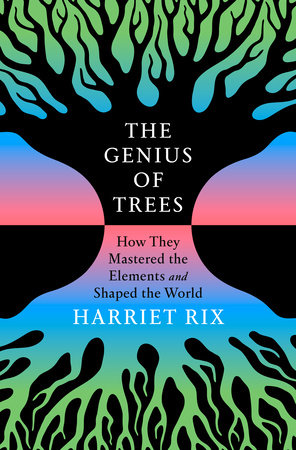
The Genius of Trees

How They Mastered the Elements and Shaped the World

Look inside
Hardcover
$30.00 US
6.37"W x 9.52"H x 1.12"D   (16.2 x 24.2 x 2.8 cm) | 18 oz (510 g) | 12 per carton
On sale Sep 09, 2025 | 320 Pages | 9780593735510
Grades 9-12 + AP/IB
Sales rights: US,OpnMkt(no EU/CAN)

A mind-expanding exploration of how trees learned to shape our world by manipulating the elements, plants, animals, and even humankind, possessing agency beyond anything we might have imagined

“Astounding . . . a true masterpiece . . . Rix refuses to put herself much in the picture, but through the scenes we glimpse an Indiana Jones figure who is both an eminent, travelling scientist and a born writer.”—The Telegraph


A NEW YORKER BEST BOOK OF THE YEAR

For a supposedly stationary life-form, trees have demonstrated an astonishing mastery over the environment around them. In The Genius of Trees, tree scientist Harriet Rix reveals the inventive ways trees sculpt their environment and explains the science of how they achieve these incredible feats. Taking us on an awe-inspiring journey through deep history and unseen biochemistry across the globe, Rix restores trees to their rightful station, not as victims of our negligence but as ingenious, stunningly inventive agents in a grand ecological narrative. Trees manipulate fundamental elements, plants, animals, bacteria, fungi, and even humankind to achieve their ends, as seen with oaks in Devon, England, shaping ecosystems through root networks and fungi, and in Amedi, Iraq, changing sexes as they age; laurel rainforests in the Canary Islands regulating water cycles; and metasequoias in California influencing microclimates.

Some tree species have gone to extraordinary lengths to make sure their fruits reach large primates, who can spread their seeds over vast distances, while poisoning smaller and less useful mammals. Others can split solid rock and create fertile ground in barren landscapes, effectively building entire ecosystems from scratch. And new discoveries are constantly coming to light: research has shown that trees have an even greater role in preventing global warming than we thought--trees, at one time thought to produce methane actually consume it. We share one world with trees and one need for survival.

This eye-opening journey into the inner lives of nature’s most powerful plant is a profoundly new and original way of understanding both the miracles trees perform and the glories of our natural world.
Chapter 1

Trees shaping water

How trees brought water down and sent it back up

There is a sky behind the forest, there are seas unbounded, seething, waves made from the foam of dreams and churned by hands of light.

Nāzik al-Malā’ikah, Revolt Against the Sun (translated by Emily Drumsta)

The cloud tasted of almonds. The tree I was looking at grew up gray-barked and straight for almost 100 feet until its trunk dissolved into the thick mist, and everything about it—slim emerald leaves, dead flaking twigs, mossy junctions between the leaves—was dripping with great drops of water that bent a thousand reflections into smooth curves. It was a tented world of cloud and moss and deep green. I knew, but couldn’t see, that on the ridge to either side the laurel trees and the clouds continued, but if I walked just a little way down the mountain the sky would clear, there’d be a hot sun in a blue sky, I would see the sea, be surrounded by cactus and spurge, and feel the baking heat. That alternate reality seemed a million miles away. It was February and I was in the Canary Islands, in the cloud forests of La Gomera.

Trees are cloud chasers, and cloud forests—known for their constant, lingering mists—don’t exist just in the Canaries; they are in Brazil and Costa Rica, China and Borneo, Australia and the Philippines. Cloud forests tend to occur in places where the landscape gathers water from the air—typically mountains next to the sea. But trees don’t affect water only in cloud forests; all 3 trillion trees across the world have an effect on rainfall and waterflows above and below them.

In a sense, trees developed into trees to gain power over water. During photosynthesis, trees use packets of solar energy to split water into hydrogen and oxygen and transfer the electrons onto carbon dioxide so it can start to make sugars. This means they need large quantities of both air and water—mutually exclusive unless you can operate vertically. In the earliest stages of their evolution as trees in water-logged environments, upward growth raised green parts of the plant above the water and into the air where it could photosynthesize, while in dry areas vertical growth downward allowed access to deeper water tables.

Having started successfully, trees continued to evolve a tightly engineered anatomy to chase this advantage. Above the ground, trees are rainmakers, growing tall to interrupt air flow with their leaves and trunks and branches, emitting volatile organic compounds like scents and alcohols to seed clouds, and releasing water vapor out of their stomata to cycle a gentle, consistent flow of moisture from the air. Below ground, their roots collect and redistribute water, ushering water down to the water table, lowering or raising the level of the water table to ensure they have just the right amount for their roots to be on stable ground. And in between, the tree can control and use the water within itself. Just as humans can reach up to pluck an apple, crunch hard to eat it, and bend down to plant the core, so trees use all these three capabilities to direct water across the earth.

Cumulatively, the earth’s trees sweepingly adjust global water flow. Trees of all 73,000 species are constantly making minute adjustments, but normally the resultant changes are subtle, deniable, and easy for humans to ignore, or, as in the Amazon rainforest, on a scale too enormous to be easily comprehended. I had gone to La Gomera because the dramatic change from desert to cloud forest is heightened by the extreme lengths to which the trees have gone, and continue to go, to maintain their clouds. You can see the water pouring off their branches, smell the terpenes seeding the cloud, and in the tangle of dark-green leaf shapes above your head it is obvious that you are looking at cloud catchers, branches designed to scoop out the belly of a cloud. What you can’t see is the effect of transpiration—water molecules sucked up by the tree’s roots hustling minerals through the trunk, up to the furthest leaves 100 feet above, and then with a final puff of energy evaporating off and out into the air. You can, however, feel it in the cool under the trees as heat departs with the water molecules that are heading up to swell the clouds.

But does water enable the trees, or did the trees enable the water? A little bit of both, but trees are good at clinging on where they are given even a hint of water to work with. When the climate changes around them, trees tend to evolve, so that, where possible, they outflank the change by getting even better at shaping water. Most of the trees that grow in the monteverde forests, for example, the mostly evergreen forests that flourish in mountainous areas, are rare laurels, surviving forest that diversified out of the chaos after the last great extinction 66 million years ago when an asteroid hit the earth at Chicxulub in Mexico, causing darkness, chaos, a cloak of iridium over the earth, and the extinction of the (non-avian) dinosaurs.

Before the extinction, forests were open canopied and dominated by gymnosperms (literally, “naked seeds”), which grow tall and straight and stiff, live long, and alter the abiotic environment—water, air, earth, and fire—dramatically. For the first 300 million years of tree existence, these were the trees that were shaping the world, and they still grow on six out of seven continents and thrive in some of the most inhospitable parts of the world. They include the pines and the firs and the larch, the monkey-puzzle, the yew and the Wollemi pine, the giant redwoods and the Podocarpus, the towering alerce and the mighty kauri, and also some of the most endangered trees on the planet. The asteroid strike marked the beginning of the end for many of them, and, because the trees that replaced them differ fundamentally, I am, dear reader, going to crave your indulgence as we make a quick diversion into tree history. Stay with me, because it’s only a few pages, and essential to understanding not just why trees have had an effect on water, but why they look and grow as they do and the effect that this has had on the world.


There is a split down the middle of the tree world, separating the conifers and the broadleaved trees. With a few exceptions (including the broadleaved deciduous alder trees, lover of riverbanks, which produce little cones that float downriver; the Casuarina of India, the Philippines, and Australia with their tubular, weeping leaves like a green plume of horsehair and their spiky green cones; and Platycarya strobilacea, found in fossils in the London clay and now happily embedded in forests in China and Korea and Vietnam, walnut-like until you see its bristling brown cones), all trees with cones are gymnosperms.

On the other side of the split are the angiosperms. Two hundred million years ago, a flowering plant developed under the gymnosperm canopy that later benefitted from the revolutionary impact of the Chicxulub asteroid and became the diverse and abundant group of plants we see today as the flowering plants. Some of these angiosperms (literally “contained seeds”) grew up to be trees, and they are mostly broadleaved and often deciduous, losing their wide leaves once a year in colder or darker seasons. The angiosperms include the oaks and the ash, the Parrotia and the baobab, the eucalyptus and the laurels, the palm trees and the rhododendrons. The angio-, or container part of their name, denotes the fact that they have a carpel: a fleshy, adapted leaf that folds around the ovaries, meaning that pollen has to penetrate through some of the plant before it can produce seed. This was an extraordinarily powerful mechanism, because it gave the female plant—which here simply means the plant that will produce seeds and is therefore investing most nutrients in the potential offspring—the power of selection, a dogma-defying ability to determine its offspring’s DNA and therefore influence evolution.

The result was diversity and flexibility, chemical and physical. It’s not just imagination that makes angiosperms look more youthful and less staid than gymnosperms. Giant sequoias and other gymnosperms often have burls, huge shoots waiting to spring up if they hit the ground, and it is supposed that these are an adaptation to the trees being knocked over by dinosaurs. By contrast, an angiosperm will root in a thousand places—even a 100-year-old beech tree can send up shoots from its trunk if it falls over, and becomes a phoenix tree. Genetically too, angiosperms tend to be more flexible, happily duplicating their DNA and experimenting with new chemical compounds. The ability to produce flowers and fruit, as well as shorter timescales of reproduction, meant that angiosperms shaped biotic factors—bacteria, fungi, plants, animals, and probably also humans—more than gymnosperms.

In the dark of the impact winter that followed the asteroid, the gymnosperms, those old evergreen trees that smothered the earth in the Carboniferous period, suffered. Their leaves, big enough when carbon dioxide levels were high and the earth peaceful, were suddenly too small, the veins bringing water and nutrients to the leaves too rudimentary for a dramatically changed climate, and their long lifespans a disadvantage in a world of chaos. They were supplanted by the angiosperms, which could cycle water quickly and drop their leaves when necessary, conserving energy until the next opportunity arose.
“Wide-ranging. . . . In Rix’s telling, trees emerge as beings with ‘profound agency,’ worthy of our continued attention, care, and respect.”The New Yorker

“A compelling journey of a book, full of wonder and revelation. Highly recommended.”—Sue Stuart-Smith, author of The Well-Gardened Mind

“[Rix] is an intrepid and erudite guide. . . . Genius is too small a word for all of this.”The Guardian

“Sublime. . . . Astounding. . . . Like an early Robert MacFarlane narrator, Rix refuses to put herself much in the picture, but through the scenes we glimpse an Indiana Jones figure who is both an eminent, travelling scientist and a born writer. . . . Non-fiction rarely sees a debut like The Genius of Trees. It is a true masterpiece.”—The Telegraph

“You will forever love trees after you read this wonderful book. Not only is the text brilliant, but the author is genius. Harriet Rix’s stories range from why sloths are shaped by trees to be greenish in color to the chemical secrets of chocolate trees to how one fragile moth pollinates Joshua trees. You will want to read this book again and again.”—Meg Lowman, author of The Arbornaut

“A wondrous spreading canopy of a book that gives us trees as we’ve never seen them before: as dynamic forces, founders of our world, and agents of their own destiny as well as ours. This is science writing at its best—beautifully explained, brilliantly written, and perception-changing.”—Isabella Tree, author of Wilding

“A magisterial tour de force. Rix packs in several lifetimes of science into this sweeping story of the amazing genius of trees. I learned so much. Surely destined to become a classic.”—Ben Rawlence, author of The Treeline

“An exceptional book. Up to date scientifically, beautifully clear for all of us. Rix changes our entire view of trees while carrying us to other worlds and times. Enchantingly written, The Genius of Trees has personal touches that unite science, travel, and fine literature, and leads us by the hand through woods we never understood before.”—Robin Lane Fox, author of Thoughtful Gardening

“In her wonderful book, Harriet Rix has given us a unique vantage point on the inalienable agency of trees. The Genius of Trees is both shocking and poetic, full of detail and even then dotted with fascinating footnotes. I left the book feeling invigorated and inspired.”—Lyndsie Bourgon, author of Tree Thieves
© Alex Chisholm
Harriet Rix is a tree science consultant who travels widely, studying trees around the world. She was formerly based at the Tree Council, where she researched tree diseases and urban tree strategies.

Rix holds a degree in biochemistry from the University of Oxford and an MPhil in the history and philosophy of science from the University of Cambridge. A former London Library Emerging Writer, her writing and photography have appeared in the Financial Times, London Review of Books, and Times Literary Supplement, among others. View titles by Harriet Rix
Available for sale exclusive:
•     Guam
•     Minor Outl.Ins.
•     North Mariana
•     Philippines
•     Puerto Rico
•     Samoa,American
•     US Virgin Is.
•     USA

Available for sale non-exclusive:
•     Afghanistan
•     Aland Islands
•     Albania
•     Algeria
•     Angola
•     Anguilla
•     Antarctica
•     Argentina
•     Armenia
•     Aruba
•     Azerbaijan
•     Bahrain
•     Belarus
•     Benin
•     Bhutan
•     Bolivia
•     Bonaire, Saba
•     Bosnia Herzeg.
•     Bouvet Island
•     Brazil
•     Burkina Faso
•     Burundi
•     Cambodia
•     Cape Verde
•     Centr.Afr.Rep.
•     Chad
•     Chile
•     China
•     Colombia
•     Comoro Is.
•     Congo
•     Costa Rica
•     Cuba
•     Curacao
•     Dem. Rep. Congo
•     Djibouti
•     Dominican Rep.
•     Ecuador
•     Egypt
•     El Salvador
•     Equatorial Gui.
•     Eritrea
•     Ethiopia
•     French Guinea
•     Gabon
•     Georgia
•     Guadeloupe
•     Guatemala
•     Guinea Republic
•     Guinea-Bissau
•     Haiti
•     Honduras
•     Hong Kong
•     Indonesia
•     Iran
•     Israel
•     Ivory Coast
•     Japan
•     Kazakhstan
•     Kyrgyzstan
•     Laos
•     Lebanon
•     Liberia
•     Libya
•     Macau
•     Macedonia
•     Madagascar
•     Maldives
•     Mali
•     Marshall island
•     Martinique
•     Mauritania
•     Mayotte
•     Mexico
•     Micronesia
•     Moldavia
•     Mongolia
•     Montenegro
•     Morocco
•     Nepal
•     New Caledonia
•     Nicaragua
•     Niger
•     North Korea
•     Oman
•     Palau
•     Palestinian Ter
•     Panama
•     Paraguay
•     Peru
•     Qatar
•     Reunion Island
•     Russian Fed.
•     Saint Martin
•     SaoTome Princip
•     Saudi Arabia
•     Senegal
•     Serbia
•     Sint Maarten
•     South Korea
•     South Sudan
•     St Barthelemy
•     St.Pier,Miquel.
•     Sth Terr. Franc
•     Suriname
•     Svalbard
•     Syria
•     Tadschikistan
•     Taiwan
•     Thailand
•     Timor-Leste
•     Togo
•     Tunisia
•     Turkmenistan
•     Ukraine
•     Unit.Arab Emir.
•     Uruguay
•     Uzbekistan
•     Venezuela
•     Vietnam
•     Wallis,Futuna
•     West Saharan

Not available for sale:
•     Andorra
•     Antigua/Barbuda
•     Australia
•     Austria
•     Bahamas
•     Bangladesh
•     Barbados
•     Belgium
•     Belize
•     Bermuda
•     Botswana
•     Brit.Ind.Oc.Ter
•     Brit.Virgin Is.
•     Brunei
•     Bulgaria
•     Cameroon
•     Canada
•     Cayman Islands
•     Christmas Islnd
•     Cocos Islands
•     Cook Islands
•     Croatia
•     Cyprus
•     Czech Republic
•     Denmark
•     Dominica
•     Estonia
•     Falkland Islnds
•     Faroe Islands
•     Fiji
•     Finland
•     France
•     Fren.Polynesia
•     Gambia
•     Germany
•     Ghana
•     Gibraltar
•     Greece
•     Greenland
•     Grenada
•     Guernsey
•     Guyana
•     Heard/McDon.Isl
•     Hungary
•     Iceland
•     India
•     Iraq
•     Ireland
•     Isle of Man
•     Italy
•     Jamaica
•     Jersey
•     Jordan
•     Kenya
•     Kiribati
•     Kuwait
•     Latvia
•     Lesotho
•     Liechtenstein
•     Lithuania
•     Luxembourg
•     Malawi
•     Malaysia
•     Malta
•     Mauritius
•     Monaco
•     Montserrat
•     Mozambique
•     Myanmar
•     Namibia
•     Nauru
•     Netherlands
•     New Zealand
•     Nigeria
•     Niue
•     Norfolk Island
•     Norway
•     Pakistan
•     PapuaNewGuinea
•     Pitcairn Islnds
•     Poland
•     Portugal
•     Romania
•     Rwanda
•     S. Sandwich Ins
•     San Marino
•     Seychelles
•     Sierra Leone
•     Singapore
•     Slovakia
•     Slovenia
•     Solomon Islands
•     Somalia
•     South Africa
•     Spain
•     Sri Lanka
•     St. Helena
•     St. Lucia
•     St. Vincent
•     St.Chr.,Nevis
•     Sudan
•     Swaziland
•     Sweden
•     Switzerland
•     Tanzania
•     Tokelau Islands
•     Tonga
•     Trinidad,Tobago
•     Turkey
•     Turks&Caicos Is
•     Tuvalu
•     Uganda
•     United Kingdom
•     Vanuatu
•     Vatican City
•     Western Samoa
•     Yemen
•     Zambia
•     Zimbabwe

About

A mind-expanding exploration of how trees learned to shape our world by manipulating the elements, plants, animals, and even humankind, possessing agency beyond anything we might have imagined

“Astounding . . . a true masterpiece . . . Rix refuses to put herself much in the picture, but through the scenes we glimpse an Indiana Jones figure who is both an eminent, travelling scientist and a born writer.”—The Telegraph


A NEW YORKER BEST BOOK OF THE YEAR

For a supposedly stationary life-form, trees have demonstrated an astonishing mastery over the environment around them. In The Genius of Trees, tree scientist Harriet Rix reveals the inventive ways trees sculpt their environment and explains the science of how they achieve these incredible feats. Taking us on an awe-inspiring journey through deep history and unseen biochemistry across the globe, Rix restores trees to their rightful station, not as victims of our negligence but as ingenious, stunningly inventive agents in a grand ecological narrative. Trees manipulate fundamental elements, plants, animals, bacteria, fungi, and even humankind to achieve their ends, as seen with oaks in Devon, England, shaping ecosystems through root networks and fungi, and in Amedi, Iraq, changing sexes as they age; laurel rainforests in the Canary Islands regulating water cycles; and metasequoias in California influencing microclimates.

Some tree species have gone to extraordinary lengths to make sure their fruits reach large primates, who can spread their seeds over vast distances, while poisoning smaller and less useful mammals. Others can split solid rock and create fertile ground in barren landscapes, effectively building entire ecosystems from scratch. And new discoveries are constantly coming to light: research has shown that trees have an even greater role in preventing global warming than we thought--trees, at one time thought to produce methane actually consume it. We share one world with trees and one need for survival.

This eye-opening journey into the inner lives of nature’s most powerful plant is a profoundly new and original way of understanding both the miracles trees perform and the glories of our natural world.

Excerpt

Chapter 1

Trees shaping water

How trees brought water down and sent it back up

There is a sky behind the forest, there are seas unbounded, seething, waves made from the foam of dreams and churned by hands of light.

Nāzik al-Malā’ikah, Revolt Against the Sun (translated by Emily Drumsta)

The cloud tasted of almonds. The tree I was looking at grew up gray-barked and straight for almost 100 feet until its trunk dissolved into the thick mist, and everything about it—slim emerald leaves, dead flaking twigs, mossy junctions between the leaves—was dripping with great drops of water that bent a thousand reflections into smooth curves. It was a tented world of cloud and moss and deep green. I knew, but couldn’t see, that on the ridge to either side the laurel trees and the clouds continued, but if I walked just a little way down the mountain the sky would clear, there’d be a hot sun in a blue sky, I would see the sea, be surrounded by cactus and spurge, and feel the baking heat. That alternate reality seemed a million miles away. It was February and I was in the Canary Islands, in the cloud forests of La Gomera.

Trees are cloud chasers, and cloud forests—known for their constant, lingering mists—don’t exist just in the Canaries; they are in Brazil and Costa Rica, China and Borneo, Australia and the Philippines. Cloud forests tend to occur in places where the landscape gathers water from the air—typically mountains next to the sea. But trees don’t affect water only in cloud forests; all 3 trillion trees across the world have an effect on rainfall and waterflows above and below them.

In a sense, trees developed into trees to gain power over water. During photosynthesis, trees use packets of solar energy to split water into hydrogen and oxygen and transfer the electrons onto carbon dioxide so it can start to make sugars. This means they need large quantities of both air and water—mutually exclusive unless you can operate vertically. In the earliest stages of their evolution as trees in water-logged environments, upward growth raised green parts of the plant above the water and into the air where it could photosynthesize, while in dry areas vertical growth downward allowed access to deeper water tables.

Having started successfully, trees continued to evolve a tightly engineered anatomy to chase this advantage. Above the ground, trees are rainmakers, growing tall to interrupt air flow with their leaves and trunks and branches, emitting volatile organic compounds like scents and alcohols to seed clouds, and releasing water vapor out of their stomata to cycle a gentle, consistent flow of moisture from the air. Below ground, their roots collect and redistribute water, ushering water down to the water table, lowering or raising the level of the water table to ensure they have just the right amount for their roots to be on stable ground. And in between, the tree can control and use the water within itself. Just as humans can reach up to pluck an apple, crunch hard to eat it, and bend down to plant the core, so trees use all these three capabilities to direct water across the earth.

Cumulatively, the earth’s trees sweepingly adjust global water flow. Trees of all 73,000 species are constantly making minute adjustments, but normally the resultant changes are subtle, deniable, and easy for humans to ignore, or, as in the Amazon rainforest, on a scale too enormous to be easily comprehended. I had gone to La Gomera because the dramatic change from desert to cloud forest is heightened by the extreme lengths to which the trees have gone, and continue to go, to maintain their clouds. You can see the water pouring off their branches, smell the terpenes seeding the cloud, and in the tangle of dark-green leaf shapes above your head it is obvious that you are looking at cloud catchers, branches designed to scoop out the belly of a cloud. What you can’t see is the effect of transpiration—water molecules sucked up by the tree’s roots hustling minerals through the trunk, up to the furthest leaves 100 feet above, and then with a final puff of energy evaporating off and out into the air. You can, however, feel it in the cool under the trees as heat departs with the water molecules that are heading up to swell the clouds.

But does water enable the trees, or did the trees enable the water? A little bit of both, but trees are good at clinging on where they are given even a hint of water to work with. When the climate changes around them, trees tend to evolve, so that, where possible, they outflank the change by getting even better at shaping water. Most of the trees that grow in the monteverde forests, for example, the mostly evergreen forests that flourish in mountainous areas, are rare laurels, surviving forest that diversified out of the chaos after the last great extinction 66 million years ago when an asteroid hit the earth at Chicxulub in Mexico, causing darkness, chaos, a cloak of iridium over the earth, and the extinction of the (non-avian) dinosaurs.

Before the extinction, forests were open canopied and dominated by gymnosperms (literally, “naked seeds”), which grow tall and straight and stiff, live long, and alter the abiotic environment—water, air, earth, and fire—dramatically. For the first 300 million years of tree existence, these were the trees that were shaping the world, and they still grow on six out of seven continents and thrive in some of the most inhospitable parts of the world. They include the pines and the firs and the larch, the monkey-puzzle, the yew and the Wollemi pine, the giant redwoods and the Podocarpus, the towering alerce and the mighty kauri, and also some of the most endangered trees on the planet. The asteroid strike marked the beginning of the end for many of them, and, because the trees that replaced them differ fundamentally, I am, dear reader, going to crave your indulgence as we make a quick diversion into tree history. Stay with me, because it’s only a few pages, and essential to understanding not just why trees have had an effect on water, but why they look and grow as they do and the effect that this has had on the world.


There is a split down the middle of the tree world, separating the conifers and the broadleaved trees. With a few exceptions (including the broadleaved deciduous alder trees, lover of riverbanks, which produce little cones that float downriver; the Casuarina of India, the Philippines, and Australia with their tubular, weeping leaves like a green plume of horsehair and their spiky green cones; and Platycarya strobilacea, found in fossils in the London clay and now happily embedded in forests in China and Korea and Vietnam, walnut-like until you see its bristling brown cones), all trees with cones are gymnosperms.

On the other side of the split are the angiosperms. Two hundred million years ago, a flowering plant developed under the gymnosperm canopy that later benefitted from the revolutionary impact of the Chicxulub asteroid and became the diverse and abundant group of plants we see today as the flowering plants. Some of these angiosperms (literally “contained seeds”) grew up to be trees, and they are mostly broadleaved and often deciduous, losing their wide leaves once a year in colder or darker seasons. The angiosperms include the oaks and the ash, the Parrotia and the baobab, the eucalyptus and the laurels, the palm trees and the rhododendrons. The angio-, or container part of their name, denotes the fact that they have a carpel: a fleshy, adapted leaf that folds around the ovaries, meaning that pollen has to penetrate through some of the plant before it can produce seed. This was an extraordinarily powerful mechanism, because it gave the female plant—which here simply means the plant that will produce seeds and is therefore investing most nutrients in the potential offspring—the power of selection, a dogma-defying ability to determine its offspring’s DNA and therefore influence evolution.

The result was diversity and flexibility, chemical and physical. It’s not just imagination that makes angiosperms look more youthful and less staid than gymnosperms. Giant sequoias and other gymnosperms often have burls, huge shoots waiting to spring up if they hit the ground, and it is supposed that these are an adaptation to the trees being knocked over by dinosaurs. By contrast, an angiosperm will root in a thousand places—even a 100-year-old beech tree can send up shoots from its trunk if it falls over, and becomes a phoenix tree. Genetically too, angiosperms tend to be more flexible, happily duplicating their DNA and experimenting with new chemical compounds. The ability to produce flowers and fruit, as well as shorter timescales of reproduction, meant that angiosperms shaped biotic factors—bacteria, fungi, plants, animals, and probably also humans—more than gymnosperms.

In the dark of the impact winter that followed the asteroid, the gymnosperms, those old evergreen trees that smothered the earth in the Carboniferous period, suffered. Their leaves, big enough when carbon dioxide levels were high and the earth peaceful, were suddenly too small, the veins bringing water and nutrients to the leaves too rudimentary for a dramatically changed climate, and their long lifespans a disadvantage in a world of chaos. They were supplanted by the angiosperms, which could cycle water quickly and drop their leaves when necessary, conserving energy until the next opportunity arose.

Praise

“Wide-ranging. . . . In Rix’s telling, trees emerge as beings with ‘profound agency,’ worthy of our continued attention, care, and respect.”The New Yorker

“A compelling journey of a book, full of wonder and revelation. Highly recommended.”—Sue Stuart-Smith, author of The Well-Gardened Mind

“[Rix] is an intrepid and erudite guide. . . . Genius is too small a word for all of this.”The Guardian

“Sublime. . . . Astounding. . . . Like an early Robert MacFarlane narrator, Rix refuses to put herself much in the picture, but through the scenes we glimpse an Indiana Jones figure who is both an eminent, travelling scientist and a born writer. . . . Non-fiction rarely sees a debut like The Genius of Trees. It is a true masterpiece.”—The Telegraph

“You will forever love trees after you read this wonderful book. Not only is the text brilliant, but the author is genius. Harriet Rix’s stories range from why sloths are shaped by trees to be greenish in color to the chemical secrets of chocolate trees to how one fragile moth pollinates Joshua trees. You will want to read this book again and again.”—Meg Lowman, author of The Arbornaut

“A wondrous spreading canopy of a book that gives us trees as we’ve never seen them before: as dynamic forces, founders of our world, and agents of their own destiny as well as ours. This is science writing at its best—beautifully explained, brilliantly written, and perception-changing.”—Isabella Tree, author of Wilding

“A magisterial tour de force. Rix packs in several lifetimes of science into this sweeping story of the amazing genius of trees. I learned so much. Surely destined to become a classic.”—Ben Rawlence, author of The Treeline

“An exceptional book. Up to date scientifically, beautifully clear for all of us. Rix changes our entire view of trees while carrying us to other worlds and times. Enchantingly written, The Genius of Trees has personal touches that unite science, travel, and fine literature, and leads us by the hand through woods we never understood before.”—Robin Lane Fox, author of Thoughtful Gardening

“In her wonderful book, Harriet Rix has given us a unique vantage point on the inalienable agency of trees. The Genius of Trees is both shocking and poetic, full of detail and even then dotted with fascinating footnotes. I left the book feeling invigorated and inspired.”—Lyndsie Bourgon, author of Tree Thieves

Author

© Alex Chisholm
Harriet Rix is a tree science consultant who travels widely, studying trees around the world. She was formerly based at the Tree Council, where she researched tree diseases and urban tree strategies.

Rix holds a degree in biochemistry from the University of Oxford and an MPhil in the history and philosophy of science from the University of Cambridge. A former London Library Emerging Writer, her writing and photography have appeared in the Financial Times, London Review of Books, and Times Literary Supplement, among others. View titles by Harriet Rix

Rights

Available for sale exclusive:
•     Guam
•     Minor Outl.Ins.
•     North Mariana
•     Philippines
•     Puerto Rico
•     Samoa,American
•     US Virgin Is.
•     USA

Available for sale non-exclusive:
•     Afghanistan
•     Aland Islands
•     Albania
•     Algeria
•     Angola
•     Anguilla
•     Antarctica
•     Argentina
•     Armenia
•     Aruba
•     Azerbaijan
•     Bahrain
•     Belarus
•     Benin
•     Bhutan
•     Bolivia
•     Bonaire, Saba
•     Bosnia Herzeg.
•     Bouvet Island
•     Brazil
•     Burkina Faso
•     Burundi
•     Cambodia
•     Cape Verde
•     Centr.Afr.Rep.
•     Chad
•     Chile
•     China
•     Colombia
•     Comoro Is.
•     Congo
•     Costa Rica
•     Cuba
•     Curacao
•     Dem. Rep. Congo
•     Djibouti
•     Dominican Rep.
•     Ecuador
•     Egypt
•     El Salvador
•     Equatorial Gui.
•     Eritrea
•     Ethiopia
•     French Guinea
•     Gabon
•     Georgia
•     Guadeloupe
•     Guatemala
•     Guinea Republic
•     Guinea-Bissau
•     Haiti
•     Honduras
•     Hong Kong
•     Indonesia
•     Iran
•     Israel
•     Ivory Coast
•     Japan
•     Kazakhstan
•     Kyrgyzstan
•     Laos
•     Lebanon
•     Liberia
•     Libya
•     Macau
•     Macedonia
•     Madagascar
•     Maldives
•     Mali
•     Marshall island
•     Martinique
•     Mauritania
•     Mayotte
•     Mexico
•     Micronesia
•     Moldavia
•     Mongolia
•     Montenegro
•     Morocco
•     Nepal
•     New Caledonia
•     Nicaragua
•     Niger
•     North Korea
•     Oman
•     Palau
•     Palestinian Ter
•     Panama
•     Paraguay
•     Peru
•     Qatar
•     Reunion Island
•     Russian Fed.
•     Saint Martin
•     SaoTome Princip
•     Saudi Arabia
•     Senegal
•     Serbia
•     Sint Maarten
•     South Korea
•     South Sudan
•     St Barthelemy
•     St.Pier,Miquel.
•     Sth Terr. Franc
•     Suriname
•     Svalbard
•     Syria
•     Tadschikistan
•     Taiwan
•     Thailand
•     Timor-Leste
•     Togo
•     Tunisia
•     Turkmenistan
•     Ukraine
•     Unit.Arab Emir.
•     Uruguay
•     Uzbekistan
•     Venezuela
•     Vietnam
•     Wallis,Futuna
•     West Saharan

Not available for sale:
•     Andorra
•     Antigua/Barbuda
•     Australia
•     Austria
•     Bahamas
•     Bangladesh
•     Barbados
•     Belgium
•     Belize
•     Bermuda
•     Botswana
•     Brit.Ind.Oc.Ter
•     Brit.Virgin Is.
•     Brunei
•     Bulgaria
•     Cameroon
•     Canada
•     Cayman Islands
•     Christmas Islnd
•     Cocos Islands
•     Cook Islands
•     Croatia
•     Cyprus
•     Czech Republic
•     Denmark
•     Dominica
•     Estonia
•     Falkland Islnds
•     Faroe Islands
•     Fiji
•     Finland
•     France
•     Fren.Polynesia
•     Gambia
•     Germany
•     Ghana
•     Gibraltar
•     Greece
•     Greenland
•     Grenada
•     Guernsey
•     Guyana
•     Heard/McDon.Isl
•     Hungary
•     Iceland
•     India
•     Iraq
•     Ireland
•     Isle of Man
•     Italy
•     Jamaica
•     Jersey
•     Jordan
•     Kenya
•     Kiribati
•     Kuwait
•     Latvia
•     Lesotho
•     Liechtenstein
•     Lithuania
•     Luxembourg
•     Malawi
•     Malaysia
•     Malta
•     Mauritius
•     Monaco
•     Montserrat
•     Mozambique
•     Myanmar
•     Namibia
•     Nauru
•     Netherlands
•     New Zealand
•     Nigeria
•     Niue
•     Norfolk Island
•     Norway
•     Pakistan
•     PapuaNewGuinea
•     Pitcairn Islnds
•     Poland
•     Portugal
•     Romania
•     Rwanda
•     S. Sandwich Ins
•     San Marino
•     Seychelles
•     Sierra Leone
•     Singapore
•     Slovakia
•     Slovenia
•     Solomon Islands
•     Somalia
•     South Africa
•     Spain
•     Sri Lanka
•     St. Helena
•     St. Lucia
•     St. Vincent
•     St.Chr.,Nevis
•     Sudan
•     Swaziland
•     Sweden
•     Switzerland
•     Tanzania
•     Tokelau Islands
•     Tonga
•     Trinidad,Tobago
•     Turkey
•     Turks&Caicos Is
•     Tuvalu
•     Uganda
•     United Kingdom
•     Vanuatu
•     Vatican City
•     Western Samoa
•     Yemen
•     Zambia
•     Zimbabwe

Earth Day Picks for Secondary Education

Earth Day, celebrated on April 22nd, is a power opportunity to engage middle and high school students in meaningful conversations about sustainability, climate action, and global responsibility. With thoughtful curated titles and collections, students can explore complex environmental issues while building critical thinking and real-world connections. Whether you are enhancing your curriculum or adding to

Read more