Close Modal

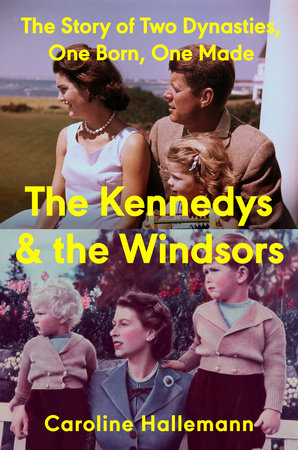
The Kennedys and the Windsors

The Story of Two Dynasties, One Born, One Made

Author Caroline Hallemann On Tour
Look inside
Hardcover
$35.00 US
6.31"W x 9.27"H x 1.3"D   (16.0 x 23.5 x 3.3 cm) | 19 oz (550 g) | 12 per carton
On sale Jun 02, 2026 | 384 Pages | 9780593717455
Sales rights: US, Canada, Open Mkt

Two iconic dynasties—the Kennedys and the Windsors—whose glamour and ambition defined an era.

** For fans of FX’s new Ryan Murphy limited series Love Story. **


For nearly a century, two families an ocean apart have captured the world’s collective imagination: the British Windsors and the American Kennedys. Much ink has been spilled on their individual trysts, tragedies, and triumphs over the years, but no one has examined their powerful and intertwined legacies. Until now.

In The Kennedys and the Windsors, acclaimed journalist Caroline Hallemann unearths the story of two iconic families whose lives, ambitions, and respective reigns have mirrored each other in surprising ways. Through rich archival research and fresh interviews from insiders on both sides of the Atlantic, Hallemann reveals how an upstart Irish Catholic family with little access into elite New England society came to host dinner parties for a King and Queen, and forge an eventual path to the White House. In the process, she draws out some startling parallels between the two families: the style icons Princess Diana and Carolyn Bessette-Kennedy (both tragically gone too soon), the frustrated “second sisters” Princess Margaret and Lee Radziwill, the scandal-plagued next generation of Robert F. Kennedy Jr. and the man formerly known as Prince Andrew, and the current generation’s shared struggle to figure out what a monarchy (actual or imagined) means in the twenty-first century.

From Queen Elizabeth’s coronation to President Kennedy’s historic London visit, from JFK Jr.’s shocking death to Prince Harry’s decisive break with his family, Hallemann traces the key moments in the lives of these two dynasties through a fresh and fascinating lens, showing how they have intersected over the generations in ways that not only shaped their images and legacies, but history itself.
CAUTION: This email originated from outside of Penguin Random House. Please be extra cautious when opening file attachments or clicking on links.

Chapter 1

The Kennedys at Court

Joseph P. Kennedy was an unusual choice for ambassador to the Court of St. James's in 1937. An Irish Catholic Bostonian, he and his family had always been on the outskirts of WASPy New England society.

Joe's wife, Rose Fitzgerald Kennedy, once described Boston as being made up of two separate communities. One of them was Protestant and English, essentially constituting the descendants of the original colonists-"proper Bostonians," or Boston Brahmin as they were sometimes called. "With the advantages of inherited wealth and status and close-knit interfamily ties, they controlled the banks, insurance companies, the big law firms, the big shipping and mercantile enterprises, and almost all the usual routes to success, and thus were a self-perpetuating aristocracy," Rose explained in her memoir, Times to Remember. It was a "closed" society.

The other predominant group in Boston was the Irish Catholics, many of whom were the descendants of those who had fled Ireland during the Great Hunger of the mid-1800s. "Between the two groups feelings were, at best, suspicious, and in general amounted to a state of chronic, mutual antagonism," Rose wrote, explaining that this discord had "stemmed from the ancient unhappy relationship between England and Ireland," and had been sustained across not only geography but also generations. Irish Catholic Bostonians often gained clout through politics. At least, that's how it worked for Rose's family. She was the daughter of John "Honey Fitz" Fitzgerald, a colorful "pixielike" man, who rose to prominence as Boston's mayor and, later, used his influence in the local Democratic Party to give his grandson (his namesake, John Fitzgerald Kennedy) a leg up. The Kennedys were already at the center of Boston's Irish community by the early twentieth century. But with Joe's appointment as ambassador, they found themselves navigating the complexities of the English upper class. It was not always easy.

Then, as now, many of the cushiest ambassadorships were given to campaign supporters. Joe's was one such appointment; the position was granted as a thank-you of sorts for his support of President Franklin D. Roosevelt's 1936 reelection campaign, despite his complete lack of relevant diplomatic experience. After attending Harvard University, Joe had built his fortune first as a banker and then as a producer in Hollywood.

While many have alleged that Joe made millions transporting and selling alcohol during the Prohibition era, a rumor that began during his lifetime, there's no credible evidence of that sort of illicit behavior. But as historian Daniel Okrent put it in his book Last Call: The Rise and Fall of Prohibition, "One cannot prove a negative." And the allegations are rooted in a kernel of truth. As the amendment to repeal Prohibition was gaining popularity in the fall of 1933, Joe traveled to England with James Roosevelt, the son of FDR. While in the UK, they met with the managing directors of the conglomerate Distillers Company, securing the rights to become the sole American importer of Dewar's and Haig & Haig whiskey and Gordon's gin. Joe had already procured a medicinal liquor permit, as well as warehouse space for the alcohol, and so they prudently imported the goods in November, preparing for the day when imbibing alcohol was once again legal in the US. They were ready for the raucous celebrations on December 6, 1933. However, as this story was repeated, the legality of Joe's actions was left out, and so, as Okrent put it, "from such acorns, nourished by a lifetime's accumulation of rumors, enemies, and vast sums of money, arose the widely accepted story of Joseph P. Kennedy, bootlegger."

With another term secured for FDR, Joe had his eye on another post entirely-that of secretary of the treasury-but that simply wasn't an option. "Father was not going to remove Henry Morgenthau from office. Father did not tell Joe in so many words, but in time it became clear to him," James Roosevelt wrote in his memoirs, noting that while the treasury secretary post was off the table, his father did want to give Joe something in return for his loyalty.

"We've got to do something for old Joe, but I don't know what," FDR told his son. "He wants what he can't have, but there must be something we can give him he'll be happy with."

There was one other job Joe would be willing to consider. "I'd like to be ambassador to England," he told James one evening. If status for his family was what he was seeking, he would have been hard-pressed to pick a better position. The list of ambassadors up to that point included many successful politicians, including five future presidents (John Adams, James Monroe, John Quincy Adams, Martin Van Buren, and James Buchanan) as well as numerous notable businessmen.

"He wanted to build as high a platform as possible from which his children could be launched. He wanted them to start out with every possible advantage, advantages that he himself hadn't had," Jack Kennedy's longtime close friend Kirk LeMoyne "Lem" Billings would later say. "I don't think there's any question about it, the post of the American Ambassador to the Court of St. James's couldn't do anything but help build prestige for the Kennedy family."

When James Roosevelt relayed Joe's ambition to his father, FDR allegedly "laughed so hard he almost toppled from his wheelchair." Yet, Joe Kennedy had a way of getting what he wanted. And in this case, Roosevelt was easily convinced. After all, sending Joe across the ocean made it far more difficult for him to interfere in politics at home. Plus, Roosevelt knew that Joe had deep pockets and would be willing to entertain on his own dime. Kennedy biographer Susan Ronald also suggests that the idea of Joe as ambassador "appealed to Roosevelt's mischievous sense of humor, picturing an Irish Catholic in the bastion of Anglicanism." And so, on February 18, 1938, Joe Kennedy was sworn in as the US ambassador to Great Britain by Supreme Court Justice Stanley Reed, as President Roosevelt looked on. A few days later, on February 23, he boarded the SS Manhattan and set forth across the Atlantic.

q


From the moment a Kennedy stepped foot in London, the British press was fascinated by the family. Reporters captured Joe’s arrival in Plymouth, and they were there as he saw his new residence in London, a six-story Beaux-Arts-style property just off Hyde Park. He had several American creature comforts sent over to immediately make the fifty-two-room mansion feel more like home: candy from a specific store on Cape Cod, Maxwell House coffee, toiletries including Nivea and Jergens lotions, Cheracol cough syrup, and dozens of cans of New England clam chowder. The cellar was stocked with champagne for hosting, and he had arranged to borrow works of art from William Randolph Hearst’s castle in Wales to adorn the walls. He also took note of how close 14 Prince’s Gate was to “Rotten Row,” a specific area in the park where the upper class were often seen horse riding.

After much conversation about whether or not Joe would wear the customary knee breeches at court (he eventually opted for long trousers, bucking British tradition in something of a faux pas), he became a "full fledged" ambassador by presenting his letter of credence to King George VI on March 8, 1938. "The coaches, with their scarlet-coated drivers and footmen, came for us at the Embassy a little after eleven," Joe wrote in his diary. "The show at Buckingham Palace was set up to expectations, and I chatted informally with the King for five minutes. I found him charming in every way."

A few days later, Rose arrived with her second-eldest daughter, Kathleen "Kick" (born 1920), as well as the four younger Kennedy children: Patricia "Pat" (born 1924), Robert "Bobby" (born 1925), Jean (born 1928), and Edward "Teddy" (born 1932). At that point, the two eldest sons, Joseph "Joe" P. Kennedy Jr. (born 1915) and John "Jack" F. Kennedy (born 1917) were in college, and Eunice (born 1921) was finishing the school term at the Convent of the Sacred Heart in Noroton, Connecticut. Eunice and Rosemary (born 1918) traveled over separately. But the entire brood immediately made an impression on the British public.

Deborah Cavendish, Duchess of Devonshire (aka Debo, one of the iconic Mitford sisters, who would go on to become Kick's sister-in-law by marriage), would later write, "Nothing like the Kennedy family had been seen before in the rarefied atmosphere of London diplomatic circles. For the next seventeen months they enlivened the scene." As Life magazine put it, Great Britain got "eleven Ambassadors for the price of one." The press covered their every move as if they were celebrities.

They had arrived in London at the start of the social season of parties, balls, and court functions, and the family found themselves with a full and lively calendar. It was not by accident. Word had been "passed around (before [Joe's] arrival) to be nice," Winston Churchill's son Randolph explained to journalist C. L. Sulzberger. "Consequentially the Establishment went to work. [The Kennedys were] invited to house parties, dinners, golf and shooting by dukes and earls"-the full upper-crust British experience.

"Those first months passed in a whirl of introductions and social and official events," Rose recalled. A few days after she arrived, Rose, as the wife of an ambassador, was received by Queen Elizabeth at Buckingham Palace. Queen Elizabeth, later known as the Queen Mother, was eager to welcome the new ambassador's family to the country. Immediately, Rose felt "at ease" with the royal, describing her smile as "happy" and her manner as "friendly." They sat together on a small sofa near a fireplace, as Elizabeth asked her questions about her children, their schools, and the family's initial impressions of England. The conversation flowed easily, no doubt aided by the fact that then Princess Elizabeth and Princess Margaret were about the same age as Bobby and Jean. These were just two mothers talking about their babies.

Soon after that initial conversation, the Kennedys were invited to Windsor Castle for a weekend visit alongside Prime Minister Neville Chamberlain and his wife, Anne-a strategic move by UK officials. For as much as Joe viewed this embassy position as an opportunity to improve his family's standing, the royals and the government had their own agendas. The British establishment was keen to impress Joe (and by extension, the Roosevelt administration); on March 12, 1938, Germany had invaded Austria, marking the first act of the Nazi regime's territorial expansion. With a potential war on the horizon, American support was essential to the British government, and the British royal family would be key to winning that favor.

"It was a period during which I would guess any ambassador would have been popular in London, because they obviously needed our help during this period and knew they were going to need it more," Lem later summarized in an oral history for the John F. Kennedy Presidential Library and Museum. "Mr. Kennedy, although being probably the first American of Irish descent who had been Ambassador to the Court of St. James's, was exceedingly popular in the beginning and he became a very close and fast friend, for instance, of the King [George VI] and Queen [Elizabeth]. He was a great admirer of Queen Elizabeth (the present Queen Mother) and thought she was one of the most capable, charming women whom he'd ever met. I heard him say this time and time again."

Joe and Rose arrived at Windsor Castle by car on April 9 and were met by a man in a gray suit who swiftly escorted them to where they would be staying. "Rose, this is a helluva long way from East Boston," Joe Kennedy said to his wife as they explored their bedrooms in one of the towers with a "lovely view of the park." Rose's room was outfitted with an enormous bed upholstered in red damask and set up so high a step stool was needed to get into it.

During dinner that night, Joe sat next to the Queen. They spoke of the American press and relations between the two countries. "She impressed me as a most charming person with a fine head," he wrote in his diary. His wife was equally captivated. "She has a very pleasing voice, a beautiful English complexion, great dignity and charm; is simple in manner, stands very erect and holds herself well and is every inch a Queen," she wrote in her diary. "We talked, among other things, about the difficulty of sleeping in London, and the Queen was very much amused that I put wax in my ears," Rose wrote of the evening spent chatting in the drawing room.

That night, Rose lay awake in that bed thinking, "I must be dreaming that I, Rose Kennedy, a simple young matron from Boston, am really here at Windsor Castle, the guest of the Queen and two little princesses."

The next few days were filled with walks in the gardens and tours of the castle. Joe made a point to speak with one of the King's secretaries, mentioning that they might take a tour of the United States-perhaps the seed of the royals' historic 1939 visit to New York and Washington, DC, the first time a reigning British monarch had ever visited the United States. "I insisted they would help Great Britain immensely," Joe said.

After Palm Sunday Mass in town, Rose and Joe met up with the Windsors once again for lunch. This time, Princess Elizabeth sat between Ambassador Kennedy and Prime Minister Chamberlain. "I suppose this was a pattern of regular procedure-associating with older people even when she was very young," Rose observed in her diary. Joe spoke with the young princess about her love of geography, swimming, horseback riding, and movies, particularly Snow White and the Seven Dwarfs. (Perhaps this remained top of mind as he gave her a color drawing from the film signed by Walt Disney for her thirteenth birthday.)

Rose later ranked this as one of the top weekends of her life. Her daughter Kick had a similar response to a weekend in the countryside with the English aristocracy, describing a weekend at Cliveden, the home of Lord and Lady Astor, as "the best thing that ever happened to [her]."

q


In the months following the meeting in Windsor, the royals’ and the Kennedys’ paths continued to cross at various events. In May, Rose and her two eldest daughters, Rosemary and Kick, were presented at court in what Rose described as “one of the most utterly simple and intensely complicated events imaginable.” Rosemary, then age nineteen, had been born with intellectual disabilities, though the Kennedys were keen to include her in as many family activities as possible. It was within Joe’s right as ambassador to arrange presentations for high-profile Americans, but one of his first acts in his position had been to greatly reduce the number of women who were given the honor. “Mr. Kennedy, who had planned this step from the time he decided to come to London, did not actually make the decision until he had discussed the matter with court officials and even with the King and Queen,” reported the New York Times. Exceptions were made for his own family, of course; Joe was never one to miss an opportunity to push his offspring up a rung on the social ladder.
“Hallemann’s deeply researched and engaging debut book intertwines the histories of the iconic Kennedy and Windsor dynasties and captivates with its literary quality . . . Her writing is lively, accessible, and sharp, melding scholarly insight with storytelling flair and sidestepping dry jargon to draw in historians, history buffs, and casual readers alike.” —Library Journal (starred review)

“When observed on an individual basis, the notoriety surrounding either a Kennedy or a Windsor at any given point in time may present as a one-off. Culture observer Halleman does a masterful job of weaving their discrete stories into a unified historical tapestry.” —Booklist (starred review)

“A guilty pleasure [well done].” —Kirkus

"[F]antastic . . . [Hallemann] connects and uncovers juicy new details and stories about these two historic families. I highly recommend it to all history lovers and those interested in the monarchy or America's royal family alike!" —Oprah Daily

“Hallemann has beautifully woven together the stories of two of the most famous families in the world. She's uncovered never-before-told stories — not easy to do with dynasties under the world's microscope — to show how these families have been intertwined for generations. The Kennedys and the Windsors is a meticulous feat of research and reporting that's also incredibly entertaining to read.” —Kate Storey, New York Times bestselling author of White House by the Sea: A Century of the Kennedys at Hyannis Port

"Hallemann offers up an intriguing tale rich with drama and tension, exploring the startling parallels between these iconic, dynastic families, from the pressures placed on first daughters Jackie Kennedy and Queen Elizabeth, to the sacrifices of their younger sisters Lee Radziwill and Princess Margaret, and of how marriage in the spotlight can often mean prioritizing duty over desire." —Julie Satow, New York Times bestselling author of When Women Ran Fifth Avenue: Glamour and Power at the Dawn of American Fashion

“A fascinating, revealing look at the interwoven paths of two history-defining families. Caroline Hallemann’s deeply researched book will captivate fans of both families—a must-read on either side of the pond.” —Elizabeth Holmes, New York Times bestselling author of HRH: So Many Thoughts on Royal Style

“Hallemann's elegant prose traces a lifetime of parallels between the two houses, uncovering shared moments and illuminating the mutual experience of relentless public scrutiny. Whether it's cub reporter Jackie Kennedy’s surprise to find the Duke and Duchess of Windsor among her fellow passengers aboard the SS United States en route to Elizabeth II's coronation, or the challenges faced by a dutiful Queen and First Lady with unpredictable younger sisters, Hallemann deftly portrays their inextricably linked lives.” —Elizabeth Beller, New York Times bestselling author of Once Upon a Time: The Captivating Life of Carolyn Bessette-Kennedy

“Years ago, with no Kennedy-Windsor book worth its paper to satisfy me, I wrote to the Queen herself and received a polite nothing in return, which is all to say this book more than earns its place on the shelf—it’s central on mine.” —Alexis Coe, New York Times bestselling author of You Never Forget Your First: A Biography of George Washington

"Halleman has a journalist's eye for detail and a cordial, compelling writing style that's perfect for the subject matter—two larger-than-life families with a shocking amount of common history. This is a deep dive worth taking, whether you're already obsessed or not (you will be).” —Mary Laura Philpott, bestselling author of Bomb Shelter: Love, Time, and Other Explosives
© Kailee Riches Photography
Caroline Hallemann is the Digital Director of Town & Country magazine, where she writes about culture, society, entertainment, and the world of the rich and powerful. Her work has often focused on the British monarchy and the closest thing America has to a royal family: the Kennedys. She lives in Nashville, Tennessee. View titles by Caroline Hallemann
Available for sale exclusive:
•     Canada
•     Guam
•     Minor Outl.Ins.
•     North Mariana
•     Philippines
•     Puerto Rico
•     Samoa,American
•     US Virgin Is.
•     USA

Available for sale non-exclusive:
•     Afghanistan
•     Aland Islands
•     Albania
•     Algeria
•     Andorra
•     Angola
•     Anguilla
•     Antarctica
•     Argentina
•     Armenia
•     Aruba
•     Austria
•     Azerbaijan
•     Bahrain
•     Belarus
•     Belgium
•     Benin
•     Bhutan
•     Bolivia
•     Bonaire, Saba
•     Bosnia Herzeg.
•     Bouvet Island
•     Brazil
•     Bulgaria
•     Burkina Faso
•     Burundi
•     Cambodia
•     Cape Verde
•     Centr.Afr.Rep.
•     Chad
•     Chile
•     China
•     Colombia
•     Comoro Is.
•     Congo
•     Cook Islands
•     Costa Rica
•     Croatia
•     Cuba
•     Curacao
•     Czech Republic
•     Dem. Rep. Congo
•     Denmark
•     Djibouti
•     Dominican Rep.
•     Ecuador
•     Egypt
•     El Salvador
•     Equatorial Gui.
•     Eritrea
•     Estonia
•     Ethiopia
•     Faroe Islands
•     Finland
•     France
•     Fren.Polynesia
•     French Guinea
•     Gabon
•     Georgia
•     Germany
•     Greece
•     Greenland
•     Guadeloupe
•     Guatemala
•     Guinea Republic
•     Guinea-Bissau
•     Haiti
•     Heard/McDon.Isl
•     Honduras
•     Hong Kong
•     Hungary
•     Iceland
•     Indonesia
•     Iran
•     Israel
•     Italy
•     Ivory Coast
•     Japan
•     Kazakhstan
•     Kuwait
•     Kyrgyzstan
•     Laos
•     Latvia
•     Lebanon
•     Liberia
•     Libya
•     Liechtenstein
•     Lithuania
•     Luxembourg
•     Macau
•     Macedonia
•     Madagascar
•     Maldives
•     Mali
•     Marshall island
•     Martinique
•     Mauritania
•     Mayotte
•     Mexico
•     Micronesia
•     Moldavia
•     Monaco
•     Mongolia
•     Montenegro
•     Morocco
•     Myanmar
•     Nepal
•     Netherlands
•     New Caledonia
•     Nicaragua
•     Niger
•     Niue
•     Norfolk Island
•     North Korea
•     Norway
•     Oman
•     Palau
•     Palestinian Ter
•     Panama
•     Paraguay
•     Peru
•     Poland
•     Portugal
•     Qatar
•     Reunion Island
•     Romania
•     Russian Fed.
•     Rwanda
•     Saint Martin
•     San Marino
•     SaoTome Princip
•     Saudi Arabia
•     Senegal
•     Serbia
•     Singapore
•     Sint Maarten
•     Slovakia
•     Slovenia
•     South Korea
•     South Sudan
•     Spain
•     St Barthelemy
•     St.Pier,Miquel.
•     Sth Terr. Franc
•     Suriname
•     Svalbard
•     Sweden
•     Switzerland
•     Syria
•     Tadschikistan
•     Taiwan
•     Thailand
•     Timor-Leste
•     Togo
•     Tokelau Islands
•     Tunisia
•     Turkey
•     Turkmenistan
•     Ukraine
•     Unit.Arab Emir.
•     Uruguay
•     Uzbekistan
•     Vatican City
•     Venezuela
•     Vietnam
•     Wallis,Futuna
•     West Saharan
•     Yemen

Not available for sale:
•     Antigua/Barbuda
•     Australia
•     Bahamas
•     Bangladesh
•     Barbados
•     Belize
•     Bermuda
•     Botswana
•     Brit.Ind.Oc.Ter
•     Brit.Virgin Is.
•     Brunei
•     Cameroon
•     Cayman Islands
•     Christmas Islnd
•     Cocos Islands
•     Cyprus
•     Dominica
•     Falkland Islnds
•     Fiji
•     Gambia
•     Ghana
•     Gibraltar
•     Grenada
•     Guernsey
•     Guyana
•     India
•     Iraq
•     Ireland
•     Isle of Man
•     Jamaica
•     Jersey
•     Jordan
•     Kenya
•     Kiribati
•     Lesotho
•     Malawi
•     Malaysia
•     Malta
•     Mauritius
•     Montserrat
•     Mozambique
•     Namibia
•     Nauru
•     New Zealand
•     Nigeria
•     Pakistan
•     PapuaNewGuinea
•     Pitcairn Islnds
•     S. Sandwich Ins
•     Seychelles
•     Sierra Leone
•     Solomon Islands
•     Somalia
•     South Africa
•     Sri Lanka
•     St. Helena
•     St. Lucia
•     St. Vincent
•     St.Chr.,Nevis
•     Sudan
•     Swaziland
•     Tanzania
•     Tonga
•     Trinidad,Tobago
•     Turks&Caicos Is
•     Tuvalu
•     Uganda
•     United Kingdom
•     Vanuatu
•     Western Samoa
•     Zambia
•     Zimbabwe

About

Two iconic dynasties—the Kennedys and the Windsors—whose glamour and ambition defined an era.

** For fans of FX’s new Ryan Murphy limited series Love Story. **


For nearly a century, two families an ocean apart have captured the world’s collective imagination: the British Windsors and the American Kennedys. Much ink has been spilled on their individual trysts, tragedies, and triumphs over the years, but no one has examined their powerful and intertwined legacies. Until now.

In The Kennedys and the Windsors, acclaimed journalist Caroline Hallemann unearths the story of two iconic families whose lives, ambitions, and respective reigns have mirrored each other in surprising ways. Through rich archival research and fresh interviews from insiders on both sides of the Atlantic, Hallemann reveals how an upstart Irish Catholic family with little access into elite New England society came to host dinner parties for a King and Queen, and forge an eventual path to the White House. In the process, she draws out some startling parallels between the two families: the style icons Princess Diana and Carolyn Bessette-Kennedy (both tragically gone too soon), the frustrated “second sisters” Princess Margaret and Lee Radziwill, the scandal-plagued next generation of Robert F. Kennedy Jr. and the man formerly known as Prince Andrew, and the current generation’s shared struggle to figure out what a monarchy (actual or imagined) means in the twenty-first century.

From Queen Elizabeth’s coronation to President Kennedy’s historic London visit, from JFK Jr.’s shocking death to Prince Harry’s decisive break with his family, Hallemann traces the key moments in the lives of these two dynasties through a fresh and fascinating lens, showing how they have intersected over the generations in ways that not only shaped their images and legacies, but history itself.

Excerpt

CAUTION: This email originated from outside of Penguin Random House. Please be extra cautious when opening file attachments or clicking on links.

Chapter 1

The Kennedys at Court

Joseph P. Kennedy was an unusual choice for ambassador to the Court of St. James's in 1937. An Irish Catholic Bostonian, he and his family had always been on the outskirts of WASPy New England society.

Joe's wife, Rose Fitzgerald Kennedy, once described Boston as being made up of two separate communities. One of them was Protestant and English, essentially constituting the descendants of the original colonists-"proper Bostonians," or Boston Brahmin as they were sometimes called. "With the advantages of inherited wealth and status and close-knit interfamily ties, they controlled the banks, insurance companies, the big law firms, the big shipping and mercantile enterprises, and almost all the usual routes to success, and thus were a self-perpetuating aristocracy," Rose explained in her memoir, Times to Remember. It was a "closed" society.

The other predominant group in Boston was the Irish Catholics, many of whom were the descendants of those who had fled Ireland during the Great Hunger of the mid-1800s. "Between the two groups feelings were, at best, suspicious, and in general amounted to a state of chronic, mutual antagonism," Rose wrote, explaining that this discord had "stemmed from the ancient unhappy relationship between England and Ireland," and had been sustained across not only geography but also generations. Irish Catholic Bostonians often gained clout through politics. At least, that's how it worked for Rose's family. She was the daughter of John "Honey Fitz" Fitzgerald, a colorful "pixielike" man, who rose to prominence as Boston's mayor and, later, used his influence in the local Democratic Party to give his grandson (his namesake, John Fitzgerald Kennedy) a leg up. The Kennedys were already at the center of Boston's Irish community by the early twentieth century. But with Joe's appointment as ambassador, they found themselves navigating the complexities of the English upper class. It was not always easy.

Then, as now, many of the cushiest ambassadorships were given to campaign supporters. Joe's was one such appointment; the position was granted as a thank-you of sorts for his support of President Franklin D. Roosevelt's 1936 reelection campaign, despite his complete lack of relevant diplomatic experience. After attending Harvard University, Joe had built his fortune first as a banker and then as a producer in Hollywood.

While many have alleged that Joe made millions transporting and selling alcohol during the Prohibition era, a rumor that began during his lifetime, there's no credible evidence of that sort of illicit behavior. But as historian Daniel Okrent put it in his book Last Call: The Rise and Fall of Prohibition, "One cannot prove a negative." And the allegations are rooted in a kernel of truth. As the amendment to repeal Prohibition was gaining popularity in the fall of 1933, Joe traveled to England with James Roosevelt, the son of FDR. While in the UK, they met with the managing directors of the conglomerate Distillers Company, securing the rights to become the sole American importer of Dewar's and Haig & Haig whiskey and Gordon's gin. Joe had already procured a medicinal liquor permit, as well as warehouse space for the alcohol, and so they prudently imported the goods in November, preparing for the day when imbibing alcohol was once again legal in the US. They were ready for the raucous celebrations on December 6, 1933. However, as this story was repeated, the legality of Joe's actions was left out, and so, as Okrent put it, "from such acorns, nourished by a lifetime's accumulation of rumors, enemies, and vast sums of money, arose the widely accepted story of Joseph P. Kennedy, bootlegger."

With another term secured for FDR, Joe had his eye on another post entirely-that of secretary of the treasury-but that simply wasn't an option. "Father was not going to remove Henry Morgenthau from office. Father did not tell Joe in so many words, but in time it became clear to him," James Roosevelt wrote in his memoirs, noting that while the treasury secretary post was off the table, his father did want to give Joe something in return for his loyalty.

"We've got to do something for old Joe, but I don't know what," FDR told his son. "He wants what he can't have, but there must be something we can give him he'll be happy with."

There was one other job Joe would be willing to consider. "I'd like to be ambassador to England," he told James one evening. If status for his family was what he was seeking, he would have been hard-pressed to pick a better position. The list of ambassadors up to that point included many successful politicians, including five future presidents (John Adams, James Monroe, John Quincy Adams, Martin Van Buren, and James Buchanan) as well as numerous notable businessmen.

"He wanted to build as high a platform as possible from which his children could be launched. He wanted them to start out with every possible advantage, advantages that he himself hadn't had," Jack Kennedy's longtime close friend Kirk LeMoyne "Lem" Billings would later say. "I don't think there's any question about it, the post of the American Ambassador to the Court of St. James's couldn't do anything but help build prestige for the Kennedy family."

When James Roosevelt relayed Joe's ambition to his father, FDR allegedly "laughed so hard he almost toppled from his wheelchair." Yet, Joe Kennedy had a way of getting what he wanted. And in this case, Roosevelt was easily convinced. After all, sending Joe across the ocean made it far more difficult for him to interfere in politics at home. Plus, Roosevelt knew that Joe had deep pockets and would be willing to entertain on his own dime. Kennedy biographer Susan Ronald also suggests that the idea of Joe as ambassador "appealed to Roosevelt's mischievous sense of humor, picturing an Irish Catholic in the bastion of Anglicanism." And so, on February 18, 1938, Joe Kennedy was sworn in as the US ambassador to Great Britain by Supreme Court Justice Stanley Reed, as President Roosevelt looked on. A few days later, on February 23, he boarded the SS Manhattan and set forth across the Atlantic.

q


From the moment a Kennedy stepped foot in London, the British press was fascinated by the family. Reporters captured Joe’s arrival in Plymouth, and they were there as he saw his new residence in London, a six-story Beaux-Arts-style property just off Hyde Park. He had several American creature comforts sent over to immediately make the fifty-two-room mansion feel more like home: candy from a specific store on Cape Cod, Maxwell House coffee, toiletries including Nivea and Jergens lotions, Cheracol cough syrup, and dozens of cans of New England clam chowder. The cellar was stocked with champagne for hosting, and he had arranged to borrow works of art from William Randolph Hearst’s castle in Wales to adorn the walls. He also took note of how close 14 Prince’s Gate was to “Rotten Row,” a specific area in the park where the upper class were often seen horse riding.

After much conversation about whether or not Joe would wear the customary knee breeches at court (he eventually opted for long trousers, bucking British tradition in something of a faux pas), he became a "full fledged" ambassador by presenting his letter of credence to King George VI on March 8, 1938. "The coaches, with their scarlet-coated drivers and footmen, came for us at the Embassy a little after eleven," Joe wrote in his diary. "The show at Buckingham Palace was set up to expectations, and I chatted informally with the King for five minutes. I found him charming in every way."

A few days later, Rose arrived with her second-eldest daughter, Kathleen "Kick" (born 1920), as well as the four younger Kennedy children: Patricia "Pat" (born 1924), Robert "Bobby" (born 1925), Jean (born 1928), and Edward "Teddy" (born 1932). At that point, the two eldest sons, Joseph "Joe" P. Kennedy Jr. (born 1915) and John "Jack" F. Kennedy (born 1917) were in college, and Eunice (born 1921) was finishing the school term at the Convent of the Sacred Heart in Noroton, Connecticut. Eunice and Rosemary (born 1918) traveled over separately. But the entire brood immediately made an impression on the British public.

Deborah Cavendish, Duchess of Devonshire (aka Debo, one of the iconic Mitford sisters, who would go on to become Kick's sister-in-law by marriage), would later write, "Nothing like the Kennedy family had been seen before in the rarefied atmosphere of London diplomatic circles. For the next seventeen months they enlivened the scene." As Life magazine put it, Great Britain got "eleven Ambassadors for the price of one." The press covered their every move as if they were celebrities.

They had arrived in London at the start of the social season of parties, balls, and court functions, and the family found themselves with a full and lively calendar. It was not by accident. Word had been "passed around (before [Joe's] arrival) to be nice," Winston Churchill's son Randolph explained to journalist C. L. Sulzberger. "Consequentially the Establishment went to work. [The Kennedys were] invited to house parties, dinners, golf and shooting by dukes and earls"-the full upper-crust British experience.

"Those first months passed in a whirl of introductions and social and official events," Rose recalled. A few days after she arrived, Rose, as the wife of an ambassador, was received by Queen Elizabeth at Buckingham Palace. Queen Elizabeth, later known as the Queen Mother, was eager to welcome the new ambassador's family to the country. Immediately, Rose felt "at ease" with the royal, describing her smile as "happy" and her manner as "friendly." They sat together on a small sofa near a fireplace, as Elizabeth asked her questions about her children, their schools, and the family's initial impressions of England. The conversation flowed easily, no doubt aided by the fact that then Princess Elizabeth and Princess Margaret were about the same age as Bobby and Jean. These were just two mothers talking about their babies.

Soon after that initial conversation, the Kennedys were invited to Windsor Castle for a weekend visit alongside Prime Minister Neville Chamberlain and his wife, Anne-a strategic move by UK officials. For as much as Joe viewed this embassy position as an opportunity to improve his family's standing, the royals and the government had their own agendas. The British establishment was keen to impress Joe (and by extension, the Roosevelt administration); on March 12, 1938, Germany had invaded Austria, marking the first act of the Nazi regime's territorial expansion. With a potential war on the horizon, American support was essential to the British government, and the British royal family would be key to winning that favor.

"It was a period during which I would guess any ambassador would have been popular in London, because they obviously needed our help during this period and knew they were going to need it more," Lem later summarized in an oral history for the John F. Kennedy Presidential Library and Museum. "Mr. Kennedy, although being probably the first American of Irish descent who had been Ambassador to the Court of St. James's, was exceedingly popular in the beginning and he became a very close and fast friend, for instance, of the King [George VI] and Queen [Elizabeth]. He was a great admirer of Queen Elizabeth (the present Queen Mother) and thought she was one of the most capable, charming women whom he'd ever met. I heard him say this time and time again."

Joe and Rose arrived at Windsor Castle by car on April 9 and were met by a man in a gray suit who swiftly escorted them to where they would be staying. "Rose, this is a helluva long way from East Boston," Joe Kennedy said to his wife as they explored their bedrooms in one of the towers with a "lovely view of the park." Rose's room was outfitted with an enormous bed upholstered in red damask and set up so high a step stool was needed to get into it.

During dinner that night, Joe sat next to the Queen. They spoke of the American press and relations between the two countries. "She impressed me as a most charming person with a fine head," he wrote in his diary. His wife was equally captivated. "She has a very pleasing voice, a beautiful English complexion, great dignity and charm; is simple in manner, stands very erect and holds herself well and is every inch a Queen," she wrote in her diary. "We talked, among other things, about the difficulty of sleeping in London, and the Queen was very much amused that I put wax in my ears," Rose wrote of the evening spent chatting in the drawing room.

That night, Rose lay awake in that bed thinking, "I must be dreaming that I, Rose Kennedy, a simple young matron from Boston, am really here at Windsor Castle, the guest of the Queen and two little princesses."

The next few days were filled with walks in the gardens and tours of the castle. Joe made a point to speak with one of the King's secretaries, mentioning that they might take a tour of the United States-perhaps the seed of the royals' historic 1939 visit to New York and Washington, DC, the first time a reigning British monarch had ever visited the United States. "I insisted they would help Great Britain immensely," Joe said.

After Palm Sunday Mass in town, Rose and Joe met up with the Windsors once again for lunch. This time, Princess Elizabeth sat between Ambassador Kennedy and Prime Minister Chamberlain. "I suppose this was a pattern of regular procedure-associating with older people even when she was very young," Rose observed in her diary. Joe spoke with the young princess about her love of geography, swimming, horseback riding, and movies, particularly Snow White and the Seven Dwarfs. (Perhaps this remained top of mind as he gave her a color drawing from the film signed by Walt Disney for her thirteenth birthday.)

Rose later ranked this as one of the top weekends of her life. Her daughter Kick had a similar response to a weekend in the countryside with the English aristocracy, describing a weekend at Cliveden, the home of Lord and Lady Astor, as "the best thing that ever happened to [her]."

q


In the months following the meeting in Windsor, the royals’ and the Kennedys’ paths continued to cross at various events. In May, Rose and her two eldest daughters, Rosemary and Kick, were presented at court in what Rose described as “one of the most utterly simple and intensely complicated events imaginable.” Rosemary, then age nineteen, had been born with intellectual disabilities, though the Kennedys were keen to include her in as many family activities as possible. It was within Joe’s right as ambassador to arrange presentations for high-profile Americans, but one of his first acts in his position had been to greatly reduce the number of women who were given the honor. “Mr. Kennedy, who had planned this step from the time he decided to come to London, did not actually make the decision until he had discussed the matter with court officials and even with the King and Queen,” reported the New York Times. Exceptions were made for his own family, of course; Joe was never one to miss an opportunity to push his offspring up a rung on the social ladder.

Praise

“Hallemann’s deeply researched and engaging debut book intertwines the histories of the iconic Kennedy and Windsor dynasties and captivates with its literary quality . . . Her writing is lively, accessible, and sharp, melding scholarly insight with storytelling flair and sidestepping dry jargon to draw in historians, history buffs, and casual readers alike.” —Library Journal (starred review)

“When observed on an individual basis, the notoriety surrounding either a Kennedy or a Windsor at any given point in time may present as a one-off. Culture observer Halleman does a masterful job of weaving their discrete stories into a unified historical tapestry.” —Booklist (starred review)

“A guilty pleasure [well done].” —Kirkus

"[F]antastic . . . [Hallemann] connects and uncovers juicy new details and stories about these two historic families. I highly recommend it to all history lovers and those interested in the monarchy or America's royal family alike!" —Oprah Daily

“Hallemann has beautifully woven together the stories of two of the most famous families in the world. She's uncovered never-before-told stories — not easy to do with dynasties under the world's microscope — to show how these families have been intertwined for generations. The Kennedys and the Windsors is a meticulous feat of research and reporting that's also incredibly entertaining to read.” —Kate Storey, New York Times bestselling author of White House by the Sea: A Century of the Kennedys at Hyannis Port

"Hallemann offers up an intriguing tale rich with drama and tension, exploring the startling parallels between these iconic, dynastic families, from the pressures placed on first daughters Jackie Kennedy and Queen Elizabeth, to the sacrifices of their younger sisters Lee Radziwill and Princess Margaret, and of how marriage in the spotlight can often mean prioritizing duty over desire." —Julie Satow, New York Times bestselling author of When Women Ran Fifth Avenue: Glamour and Power at the Dawn of American Fashion

“A fascinating, revealing look at the interwoven paths of two history-defining families. Caroline Hallemann’s deeply researched book will captivate fans of both families—a must-read on either side of the pond.” —Elizabeth Holmes, New York Times bestselling author of HRH: So Many Thoughts on Royal Style

“Hallemann's elegant prose traces a lifetime of parallels between the two houses, uncovering shared moments and illuminating the mutual experience of relentless public scrutiny. Whether it's cub reporter Jackie Kennedy’s surprise to find the Duke and Duchess of Windsor among her fellow passengers aboard the SS United States en route to Elizabeth II's coronation, or the challenges faced by a dutiful Queen and First Lady with unpredictable younger sisters, Hallemann deftly portrays their inextricably linked lives.” —Elizabeth Beller, New York Times bestselling author of Once Upon a Time: The Captivating Life of Carolyn Bessette-Kennedy

“Years ago, with no Kennedy-Windsor book worth its paper to satisfy me, I wrote to the Queen herself and received a polite nothing in return, which is all to say this book more than earns its place on the shelf—it’s central on mine.” —Alexis Coe, New York Times bestselling author of You Never Forget Your First: A Biography of George Washington

"Halleman has a journalist's eye for detail and a cordial, compelling writing style that's perfect for the subject matter—two larger-than-life families with a shocking amount of common history. This is a deep dive worth taking, whether you're already obsessed or not (you will be).” —Mary Laura Philpott, bestselling author of Bomb Shelter: Love, Time, and Other Explosives

Author

© Kailee Riches Photography
Caroline Hallemann is the Digital Director of Town & Country magazine, where she writes about culture, society, entertainment, and the world of the rich and powerful. Her work has often focused on the British monarchy and the closest thing America has to a royal family: the Kennedys. She lives in Nashville, Tennessee. View titles by Caroline Hallemann

Rights

Available for sale exclusive:
•     Canada
•     Guam
•     Minor Outl.Ins.
•     North Mariana
•     Philippines
•     Puerto Rico
•     Samoa,American
•     US Virgin Is.
•     USA

Available for sale non-exclusive:
•     Afghanistan
•     Aland Islands
•     Albania
•     Algeria
•     Andorra
•     Angola
•     Anguilla
•     Antarctica
•     Argentina
•     Armenia
•     Aruba
•     Austria
•     Azerbaijan
•     Bahrain
•     Belarus
•     Belgium
•     Benin
•     Bhutan
•     Bolivia
•     Bonaire, Saba
•     Bosnia Herzeg.
•     Bouvet Island
•     Brazil
•     Bulgaria
•     Burkina Faso
•     Burundi
•     Cambodia
•     Cape Verde
•     Centr.Afr.Rep.
•     Chad
•     Chile
•     China
•     Colombia
•     Comoro Is.
•     Congo
•     Cook Islands
•     Costa Rica
•     Croatia
•     Cuba
•     Curacao
•     Czech Republic
•     Dem. Rep. Congo
•     Denmark
•     Djibouti
•     Dominican Rep.
•     Ecuador
•     Egypt
•     El Salvador
•     Equatorial Gui.
•     Eritrea
•     Estonia
•     Ethiopia
•     Faroe Islands
•     Finland
•     France
•     Fren.Polynesia
•     French Guinea
•     Gabon
•     Georgia
•     Germany
•     Greece
•     Greenland
•     Guadeloupe
•     Guatemala
•     Guinea Republic
•     Guinea-Bissau
•     Haiti
•     Heard/McDon.Isl
•     Honduras
•     Hong Kong
•     Hungary
•     Iceland
•     Indonesia
•     Iran
•     Israel
•     Italy
•     Ivory Coast
•     Japan
•     Kazakhstan
•     Kuwait
•     Kyrgyzstan
•     Laos
•     Latvia
•     Lebanon
•     Liberia
•     Libya
•     Liechtenstein
•     Lithuania
•     Luxembourg
•     Macau
•     Macedonia
•     Madagascar
•     Maldives
•     Mali
•     Marshall island
•     Martinique
•     Mauritania
•     Mayotte
•     Mexico
•     Micronesia
•     Moldavia
•     Monaco
•     Mongolia
•     Montenegro
•     Morocco
•     Myanmar
•     Nepal
•     Netherlands
•     New Caledonia
•     Nicaragua
•     Niger
•     Niue
•     Norfolk Island
•     North Korea
•     Norway
•     Oman
•     Palau
•     Palestinian Ter
•     Panama
•     Paraguay
•     Peru
•     Poland
•     Portugal
•     Qatar
•     Reunion Island
•     Romania
•     Russian Fed.
•     Rwanda
•     Saint Martin
•     San Marino
•     SaoTome Princip
•     Saudi Arabia
•     Senegal
•     Serbia
•     Singapore
•     Sint Maarten
•     Slovakia
•     Slovenia
•     South Korea
•     South Sudan
•     Spain
•     St Barthelemy
•     St.Pier,Miquel.
•     Sth Terr. Franc
•     Suriname
•     Svalbard
•     Sweden
•     Switzerland
•     Syria
•     Tadschikistan
•     Taiwan
•     Thailand
•     Timor-Leste
•     Togo
•     Tokelau Islands
•     Tunisia
•     Turkey
•     Turkmenistan
•     Ukraine
•     Unit.Arab Emir.
•     Uruguay
•     Uzbekistan
•     Vatican City
•     Venezuela
•     Vietnam
•     Wallis,Futuna
•     West Saharan
•     Yemen

Not available for sale:
•     Antigua/Barbuda
•     Australia
•     Bahamas
•     Bangladesh
•     Barbados
•     Belize
•     Bermuda
•     Botswana
•     Brit.Ind.Oc.Ter
•     Brit.Virgin Is.
•     Brunei
•     Cameroon
•     Cayman Islands
•     Christmas Islnd
•     Cocos Islands
•     Cyprus
•     Dominica
•     Falkland Islnds
•     Fiji
•     Gambia
•     Ghana
•     Gibraltar
•     Grenada
•     Guernsey
•     Guyana
•     India
•     Iraq
•     Ireland
•     Isle of Man
•     Jamaica
•     Jersey
•     Jordan
•     Kenya
•     Kiribati
•     Lesotho
•     Malawi
•     Malaysia
•     Malta
•     Mauritius
•     Montserrat
•     Mozambique
•     Namibia
•     Nauru
•     New Zealand
•     Nigeria
•     Pakistan
•     PapuaNewGuinea
•     Pitcairn Islnds
•     S. Sandwich Ins
•     Seychelles
•     Sierra Leone
•     Solomon Islands
•     Somalia
•     South Africa
•     Sri Lanka
•     St. Helena
•     St. Lucia
•     St. Vincent
•     St.Chr.,Nevis
•     Sudan
•     Swaziland
•     Tanzania
•     Tonga
•     Trinidad,Tobago
•     Turks&Caicos Is
•     Tuvalu
•     Uganda
•     United Kingdom
•     Vanuatu
•     Western Samoa
•     Zambia
•     Zimbabwe