Close Modal

Bring the House Down

A Novel

Paperback
$19.00 US
5-3/16"W x 8"H (13.2 x 20.3 cm) | 8 oz (237 g) | 24 per carton
On sale Jul 21, 2026 | 304 Pages | 9780593688915
Sales rights: US,OpnMkt(no EU/CAN)

See Additional Formats
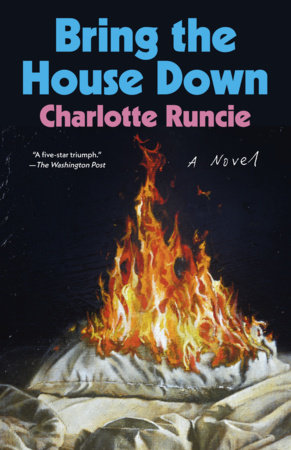
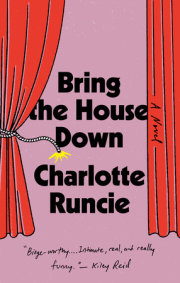
A "binge-worthy novel" (Kiley Reid, New York Times bestselling author of Come and Get It) following a theater critic at the Edinburgh Festival Fringe who writes a vicious one-star review of a struggling actress he has a one-night stand with in this sharply funny, feminist tinderbox.

A WASHINGTON POST AND NPR BEST BOOK OF THE YEARONE OF GLAMOUR'S BEST BOOKS FOR BOOK CLUBS

“Excellent…a fiery reminder that we still have so far to go when it comes to men behaving poorly and getting away with it.”—LitHub


    Infamous theater critic Alex Lyons knows his verdict by the time the curtain comes down—either a five-star rave or a one-star pan. On the opening night of the Edinburgh Festival Fringe, he doesn’t deliberate over the scathing review he writes for Hayley Sinclair’s show. Nor does he hesitate when the opportunity presents itself to have a one-night stand with the struggling actress.
    Unaware that she’s gone home with the critic who’s just written a career-ending review of her show, Hayley wakes up at his apartment to see his hatchet job in print. In a brilliant act of revenge, she revamps her one-woman show into a viral sensation critiquing Alex Lyons himself—entitled son of a famous actress, serial philanderer, and by all accounts a terrible man. As his reputation goes up in flames, he insists on telling his version of events to his colleague Sophie. Through her eyes, we see that the deeper she gets pulled into his downfall, the more conflicted she becomes.
    A brilliant Trojan horse of a book about art, power, and misogyny, Bring the House Down is a searing, insightful, and hilarious debut that captures the blurred line between reality and performance.
WEEK ZERO

Saturday, 29 July

ONE

Alex Lyons opened his laptop and wrote the review in the space of forty-five minutes after the show ended. It was a one-star review. He didn’t agonise over that rating—I’d never seen him agonise over anything. The solo performance artist, Hayley Sinclair, had a lot to say about the climate emergency, the patriarchy, and the looming end of the world, which was fair enough, but unfortunately her show was so terrible that, by half an hour in, Alex had decided that he actually wanted the world to end as soon as possible. Then, at least, he’d never have to risk seeing one of her performances again. That was a good line, so he put it in. He wrote hunched on a low wall outside the venue, thinking about where he could get a drink afterwards.

Alex was chief theatre critic for the national newspaper where I was a junior writer on the culture desk. We’d both worked at the paper for years, but that year, for the first time, Alex and I were both away from London, reporting from the month-long arts festival of the Edinburgh Fringe.

I can’t give you the name of the newspaper, but let’s just say it’s considered by some people to be the last remaining newspaper of decency, and by other people to be a rag of unforgivable bias. I’ll just call it “the paper”—that’s what everyone who worked there called it anyway.

Alex proofread his review and found no errors, so he emailed it to the editor on duty with the star rating at the top in capital letters, for clarity—ONE STAR—and packed his laptop back into his chestnut Italian leather satchel, a birthday present from his mother. He lit a cigarette and walked down Rose Street, which was full of stag dos shouting in vowels and vomiting into the gutters between the cobblestones.

Edinburgh was a city that Alex knew only in August. I know it a little better, having lived there for a while after university. I’ve seen it stripped back to its gorgeous Enlightenment bones of dark wet stone tenements in the quiet, endless winters, the yeasty smells of the brewery on still nights, the sea mist over Holyrood, the glass-fronted hotels for the rich rising above lines of addicts queuing for methadone on Leith Walk.

For Alex, like most annual festival visitors, Edinburgh was not a real place, but a mirage, a pop-up of banners and posters, coffee vans and burger vans and street performers, the spats of frying meat and the dank smell of lager.

It was gone eleven and the streets were still full. A rat matched his pace along North Bridge, hunting in the night’s street rubbish that spilled across the pavement. Suits, who were either TV journalists or disgraced politicians, strode home from a late broadcast at the BBC studios with their jackets flapping open. Audiences were coming out of theatres.

All this had a glamour for Alex. As he walked, meandering through the streets to absorb the festival air, the city brought him peace after the bad show, and if he doubted his opinion or suspected himself of cruelty, for even a moment, he could rationalise his work as all part of contributing to the culture, to maintaining high standards, and to being in a city full of people chasing their next pleasure. A city situated towards delight, not mediocrity. A place where people wanted only the best of life and it made them honest and free.

It seemed as though everywhere on the Royal Mile, under the clear summer moon in the never-quite-darkness of the Scottish summer night, were actors and actresses coming out of their shows. This gave Alex a jolt of energy. He was always drawn to actresses. All theatre people, with their superficial vanity and deep insecurity, were easy to flatter. But actresses, in particular, offered him something deeper that he couldn’t always define. This unsettled him in a way that he liked. Actors and actresses had something about them that normal humans lacked. They had large, expressive eyes. They could sing, usually. They had a warmth that made Alex want to reach out his own cold hands towards them. They held, always, the energy of potential transformation. By knowing how to become other people, they knew the terrible truth of what it’s like to taste the life of someone else.


When I first started working in culture journalism, I used to get asked to do a lot of clickbait listicles for the website that nobody else wanted to write—“13 things you never knew about Picasso,” and all that. It became a bit of a speciality of mine. So: there are three things you need to know about Alex. The first is that a lot of women fell for him.

“The thing is, Sophie,” Alex had said to me on the train we’d taken together from London Kings Cross up to Edinburgh Waverley two days previously, opening a raspberry Lucozade he’d bought from the trolley, leaning towards me over the grey Formica train table as if about to reveal a universal spiritual truth. “Since I turned thirty, getting laid has become embarrassingly easy.”

“Yeah?” I said. “Lucky you.”

He did a little smile and drank his Lucozade. It’s this image of Alex from the beginning of the festival that returns to me now: the unseriousness of his eyes, staring at the moving sea through the window of our train.

Previously lean to the point of lankiness, like an ex-racing greyhound, in the last few years he’d gained some muscle, having taken advantage of the paper’s inexplicably well-appointed and free-to-access onsite gym that I never used. Alex now looked like the kind of human being they would put in the human being catalogues. Tall, strong, good teeth and slightly curly dark hair, physically independent, no defects. No visible defects.

Alex read what he said were “proper books.” He always had a line ready on Adorno and Derrida and Stanislavski, and so what if it was always the same line? It wasn’t just those guys. He had deferential feminist stuff he could say about Germaine Greer and Judith Butler, and an at-the-fingertips thesis on Sarah Kane. And he could be funny about the lowbrow. He liked panto. He liked characters who wanted you to boo and hiss.

The women Alex went for were educated and arty and ambitious. They were writers and directors, editors and agents. And actresses. He had, he told me, recently resolved to stop sleeping with women under the age of twenty-four after one of them told him he looked like “such a softboi, but old,” and it was like being insulted in an entirely different language.

In general, he had a preference for women around his own age, who had until recently been stuck in long-term relationships with boring men who didn’t appreciate them, and who had mostly wriggled themselves loose from their sexless cocoons at around thirty and, drying their wings, found themselves (a) horny and (b) looking for an intellectual equal. In Alex, they thought they might find it.

He was always briefly entangled with someone. His attitude towards women was something that made it difficult for me to think of Alex as a friend, though it’s something you can tolerate in a colleague.


That’s the second thing to know about Alex: he was a good colleague. He made me laugh. He’d give me a conspiratorial eye-roll during a forward-planning meeting while he leaned back in his chair with a Biro in his mouth. He had a disarming ability to notice and remember people’s preferences: he’d do a coffee run for the culture desk and remember without having to check that Graham liked his flat white with oat milk and Nicky on listings always had an extra shot.

And I had to admire his work. He could turn out copy clean as mine at twice the speed. Where my pieces could be tentative and people-pleasing, Alex’s reviews were sharp and zingy and held the page.

One time, a few years ago, I’d written a feature about the Venice Biennale that wasn’t working. I knew it wasn’t working because Paul Ellis, my least favourite of the paper’s senior editors, had told me it was shit and I needed to start again. But I’d already rewritten it four times, and I was fighting back tears at my desk, wishing that Graham, the culture editor, wasn’t off sick, when Alex dragged one of the wheeled chairs over to me and plonked himself down in it.

“Don’t take journalism so seriously, Soph,” he said. “Can I?”

He picked up the printout of my draft, which was now covered in Paul’s red Biro crossings-out, lines drawn through whole paragraphs so violently they almost tore through the paper, and read it in about four seconds. He pointed to a sentence halfway down.

“Ignore Paul. Start with this bit. This observation about the city, where it’s like a character. It’s kind of beautiful. Move it up top so you start with colour, then get the nut graf out of the way, and shove everything else after that and give it to a different editor to sign off. Relax, it’s a nice piece.”

He sauntered off for a cigarette. Praise is rare in journalism. That was still the only time anyone at the paper had ever directly complimented my writing.


Alex told me not to take journalism so seriously, but I was never sure whether he took that advice himself. And this is the third thing to know about Alex. He loved writing about theatre. Theatre really mattered to him.

Theatre, Alex once told me when I made the mistake of saying I wasn’t all that into it, because exhibitions were more my kind of thing, is different from any other form of art. It isn’t like a film or a TV show where everything’s been recorded and cut and edited, and someone has already seen it before you. It’s nothing like a painting, which is a single, preserved moment of perspective. Theatre is happening to you right now, made real by the people in front of you, never seen before, not quite like this, and never again. Stage performance is the only storytelling art form created in the present tense, Alex said. These people could do anything. They could make you feel anything. Isn’t that wonderful? Isn’t that terrifying?

As with everything we love, Alex experienced it first as a child. It was a children’s show about penguins, which his mother, the actress and director Judith Lyons, had taken him to when he was six years old. She knew it was on because at the time she was casually seeing the artistic director of the theatre in Hammersmith where it was playing. Here, Alex was baptised into the rituals of theatre, which, like the rituals of any religion, are designed to seduce.

There was, before the night even began, the ritual of the ticket. For Alex, this was a paper key to a door that he had longed to open, and which led to the place that was, he suspected, where his mother really lived. The ticket was a promise that he would be welcome at this theatre, at this time, and there would be a seat prepared for him, and light in the darkness.

(As an adult, Alex could do a good rant on the death of the paper ticket stub in the age of the e-ticket. He really got going on it over Friday drinks in the dark, wood-panelled pub round the corner from our paper’s newsroom, eyes shining in the gloom, holding a pint of oyster stout, on and on about how something has been surrendered, and we’ve now lost forever the printed remains of a time past, a time when magic left real traces in your pocket.)

Alex, at six years old, had arrived at the box office, which was not an office and had no boxes, and was greeted by a front-of-house assistant in a golden waistcoat. She ripped off the perforated ticket stub and bent to stamp his outstretched hand with an inky purple blotch in the shape of a penguin.

This was before his mother had received her damehood. But even then, she was conspicuous, with a fur-trimmed jacket and high leather boots and a familiar face. She enunciated more than other people. She bought him a striped packet of red and green sweets. The sweets were sour inside but coated in crystals of sugar, to be eaten quietly and not rustled. She was approached by two politely giddy women in the foyer and indulged an autograph request with the fountain pen she carried in her handbag.

“You’ll have to excuse me.” She drew the “J” in “Judith” with a long tail and dotted the “i” with a horizontal line. “I’m here with my son.”

This made Alex feel special and important. The whole interior of the building was velvet, from the carpet to the seats to the curtains to the new texture of his own body in this strange place, and everything was deep red and gold, arched and designed for his delight.

His mother bought a theatre programme in the foyer. The booklet was bigger than any of his reading books at home and filled with shiny black-and-white pictures of the actors in rehearsals, somersaulting and gesticulating and laughing with scripts in their hands. His thumb found a page with more weight than the others, and here was a sheet of penguin and snowflake stickers, opposite a puzzle section with a themed wordsearch about Antarctica.

The theatre was full of children just like him, except not like him, because they didn’t have his mother. Alex and Judith sat in a row towards the front of the stalls on the scarlet fold-out seats. Using the fountain pen, he had just circled the words COLD and SOUTH POLE and PENGUINS in the wordsearch when the house lights went down, like the blowing out of a candle.

His mother smelled like a shimmer of flower petals and slightly of whisky. She squeezed his hand and he squeezed hers. The curtain drew back, and the stage lights came up, and there were people up there, real grown-ups, confident and loud and alive, with snow falling on the stage as they pretended to be anything other than who or what they really were. There was nothing between him and the actors. They could touch him if they wanted, and he would let them. All they wanted in return was his applause. This meant they wanted his love. (It was only much later that he would realise he had the power to keep his love from them.)

He didn’t remember much about the show itself, as an adult. He only remembered, as he told me when everything was falling apart, the moment when his mother’s world became his world, too. The fear and wonder of it. He remembered the applause, and how it connected the audience and the performers in a sacred pact of pleasure. He remembered it every time he reviewed a show.
“A turbulent and harrowing ride on what it really means to criticize a culture. . .The difficult genius of Bring the House Down is how hard it hammers the idea of there really being two sides to every story. . .Runcie writes with a voice that can only be achieved through the bird’s eye view of an objective, observant journalist. . .[A] formidable debut novel.”
—Chicago Review of Books

"So delightfully snackable that you may, as I did, gulp it down in two or three sittings. . .This deeply entertaining novel [is] well worth the price of admission.”
—Los Angeles Times


“Accomplished. . . A smart, sharp and compulsively readable first novel that provides food for thought on a variety of complex topics. . . Runcie strikes a perfect balance, and instead of tub-thumping or finger-pointing, explores each issue with nuance and evenhandedness. Serious and thought-provoking [but] also fun and frequently witty. . . [Bring the House Down is] a five-star triumph.”
—Washington Post

"Biting satire and surprising emotional depth earn this one a rave.”
—Boston Globe

"Entertaining and very timely. . . One of the most enjoyable novels I've read in a long time. . . Runcie's verbal wit, narrative chops and emotional subtlety rendered [a hatchet job] impossible."
—The Guardian

“This darkly funny feminist book asks big questions about cancel culture, art and revenge.”
—Good Housekeeping

"Bring the House Down considers what role theater can have in a community with more humor that you’d think was possible.”
—Elle, Best Books of the Summer

“Runcie gets theater right in this excellent debut novel. . . It’s a brilliant look at the utter madness that is the [Edinburgh Festival] Fringe, a deep consideration of criticism and art (and parenthood as a professional), and a fiery reminder that we still have so far to go when it comes to men behaving poorly and getting away with it.”
—LitHub

“An unusual, thought-provoking, multilayered read that book groups will enjoy debating. A smart novel that carefully considers the shifting sands of life."
—Kirkus (starred review)

“A sharp, absorbing, thoroughly entertaining send-up of gender politics, the dynamic between critics and artists, and the struggle for women to balance careers and motherhood.”
—Booklist (starred review)

“An ebullient piece of retribution for an unrepentant jerk [and] a nuanced and thoughtful take on gender and power.”
Bloomberg Businessweek, 10 Best Books of the Summer

“[A clever] debut. . . Runcie takes a thought-provoking look at art’s complex relationship with criticism and public outrage. This dramedy packs a punch.”
—Publisher's Weekly

“Runcie's story is one we can all relate to—whether we're aspiring stage actors or not. . . By all accounts juicy and so real, I read this book in a single weekend.”
Glamour

Bring the House Down is sharp-witted, wise, and authentic—what a fierce, fantastically funny read.”
Claire Lombardo, New York Times bestselling author of The Most Fun We Ever Had and Same As It Ever Was

“An astounding debut about the fraught relationship between artist and critic, truth and publicity, men and women. Bring the House Down reminds us how unwise it is to make easy judgments about people or art—which does not stop me from giving Charlotte Runcie five big stars.”
Nathan Hill, New York Times bestselling author of Wellness and The Nix

“An enticing debut. This is a binge-worthy novel that explores our obsessions, our inner critic, and who we think we are in person and in print. Intimate, real, and really funny. This one has teeth.”
Kiley Reid, New York Times bestselling author of Come and Get It and Such a Fun Age

“I read this in a day and wished there were another hundred pages so I could just keep reading. Funny, precise, and such fun. And now that I've finished it the characters are lodged in my brain like they're real people I used to know.”
Holly Gramazio, New York Times bestselling author of The Husbands

“Funny, bold and tender, Bring the House Down is a biting study of power, gender and the meaning of art. I loved this incendiary debut.”
Emilia Hart, New York Times bestselling author of author of Weyward and The Sirens

“A daring dive into the excesses of our rating culture, Bring The House Down searches for the nuance and complexity we lose when we reduce our experiences to one-star/five-star, best/worst, or love/hate binaries. Runcie’s propulsive and tender prose interrogates the critic’s role and allegiances in a world where art has become a product like any other. A fascinating read.”
Camille Bordas, author of The Material and How to Behave in a Crowd

"Bring the House Down is a bitingly sharp, witty, and multi-layered exploration of rage and art. Runcie is so good on nuance, on interrogating the good and bad of meticulously-drawn characters we come to love even when we feel we shouldn't – all the while delving into questions of complicity, goodness, and how our own desires muddy the water."
Sophie Mackintosh, author of The Water Cure and Cursed Bread

"A novel about losing and finding yourself again, about who we are versus who we think we are, and about the inner lives we rarely reveal. Runcie’s characters feel so real I wouldn’t be surprised to find myself next to them on the train or to overhear them on the streets of Edinburgh."
—Rowan Hisayo Buchanan, author of The Sleep Watcher, Starling Days and Harmless Like You

"I devoured Bring the House Down—and when I wasn't reading it, I was thinking about it. Charlotte Runcie combines her searing observation and immaculate pacing with infectious prose in this compelling, comedic and seriously clever debut novel. I can't wait for everyone else to read it so I can finally talk about it at length."
Alice Vincent, author of Why Women Grow

"Bring the House Down is an agile, addictive story exploring art, ethics, the role of the critic, vindication of female rage, and the public appetite for blood. Runcie is sharply attuned to the vast uncomfortable grey areas of gender and power relations, navigating them with wry, revelatory observations that are devastatingly acute. Atmospheric, propulsive, electric."
Heidi Sopinka, author of Utopia
© Sophie Davidson
CHARLOTTE RUNCIE was most recently The Daily Telegraph’s radio critic and senior arts columnist. She has also written for magazines and newspapers including The Times and The Guardian, spending years in the culture trenches reviewing shows at the Edinburgh Festival. A graduate of Cambridge University, Charlotte was longlisted for the 2023 Lucy Cavendish Fiction Prize and the Bridport Prize, and was a Foyle Young Poet of the Year. View titles by Charlotte Runcie
Available for sale exclusive:
•     Guam
•     Minor Outl.Ins.
•     North Mariana
•     Philippines
•     Puerto Rico
•     Samoa,American
•     US Virgin Is.
•     USA

Available for sale non-exclusive:
•     Afghanistan
•     Aland Islands
•     Albania
•     Algeria
•     Angola
•     Antarctica
•     Argentina
•     Armenia
•     Aruba
•     Azerbaijan
•     Bahrain
•     Belarus
•     Benin
•     Bolivia
•     Bonaire, Saba
•     Bosnia Herzeg.
•     Bouvet Island
•     Brazil
•     Burkina Faso
•     Burundi
•     Cambodia
•     Cape Verde
•     Centr.Afr.Rep.
•     Chad
•     Chile
•     China
•     Colombia
•     Comoro Is.
•     Congo
•     Cook Islands
•     Costa Rica
•     Cuba
•     Curacao
•     Dem. Rep. Congo
•     Djibouti
•     Dominican Rep.
•     Ecuador
•     Egypt
•     El Salvador
•     Equatorial Gui.
•     Eritrea
•     Ethiopia
•     Faroe Islands
•     Fren.Polynesia
•     French Guinea
•     Gabon
•     Georgia
•     Guadeloupe
•     Guatemala
•     Guinea Republic
•     Guinea-Bissau
•     Haiti
•     Heard/McDon.Isl
•     Honduras
•     Hong Kong
•     Indonesia
•     Iran
•     Iraq
•     Israel
•     Ivory Coast
•     Japan
•     Kazakhstan
•     Kyrgyzstan
•     Laos
•     Lebanon
•     Liberia
•     Libya
•     Macau
•     Macedonia
•     Madagascar
•     Maldives
•     Mali
•     Marshall island
•     Martinique
•     Mauritania
•     Mayotte
•     Mexico
•     Micronesia
•     Moldavia
•     Mongolia
•     Montenegro
•     Morocco
•     New Caledonia
•     Nicaragua
•     Niger
•     Niue
•     Norfolk Island
•     North Korea
•     Oman
•     Palau
•     Palestinian Ter
•     Panama
•     Paraguay
•     Peru
•     Qatar
•     Reunion Island
•     Russian Fed.
•     Rwanda
•     Saint Martin
•     SaoTome Princip
•     Saudi Arabia
•     Senegal
•     Serbia
•     Singapore
•     Sint Maarten
•     South Korea
•     South Sudan
•     St Barthelemy
•     St.Pier,Miquel.
•     Sth Terr. Franc
•     Sudan
•     Suriname
•     Svalbard
•     Syria
•     Tadschikistan
•     Taiwan
•     Thailand
•     Timor-Leste
•     Togo
•     Tokelau Islands
•     Tunisia
•     Turkmenistan
•     Ukraine
•     Unit.Arab Emir.
•     Uruguay
•     Uzbekistan
•     Venezuela
•     Vietnam
•     Wallis,Futuna
•     West Saharan

Not available for sale:
•     Andorra
•     Anguilla
•     Antigua/Barbuda
•     Australia
•     Austria
•     Bahamas
•     Bangladesh
•     Barbados
•     Belgium
•     Belize
•     Bermuda
•     Bhutan
•     Botswana
•     Brit.Ind.Oc.Ter
•     Brit.Virgin Is.
•     Brunei
•     Bulgaria
•     Cameroon
•     Canada
•     Cayman Islands
•     Christmas Islnd
•     Cocos Islands
•     Croatia
•     Cyprus
•     Czech Republic
•     Denmark
•     Dominica
•     Estonia
•     Falkland Islnds
•     Fiji
•     Finland
•     France
•     Gambia
•     Germany
•     Ghana
•     Gibraltar
•     Greece
•     Greenland
•     Grenada
•     Guernsey
•     Guyana
•     Hungary
•     Iceland
•     India
•     Ireland
•     Isle of Man
•     Italy
•     Jamaica
•     Jersey
•     Jordan
•     Kenya
•     Kiribati
•     Kuwait
•     Latvia
•     Lesotho
•     Liechtenstein
•     Lithuania
•     Luxembourg
•     Malawi
•     Malaysia
•     Malta
•     Mauritius
•     Monaco
•     Montserrat
•     Mozambique
•     Myanmar
•     Namibia
•     Nauru
•     Nepal
•     Netherlands
•     New Zealand
•     Nigeria
•     Norway
•     Pakistan
•     PapuaNewGuinea
•     Pitcairn Islnds
•     Poland
•     Portugal
•     Romania
•     S. Sandwich Ins
•     San Marino
•     Seychelles
•     Sierra Leone
•     Slovakia
•     Slovenia
•     Solomon Islands
•     Somalia
•     South Africa
•     Spain
•     Sri Lanka
•     St. Helena
•     St. Lucia
•     St. Vincent
•     St.Chr.,Nevis
•     Swaziland
•     Sweden
•     Switzerland
•     Tanzania
•     Tonga
•     Trinidad,Tobago
•     Turkey
•     Turks&Caicos Is
•     Tuvalu
•     Uganda
•     United Kingdom
•     Vanuatu
•     Vatican City
•     Western Samoa
•     Yemen
•     Zambia
•     Zimbabwe

About

A "binge-worthy novel" (Kiley Reid, New York Times bestselling author of Come and Get It) following a theater critic at the Edinburgh Festival Fringe who writes a vicious one-star review of a struggling actress he has a one-night stand with in this sharply funny, feminist tinderbox.

A WASHINGTON POST AND NPR BEST BOOK OF THE YEARONE OF GLAMOUR'S BEST BOOKS FOR BOOK CLUBS

“Excellent…a fiery reminder that we still have so far to go when it comes to men behaving poorly and getting away with it.”—LitHub


    Infamous theater critic Alex Lyons knows his verdict by the time the curtain comes down—either a five-star rave or a one-star pan. On the opening night of the Edinburgh Festival Fringe, he doesn’t deliberate over the scathing review he writes for Hayley Sinclair’s show. Nor does he hesitate when the opportunity presents itself to have a one-night stand with the struggling actress.
    Unaware that she’s gone home with the critic who’s just written a career-ending review of her show, Hayley wakes up at his apartment to see his hatchet job in print. In a brilliant act of revenge, she revamps her one-woman show into a viral sensation critiquing Alex Lyons himself—entitled son of a famous actress, serial philanderer, and by all accounts a terrible man. As his reputation goes up in flames, he insists on telling his version of events to his colleague Sophie. Through her eyes, we see that the deeper she gets pulled into his downfall, the more conflicted she becomes.
    A brilliant Trojan horse of a book about art, power, and misogyny, Bring the House Down is a searing, insightful, and hilarious debut that captures the blurred line between reality and performance.

Excerpt

WEEK ZERO

Saturday, 29 July

ONE

Alex Lyons opened his laptop and wrote the review in the space of forty-five minutes after the show ended. It was a one-star review. He didn’t agonise over that rating—I’d never seen him agonise over anything. The solo performance artist, Hayley Sinclair, had a lot to say about the climate emergency, the patriarchy, and the looming end of the world, which was fair enough, but unfortunately her show was so terrible that, by half an hour in, Alex had decided that he actually wanted the world to end as soon as possible. Then, at least, he’d never have to risk seeing one of her performances again. That was a good line, so he put it in. He wrote hunched on a low wall outside the venue, thinking about where he could get a drink afterwards.

Alex was chief theatre critic for the national newspaper where I was a junior writer on the culture desk. We’d both worked at the paper for years, but that year, for the first time, Alex and I were both away from London, reporting from the month-long arts festival of the Edinburgh Fringe.

I can’t give you the name of the newspaper, but let’s just say it’s considered by some people to be the last remaining newspaper of decency, and by other people to be a rag of unforgivable bias. I’ll just call it “the paper”—that’s what everyone who worked there called it anyway.

Alex proofread his review and found no errors, so he emailed it to the editor on duty with the star rating at the top in capital letters, for clarity—ONE STAR—and packed his laptop back into his chestnut Italian leather satchel, a birthday present from his mother. He lit a cigarette and walked down Rose Street, which was full of stag dos shouting in vowels and vomiting into the gutters between the cobblestones.

Edinburgh was a city that Alex knew only in August. I know it a little better, having lived there for a while after university. I’ve seen it stripped back to its gorgeous Enlightenment bones of dark wet stone tenements in the quiet, endless winters, the yeasty smells of the brewery on still nights, the sea mist over Holyrood, the glass-fronted hotels for the rich rising above lines of addicts queuing for methadone on Leith Walk.

For Alex, like most annual festival visitors, Edinburgh was not a real place, but a mirage, a pop-up of banners and posters, coffee vans and burger vans and street performers, the spats of frying meat and the dank smell of lager.

It was gone eleven and the streets were still full. A rat matched his pace along North Bridge, hunting in the night’s street rubbish that spilled across the pavement. Suits, who were either TV journalists or disgraced politicians, strode home from a late broadcast at the BBC studios with their jackets flapping open. Audiences were coming out of theatres.

All this had a glamour for Alex. As he walked, meandering through the streets to absorb the festival air, the city brought him peace after the bad show, and if he doubted his opinion or suspected himself of cruelty, for even a moment, he could rationalise his work as all part of contributing to the culture, to maintaining high standards, and to being in a city full of people chasing their next pleasure. A city situated towards delight, not mediocrity. A place where people wanted only the best of life and it made them honest and free.

It seemed as though everywhere on the Royal Mile, under the clear summer moon in the never-quite-darkness of the Scottish summer night, were actors and actresses coming out of their shows. This gave Alex a jolt of energy. He was always drawn to actresses. All theatre people, with their superficial vanity and deep insecurity, were easy to flatter. But actresses, in particular, offered him something deeper that he couldn’t always define. This unsettled him in a way that he liked. Actors and actresses had something about them that normal humans lacked. They had large, expressive eyes. They could sing, usually. They had a warmth that made Alex want to reach out his own cold hands towards them. They held, always, the energy of potential transformation. By knowing how to become other people, they knew the terrible truth of what it’s like to taste the life of someone else.


When I first started working in culture journalism, I used to get asked to do a lot of clickbait listicles for the website that nobody else wanted to write—“13 things you never knew about Picasso,” and all that. It became a bit of a speciality of mine. So: there are three things you need to know about Alex. The first is that a lot of women fell for him.

“The thing is, Sophie,” Alex had said to me on the train we’d taken together from London Kings Cross up to Edinburgh Waverley two days previously, opening a raspberry Lucozade he’d bought from the trolley, leaning towards me over the grey Formica train table as if about to reveal a universal spiritual truth. “Since I turned thirty, getting laid has become embarrassingly easy.”

“Yeah?” I said. “Lucky you.”

He did a little smile and drank his Lucozade. It’s this image of Alex from the beginning of the festival that returns to me now: the unseriousness of his eyes, staring at the moving sea through the window of our train.

Previously lean to the point of lankiness, like an ex-racing greyhound, in the last few years he’d gained some muscle, having taken advantage of the paper’s inexplicably well-appointed and free-to-access onsite gym that I never used. Alex now looked like the kind of human being they would put in the human being catalogues. Tall, strong, good teeth and slightly curly dark hair, physically independent, no defects. No visible defects.

Alex read what he said were “proper books.” He always had a line ready on Adorno and Derrida and Stanislavski, and so what if it was always the same line? It wasn’t just those guys. He had deferential feminist stuff he could say about Germaine Greer and Judith Butler, and an at-the-fingertips thesis on Sarah Kane. And he could be funny about the lowbrow. He liked panto. He liked characters who wanted you to boo and hiss.

The women Alex went for were educated and arty and ambitious. They were writers and directors, editors and agents. And actresses. He had, he told me, recently resolved to stop sleeping with women under the age of twenty-four after one of them told him he looked like “such a softboi, but old,” and it was like being insulted in an entirely different language.

In general, he had a preference for women around his own age, who had until recently been stuck in long-term relationships with boring men who didn’t appreciate them, and who had mostly wriggled themselves loose from their sexless cocoons at around thirty and, drying their wings, found themselves (a) horny and (b) looking for an intellectual equal. In Alex, they thought they might find it.

He was always briefly entangled with someone. His attitude towards women was something that made it difficult for me to think of Alex as a friend, though it’s something you can tolerate in a colleague.


That’s the second thing to know about Alex: he was a good colleague. He made me laugh. He’d give me a conspiratorial eye-roll during a forward-planning meeting while he leaned back in his chair with a Biro in his mouth. He had a disarming ability to notice and remember people’s preferences: he’d do a coffee run for the culture desk and remember without having to check that Graham liked his flat white with oat milk and Nicky on listings always had an extra shot.

And I had to admire his work. He could turn out copy clean as mine at twice the speed. Where my pieces could be tentative and people-pleasing, Alex’s reviews were sharp and zingy and held the page.

One time, a few years ago, I’d written a feature about the Venice Biennale that wasn’t working. I knew it wasn’t working because Paul Ellis, my least favourite of the paper’s senior editors, had told me it was shit and I needed to start again. But I’d already rewritten it four times, and I was fighting back tears at my desk, wishing that Graham, the culture editor, wasn’t off sick, when Alex dragged one of the wheeled chairs over to me and plonked himself down in it.

“Don’t take journalism so seriously, Soph,” he said. “Can I?”

He picked up the printout of my draft, which was now covered in Paul’s red Biro crossings-out, lines drawn through whole paragraphs so violently they almost tore through the paper, and read it in about four seconds. He pointed to a sentence halfway down.

“Ignore Paul. Start with this bit. This observation about the city, where it’s like a character. It’s kind of beautiful. Move it up top so you start with colour, then get the nut graf out of the way, and shove everything else after that and give it to a different editor to sign off. Relax, it’s a nice piece.”

He sauntered off for a cigarette. Praise is rare in journalism. That was still the only time anyone at the paper had ever directly complimented my writing.


Alex told me not to take journalism so seriously, but I was never sure whether he took that advice himself. And this is the third thing to know about Alex. He loved writing about theatre. Theatre really mattered to him.

Theatre, Alex once told me when I made the mistake of saying I wasn’t all that into it, because exhibitions were more my kind of thing, is different from any other form of art. It isn’t like a film or a TV show where everything’s been recorded and cut and edited, and someone has already seen it before you. It’s nothing like a painting, which is a single, preserved moment of perspective. Theatre is happening to you right now, made real by the people in front of you, never seen before, not quite like this, and never again. Stage performance is the only storytelling art form created in the present tense, Alex said. These people could do anything. They could make you feel anything. Isn’t that wonderful? Isn’t that terrifying?

As with everything we love, Alex experienced it first as a child. It was a children’s show about penguins, which his mother, the actress and director Judith Lyons, had taken him to when he was six years old. She knew it was on because at the time she was casually seeing the artistic director of the theatre in Hammersmith where it was playing. Here, Alex was baptised into the rituals of theatre, which, like the rituals of any religion, are designed to seduce.

There was, before the night even began, the ritual of the ticket. For Alex, this was a paper key to a door that he had longed to open, and which led to the place that was, he suspected, where his mother really lived. The ticket was a promise that he would be welcome at this theatre, at this time, and there would be a seat prepared for him, and light in the darkness.

(As an adult, Alex could do a good rant on the death of the paper ticket stub in the age of the e-ticket. He really got going on it over Friday drinks in the dark, wood-panelled pub round the corner from our paper’s newsroom, eyes shining in the gloom, holding a pint of oyster stout, on and on about how something has been surrendered, and we’ve now lost forever the printed remains of a time past, a time when magic left real traces in your pocket.)

Alex, at six years old, had arrived at the box office, which was not an office and had no boxes, and was greeted by a front-of-house assistant in a golden waistcoat. She ripped off the perforated ticket stub and bent to stamp his outstretched hand with an inky purple blotch in the shape of a penguin.

This was before his mother had received her damehood. But even then, she was conspicuous, with a fur-trimmed jacket and high leather boots and a familiar face. She enunciated more than other people. She bought him a striped packet of red and green sweets. The sweets were sour inside but coated in crystals of sugar, to be eaten quietly and not rustled. She was approached by two politely giddy women in the foyer and indulged an autograph request with the fountain pen she carried in her handbag.

“You’ll have to excuse me.” She drew the “J” in “Judith” with a long tail and dotted the “i” with a horizontal line. “I’m here with my son.”

This made Alex feel special and important. The whole interior of the building was velvet, from the carpet to the seats to the curtains to the new texture of his own body in this strange place, and everything was deep red and gold, arched and designed for his delight.

His mother bought a theatre programme in the foyer. The booklet was bigger than any of his reading books at home and filled with shiny black-and-white pictures of the actors in rehearsals, somersaulting and gesticulating and laughing with scripts in their hands. His thumb found a page with more weight than the others, and here was a sheet of penguin and snowflake stickers, opposite a puzzle section with a themed wordsearch about Antarctica.

The theatre was full of children just like him, except not like him, because they didn’t have his mother. Alex and Judith sat in a row towards the front of the stalls on the scarlet fold-out seats. Using the fountain pen, he had just circled the words COLD and SOUTH POLE and PENGUINS in the wordsearch when the house lights went down, like the blowing out of a candle.

His mother smelled like a shimmer of flower petals and slightly of whisky. She squeezed his hand and he squeezed hers. The curtain drew back, and the stage lights came up, and there were people up there, real grown-ups, confident and loud and alive, with snow falling on the stage as they pretended to be anything other than who or what they really were. There was nothing between him and the actors. They could touch him if they wanted, and he would let them. All they wanted in return was his applause. This meant they wanted his love. (It was only much later that he would realise he had the power to keep his love from them.)

He didn’t remember much about the show itself, as an adult. He only remembered, as he told me when everything was falling apart, the moment when his mother’s world became his world, too. The fear and wonder of it. He remembered the applause, and how it connected the audience and the performers in a sacred pact of pleasure. He remembered it every time he reviewed a show.

Praise

“A turbulent and harrowing ride on what it really means to criticize a culture. . .The difficult genius of Bring the House Down is how hard it hammers the idea of there really being two sides to every story. . .Runcie writes with a voice that can only be achieved through the bird’s eye view of an objective, observant journalist. . .[A] formidable debut novel.”
—Chicago Review of Books

"So delightfully snackable that you may, as I did, gulp it down in two or three sittings. . .This deeply entertaining novel [is] well worth the price of admission.”
—Los Angeles Times


“Accomplished. . . A smart, sharp and compulsively readable first novel that provides food for thought on a variety of complex topics. . . Runcie strikes a perfect balance, and instead of tub-thumping or finger-pointing, explores each issue with nuance and evenhandedness. Serious and thought-provoking [but] also fun and frequently witty. . . [Bring the House Down is] a five-star triumph.”
—Washington Post

"Biting satire and surprising emotional depth earn this one a rave.”
—Boston Globe

"Entertaining and very timely. . . One of the most enjoyable novels I've read in a long time. . . Runcie's verbal wit, narrative chops and emotional subtlety rendered [a hatchet job] impossible."
—The Guardian

“This darkly funny feminist book asks big questions about cancel culture, art and revenge.”
—Good Housekeeping

"Bring the House Down considers what role theater can have in a community with more humor that you’d think was possible.”
—Elle, Best Books of the Summer

“Runcie gets theater right in this excellent debut novel. . . It’s a brilliant look at the utter madness that is the [Edinburgh Festival] Fringe, a deep consideration of criticism and art (and parenthood as a professional), and a fiery reminder that we still have so far to go when it comes to men behaving poorly and getting away with it.”
—LitHub

“An unusual, thought-provoking, multilayered read that book groups will enjoy debating. A smart novel that carefully considers the shifting sands of life."
—Kirkus (starred review)

“A sharp, absorbing, thoroughly entertaining send-up of gender politics, the dynamic between critics and artists, and the struggle for women to balance careers and motherhood.”
—Booklist (starred review)

“An ebullient piece of retribution for an unrepentant jerk [and] a nuanced and thoughtful take on gender and power.”
Bloomberg Businessweek, 10 Best Books of the Summer

“[A clever] debut. . . Runcie takes a thought-provoking look at art’s complex relationship with criticism and public outrage. This dramedy packs a punch.”
—Publisher's Weekly

“Runcie's story is one we can all relate to—whether we're aspiring stage actors or not. . . By all accounts juicy and so real, I read this book in a single weekend.”
Glamour

Bring the House Down is sharp-witted, wise, and authentic—what a fierce, fantastically funny read.”
Claire Lombardo, New York Times bestselling author of The Most Fun We Ever Had and Same As It Ever Was

“An astounding debut about the fraught relationship between artist and critic, truth and publicity, men and women. Bring the House Down reminds us how unwise it is to make easy judgments about people or art—which does not stop me from giving Charlotte Runcie five big stars.”
Nathan Hill, New York Times bestselling author of Wellness and The Nix

“An enticing debut. This is a binge-worthy novel that explores our obsessions, our inner critic, and who we think we are in person and in print. Intimate, real, and really funny. This one has teeth.”
Kiley Reid, New York Times bestselling author of Come and Get It and Such a Fun Age

“I read this in a day and wished there were another hundred pages so I could just keep reading. Funny, precise, and such fun. And now that I've finished it the characters are lodged in my brain like they're real people I used to know.”
Holly Gramazio, New York Times bestselling author of The Husbands

“Funny, bold and tender, Bring the House Down is a biting study of power, gender and the meaning of art. I loved this incendiary debut.”
Emilia Hart, New York Times bestselling author of author of Weyward and The Sirens

“A daring dive into the excesses of our rating culture, Bring The House Down searches for the nuance and complexity we lose when we reduce our experiences to one-star/five-star, best/worst, or love/hate binaries. Runcie’s propulsive and tender prose interrogates the critic’s role and allegiances in a world where art has become a product like any other. A fascinating read.”
Camille Bordas, author of The Material and How to Behave in a Crowd

"Bring the House Down is a bitingly sharp, witty, and multi-layered exploration of rage and art. Runcie is so good on nuance, on interrogating the good and bad of meticulously-drawn characters we come to love even when we feel we shouldn't – all the while delving into questions of complicity, goodness, and how our own desires muddy the water."
Sophie Mackintosh, author of The Water Cure and Cursed Bread

"A novel about losing and finding yourself again, about who we are versus who we think we are, and about the inner lives we rarely reveal. Runcie’s characters feel so real I wouldn’t be surprised to find myself next to them on the train or to overhear them on the streets of Edinburgh."
—Rowan Hisayo Buchanan, author of The Sleep Watcher, Starling Days and Harmless Like You

"I devoured Bring the House Down—and when I wasn't reading it, I was thinking about it. Charlotte Runcie combines her searing observation and immaculate pacing with infectious prose in this compelling, comedic and seriously clever debut novel. I can't wait for everyone else to read it so I can finally talk about it at length."
Alice Vincent, author of Why Women Grow

"Bring the House Down is an agile, addictive story exploring art, ethics, the role of the critic, vindication of female rage, and the public appetite for blood. Runcie is sharply attuned to the vast uncomfortable grey areas of gender and power relations, navigating them with wry, revelatory observations that are devastatingly acute. Atmospheric, propulsive, electric."
Heidi Sopinka, author of Utopia

Author

© Sophie Davidson
CHARLOTTE RUNCIE was most recently The Daily Telegraph’s radio critic and senior arts columnist. She has also written for magazines and newspapers including The Times and The Guardian, spending years in the culture trenches reviewing shows at the Edinburgh Festival. A graduate of Cambridge University, Charlotte was longlisted for the 2023 Lucy Cavendish Fiction Prize and the Bridport Prize, and was a Foyle Young Poet of the Year. View titles by Charlotte Runcie

Rights

Available for sale exclusive:
•     Guam
•     Minor Outl.Ins.
•     North Mariana
•     Philippines
•     Puerto Rico
•     Samoa,American
•     US Virgin Is.
•     USA

Available for sale non-exclusive:
•     Afghanistan
•     Aland Islands
•     Albania
•     Algeria
•     Angola
•     Antarctica
•     Argentina
•     Armenia
•     Aruba
•     Azerbaijan
•     Bahrain
•     Belarus
•     Benin
•     Bolivia
•     Bonaire, Saba
•     Bosnia Herzeg.
•     Bouvet Island
•     Brazil
•     Burkina Faso
•     Burundi
•     Cambodia
•     Cape Verde
•     Centr.Afr.Rep.
•     Chad
•     Chile
•     China
•     Colombia
•     Comoro Is.
•     Congo
•     Cook Islands
•     Costa Rica
•     Cuba
•     Curacao
•     Dem. Rep. Congo
•     Djibouti
•     Dominican Rep.
•     Ecuador
•     Egypt
•     El Salvador
•     Equatorial Gui.
•     Eritrea
•     Ethiopia
•     Faroe Islands
•     Fren.Polynesia
•     French Guinea
•     Gabon
•     Georgia
•     Guadeloupe
•     Guatemala
•     Guinea Republic
•     Guinea-Bissau
•     Haiti
•     Heard/McDon.Isl
•     Honduras
•     Hong Kong
•     Indonesia
•     Iran
•     Iraq
•     Israel
•     Ivory Coast
•     Japan
•     Kazakhstan
•     Kyrgyzstan
•     Laos
•     Lebanon
•     Liberia
•     Libya
•     Macau
•     Macedonia
•     Madagascar
•     Maldives
•     Mali
•     Marshall island
•     Martinique
•     Mauritania
•     Mayotte
•     Mexico
•     Micronesia
•     Moldavia
•     Mongolia
•     Montenegro
•     Morocco
•     New Caledonia
•     Nicaragua
•     Niger
•     Niue
•     Norfolk Island
•     North Korea
•     Oman
•     Palau
•     Palestinian Ter
•     Panama
•     Paraguay
•     Peru
•     Qatar
•     Reunion Island
•     Russian Fed.
•     Rwanda
•     Saint Martin
•     SaoTome Princip
•     Saudi Arabia
•     Senegal
•     Serbia
•     Singapore
•     Sint Maarten
•     South Korea
•     South Sudan
•     St Barthelemy
•     St.Pier,Miquel.
•     Sth Terr. Franc
•     Sudan
•     Suriname
•     Svalbard
•     Syria
•     Tadschikistan
•     Taiwan
•     Thailand
•     Timor-Leste
•     Togo
•     Tokelau Islands
•     Tunisia
•     Turkmenistan
•     Ukraine
•     Unit.Arab Emir.
•     Uruguay
•     Uzbekistan
•     Venezuela
•     Vietnam
•     Wallis,Futuna
•     West Saharan

Not available for sale:
•     Andorra
•     Anguilla
•     Antigua/Barbuda
•     Australia
•     Austria
•     Bahamas
•     Bangladesh
•     Barbados
•     Belgium
•     Belize
•     Bermuda
•     Bhutan
•     Botswana
•     Brit.Ind.Oc.Ter
•     Brit.Virgin Is.
•     Brunei
•     Bulgaria
•     Cameroon
•     Canada
•     Cayman Islands
•     Christmas Islnd
•     Cocos Islands
•     Croatia
•     Cyprus
•     Czech Republic
•     Denmark
•     Dominica
•     Estonia
•     Falkland Islnds
•     Fiji
•     Finland
•     France
•     Gambia
•     Germany
•     Ghana
•     Gibraltar
•     Greece
•     Greenland
•     Grenada
•     Guernsey
•     Guyana
•     Hungary
•     Iceland
•     India
•     Ireland
•     Isle of Man
•     Italy
•     Jamaica
•     Jersey
•     Jordan
•     Kenya
•     Kiribati
•     Kuwait
•     Latvia
•     Lesotho
•     Liechtenstein
•     Lithuania
•     Luxembourg
•     Malawi
•     Malaysia
•     Malta
•     Mauritius
•     Monaco
•     Montserrat
•     Mozambique
•     Myanmar
•     Namibia
•     Nauru
•     Nepal
•     Netherlands
•     New Zealand
•     Nigeria
•     Norway
•     Pakistan
•     PapuaNewGuinea
•     Pitcairn Islnds
•     Poland
•     Portugal
•     Romania
•     S. Sandwich Ins
•     San Marino
•     Seychelles
•     Sierra Leone
•     Slovakia
•     Slovenia
•     Solomon Islands
•     Somalia
•     South Africa
•     Spain
•     Sri Lanka
•     St. Helena
•     St. Lucia
•     St. Vincent
•     St.Chr.,Nevis
•     Swaziland
•     Sweden
•     Switzerland
•     Tanzania
•     Tonga
•     Trinidad,Tobago
•     Turkey
•     Turks&Caicos Is
•     Tuvalu
•     Uganda
•     United Kingdom
•     Vanuatu
•     Vatican City
•     Western Samoa
•     Yemen
•     Zambia
•     Zimbabwe