Close Modal

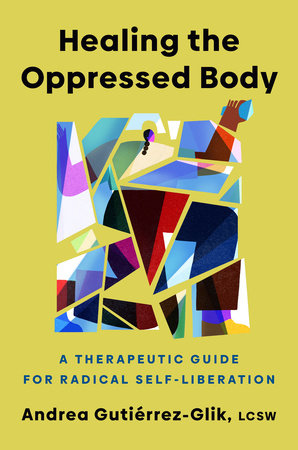
Healing the Oppressed Body

A Therapeutic Guide for Radical Self-Liberation

Look inside
Hardcover
$29.00 US
6.3"W x 9.33"H x 1.01"D   (16.0 x 23.7 x 2.6 cm) | 14 oz (408 g) | 12 per carton
On sale Mar 03, 2026 | 272 Pages | 9780593656761
Sales rights: World

An essential guide to healing from oppression-based trauma, for everyone left outside of mainstream conversations

There are many books on trauma healing that can change people’s lives. Yet when queer and trans people, people of color, and all of us living at the margins look for books that reflect our own experiences and that specifically name the oppression we experience as trauma, we’re left empty-handed. There’s little that speaks to the specific traumas we experience: homophobia, transphobia, institutional injustices, isolation, medical trauma, and discrimination at every turn. We deserve to have ourselves reflected and considered in the world of trauma recovery.

In Healing the Oppressed Body, somatic therapist Andrea Gutiérrez-Glik provides the best tools and approaches to healing and filters them through an anti-oppression lens, making sure they’re uniquely impactful for all of us.

In these pages, you’ll learn how trauma is stored and processed by our minds and bodies and how we can work with our amazingly flexible brains and nervous systems to create pathways to healing. You’ll understand just how and why trauma that occurs in our earliest days can affect us throughout our lives. You’ll learn to embrace your internal Family, making yourself whole. In Healing the Oppressed Body, Gutiérrez-Glik lovingly offers us the best, most radical solutions to tap into our sources of healing. Along the way, you’ll discover tools and techniques for emotional regulation and healing.

Whether inside the therapy room or on your own, in the pages of Healing the Oppressed Body, you’ll learn how to heal through growing compassion for all parts of yourself and others, finding community support and love, and celebrating the freedom to be your true self.
Chapter 1

How Our Bodies
Respond to Trauma

What brings you to therapy right now? This is a standard question that most therapists ask their prospective new clients.

Many of my clients come to me wanting to feel better and recognizing that past trauma is getting in the way. Some clients only want to focus on the here and now and what's unfolding for them presently. Yet that work never feels as effective or deep. For each of us, there is always more beneath the surface. The trauma we've endured grows roots deep into other aspects of our current lives.

When I use the word trauma, what exactly do I mean? Trauma is any experience that makes us feel we are in danger-one that leaves a lasting impact on us, shaping our beliefs about ourselves, the world, and our ability to feel safe. Traumatic experiences can vary from a single incident, meaning an event that occurred once, like a sexual assault or a car accident, to ongoing traumas like chronic or prolonged illness, unsafe or abusive childhoods, growing up in a war zone, or living in a society that doesn't view you or treat you as human.

Jessy came to see me because she was feeling unable to manage her anxiety. As a trans woman, Jessy felt like she was preparing for battle every time she left her apartment. Her heart rate increased, her palms got sweaty: the classic fight-or-flight response, even with her white privilege. When she was on the subway every morning, each time a commuter stared at her or made a transphobic comment, she felt her body surge with hot energy, as if someone had threatened her life. When people refuse to see us as human, it provokes a survival response. When people or systems don't see our humanity, we are more at risk for both state and interpersonal violence. Jessy's nervous system picked up on that every second of every day, and it, of course, had long-term effects on her body.

In this chapter, I'm going to introduce you to your wildly adaptive nervous system. Understanding how and why your body makes you feel the way you do is essential to understanding your trauma. Along with Jessy, you'll learn techniques to feel calm and aware. This is called the stabilization phase of therapy because it is when your body learns to experience just enough safety that it can take the next step in healing-trauma processing. During processing, clients dive directly into their trauma, hopefully in a guided and structured way to help them understand how it impacts them, and then how to make new meaning from those experiences. After processing, belief systems shift, and the body calms down and experiences fewer triggers and flashbacks. This is the integration phase where healing occurs. Trauma processing is intense work, and you can't process your trauma if you're not stabilized because doing so will destabilize you further.

Jessy needed to get stabilized before she would be ready to explore how her current symptoms connected to childhood and past traumas. Her first step was to understand what was happening inside her body and how it had adapted to keep her safe. Only then could she begin to develop mechanisms to help herself calm her body's response. This is what so many of my clients come to therapy seeking: emotion regulation and grounding tools to mitigate triggers and overwhelm. Jessy needed these tools in order to feel safer in the world and in her body, so she could enjoy life and feel less dysregulated every day. Even though the world is truly not a safe place for her, as trans people are four times more likely to be assaulted than cisgender people, she understood that it didn't serve her to live in total fight-or-flight mode every day, and the toll it was taking on her body wasn't sustainable.

How Our Bodies Keep Us Safe

The nervous system is our body's command center. It controls our thoughts, movements, and reactions to the world around us. There are two main branches of the nervous system: (1) the central nervous system, which consists of the brain and spinal cord, and (2) the peripheral nervous system, a complex system of nerves throughout the body, like the tender veins in a leaf.

Within the peripheral nervous system there are two more branches: the somatic nervous system and the autonomic nervous system. The somatic nervous system controls our voluntary movements. The autonomic nervous system, which we will focus on in this chapter, controls our bodies' automatic functioning and responses to stimuli. When we experience an unsafe situation or a trigger, it is this system that mobilizes us toward safety, often without our conscious brain knowing that's what we are doing. In fact, our brain often shuts off our critical thinking so we can focus on getting to safety in these moments. When we are triggered and a survival response is activated, we call this a trauma response.

Let's go through a common scenario.

You are at work, on the train, somewhere in public. You experience a subtle or not-so-subtle act that shows someone does not see or believe in your humanity. Maybe you are misgendered, called a racial slur, or find that the place you need to go is not accessible for your body. Your nervous system interprets this as a threat to your life or sense of self-a trigger of past trauma and discrimination-sending your body into survival mode. Our autonomic nervous system is designed to keep us safe at all costs, so it's not going to do a lot of evaluating here. Meaning, even if we are actually safe in the moment, our autonomic nervous system is going to jump into action, reacting below our level of consciousness.

Our body has two autonomic response options to increase our chances of survival.

Option one is the sympathetic nervous system response. Our adrenal glands release the stress hormones adrenaline and cortisol, which are responsible for activating the fight-or-flight or the hyperfreeze (freezing with tons of adrenaline in our body) response. Our body invests lots of energy in preparing us to move either toward the threat by fighting back, or away from the threat by fleeing-or freezing in place, hoping to not be seen at all. Our hearts race while the adrenaline courses through our bloodstream, and we may feel our palms sweat and our senses heighten.

Option two, the parasympathetic nervous system response, occurs when our brains have determined that it isn't safe to fight back or run away. Our bodies release acetylcholine, a chemical that slows down the heart rate and takes us into the survival responses of submit, attach, or hypofreeze (freeze with little to no stress hormone in our body). We can submit to the threat by seeming to ignore it or by laughing it off. We can attach, which is our people-pleasing or codependent response of needing to stay connected at all costs to the person who has hurt us. This typically occurs when the harm comes from within a major relationship in our life-a parent, a partner, a friend, or a boss. Hypofreezing in place may sound like the hyperfreeze induced by adrenaline, but in this case, we typically feel tired, numb, and dissociated-the sensation of being outside of your own body.

It's important to note that both these nervous systems are not only responsible for survival responses. The parasympathetic nervous system allows us to relax and feel calm, to enter our rest-and-digest state, which is when our body feels safe enough to recharge and to perform some basic functions that get put on hold during stress or trauma. The sympathetic branch, when activated in safe scenarios, is responsible for excitement, motivation, and nervousness over a hot date or a momentous event.

YOUR TURN

When you feel threatened, does your body respond with a sympathetic nervous system response? What triggers you into fight-or-flight mode? When it happens, what do you notice in your body?

What about a parasympathetic nervous system response?

Do you have a default option when triggered or overwhelmed, or does it depend on the scenario? Or do you experience both, and if so, what does that look like for you? Take some time to reflect on how your unique nervous system keeps you safe.

The Roots of Your Trauma Response

Recognizing trauma as the root of people's day-to-day unhappiness or anxiety also helps us to depathologize ourselves and one another. Our culture has some pretty judgmental and problematic beliefs about mental health. When we include trauma in the larger conversation about mental health, we create more compassion and understanding for more people.

One often-overlooked cause of trauma is chronic stress. Jessy certainly suffered from chronic stress. Many of us in the margins do. She also suffered from chronic illness, which is another often-unrecognized source of trauma. Other root causes of trauma arose before we were born-and reside in our genes.

Stress

Most of my clients experience daily stress-worry and mental tension-in their lives, ranging from worry over lack of access to resources, to relationships, to our political and climate reality, to existing in bodies that are seen as less worthy of basic human rights. Our body's neurochemical response to stress is similar to its response to trauma, releasing a flood of adrenaline and cortisol that puts us into fight-or-flight mode or triggers other nervous system responses to perceived danger. Sometimes stress itself is also traumatic, meaning it leaves a lasting impact on our ability to feel safe in the world and connected to others. Stress can limit our ability to get the resources and safety we need in life, even as the lack of resources and safety is the source of stress, creating a vicious cycle.

Stress and trauma can show up in the body not just as the emotional and physical distress of nervous system dysregulation but through chronic pain and illness as well. In no way are chronic pain and illness always trauma related. Yet many of my clients have been told that their chronic illness and pain is "all in their head." As we dig deep into the power of our nervous system and how it keeps us safe, it's important that we also recognize the source of that misunderstanding and how truly dangerous it is.

Though chronic illness can be traumatic and is enormously stressful, the inverse is not necessarily true: that trauma causes chronic illness. This can sometimes be true, yes, but the assumption that unexplained chronic pain has no physical cause is one I see too often in my practice. It's made by doctors who have sent their clients to trauma therapy, writing off their very real pain and illness as psychosomatic. I have seen clients suffer long-term damage to their joints, lose decades of their lives, and disbelieve their own lived experiences because they weren't properly diagnosed. Many illnesses are genetic and are not resolved when someone makes a change to their life, processes their trauma, or reduces stress.

But stress can trigger genetic health conditions. And it is vital that we understand what is going on and where chronic illness or pain is coming from, versus chalking it all up to either purely a medical issue or entirely stress and trauma. Our bodies have such a deep, inherent wisdom that it takes curiosity, trust, and attunement to fully understand what it has to tell us. Recognizing how our nervous system tries to keep us safe is key. Whatever we can do to feel safer in the here and now will help our bodies see the safety that is available to us in this moment, and might even allow us to feel more at home in our bodies. We'll explore how Jessy was able to help her body feel safe later in this chapter.

The Trauma in our Genes

Stress impacts us more deeply when it has occurred for decades in our lives or even intergenerationally. There is a connection between trauma, mental illness, and what we inherit from our ancestors.

Mental health is not all one thing. It is not just trauma, it is not just biology or genetics, and it is not just what we inherit from generations past. I think of it like this: Your ancestors and their trauma are the kindling. Genetics (and inherited traits) is the fuel. And your childhood and traumatic life experiences are the match that sets the fire aflame.

Or, this equation:

Ancestors' Trauma and Stress + Genetics + Life Experiences = Our Mental Health

The trauma that we carry in our genes is a concept I will return to time and time again in this book. Our ancestors' stress and trauma experiences actually alter our gene expression. In our lifetime, these genes are either expressed or not, usually depending on how safe our childhood was and whether we experience trauma in our lives. Stressful and traumatic experiences are often what turn on certain genes for addiction, anxiety, depression, personality disorders, and more. Our ancestors' trauma can lead to a higher likelihood of these genes being expressed even though we didn't experience the trauma firsthand.

This is a book on trauma, but in no way am I saying that all mental illness goes back to personal trauma. Or maybe a better way of understanding this is that humans are incredibly adaptive, and mental illness has become an adaptation our brains and bodies use in our confusing and violent world. Those adaptations get passed on through generations, and our own life experiences of trauma, stress, and oppression turn on genes that express mental illness. We'll look at this more closely in chapter 7.

Symptoms of Trauma

When we experience trauma, our body not only expresses or worsens certain mental illnesses, it also develops adaptations to keep us safe in an unsafe world. These adaptations are known as post-traumatic stress disorder, or PTSD.

PTSD and cPTSD

PTSD is a set of symptoms that describes our brains' and nervous systems' adaptive responses to trauma that endure for more than one month. Studies have found that chronic stress due to oppression triggers those same adaptive responses.

Not everyone who lives through a traumatic incident experiences any or all of the symptoms of PTSD. However, many experience one or more of the following categories of PTSD symptoms:

Avoidance: avoidance of people, places, or things. Avoiding any reminders of the traumatic event(s).

Intrusive memories: reexperiencing, nightmares, flashbacks.

Negative changes in cognition and mood-our bodies' shutdown mode-which includes depression, numbness, hopelessness, negative beliefs about self and the world, guilt, and shame.

Hyperarousal and hypervigilance: our bodies' fight-or-flight response, which includes anxiety, being watchful or on guard, and an exaggerated startle response.

Historically, PTSD originated as a diagnosis for those who had experienced war trauma and active combat (before the diagnosis, all we had was the term shell shock). In the last four decades, thanks to the work of many women, queer people, and/or people of color in the trauma field, it has expanded to include people with any of a myriad of traumatic life experiences, including sexual assault, chronic pain and medical trauma, traumatic loss and grief, abusive relationships, religious and cult abuse, and more.
"Healing the Oppressed Body is a revelation. Andrea Gutiérrez-Glik potently reminds readers that the body is both archive and oracle. Offering a fierce and tender medicine for those of us carrying the weight of systems in our flesh. This book bridges somatic practice, political clarity, and ancestral remembrance. With precision and care, Healing the Oppressed Body shows that embodiment itself is a radical act of resistance, a pathway to sovereignty and collective repair. The book is a permission slip Home--reminding us that our bodies have always known the way home."
—Dr. Jennifer Mullan author of the national best seller Decolonizing Therapy: Oppression, Historical Trauma & Politicizing Your Practice

"Healing the Oppressed Body is a navigation guide that offers space, voice, and dignity to anyone relegated to the shadows of our society. This is the healing compass we need for those whom society has intentionally forgotten. This book will heal generations!"
Dr. Mariel Buqué, bestselling author & owner of Break the Cycle

"Useful for therapists looking to understand how to integrate work on systemic and generational violence into their practice and for those seeking therapy who want to understand what is out there."
—Susan Raffo, author of Liberated to the Bone

"Brilliant! In Healing the Oppressed Body, Andrea Gutiérrez-Glik has helped to close the gap on our understanding of the intersection of discrimination and post-traumatic stress. She compassionately invites us to look through a multifaceted lens that accounts for generational, cultural, and personal life experiences and the ways that trauma and oppression take their toll on body and mind. This biopsychosocial perspective offers hope and a path forward."
—Arielle Schwartz, PhD, Psychologist, Award Winning Author of the Post-Traumatic Growth Guidebook, and Founder of the Center for Resilience Informed Therapy
© Brea Youngblood/Brea Photography
Andrea Gutiérrez-Glik, LCSW, is a psychotherapist specializing in treating OCD, cPTSD, and PTSD, prioritizing women, survivors, and queer and trans folks. She utilizes EMDR, IFS, I-CBT, and ERP to help clients feel safe in the present and come home to themselves. Gutiérrez-Glik is also an EMDRIA-approved consultant for therapists getting certified in EMDR and a regular teacher at Alma, the Trauma of Money™, and other mental health organizations. She lives in St. Louis, Missouri, on occupied Osage and Kaskaskia land, with her wife and their child. View titles by Andrea Gutiérrez-Glik
Available for sale exclusive:
•     Afghanistan
•     Aland Islands
•     Albania
•     Algeria
•     Andorra
•     Angola
•     Anguilla
•     Antarctica
•     Antigua/Barbuda
•     Argentina
•     Armenia
•     Aruba
•     Australia
•     Austria
•     Azerbaijan
•     Bahamas
•     Bahrain
•     Bangladesh
•     Barbados
•     Belarus
•     Belgium
•     Belize
•     Benin
•     Bermuda
•     Bhutan
•     Bolivia
•     Bonaire, Saba
•     Bosnia Herzeg.
•     Botswana
•     Bouvet Island
•     Brazil
•     Brit.Ind.Oc.Ter
•     Brit.Virgin Is.
•     Brunei
•     Bulgaria
•     Burkina Faso
•     Burundi
•     Cambodia
•     Cameroon
•     Canada
•     Cape Verde
•     Cayman Islands
•     Centr.Afr.Rep.
•     Chad
•     Chile
•     China
•     Christmas Islnd
•     Cocos Islands
•     Colombia
•     Comoro Is.
•     Congo
•     Cook Islands
•     Costa Rica
•     Croatia
•     Cuba
•     Curacao
•     Cyprus
•     Czech Republic
•     Dem. Rep. Congo
•     Denmark
•     Djibouti
•     Dominica
•     Dominican Rep.
•     Ecuador
•     Egypt
•     El Salvador
•     Equatorial Gui.
•     Eritrea
•     Estonia
•     Ethiopia
•     Falkland Islnds
•     Faroe Islands
•     Fiji
•     Finland
•     France
•     Fren.Polynesia
•     French Guinea
•     Gabon
•     Gambia
•     Georgia
•     Germany
•     Ghana
•     Gibraltar
•     Greece
•     Greenland
•     Grenada
•     Guadeloupe
•     Guam
•     Guatemala
•     Guernsey
•     Guinea Republic
•     Guinea-Bissau
•     Guyana
•     Haiti
•     Heard/McDon.Isl
•     Honduras
•     Hong Kong
•     Hungary
•     Iceland
•     India
•     Indonesia
•     Iran
•     Iraq
•     Ireland
•     Isle of Man
•     Israel
•     Italy
•     Ivory Coast
•     Jamaica
•     Japan
•     Jersey
•     Jordan
•     Kazakhstan
•     Kenya
•     Kiribati
•     Kuwait
•     Kyrgyzstan
•     Laos
•     Latvia
•     Lebanon
•     Lesotho
•     Liberia
•     Libya
•     Liechtenstein
•     Lithuania
•     Luxembourg
•     Macau
•     Macedonia
•     Madagascar
•     Malawi
•     Malaysia
•     Maldives
•     Mali
•     Malta
•     Marshall island
•     Martinique
•     Mauritania
•     Mauritius
•     Mayotte
•     Mexico
•     Micronesia
•     Minor Outl.Ins.
•     Moldavia
•     Monaco
•     Mongolia
•     Montenegro
•     Montserrat
•     Morocco
•     Mozambique
•     Myanmar
•     Namibia
•     Nauru
•     Nepal
•     Netherlands
•     New Caledonia
•     New Zealand
•     Nicaragua
•     Niger
•     Nigeria
•     Niue
•     Norfolk Island
•     North Korea
•     North Mariana
•     Norway
•     Oman
•     Pakistan
•     Palau
•     Palestinian Ter
•     Panama
•     PapuaNewGuinea
•     Paraguay
•     Peru
•     Philippines
•     Pitcairn Islnds
•     Poland
•     Portugal
•     Puerto Rico
•     Qatar
•     Reunion Island
•     Romania
•     Russian Fed.
•     Rwanda
•     S. Sandwich Ins
•     Saint Martin
•     Samoa,American
•     San Marino
•     SaoTome Princip
•     Saudi Arabia
•     Senegal
•     Serbia
•     Seychelles
•     Sierra Leone
•     Singapore
•     Sint Maarten
•     Slovakia
•     Slovenia
•     Solomon Islands
•     Somalia
•     South Africa
•     South Korea
•     South Sudan
•     Spain
•     Sri Lanka
•     St Barthelemy
•     St. Helena
•     St. Lucia
•     St. Vincent
•     St.Chr.,Nevis
•     St.Pier,Miquel.
•     Sth Terr. Franc
•     Sudan
•     Suriname
•     Svalbard
•     Swaziland
•     Sweden
•     Switzerland
•     Syria
•     Tadschikistan
•     Taiwan
•     Tanzania
•     Thailand
•     Timor-Leste
•     Togo
•     Tokelau Islands
•     Tonga
•     Trinidad,Tobago
•     Tunisia
•     Turkey
•     Turkmenistan
•     Turks&Caicos Is
•     Tuvalu
•     US Virgin Is.
•     USA
•     Uganda
•     Ukraine
•     Unit.Arab Emir.
•     United Kingdom
•     Uruguay
•     Uzbekistan
•     Vanuatu
•     Vatican City
•     Venezuela
•     Vietnam
•     Wallis,Futuna
•     West Saharan
•     Western Samoa
•     Yemen
•     Zambia
•     Zimbabwe

Introduction

Part 1
UNDERSTANDING THE BASICS OF TRAUMA’S IMPACTS
CHAPTER 1: How Our Bodies Respond to Trauma
CHAPTER 2: How Our Brains Respond to Trauma

PART 2
TWO FOUNDATIONAL THEORIES BEHIND TRAUMA HEALING FOR OUR OPPRESSED BODIES
CHAPTER 3: How Our Relationships Are Shaped by Trauma
CHAPTER 4: How Our Sense of Self is Shaped by Trauma

PART 3
UNDERSTANDING AND HEALING FROM YOUR TRAUMA
CHAPTER 5: Healing from Oppression-Based Trauma
CHAPTER 6: Healing form Childhood Trauma
CHAPTER 7: Healing from Legacy Burdens and Inherited Trauma
CHAPTER 8: Healing from the Trauma of “Modern Living”: Surviving Capitalism and Global Traumas

PART 4
NOW WHAT?
CHAPTER 9: Next Steps on Your Healing Journey
Epilogue

Acknowledgments
Notes

About

An essential guide to healing from oppression-based trauma, for everyone left outside of mainstream conversations

There are many books on trauma healing that can change people’s lives. Yet when queer and trans people, people of color, and all of us living at the margins look for books that reflect our own experiences and that specifically name the oppression we experience as trauma, we’re left empty-handed. There’s little that speaks to the specific traumas we experience: homophobia, transphobia, institutional injustices, isolation, medical trauma, and discrimination at every turn. We deserve to have ourselves reflected and considered in the world of trauma recovery.

In Healing the Oppressed Body, somatic therapist Andrea Gutiérrez-Glik provides the best tools and approaches to healing and filters them through an anti-oppression lens, making sure they’re uniquely impactful for all of us.

In these pages, you’ll learn how trauma is stored and processed by our minds and bodies and how we can work with our amazingly flexible brains and nervous systems to create pathways to healing. You’ll understand just how and why trauma that occurs in our earliest days can affect us throughout our lives. You’ll learn to embrace your internal Family, making yourself whole. In Healing the Oppressed Body, Gutiérrez-Glik lovingly offers us the best, most radical solutions to tap into our sources of healing. Along the way, you’ll discover tools and techniques for emotional regulation and healing.

Whether inside the therapy room or on your own, in the pages of Healing the Oppressed Body, you’ll learn how to heal through growing compassion for all parts of yourself and others, finding community support and love, and celebrating the freedom to be your true self.

Excerpt

Chapter 1

How Our Bodies
Respond to Trauma

What brings you to therapy right now? This is a standard question that most therapists ask their prospective new clients.

Many of my clients come to me wanting to feel better and recognizing that past trauma is getting in the way. Some clients only want to focus on the here and now and what's unfolding for them presently. Yet that work never feels as effective or deep. For each of us, there is always more beneath the surface. The trauma we've endured grows roots deep into other aspects of our current lives.

When I use the word trauma, what exactly do I mean? Trauma is any experience that makes us feel we are in danger-one that leaves a lasting impact on us, shaping our beliefs about ourselves, the world, and our ability to feel safe. Traumatic experiences can vary from a single incident, meaning an event that occurred once, like a sexual assault or a car accident, to ongoing traumas like chronic or prolonged illness, unsafe or abusive childhoods, growing up in a war zone, or living in a society that doesn't view you or treat you as human.

Jessy came to see me because she was feeling unable to manage her anxiety. As a trans woman, Jessy felt like she was preparing for battle every time she left her apartment. Her heart rate increased, her palms got sweaty: the classic fight-or-flight response, even with her white privilege. When she was on the subway every morning, each time a commuter stared at her or made a transphobic comment, she felt her body surge with hot energy, as if someone had threatened her life. When people refuse to see us as human, it provokes a survival response. When people or systems don't see our humanity, we are more at risk for both state and interpersonal violence. Jessy's nervous system picked up on that every second of every day, and it, of course, had long-term effects on her body.

In this chapter, I'm going to introduce you to your wildly adaptive nervous system. Understanding how and why your body makes you feel the way you do is essential to understanding your trauma. Along with Jessy, you'll learn techniques to feel calm and aware. This is called the stabilization phase of therapy because it is when your body learns to experience just enough safety that it can take the next step in healing-trauma processing. During processing, clients dive directly into their trauma, hopefully in a guided and structured way to help them understand how it impacts them, and then how to make new meaning from those experiences. After processing, belief systems shift, and the body calms down and experiences fewer triggers and flashbacks. This is the integration phase where healing occurs. Trauma processing is intense work, and you can't process your trauma if you're not stabilized because doing so will destabilize you further.

Jessy needed to get stabilized before she would be ready to explore how her current symptoms connected to childhood and past traumas. Her first step was to understand what was happening inside her body and how it had adapted to keep her safe. Only then could she begin to develop mechanisms to help herself calm her body's response. This is what so many of my clients come to therapy seeking: emotion regulation and grounding tools to mitigate triggers and overwhelm. Jessy needed these tools in order to feel safer in the world and in her body, so she could enjoy life and feel less dysregulated every day. Even though the world is truly not a safe place for her, as trans people are four times more likely to be assaulted than cisgender people, she understood that it didn't serve her to live in total fight-or-flight mode every day, and the toll it was taking on her body wasn't sustainable.

How Our Bodies Keep Us Safe

The nervous system is our body's command center. It controls our thoughts, movements, and reactions to the world around us. There are two main branches of the nervous system: (1) the central nervous system, which consists of the brain and spinal cord, and (2) the peripheral nervous system, a complex system of nerves throughout the body, like the tender veins in a leaf.

Within the peripheral nervous system there are two more branches: the somatic nervous system and the autonomic nervous system. The somatic nervous system controls our voluntary movements. The autonomic nervous system, which we will focus on in this chapter, controls our bodies' automatic functioning and responses to stimuli. When we experience an unsafe situation or a trigger, it is this system that mobilizes us toward safety, often without our conscious brain knowing that's what we are doing. In fact, our brain often shuts off our critical thinking so we can focus on getting to safety in these moments. When we are triggered and a survival response is activated, we call this a trauma response.

Let's go through a common scenario.

You are at work, on the train, somewhere in public. You experience a subtle or not-so-subtle act that shows someone does not see or believe in your humanity. Maybe you are misgendered, called a racial slur, or find that the place you need to go is not accessible for your body. Your nervous system interprets this as a threat to your life or sense of self-a trigger of past trauma and discrimination-sending your body into survival mode. Our autonomic nervous system is designed to keep us safe at all costs, so it's not going to do a lot of evaluating here. Meaning, even if we are actually safe in the moment, our autonomic nervous system is going to jump into action, reacting below our level of consciousness.

Our body has two autonomic response options to increase our chances of survival.

Option one is the sympathetic nervous system response. Our adrenal glands release the stress hormones adrenaline and cortisol, which are responsible for activating the fight-or-flight or the hyperfreeze (freezing with tons of adrenaline in our body) response. Our body invests lots of energy in preparing us to move either toward the threat by fighting back, or away from the threat by fleeing-or freezing in place, hoping to not be seen at all. Our hearts race while the adrenaline courses through our bloodstream, and we may feel our palms sweat and our senses heighten.

Option two, the parasympathetic nervous system response, occurs when our brains have determined that it isn't safe to fight back or run away. Our bodies release acetylcholine, a chemical that slows down the heart rate and takes us into the survival responses of submit, attach, or hypofreeze (freeze with little to no stress hormone in our body). We can submit to the threat by seeming to ignore it or by laughing it off. We can attach, which is our people-pleasing or codependent response of needing to stay connected at all costs to the person who has hurt us. This typically occurs when the harm comes from within a major relationship in our life-a parent, a partner, a friend, or a boss. Hypofreezing in place may sound like the hyperfreeze induced by adrenaline, but in this case, we typically feel tired, numb, and dissociated-the sensation of being outside of your own body.

It's important to note that both these nervous systems are not only responsible for survival responses. The parasympathetic nervous system allows us to relax and feel calm, to enter our rest-and-digest state, which is when our body feels safe enough to recharge and to perform some basic functions that get put on hold during stress or trauma. The sympathetic branch, when activated in safe scenarios, is responsible for excitement, motivation, and nervousness over a hot date or a momentous event.

YOUR TURN

When you feel threatened, does your body respond with a sympathetic nervous system response? What triggers you into fight-or-flight mode? When it happens, what do you notice in your body?

What about a parasympathetic nervous system response?

Do you have a default option when triggered or overwhelmed, or does it depend on the scenario? Or do you experience both, and if so, what does that look like for you? Take some time to reflect on how your unique nervous system keeps you safe.

The Roots of Your Trauma Response

Recognizing trauma as the root of people's day-to-day unhappiness or anxiety also helps us to depathologize ourselves and one another. Our culture has some pretty judgmental and problematic beliefs about mental health. When we include trauma in the larger conversation about mental health, we create more compassion and understanding for more people.

One often-overlooked cause of trauma is chronic stress. Jessy certainly suffered from chronic stress. Many of us in the margins do. She also suffered from chronic illness, which is another often-unrecognized source of trauma. Other root causes of trauma arose before we were born-and reside in our genes.

Stress

Most of my clients experience daily stress-worry and mental tension-in their lives, ranging from worry over lack of access to resources, to relationships, to our political and climate reality, to existing in bodies that are seen as less worthy of basic human rights. Our body's neurochemical response to stress is similar to its response to trauma, releasing a flood of adrenaline and cortisol that puts us into fight-or-flight mode or triggers other nervous system responses to perceived danger. Sometimes stress itself is also traumatic, meaning it leaves a lasting impact on our ability to feel safe in the world and connected to others. Stress can limit our ability to get the resources and safety we need in life, even as the lack of resources and safety is the source of stress, creating a vicious cycle.

Stress and trauma can show up in the body not just as the emotional and physical distress of nervous system dysregulation but through chronic pain and illness as well. In no way are chronic pain and illness always trauma related. Yet many of my clients have been told that their chronic illness and pain is "all in their head." As we dig deep into the power of our nervous system and how it keeps us safe, it's important that we also recognize the source of that misunderstanding and how truly dangerous it is.

Though chronic illness can be traumatic and is enormously stressful, the inverse is not necessarily true: that trauma causes chronic illness. This can sometimes be true, yes, but the assumption that unexplained chronic pain has no physical cause is one I see too often in my practice. It's made by doctors who have sent their clients to trauma therapy, writing off their very real pain and illness as psychosomatic. I have seen clients suffer long-term damage to their joints, lose decades of their lives, and disbelieve their own lived experiences because they weren't properly diagnosed. Many illnesses are genetic and are not resolved when someone makes a change to their life, processes their trauma, or reduces stress.

But stress can trigger genetic health conditions. And it is vital that we understand what is going on and where chronic illness or pain is coming from, versus chalking it all up to either purely a medical issue or entirely stress and trauma. Our bodies have such a deep, inherent wisdom that it takes curiosity, trust, and attunement to fully understand what it has to tell us. Recognizing how our nervous system tries to keep us safe is key. Whatever we can do to feel safer in the here and now will help our bodies see the safety that is available to us in this moment, and might even allow us to feel more at home in our bodies. We'll explore how Jessy was able to help her body feel safe later in this chapter.

The Trauma in our Genes

Stress impacts us more deeply when it has occurred for decades in our lives or even intergenerationally. There is a connection between trauma, mental illness, and what we inherit from our ancestors.

Mental health is not all one thing. It is not just trauma, it is not just biology or genetics, and it is not just what we inherit from generations past. I think of it like this: Your ancestors and their trauma are the kindling. Genetics (and inherited traits) is the fuel. And your childhood and traumatic life experiences are the match that sets the fire aflame.

Or, this equation:

Ancestors' Trauma and Stress + Genetics + Life Experiences = Our Mental Health

The trauma that we carry in our genes is a concept I will return to time and time again in this book. Our ancestors' stress and trauma experiences actually alter our gene expression. In our lifetime, these genes are either expressed or not, usually depending on how safe our childhood was and whether we experience trauma in our lives. Stressful and traumatic experiences are often what turn on certain genes for addiction, anxiety, depression, personality disorders, and more. Our ancestors' trauma can lead to a higher likelihood of these genes being expressed even though we didn't experience the trauma firsthand.

This is a book on trauma, but in no way am I saying that all mental illness goes back to personal trauma. Or maybe a better way of understanding this is that humans are incredibly adaptive, and mental illness has become an adaptation our brains and bodies use in our confusing and violent world. Those adaptations get passed on through generations, and our own life experiences of trauma, stress, and oppression turn on genes that express mental illness. We'll look at this more closely in chapter 7.

Symptoms of Trauma

When we experience trauma, our body not only expresses or worsens certain mental illnesses, it also develops adaptations to keep us safe in an unsafe world. These adaptations are known as post-traumatic stress disorder, or PTSD.

PTSD and cPTSD

PTSD is a set of symptoms that describes our brains' and nervous systems' adaptive responses to trauma that endure for more than one month. Studies have found that chronic stress due to oppression triggers those same adaptive responses.

Not everyone who lives through a traumatic incident experiences any or all of the symptoms of PTSD. However, many experience one or more of the following categories of PTSD symptoms:

Avoidance: avoidance of people, places, or things. Avoiding any reminders of the traumatic event(s).

Intrusive memories: reexperiencing, nightmares, flashbacks.

Negative changes in cognition and mood-our bodies' shutdown mode-which includes depression, numbness, hopelessness, negative beliefs about self and the world, guilt, and shame.

Hyperarousal and hypervigilance: our bodies' fight-or-flight response, which includes anxiety, being watchful or on guard, and an exaggerated startle response.

Historically, PTSD originated as a diagnosis for those who had experienced war trauma and active combat (before the diagnosis, all we had was the term shell shock). In the last four decades, thanks to the work of many women, queer people, and/or people of color in the trauma field, it has expanded to include people with any of a myriad of traumatic life experiences, including sexual assault, chronic pain and medical trauma, traumatic loss and grief, abusive relationships, religious and cult abuse, and more.

Praise

"Healing the Oppressed Body is a revelation. Andrea Gutiérrez-Glik potently reminds readers that the body is both archive and oracle. Offering a fierce and tender medicine for those of us carrying the weight of systems in our flesh. This book bridges somatic practice, political clarity, and ancestral remembrance. With precision and care, Healing the Oppressed Body shows that embodiment itself is a radical act of resistance, a pathway to sovereignty and collective repair. The book is a permission slip Home--reminding us that our bodies have always known the way home."
—Dr. Jennifer Mullan author of the national best seller Decolonizing Therapy: Oppression, Historical Trauma & Politicizing Your Practice

"Healing the Oppressed Body is a navigation guide that offers space, voice, and dignity to anyone relegated to the shadows of our society. This is the healing compass we need for those whom society has intentionally forgotten. This book will heal generations!"
Dr. Mariel Buqué, bestselling author & owner of Break the Cycle

"Useful for therapists looking to understand how to integrate work on systemic and generational violence into their practice and for those seeking therapy who want to understand what is out there."
—Susan Raffo, author of Liberated to the Bone

"Brilliant! In Healing the Oppressed Body, Andrea Gutiérrez-Glik has helped to close the gap on our understanding of the intersection of discrimination and post-traumatic stress. She compassionately invites us to look through a multifaceted lens that accounts for generational, cultural, and personal life experiences and the ways that trauma and oppression take their toll on body and mind. This biopsychosocial perspective offers hope and a path forward."
—Arielle Schwartz, PhD, Psychologist, Award Winning Author of the Post-Traumatic Growth Guidebook, and Founder of the Center for Resilience Informed Therapy

Author

© Brea Youngblood/Brea Photography
Andrea Gutiérrez-Glik, LCSW, is a psychotherapist specializing in treating OCD, cPTSD, and PTSD, prioritizing women, survivors, and queer and trans folks. She utilizes EMDR, IFS, I-CBT, and ERP to help clients feel safe in the present and come home to themselves. Gutiérrez-Glik is also an EMDRIA-approved consultant for therapists getting certified in EMDR and a regular teacher at Alma, the Trauma of Money™, and other mental health organizations. She lives in St. Louis, Missouri, on occupied Osage and Kaskaskia land, with her wife and their child. View titles by Andrea Gutiérrez-Glik

Rights

Available for sale exclusive:
•     Afghanistan
•     Aland Islands
•     Albania
•     Algeria
•     Andorra
•     Angola
•     Anguilla
•     Antarctica
•     Antigua/Barbuda
•     Argentina
•     Armenia
•     Aruba
•     Australia
•     Austria
•     Azerbaijan
•     Bahamas
•     Bahrain
•     Bangladesh
•     Barbados
•     Belarus
•     Belgium
•     Belize
•     Benin
•     Bermuda
•     Bhutan
•     Bolivia
•     Bonaire, Saba
•     Bosnia Herzeg.
•     Botswana
•     Bouvet Island
•     Brazil
•     Brit.Ind.Oc.Ter
•     Brit.Virgin Is.
•     Brunei
•     Bulgaria
•     Burkina Faso
•     Burundi
•     Cambodia
•     Cameroon
•     Canada
•     Cape Verde
•     Cayman Islands
•     Centr.Afr.Rep.
•     Chad
•     Chile
•     China
•     Christmas Islnd
•     Cocos Islands
•     Colombia
•     Comoro Is.
•     Congo
•     Cook Islands
•     Costa Rica
•     Croatia
•     Cuba
•     Curacao
•     Cyprus
•     Czech Republic
•     Dem. Rep. Congo
•     Denmark
•     Djibouti
•     Dominica
•     Dominican Rep.
•     Ecuador
•     Egypt
•     El Salvador
•     Equatorial Gui.
•     Eritrea
•     Estonia
•     Ethiopia
•     Falkland Islnds
•     Faroe Islands
•     Fiji
•     Finland
•     France
•     Fren.Polynesia
•     French Guinea
•     Gabon
•     Gambia
•     Georgia
•     Germany
•     Ghana
•     Gibraltar
•     Greece
•     Greenland
•     Grenada
•     Guadeloupe
•     Guam
•     Guatemala
•     Guernsey
•     Guinea Republic
•     Guinea-Bissau
•     Guyana
•     Haiti
•     Heard/McDon.Isl
•     Honduras
•     Hong Kong
•     Hungary
•     Iceland
•     India
•     Indonesia
•     Iran
•     Iraq
•     Ireland
•     Isle of Man
•     Israel
•     Italy
•     Ivory Coast
•     Jamaica
•     Japan
•     Jersey
•     Jordan
•     Kazakhstan
•     Kenya
•     Kiribati
•     Kuwait
•     Kyrgyzstan
•     Laos
•     Latvia
•     Lebanon
•     Lesotho
•     Liberia
•     Libya
•     Liechtenstein
•     Lithuania
•     Luxembourg
•     Macau
•     Macedonia
•     Madagascar
•     Malawi
•     Malaysia
•     Maldives
•     Mali
•     Malta
•     Marshall island
•     Martinique
•     Mauritania
•     Mauritius
•     Mayotte
•     Mexico
•     Micronesia
•     Minor Outl.Ins.
•     Moldavia
•     Monaco
•     Mongolia
•     Montenegro
•     Montserrat
•     Morocco
•     Mozambique
•     Myanmar
•     Namibia
•     Nauru
•     Nepal
•     Netherlands
•     New Caledonia
•     New Zealand
•     Nicaragua
•     Niger
•     Nigeria
•     Niue
•     Norfolk Island
•     North Korea
•     North Mariana
•     Norway
•     Oman
•     Pakistan
•     Palau
•     Palestinian Ter
•     Panama
•     PapuaNewGuinea
•     Paraguay
•     Peru
•     Philippines
•     Pitcairn Islnds
•     Poland
•     Portugal
•     Puerto Rico
•     Qatar
•     Reunion Island
•     Romania
•     Russian Fed.
•     Rwanda
•     S. Sandwich Ins
•     Saint Martin
•     Samoa,American
•     San Marino
•     SaoTome Princip
•     Saudi Arabia
•     Senegal
•     Serbia
•     Seychelles
•     Sierra Leone
•     Singapore
•     Sint Maarten
•     Slovakia
•     Slovenia
•     Solomon Islands
•     Somalia
•     South Africa
•     South Korea
•     South Sudan
•     Spain
•     Sri Lanka
•     St Barthelemy
•     St. Helena
•     St. Lucia
•     St. Vincent
•     St.Chr.,Nevis
•     St.Pier,Miquel.
•     Sth Terr. Franc
•     Sudan
•     Suriname
•     Svalbard
•     Swaziland
•     Sweden
•     Switzerland
•     Syria
•     Tadschikistan
•     Taiwan
•     Tanzania
•     Thailand
•     Timor-Leste
•     Togo
•     Tokelau Islands
•     Tonga
•     Trinidad,Tobago
•     Tunisia
•     Turkey
•     Turkmenistan
•     Turks&Caicos Is
•     Tuvalu
•     US Virgin Is.
•     USA
•     Uganda
•     Ukraine
•     Unit.Arab Emir.
•     United Kingdom
•     Uruguay
•     Uzbekistan
•     Vanuatu
•     Vatican City
•     Venezuela
•     Vietnam
•     Wallis,Futuna
•     West Saharan
•     Western Samoa
•     Yemen
•     Zambia
•     Zimbabwe

Table of Contents

Introduction

Part 1
UNDERSTANDING THE BASICS OF TRAUMA’S IMPACTS
CHAPTER 1: How Our Bodies Respond to Trauma
CHAPTER 2: How Our Brains Respond to Trauma

PART 2
TWO FOUNDATIONAL THEORIES BEHIND TRAUMA HEALING FOR OUR OPPRESSED BODIES
CHAPTER 3: How Our Relationships Are Shaped by Trauma
CHAPTER 4: How Our Sense of Self is Shaped by Trauma

PART 3
UNDERSTANDING AND HEALING FROM YOUR TRAUMA
CHAPTER 5: Healing from Oppression-Based Trauma
CHAPTER 6: Healing form Childhood Trauma
CHAPTER 7: Healing from Legacy Burdens and Inherited Trauma
CHAPTER 8: Healing from the Trauma of “Modern Living”: Surviving Capitalism and Global Traumas

PART 4
NOW WHAT?
CHAPTER 9: Next Steps on Your Healing Journey
Epilogue

Acknowledgments
Notes

New & Upcoming Psychology Titles for Higher Education

Keep your psychology curriculum current with these new and upcoming books. They bring today’s topics on mental health, identity, cognition, and connection into focus. Aligned with course objectives, these titles enhance core learning while blending current research with engaging narratives. For more books on psychology see here.

Read more