A New York Times bestselling historian confronts the myth of American meritocracy and our enduring reverence for the über-rich—and how that feedback loop corrodes democracy
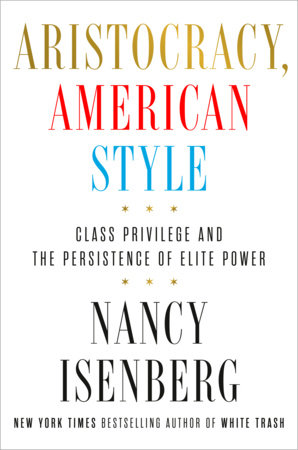
Americans are taught to see aristocracy as everything we are not. Yet from the Revolution forward, the nation has cultivated elites in all but name—dynasties of wealth, pedigree, and corporate power—while praising them as proof the system works. In Aristocracy, American Style, bestselling historian Nancy Isenberg shows that the feel-good myths of the self-made man and “opportunity for all” have not simply distracted us; they have supplied a durable logic that launders privilege across generations.
Drawing on public policy, popular culture, and political rhetoric, Isenberg pierces the veil that shields the most privileged among us. Ranging from Gilded Age robber barons to modern moguls and influencers, from Brahmins to “nepo babies,” she demonstrates how American elites have long borrowed aristocratic forms—crests reborn as logos, courts reborn as corporate suites, noblesse oblige reborn as naming rights—while media infrastructures keep us awed by scandal and celebrity churn. The result is not just a roll call of the rich but a working model of power.
From the racetracks and jockey clubs of early America to the halls of the Ivy League and the red carpets of Hollywood, Aristocracy, American Style reframes today’s inequality as the predictable outcome of an old, distinctly American regime—one that thrives under democratic slogans while narrowing democratic possibility—and shows what it costs a republic to mistake prestige for merit.
Nancy Isenberg is the T. Harry Williams Professor of American History at Louisiana State University, and the author of the New York Times bestseller White Trash: The 400-Year Untold History of Class in America, and two award-winning books, Fallen Founder: The Life of Aaron Burr and Sex and Citizenship in Antebellum America. She is the coauthor, with Andrew Burstein, of Madison and Jefferson.
View titles by Nancy Isenberg
A New York Times bestselling historian confronts the myth of American meritocracy and our enduring reverence for the über-rich—and how that feedback loop corrodes democracy
Americans are taught to see aristocracy as everything we are not. Yet from the Revolution forward, the nation has cultivated elites in all but name—dynasties of wealth, pedigree, and corporate power—while praising them as proof the system works. In Aristocracy, American Style, bestselling historian Nancy Isenberg shows that the feel-good myths of the self-made man and “opportunity for all” have not simply distracted us; they have supplied a durable logic that launders privilege across generations.
Drawing on public policy, popular culture, and political rhetoric, Isenberg pierces the veil that shields the most privileged among us. Ranging from Gilded Age robber barons to modern moguls and influencers, from Brahmins to “nepo babies,” she demonstrates how American elites have long borrowed aristocratic forms—crests reborn as logos, courts reborn as corporate suites, noblesse oblige reborn as naming rights—while media infrastructures keep us awed by scandal and celebrity churn. The result is not just a roll call of the rich but a working model of power.
From the racetracks and jockey clubs of early America to the halls of the Ivy League and the red carpets of Hollywood, Aristocracy, American Style reframes today’s inequality as the predictable outcome of an old, distinctly American regime—one that thrives under democratic slogans while narrowing democratic possibility—and shows what it costs a republic to mistake prestige for merit.
Nancy Isenberg is the T. Harry Williams Professor of American History at Louisiana State University, and the author of the New York Times bestseller White Trash: The 400-Year Untold History of Class in America, and two award-winning books, Fallen Founder: The Life of Aaron Burr and Sex and Citizenship in Antebellum America. She is the coauthor, with Andrew Burstein, of Madison and Jefferson.
View titles by Nancy Isenberg