Close Modal

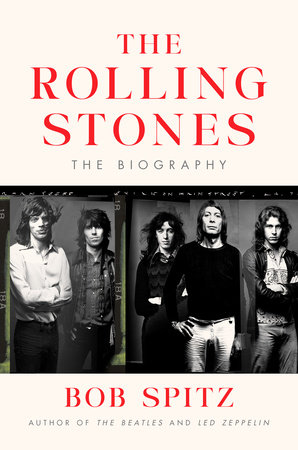
The Rolling Stones

The Biography

Author Bob Spitz
Look inside
Best Seller
Hardcover
$38.00 US
6.44"W x 9.51"H x 1.34"D   (16.4 x 24.2 x 3.4 cm) | 37 oz (1,043 g) | 12 per carton
On sale Apr 21, 2026 | 704 Pages | 9780593489093
Sales rights: US, Canada, Open Mkt

additional book photo
An Instant New York Times Bestseller

“A magisterial work that charts the 60-year journey of ‘the greatest rock and roll band in the world.’ . . . Hundreds of books have been written about the Rolling Stones, but few sparkle quite like Spitz’s. For anyone who loves or even likes the Stones, it’s indispensable.” —Los Angeles Times


All great music is a threat.

What left is there to say about The Rolling Stones? A hell of a lot, it turns out.

Bob Spitz has brought his indefatigable energy and five decades of experiences in the fields and hollows of rock 'n’ roll to bear on his five-year journey to reexamine one of popular music’s greatest stories. There are myriad revisions to the conventional narrative which underscore just how in control of that narrative the band has been up to now—small example: no, Muddy Waters was not mopping the floors at Chess Records when the Stones showed up. But in a larger sense, as with the Beatles and Led Zeppelin, Spitz’s greatest gift is for the big picture. He knows where the magic is, and why it is. He is as clear-eyed a connoisseur of the show business, the spectacle and the collateral damage of this whirlwind as anyone alive, and that lucid gaze pierces a lot of incrusted bullshit, but the ultimate goal is to connect with a creative force whose power shows no signs of fading, over sixty years on.

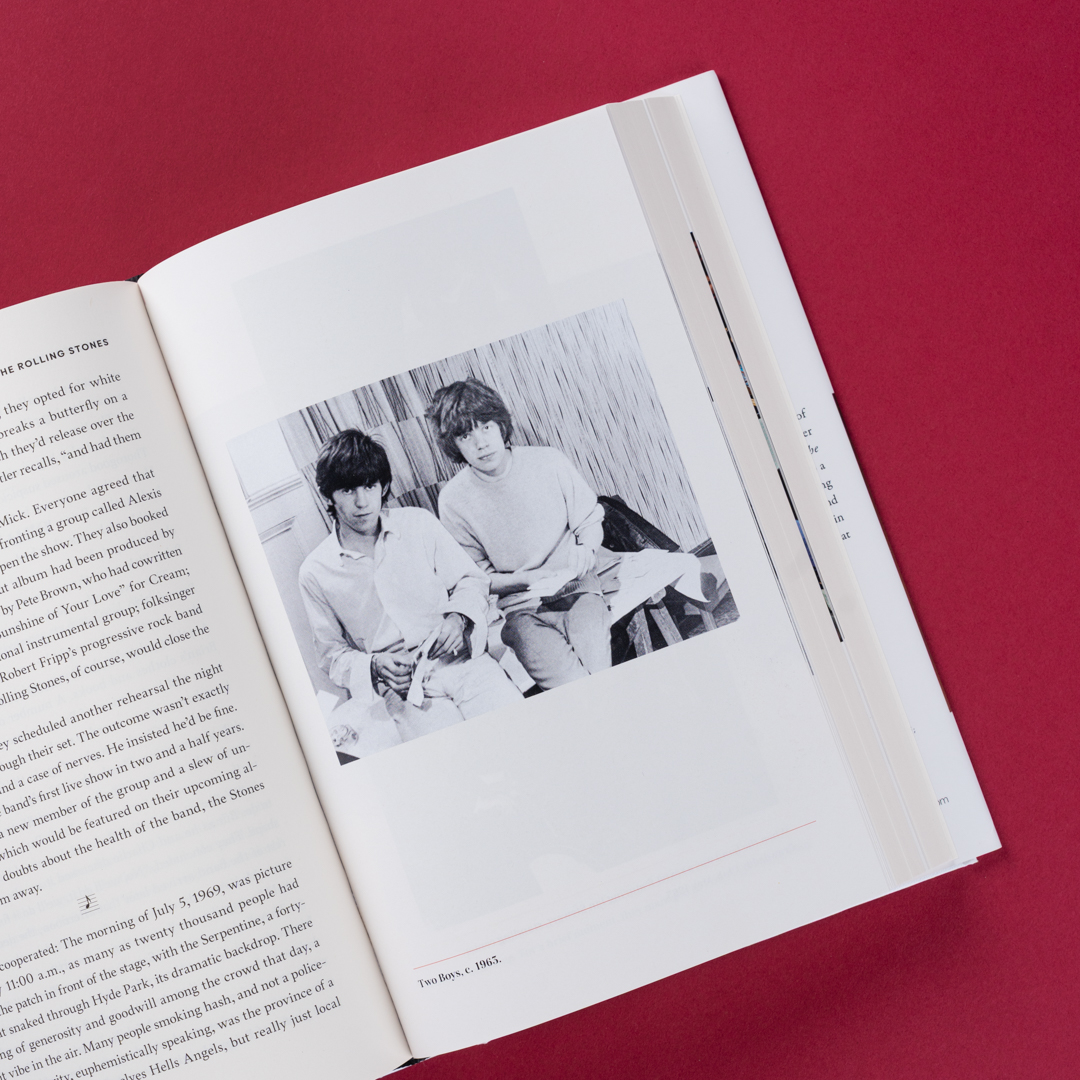
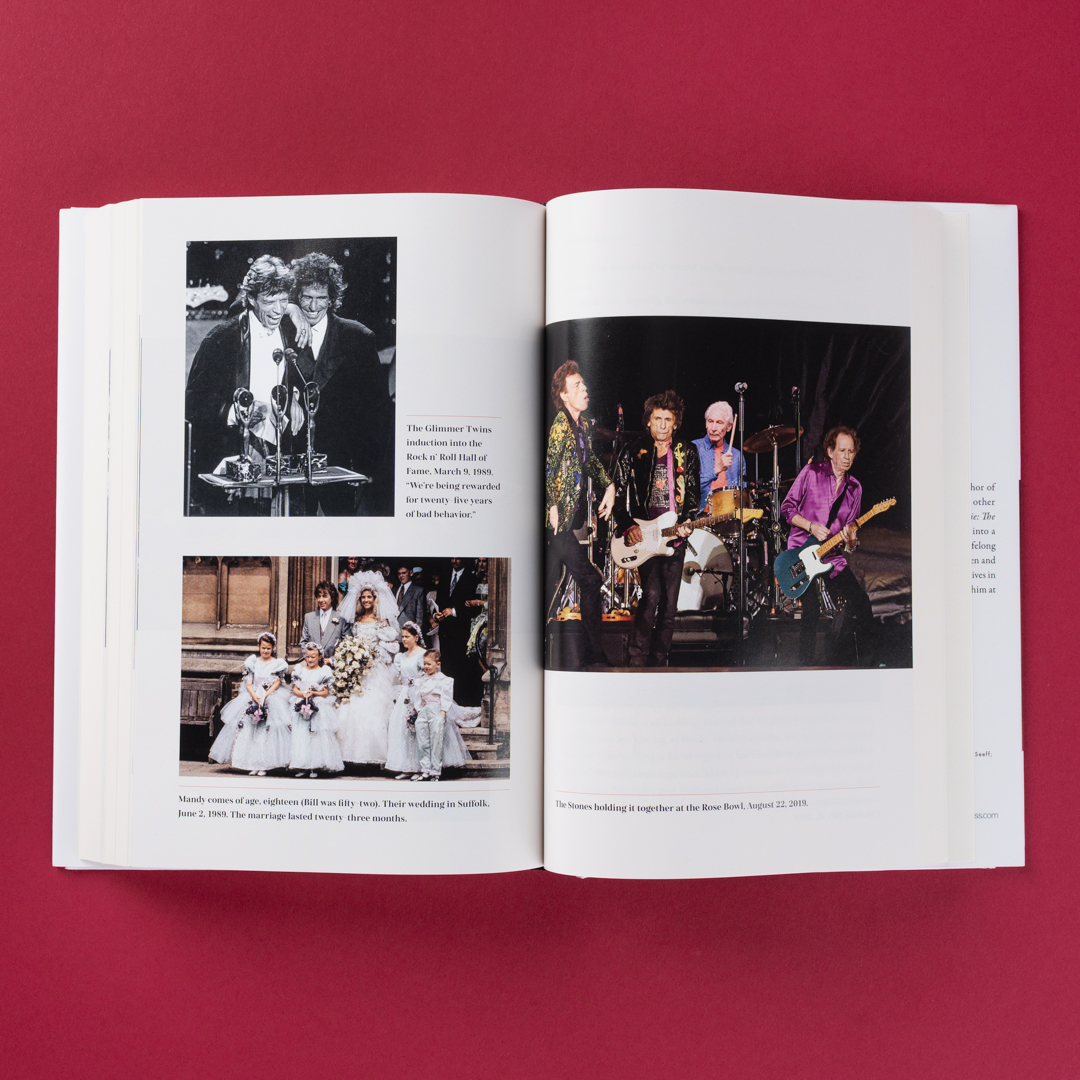
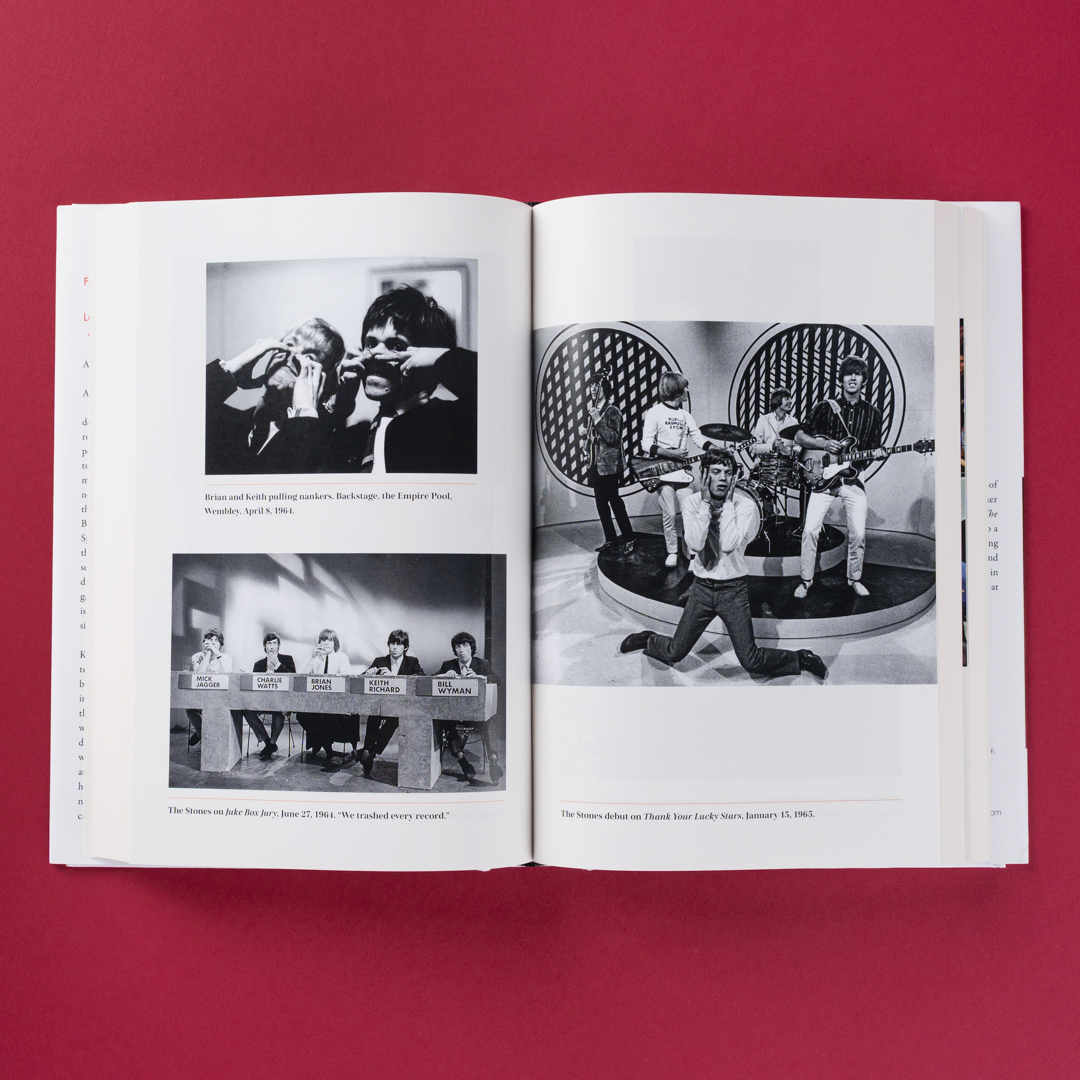
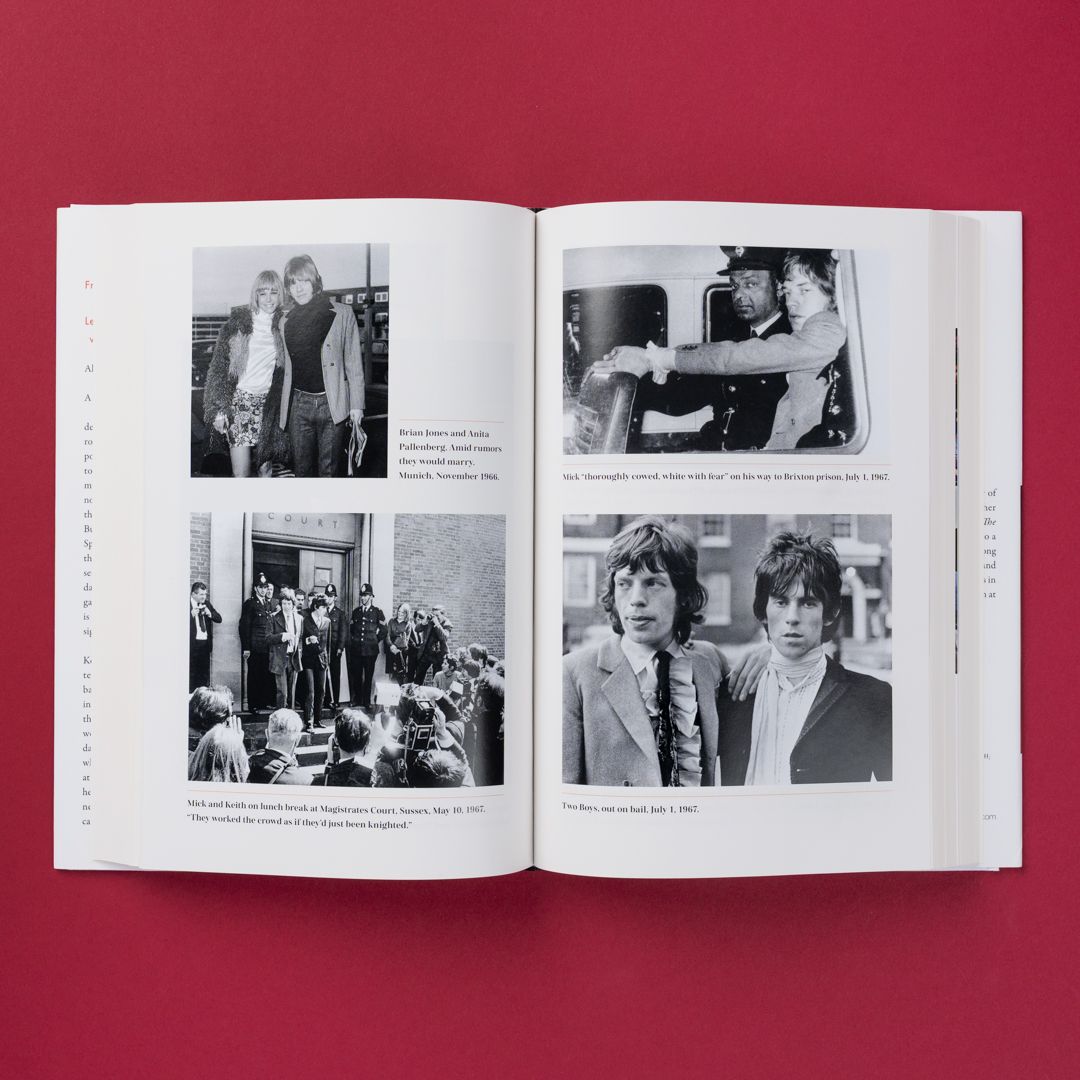
At its heart the story is about two boys, Mick and Keith, and their unique, fraught, alchemical bond, often tested, never sundered. The Glimmer Twins. The bandmates, like Charlie Watts, who found their groove in relation to this double star made the trip intact, while those who struggled, like Brian Jones and Mick Taylor, were chewed up and spit out. This is a story with many dark corners, including a surprising number of deaths. But whether Jagger and Richards sold their souls to the devil is at the crossroads for blues greatness or just squeezed their heroes for every drop of inspiration, in the end their connection to their music and to each other put them in a category of one, where they very much remain.
Chapter One

The Blues Brothers

Keith was born my brother by accident by different parents.

-Mick Jagger

He's a smart little motherfucker, I'll give him that.

-Keith Richards

Michael Philip Jagger's situation was complicated. There were expectations weighing on his shoulders. Born July 26, 1943, in an England under attack, Mike, as he was known, was vessel for the Jagger family's hopes of an upwardly mobile trajectory. His parents, Joe and Eva, had already crossed the tracks from a working-class Dartford subdivision to one of the borough's posher new enclaves called the Close, sporting single-family homes and big backyards. Eva, a clever housewife, sold Avon beauty products to boost the family income. Joe, in a few high-flying years, had leapfrogged from high school gym teacher to lecturer at St. Mary's College and television sports guru, establishing his bona fides as one of England's preeminent fitness experts. He was grooming Mike to follow in his footsteps.

Joe and Mike were an early television tag team. Viewers tuned in regularly to watch their routines. When there was an exercise to demonstrate, Joe had Mike spring into action and perform twenty jumping jacks, or press a hundred pounds, or chin a bar. The kid was a natural. He not only handled anything Joe threw at him but turned on the charm.

Mike had all the tools necessary to leap social classes in a single bound. He played cricket, rugby, basketball, and tennis. He excelled at track, threw the javelin, undertook a taxing daily regimen of push-ups and sit-ups. Academically, he was a decent, if lazy, student-he graduated twelfth in a class of twenty-five-more intuitive than intellectual. Friends considered him outgoing. And he had spunk.

"I didn't have any inhibitions," he recalled. Even as a kid, at fifteen or sixteen, he'd front a little pop combo and "do mad things," raising the heat in a local auditorium by dropping to his knees and rolling on the ground in some weird mash-up of Johnnie Ray and Bruno Sammartino. Audiences were shocked at first-he could see it in their faces-but they ate it up, save for two stony-eyed observers who patrolled the back aisles of his performances. "My parents were extremely disapproving of it all," he remembered; "it was just not done" in polite company. The music and behavior were "for very low-class people."

Keeping up appearances generally meant conformity in 1950s Britain, but Mike had his own ideas. Image was a contrivance he played with from the outset. It didn't matter if he was on a stage or running the quarter mile for Dartford Grammar. "I thought, 'Sod how we did in competition.' My first thought was: 'How does my hair look?'"

This was one strange boy. There were time-honored formalities in place to preserve the status quo. Etiquette to be adhered to and respected. But Mike Jagger was already pushing at boundaries, testing his elders, trying on various identities for size. He was content either to sing as part of a choir, until his voice broke, or to make a complete fool of himself in front of twenty people. He flouted Dartford Grammar's faux-Etonian dress code by wearing casual clothes, he challenged the headmaster, ignored the school's mandate to join the militaristic Combined Cadet Force, and was initiated into sexual experience with a boy.

And he listened to music. Not those insipid pop hits of the day on the BBC's Light Programme, but that vulgar stuff corrupting British teenagers that streamed over Radio Luxembourg and Armed Forces Radio. He fancied the bad boys-Eddie Cochran, Gene Vincent, Jerry Lee Lewis, Elvis Presley. And those Black musicians with their wild sorties-"Who Do You Love?" I'm Your "Hoochie Coochie Man," and "Mannish Boy." A cook at a nearby U.S. Army base, where Mike volunteered as a fitness instructor, had an extraordinary record collection: Lead Belly, Robert Johnson, Howlin' Wolf, and Muddy Waters. It was a revelation. The Black man's music! He was hooked, he couldn't get enough of it.

Mike Jagger was walking a fine line. He strove to please his parents, whom he adored and respected, but he was struggling to meet their expectations and still be his own man. His father didn't give him an inch. Even though Mike got seven O levels and three A level passes-the equivalent of college advance placement courses-Joe was never satisfied. "Get on your homework," he bellowed whenever the music-"jungle music," Joe called it-came wafting from behind Mike's bedroom door. Joe hounded him about exercising, to get in shape, to stay fit. "He couldn't go anywhere without his father shouting that he needed to do his weights or push-ups," recalled Dick Taylor, another music junkie who lived nearby in Dartford. It was a constant struggle.

Especially considering Mike's circumstances at LSE. He'd nabbed a coveted scholarship that gave him a weekly stipend of £7 to cover expenses. Plus, there were perks. Enrollment there conferred a certain status. A long line of dignitaries had risen from the school's storied ranks. Bertrand Russell and John Maynard Keynes dropped in to lecture. A degree got you a ticket to the English middle class. But Mike constantly wrestled with the relevance of his education. He couldn't square the work and effort with where it was leading.

"When I was twelve or thirteen, I was thinking of becoming a journalist," he recalled. "Then I was imagining that I was going to be in some form of government, because I was interested in macroeconomics, how government influenced the economy." But now music had intruded. Fats Domino, Little Richard, Chuck Berry, Bo Diddley-another new, fantastic discovery almost every week.

Friday afternoons, while his LSE classmates grabbed lunch, Mike spent the hour around the corner from school, in the basement of Dobells, a mostly jazz-oriented record shop, scavenging among the dusty bins of album rejects hoping to unearth anything that looked like an authentic blues gem. The exotic labels were catnip: Aladdin, Duke, Modern, Excello, Specialty. He'd chase anything down that gave off a whiff of authentic blues.

The so-called bands Mike fronted offered little inspiration. "I was in loads of skiffle groups," he said, joining the fad of folk-music enthusiasts. He'd busk with his mate Dick Taylor or any number of public school minstrels who bashed away on their homemade instruments with joie de vivre and little else. And even though another band from Dartford Grammar, the Southerners, nabbed a prestigious TV gig, skiffle soon wore out its welcome. There were only so many times one could sing "Rock Island Line" or "Pick a Bale of Cotton."

After Mike saw Buddy Holly perform, his taste evolved into a steady diet of rock 'n roll. Mike auditioned to sing with a band made up of friends he'd known from primary school, but they were appalled by his offbeat voice. Instead, he, Dick Taylor, and two other schoolmates, Bob Beckwith and Alan Etherington, set up shop and ran through every rock 'n roll song they could think of-always including "La Bamba."

Eventually, they made it official, calling themselves a band: Little Boy Blue and the Blue Boys. There were no gigs; gigs never entered their minds. It was enough to play as an ensemble in Dick Taylor's back garden or at Alan Etherington's house. The band's equipment was an assemblage of spare parts. Dick inherited a drum kit of the tin-can variety. No amplifiers figured in the equation, but a Grundig radiogram-one of those boxy wooden radio/gramophone players that occupied the corners of most British living rooms-had a jack and enough wattage to produce a suitable squawk. Bob and Alan took turns plugging their guitars into it, forcing Mike, sans microphone, to project his voice over the clatter.

There was never any question who would handle the vocals. Mike, who played no instrument, simply assumed the role, installing himself as frontman. He was completely uninhibited. He never gave a second thought to how he'd come off mimicking the gritty sound and phrasing of forty-year-old Black men, to say nothing of acting out a lyric by grinding his hips or rolling his eyes. Instinctively, he knew how to move, he was seductive, and he had presence. Most sixteen-year-olds would have saved the theatrics for the stage, but whenever they rehearsed, Mike was always in character, always Little Boy Blue. He never held anything back.

By the time Mike enrolled at the London School of Economics in September 1961, the band's repertoire had undergone a sea change. Songs dominating the UK charts were a simpering hodgepodge. "Hello Mary Lou," "Rubber Ball," "Poetry in Motion," "Michael, Row the Boat Ashore." British rock 'n roll impostors like Cliff Richard, Tommy Steele, and Terry Dene peddled syrupy pop. Even Elvis, their idol from the United States, had lost his sting, crooning mainstream drivel like "Wooden Heart" and "Surrender." Buddy and Eddie were dead, Jerry Lee canceled, Little Richard God-fearing, Chuck about to do hard time. Rock 'n roll-the rock 'n roll that had ignited the boys' imaginations-was in a bad place. Mike decided to take things in a different direction.

As far as a band was concerned, the blues he and Dick Taylor had been listening to had more upside. The blues was gritty, ferocious, it pulsed with whoop and holler and a primal sexuality. To play it, you had to put your heart and soul into it. You had to celebrate it as if you spoke the language, understood the inimitable poetry of blues, suffered the consequences of life. A singer, especially, had to give it expression and nuance, calibrating his voice so that it could slide from high-flying falsetto to a deep, trembling moan without missing a beat. And he had to believe it. A big ask for an eighteen-year-old.

No, Little Boy Blue and the Blue Boys weren't going to play that sappy Top 40 shit. They were going to play the blues. Forget the fact that no one their age was listening to the blues or that you couldn't find blues records in any of the local shops. Forget that few blues singers had ever performed in England. None of that was of any consequence. They were going to play the blues-celebrate the blues-because it mattered, period.

Luckily, Mike had curated his own little Library of Blues Esoterica. "In 1961, [he] had reels of Jimmy Reed tapes," said a trusted friend, "Elmore James's 'The Sun Is Shining,' a lot of unissued Muddy Waters and Little Walter stuff, and Slim Harpo." These were relics from the sacred canon. Eventually, Mike and Dick helped to expand the band's horizons, introducing them to more cutting-edge artists like Memphis Slim, John Lee Hooker, Lightnin' Hopkins, and Howlin' Wolf. They'd play all the essential blues standbys-"Smokestack Lightnin'," "Good Morning, School Girl," "Shame, Shame, Shame," "Eldorado Cadillac," "It's Gonna Work Out Fine." And for dessert, "La Bamba."

Plans got scrambled a bit when Keith Richards entered the picture. He showed up at the Carousel coffee bar to check out Mike's scene. He even brought his guitar, a secondhand Hofner Archtop with a cheap Japanese pickup wedged under the strings. But Mike's friends intimidated him, so he sat silently for the most part, taking it in. Keith was better one on one. Alone with Mike, he came alive, especially when a tape rolled and a song he never heard before came through the speaker.

Keith knew Chuck Berry and Buddy Holly inside out, but Bo Diddley was a revelation. John Lee Hooker, Jimmy Reed, Little Walter . . . Where have these guys been all my life? "He started to play me these records, and I really turned on to it," Keith recalled. The two boys would sit for hours hunched over a tape or record, dissecting a song as if it were a frog in biology class: first analyzing the overall sound, then paring away the chords, the words, the performance, the expression, until nothing was left except to play the damned thing. "[H]e'd start to sing, and I'd start to play, and 'Hey, that ain't bad.'"

A real attraction formed between the two boys, a chemical connection. They began to intuit each other, to reach a mutual decision about songs, technique, life in general, without having to say it aloud. Friendship was one thing, but this was something else, something deeper. They understood each other. For Keith Richards, who had yet to find a real purpose in life, it was transformational. Mike wasn't just another acquaintance who'd rotate in and out of his life. He was a friend, not a word Keith used lightly.


An only child, Keith Richards was used to being alone. He was an irrefutable war baby. Shy, skinny, a cagey observer, with an independent streak that bordered on compulsive.

Born in Dartford on December 18, 1943, Keith was conceived as an excuse for his mother, Doris, to avoid wartime work. His father, Bert, toiled long hours in a General Electric factory before being called up soon after D-Day. "Pretty distant" is the way Keith remembers him. Doris, on the other hand, was equal parts doting mother and ballbuster. She adored her son-the courteous, angelic version. But she didn't give the devilish side an inch, threatening to have him taken away by "the Man" when he misbehaved. To prepare him for the hard world ahead, she euthanized his pets.

Still, family was a refuge. Keith's mother's six sisters served as warmhearted aunties, and his grandfather, Gus, provided the magic. Theodore Augustus "Gus" Dupree is the éminence grise in the Keith Richards story-"a guy," in Keith's eyes, "who could do anything." The man wore any number of interchangeable hats-musician, baker, storyteller, prankster, peacemaker, roué, maverick, grandfather extraordinaire. A little boy couldn't conjure up a better playmate.

Gus rescued Keith as soon as he was old enough to walk, taking him on long excursions, during which he imparted truths, half-truths, and tall stories meant to teach his grandson how to live. Keith was a quick study, acquiring from Gus a sense of irreverence and individualism, self-reliance, not taking any shit. "There's a joy in life; that's what I learned from my grandfather," Keith recalled. "He just enjoyed the world, and he taught me how to do that."

And then, in 1956, during one of their routine visits, Gus took down a Spanish guitar that sat atop his upright piano and put it into his grandson's hands. Gus had mastered saxophone and violin while only tinkering with the guitar, but he managed to show Keith how to form the major chords. A lonely thirteen-year-old and a guitar-the cap was off the gusher.

Keith could already sing. From the time he was eleven, he performed nobly in Dartford Tech's boys choir, one of three gorgeous sopranos-"the worst hoods in my school," he recalls. In their white surplices they passed as little angels, until their voices broke.
"Excels at presenting the Stones in glorious Technicolor . . . indispensable." Marc Ballon, LA Times

“You won’t look at the Stones the same way again” — David Kirby, The Wall Street Journal

“Sure to titillate Stones fans with its many insider stories” — Nathan Smith, The Observer

“A terrific biography . . . A must for every fan of the Stones and rock and roll, a work of music history to savor.” —Booklist (starred review)

“Spitz offers a good explanation for why the Stones have endured, filthy rich while continuing to present themselves as unwholesome, dangerous street rats . . . a treasure trove for Stones fans.” —Kirkus (starred review)
© Elena Seibert
Bob Spitz is the award-winning author of the biographies Dearie: The Remarkable Life of Julia Child and The Beatles, both New York Times bestsellers, as well as seven other nonfiction books and a screenplay. He helped manage Bruce Springsteen and Elton John at crucial points in their careers. He’s written hundreds of major profiles of figures, ranging from Keith Richards to Jane Fonda, from Paul McCartney to Paul Bowles. View titles by Bob Spitz
Available for sale exclusive:
•     Canada
•     Guam
•     Minor Outl.Ins.
•     North Mariana
•     Philippines
•     Puerto Rico
•     Samoa,American
•     US Virgin Is.
•     USA

Available for sale non-exclusive:
•     Afghanistan
•     Aland Islands
•     Albania
•     Algeria
•     Andorra
•     Angola
•     Anguilla
•     Antarctica
•     Argentina
•     Armenia
•     Aruba
•     Austria
•     Azerbaijan
•     Bahrain
•     Belarus
•     Belgium
•     Benin
•     Bhutan
•     Bolivia
•     Bonaire, Saba
•     Bosnia Herzeg.
•     Bouvet Island
•     Brazil
•     Bulgaria
•     Burkina Faso
•     Burundi
•     Cambodia
•     Cape Verde
•     Centr.Afr.Rep.
•     Chad
•     Chile
•     China
•     Colombia
•     Comoro Is.
•     Congo
•     Cook Islands
•     Costa Rica
•     Croatia
•     Cuba
•     Curacao
•     Czech Republic
•     Dem. Rep. Congo
•     Denmark
•     Djibouti
•     Dominican Rep.
•     Ecuador
•     Egypt
•     El Salvador
•     Equatorial Gui.
•     Eritrea
•     Estonia
•     Ethiopia
•     Faroe Islands
•     Finland
•     France
•     Fren.Polynesia
•     French Guinea
•     Gabon
•     Georgia
•     Germany
•     Greece
•     Greenland
•     Guadeloupe
•     Guatemala
•     Guinea Republic
•     Guinea-Bissau
•     Haiti
•     Heard/McDon.Isl
•     Honduras
•     Hong Kong
•     Hungary
•     Iceland
•     Indonesia
•     Iran
•     Israel
•     Italy
•     Ivory Coast
•     Japan
•     Kazakhstan
•     Kyrgyzstan
•     Laos
•     Latvia
•     Lebanon
•     Liberia
•     Libya
•     Liechtenstein
•     Lithuania
•     Luxembourg
•     Macau
•     Macedonia
•     Madagascar
•     Maldives
•     Mali
•     Marshall island
•     Martinique
•     Mauritania
•     Mayotte
•     Mexico
•     Micronesia
•     Moldavia
•     Monaco
•     Mongolia
•     Montenegro
•     Morocco
•     Myanmar
•     Nepal
•     Netherlands
•     New Caledonia
•     Nicaragua
•     Niger
•     Niue
•     North Korea
•     Norway
•     Oman
•     Palau
•     Palestinian Ter
•     Panama
•     Paraguay
•     Peru
•     Poland
•     Portugal
•     Qatar
•     Reunion Island
•     Romania
•     Russian Fed.
•     Saint Martin
•     San Marino
•     SaoTome Princip
•     Saudi Arabia
•     Senegal
•     Serbia
•     Sint Maarten
•     Slovakia
•     Slovenia
•     South Korea
•     South Sudan
•     Spain
•     St Barthelemy
•     St.Pier,Miquel.
•     Sth Terr. Franc
•     Suriname
•     Svalbard
•     Sweden
•     Switzerland
•     Syria
•     Tadschikistan
•     Taiwan
•     Thailand
•     Timor-Leste
•     Togo
•     Tunisia
•     Turkey
•     Turkmenistan
•     Ukraine
•     Unit.Arab Emir.
•     Uruguay
•     Uzbekistan
•     Vatican City
•     Venezuela
•     Vietnam
•     Wallis,Futuna
•     West Saharan
•     Yemen

Not available for sale:
•     Antigua/Barbuda
•     Australia
•     Bahamas
•     Bangladesh
•     Barbados
•     Belize
•     Bermuda
•     Botswana
•     Brit.Ind.Oc.Ter
•     Brit.Virgin Is.
•     Brunei
•     Cameroon
•     Cayman Islands
•     Christmas Islnd
•     Cocos Islands
•     Cyprus
•     Dominica
•     Falkland Islnds
•     Fiji
•     Gambia
•     Ghana
•     Gibraltar
•     Grenada
•     Guernsey
•     Guyana
•     India
•     Iraq
•     Ireland
•     Isle of Man
•     Jamaica
•     Jersey
•     Jordan
•     Kenya
•     Kiribati
•     Kuwait
•     Lesotho
•     Malawi
•     Malaysia
•     Malta
•     Mauritius
•     Montserrat
•     Mozambique
•     Namibia
•     Nauru
•     New Zealand
•     Nigeria
•     Norfolk Island
•     Pakistan
•     PapuaNewGuinea
•     Pitcairn Islnds
•     Rwanda
•     S. Sandwich Ins
•     Seychelles
•     Sierra Leone
•     Singapore
•     Solomon Islands
•     Somalia
•     South Africa
•     Sri Lanka
•     St. Helena
•     St. Lucia
•     St. Vincent
•     St.Chr.,Nevis
•     Sudan
•     Swaziland
•     Tanzania
•     Tokelau Islands
•     Tonga
•     Trinidad,Tobago
•     Turks&Caicos Is
•     Tuvalu
•     Uganda
•     United Kingdom
•     Vanuatu
•     Western Samoa
•     Zambia
•     Zimbabwe

Photos

additional book photo

About

An Instant New York Times Bestseller

“A magisterial work that charts the 60-year journey of ‘the greatest rock and roll band in the world.’ . . . Hundreds of books have been written about the Rolling Stones, but few sparkle quite like Spitz’s. For anyone who loves or even likes the Stones, it’s indispensable.” —Los Angeles Times


All great music is a threat.

What left is there to say about The Rolling Stones? A hell of a lot, it turns out.

Bob Spitz has brought his indefatigable energy and five decades of experiences in the fields and hollows of rock 'n’ roll to bear on his five-year journey to reexamine one of popular music’s greatest stories. There are myriad revisions to the conventional narrative which underscore just how in control of that narrative the band has been up to now—small example: no, Muddy Waters was not mopping the floors at Chess Records when the Stones showed up. But in a larger sense, as with the Beatles and Led Zeppelin, Spitz’s greatest gift is for the big picture. He knows where the magic is, and why it is. He is as clear-eyed a connoisseur of the show business, the spectacle and the collateral damage of this whirlwind as anyone alive, and that lucid gaze pierces a lot of incrusted bullshit, but the ultimate goal is to connect with a creative force whose power shows no signs of fading, over sixty years on.

At its heart the story is about two boys, Mick and Keith, and their unique, fraught, alchemical bond, often tested, never sundered. The Glimmer Twins. The bandmates, like Charlie Watts, who found their groove in relation to this double star made the trip intact, while those who struggled, like Brian Jones and Mick Taylor, were chewed up and spit out. This is a story with many dark corners, including a surprising number of deaths. But whether Jagger and Richards sold their souls to the devil is at the crossroads for blues greatness or just squeezed their heroes for every drop of inspiration, in the end their connection to their music and to each other put them in a category of one, where they very much remain.

Excerpt

Chapter One

The Blues Brothers

Keith was born my brother by accident by different parents.

-Mick Jagger

He's a smart little motherfucker, I'll give him that.

-Keith Richards

Michael Philip Jagger's situation was complicated. There were expectations weighing on his shoulders. Born July 26, 1943, in an England under attack, Mike, as he was known, was vessel for the Jagger family's hopes of an upwardly mobile trajectory. His parents, Joe and Eva, had already crossed the tracks from a working-class Dartford subdivision to one of the borough's posher new enclaves called the Close, sporting single-family homes and big backyards. Eva, a clever housewife, sold Avon beauty products to boost the family income. Joe, in a few high-flying years, had leapfrogged from high school gym teacher to lecturer at St. Mary's College and television sports guru, establishing his bona fides as one of England's preeminent fitness experts. He was grooming Mike to follow in his footsteps.

Joe and Mike were an early television tag team. Viewers tuned in regularly to watch their routines. When there was an exercise to demonstrate, Joe had Mike spring into action and perform twenty jumping jacks, or press a hundred pounds, or chin a bar. The kid was a natural. He not only handled anything Joe threw at him but turned on the charm.

Mike had all the tools necessary to leap social classes in a single bound. He played cricket, rugby, basketball, and tennis. He excelled at track, threw the javelin, undertook a taxing daily regimen of push-ups and sit-ups. Academically, he was a decent, if lazy, student-he graduated twelfth in a class of twenty-five-more intuitive than intellectual. Friends considered him outgoing. And he had spunk.

"I didn't have any inhibitions," he recalled. Even as a kid, at fifteen or sixteen, he'd front a little pop combo and "do mad things," raising the heat in a local auditorium by dropping to his knees and rolling on the ground in some weird mash-up of Johnnie Ray and Bruno Sammartino. Audiences were shocked at first-he could see it in their faces-but they ate it up, save for two stony-eyed observers who patrolled the back aisles of his performances. "My parents were extremely disapproving of it all," he remembered; "it was just not done" in polite company. The music and behavior were "for very low-class people."

Keeping up appearances generally meant conformity in 1950s Britain, but Mike had his own ideas. Image was a contrivance he played with from the outset. It didn't matter if he was on a stage or running the quarter mile for Dartford Grammar. "I thought, 'Sod how we did in competition.' My first thought was: 'How does my hair look?'"

This was one strange boy. There were time-honored formalities in place to preserve the status quo. Etiquette to be adhered to and respected. But Mike Jagger was already pushing at boundaries, testing his elders, trying on various identities for size. He was content either to sing as part of a choir, until his voice broke, or to make a complete fool of himself in front of twenty people. He flouted Dartford Grammar's faux-Etonian dress code by wearing casual clothes, he challenged the headmaster, ignored the school's mandate to join the militaristic Combined Cadet Force, and was initiated into sexual experience with a boy.

And he listened to music. Not those insipid pop hits of the day on the BBC's Light Programme, but that vulgar stuff corrupting British teenagers that streamed over Radio Luxembourg and Armed Forces Radio. He fancied the bad boys-Eddie Cochran, Gene Vincent, Jerry Lee Lewis, Elvis Presley. And those Black musicians with their wild sorties-"Who Do You Love?" I'm Your "Hoochie Coochie Man," and "Mannish Boy." A cook at a nearby U.S. Army base, where Mike volunteered as a fitness instructor, had an extraordinary record collection: Lead Belly, Robert Johnson, Howlin' Wolf, and Muddy Waters. It was a revelation. The Black man's music! He was hooked, he couldn't get enough of it.

Mike Jagger was walking a fine line. He strove to please his parents, whom he adored and respected, but he was struggling to meet their expectations and still be his own man. His father didn't give him an inch. Even though Mike got seven O levels and three A level passes-the equivalent of college advance placement courses-Joe was never satisfied. "Get on your homework," he bellowed whenever the music-"jungle music," Joe called it-came wafting from behind Mike's bedroom door. Joe hounded him about exercising, to get in shape, to stay fit. "He couldn't go anywhere without his father shouting that he needed to do his weights or push-ups," recalled Dick Taylor, another music junkie who lived nearby in Dartford. It was a constant struggle.

Especially considering Mike's circumstances at LSE. He'd nabbed a coveted scholarship that gave him a weekly stipend of £7 to cover expenses. Plus, there were perks. Enrollment there conferred a certain status. A long line of dignitaries had risen from the school's storied ranks. Bertrand Russell and John Maynard Keynes dropped in to lecture. A degree got you a ticket to the English middle class. But Mike constantly wrestled with the relevance of his education. He couldn't square the work and effort with where it was leading.

"When I was twelve or thirteen, I was thinking of becoming a journalist," he recalled. "Then I was imagining that I was going to be in some form of government, because I was interested in macroeconomics, how government influenced the economy." But now music had intruded. Fats Domino, Little Richard, Chuck Berry, Bo Diddley-another new, fantastic discovery almost every week.

Friday afternoons, while his LSE classmates grabbed lunch, Mike spent the hour around the corner from school, in the basement of Dobells, a mostly jazz-oriented record shop, scavenging among the dusty bins of album rejects hoping to unearth anything that looked like an authentic blues gem. The exotic labels were catnip: Aladdin, Duke, Modern, Excello, Specialty. He'd chase anything down that gave off a whiff of authentic blues.

The so-called bands Mike fronted offered little inspiration. "I was in loads of skiffle groups," he said, joining the fad of folk-music enthusiasts. He'd busk with his mate Dick Taylor or any number of public school minstrels who bashed away on their homemade instruments with joie de vivre and little else. And even though another band from Dartford Grammar, the Southerners, nabbed a prestigious TV gig, skiffle soon wore out its welcome. There were only so many times one could sing "Rock Island Line" or "Pick a Bale of Cotton."

After Mike saw Buddy Holly perform, his taste evolved into a steady diet of rock 'n roll. Mike auditioned to sing with a band made up of friends he'd known from primary school, but they were appalled by his offbeat voice. Instead, he, Dick Taylor, and two other schoolmates, Bob Beckwith and Alan Etherington, set up shop and ran through every rock 'n roll song they could think of-always including "La Bamba."

Eventually, they made it official, calling themselves a band: Little Boy Blue and the Blue Boys. There were no gigs; gigs never entered their minds. It was enough to play as an ensemble in Dick Taylor's back garden or at Alan Etherington's house. The band's equipment was an assemblage of spare parts. Dick inherited a drum kit of the tin-can variety. No amplifiers figured in the equation, but a Grundig radiogram-one of those boxy wooden radio/gramophone players that occupied the corners of most British living rooms-had a jack and enough wattage to produce a suitable squawk. Bob and Alan took turns plugging their guitars into it, forcing Mike, sans microphone, to project his voice over the clatter.

There was never any question who would handle the vocals. Mike, who played no instrument, simply assumed the role, installing himself as frontman. He was completely uninhibited. He never gave a second thought to how he'd come off mimicking the gritty sound and phrasing of forty-year-old Black men, to say nothing of acting out a lyric by grinding his hips or rolling his eyes. Instinctively, he knew how to move, he was seductive, and he had presence. Most sixteen-year-olds would have saved the theatrics for the stage, but whenever they rehearsed, Mike was always in character, always Little Boy Blue. He never held anything back.

By the time Mike enrolled at the London School of Economics in September 1961, the band's repertoire had undergone a sea change. Songs dominating the UK charts were a simpering hodgepodge. "Hello Mary Lou," "Rubber Ball," "Poetry in Motion," "Michael, Row the Boat Ashore." British rock 'n roll impostors like Cliff Richard, Tommy Steele, and Terry Dene peddled syrupy pop. Even Elvis, their idol from the United States, had lost his sting, crooning mainstream drivel like "Wooden Heart" and "Surrender." Buddy and Eddie were dead, Jerry Lee canceled, Little Richard God-fearing, Chuck about to do hard time. Rock 'n roll-the rock 'n roll that had ignited the boys' imaginations-was in a bad place. Mike decided to take things in a different direction.

As far as a band was concerned, the blues he and Dick Taylor had been listening to had more upside. The blues was gritty, ferocious, it pulsed with whoop and holler and a primal sexuality. To play it, you had to put your heart and soul into it. You had to celebrate it as if you spoke the language, understood the inimitable poetry of blues, suffered the consequences of life. A singer, especially, had to give it expression and nuance, calibrating his voice so that it could slide from high-flying falsetto to a deep, trembling moan without missing a beat. And he had to believe it. A big ask for an eighteen-year-old.

No, Little Boy Blue and the Blue Boys weren't going to play that sappy Top 40 shit. They were going to play the blues. Forget the fact that no one their age was listening to the blues or that you couldn't find blues records in any of the local shops. Forget that few blues singers had ever performed in England. None of that was of any consequence. They were going to play the blues-celebrate the blues-because it mattered, period.

Luckily, Mike had curated his own little Library of Blues Esoterica. "In 1961, [he] had reels of Jimmy Reed tapes," said a trusted friend, "Elmore James's 'The Sun Is Shining,' a lot of unissued Muddy Waters and Little Walter stuff, and Slim Harpo." These were relics from the sacred canon. Eventually, Mike and Dick helped to expand the band's horizons, introducing them to more cutting-edge artists like Memphis Slim, John Lee Hooker, Lightnin' Hopkins, and Howlin' Wolf. They'd play all the essential blues standbys-"Smokestack Lightnin'," "Good Morning, School Girl," "Shame, Shame, Shame," "Eldorado Cadillac," "It's Gonna Work Out Fine." And for dessert, "La Bamba."

Plans got scrambled a bit when Keith Richards entered the picture. He showed up at the Carousel coffee bar to check out Mike's scene. He even brought his guitar, a secondhand Hofner Archtop with a cheap Japanese pickup wedged under the strings. But Mike's friends intimidated him, so he sat silently for the most part, taking it in. Keith was better one on one. Alone with Mike, he came alive, especially when a tape rolled and a song he never heard before came through the speaker.

Keith knew Chuck Berry and Buddy Holly inside out, but Bo Diddley was a revelation. John Lee Hooker, Jimmy Reed, Little Walter . . . Where have these guys been all my life? "He started to play me these records, and I really turned on to it," Keith recalled. The two boys would sit for hours hunched over a tape or record, dissecting a song as if it were a frog in biology class: first analyzing the overall sound, then paring away the chords, the words, the performance, the expression, until nothing was left except to play the damned thing. "[H]e'd start to sing, and I'd start to play, and 'Hey, that ain't bad.'"

A real attraction formed between the two boys, a chemical connection. They began to intuit each other, to reach a mutual decision about songs, technique, life in general, without having to say it aloud. Friendship was one thing, but this was something else, something deeper. They understood each other. For Keith Richards, who had yet to find a real purpose in life, it was transformational. Mike wasn't just another acquaintance who'd rotate in and out of his life. He was a friend, not a word Keith used lightly.


An only child, Keith Richards was used to being alone. He was an irrefutable war baby. Shy, skinny, a cagey observer, with an independent streak that bordered on compulsive.

Born in Dartford on December 18, 1943, Keith was conceived as an excuse for his mother, Doris, to avoid wartime work. His father, Bert, toiled long hours in a General Electric factory before being called up soon after D-Day. "Pretty distant" is the way Keith remembers him. Doris, on the other hand, was equal parts doting mother and ballbuster. She adored her son-the courteous, angelic version. But she didn't give the devilish side an inch, threatening to have him taken away by "the Man" when he misbehaved. To prepare him for the hard world ahead, she euthanized his pets.

Still, family was a refuge. Keith's mother's six sisters served as warmhearted aunties, and his grandfather, Gus, provided the magic. Theodore Augustus "Gus" Dupree is the éminence grise in the Keith Richards story-"a guy," in Keith's eyes, "who could do anything." The man wore any number of interchangeable hats-musician, baker, storyteller, prankster, peacemaker, roué, maverick, grandfather extraordinaire. A little boy couldn't conjure up a better playmate.

Gus rescued Keith as soon as he was old enough to walk, taking him on long excursions, during which he imparted truths, half-truths, and tall stories meant to teach his grandson how to live. Keith was a quick study, acquiring from Gus a sense of irreverence and individualism, self-reliance, not taking any shit. "There's a joy in life; that's what I learned from my grandfather," Keith recalled. "He just enjoyed the world, and he taught me how to do that."

And then, in 1956, during one of their routine visits, Gus took down a Spanish guitar that sat atop his upright piano and put it into his grandson's hands. Gus had mastered saxophone and violin while only tinkering with the guitar, but he managed to show Keith how to form the major chords. A lonely thirteen-year-old and a guitar-the cap was off the gusher.

Keith could already sing. From the time he was eleven, he performed nobly in Dartford Tech's boys choir, one of three gorgeous sopranos-"the worst hoods in my school," he recalls. In their white surplices they passed as little angels, until their voices broke.

Praise

"Excels at presenting the Stones in glorious Technicolor . . . indispensable." Marc Ballon, LA Times

“You won’t look at the Stones the same way again” — David Kirby, The Wall Street Journal

“Sure to titillate Stones fans with its many insider stories” — Nathan Smith, The Observer

“A terrific biography . . . A must for every fan of the Stones and rock and roll, a work of music history to savor.” —Booklist (starred review)

“Spitz offers a good explanation for why the Stones have endured, filthy rich while continuing to present themselves as unwholesome, dangerous street rats . . . a treasure trove for Stones fans.” —Kirkus (starred review)

Author

© Elena Seibert
Bob Spitz is the award-winning author of the biographies Dearie: The Remarkable Life of Julia Child and The Beatles, both New York Times bestsellers, as well as seven other nonfiction books and a screenplay. He helped manage Bruce Springsteen and Elton John at crucial points in their careers. He’s written hundreds of major profiles of figures, ranging from Keith Richards to Jane Fonda, from Paul McCartney to Paul Bowles. View titles by Bob Spitz

Rights

Available for sale exclusive:
•     Canada
•     Guam
•     Minor Outl.Ins.
•     North Mariana
•     Philippines
•     Puerto Rico
•     Samoa,American
•     US Virgin Is.
•     USA

Available for sale non-exclusive:
•     Afghanistan
•     Aland Islands
•     Albania
•     Algeria
•     Andorra
•     Angola
•     Anguilla
•     Antarctica
•     Argentina
•     Armenia
•     Aruba
•     Austria
•     Azerbaijan
•     Bahrain
•     Belarus
•     Belgium
•     Benin
•     Bhutan
•     Bolivia
•     Bonaire, Saba
•     Bosnia Herzeg.
•     Bouvet Island
•     Brazil
•     Bulgaria
•     Burkina Faso
•     Burundi
•     Cambodia
•     Cape Verde
•     Centr.Afr.Rep.
•     Chad
•     Chile
•     China
•     Colombia
•     Comoro Is.
•     Congo
•     Cook Islands
•     Costa Rica
•     Croatia
•     Cuba
•     Curacao
•     Czech Republic
•     Dem. Rep. Congo
•     Denmark
•     Djibouti
•     Dominican Rep.
•     Ecuador
•     Egypt
•     El Salvador
•     Equatorial Gui.
•     Eritrea
•     Estonia
•     Ethiopia
•     Faroe Islands
•     Finland
•     France
•     Fren.Polynesia
•     French Guinea
•     Gabon
•     Georgia
•     Germany
•     Greece
•     Greenland
•     Guadeloupe
•     Guatemala
•     Guinea Republic
•     Guinea-Bissau
•     Haiti
•     Heard/McDon.Isl
•     Honduras
•     Hong Kong
•     Hungary
•     Iceland
•     Indonesia
•     Iran
•     Israel
•     Italy
•     Ivory Coast
•     Japan
•     Kazakhstan
•     Kyrgyzstan
•     Laos
•     Latvia
•     Lebanon
•     Liberia
•     Libya
•     Liechtenstein
•     Lithuania
•     Luxembourg
•     Macau
•     Macedonia
•     Madagascar
•     Maldives
•     Mali
•     Marshall island
•     Martinique
•     Mauritania
•     Mayotte
•     Mexico
•     Micronesia
•     Moldavia
•     Monaco
•     Mongolia
•     Montenegro
•     Morocco
•     Myanmar
•     Nepal
•     Netherlands
•     New Caledonia
•     Nicaragua
•     Niger
•     Niue
•     North Korea
•     Norway
•     Oman
•     Palau
•     Palestinian Ter
•     Panama
•     Paraguay
•     Peru
•     Poland
•     Portugal
•     Qatar
•     Reunion Island
•     Romania
•     Russian Fed.
•     Saint Martin
•     San Marino
•     SaoTome Princip
•     Saudi Arabia
•     Senegal
•     Serbia
•     Sint Maarten
•     Slovakia
•     Slovenia
•     South Korea
•     South Sudan
•     Spain
•     St Barthelemy
•     St.Pier,Miquel.
•     Sth Terr. Franc
•     Suriname
•     Svalbard
•     Sweden
•     Switzerland
•     Syria
•     Tadschikistan
•     Taiwan
•     Thailand
•     Timor-Leste
•     Togo
•     Tunisia
•     Turkey
•     Turkmenistan
•     Ukraine
•     Unit.Arab Emir.
•     Uruguay
•     Uzbekistan
•     Vatican City
•     Venezuela
•     Vietnam
•     Wallis,Futuna
•     West Saharan
•     Yemen

Not available for sale:
•     Antigua/Barbuda
•     Australia
•     Bahamas
•     Bangladesh
•     Barbados
•     Belize
•     Bermuda
•     Botswana
•     Brit.Ind.Oc.Ter
•     Brit.Virgin Is.
•     Brunei
•     Cameroon
•     Cayman Islands
•     Christmas Islnd
•     Cocos Islands
•     Cyprus
•     Dominica
•     Falkland Islnds
•     Fiji
•     Gambia
•     Ghana
•     Gibraltar
•     Grenada
•     Guernsey
•     Guyana
•     India
•     Iraq
•     Ireland
•     Isle of Man
•     Jamaica
•     Jersey
•     Jordan
•     Kenya
•     Kiribati
•     Kuwait
•     Lesotho
•     Malawi
•     Malaysia
•     Malta
•     Mauritius
•     Montserrat
•     Mozambique
•     Namibia
•     Nauru
•     New Zealand
•     Nigeria
•     Norfolk Island
•     Pakistan
•     PapuaNewGuinea
•     Pitcairn Islnds
•     Rwanda
•     S. Sandwich Ins
•     Seychelles
•     Sierra Leone
•     Singapore
•     Solomon Islands
•     Somalia
•     South Africa
•     Sri Lanka
•     St. Helena
•     St. Lucia
•     St. Vincent
•     St.Chr.,Nevis
•     Sudan
•     Swaziland
•     Tanzania
•     Tokelau Islands
•     Tonga
•     Trinidad,Tobago
•     Turks&Caicos Is
•     Tuvalu
•     Uganda
•     United Kingdom
•     Vanuatu
•     Western Samoa
•     Zambia
•     Zimbabwe