Close Modal

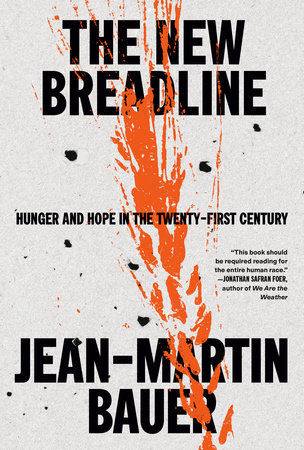
The New Breadline

Hunger and Hope in the Twenty-First Century

Look inside
Hardcover
$30.00 US
6.01"W x 8.53"H x 1.16"D   (15.3 x 21.7 x 2.9 cm) | 16 oz (459 g) | 12 per carton
On sale Jun 25, 2024 | 304 Pages | 9780593321683
Grades 9-12 + AP/IB
Sales rights: US, Canada, Open Mkt

See Additional Formats
THE NEW YORK TIMES BOOK REVIEW EDITORS' CHOICE • WINNER OF THE 2025 ZÓCALO BOOK PRIZE

A humanitarian leader with more than two decades of experience working for the United Nations takes aim at the global food crisis—revealing how hunger anywhere affects lives everywhere and what steps we can take to change course.

"This book should be required reading for the entire human race."
—Jonathan Safran Foer, author of We Are the Weather


At the turn of the twenty-first century, more than 150 countries pledged to eradicate hunger by 2030. But with only a few years left, we’re far from reaching that goal. Instead, hunger is on the rise—America itself recently experienced levels of food insecurity not seen since the Great Depression. How could the richest nation in the world have so many people going hungry?

In The New Breadline, aid worker and activist Jean-Martin Bauer unravels this paradox. Bauer’s family fled to America during the terrors of the Duvalier dictatorship in Haiti. Now on the brink of mass starvation, Haiti and its grim history inspired Bauer to make food justice his life's work. During his long career with the UN, Bauer learned firsthand that the problem of hunger is always political—and like all political conditions, hunger, he knew, was something we could work to change.

Drawing from his fieldwork in the most hunger-prone countries across the globe—from Haiti, where elites hoard imported French cheese, to Madagascar, where foreign corporations are snatching up valuable land from local farmers, to right here in America, where the lines at food banks continue to grow—Bauer weaves profound personal insight with a keen understanding of the structural systems of racism, classism, and sexism that thwart true progress in the battle against hunger. The New Breadline is an inspiring call to action to end what he persuasively argues is one of the greatest threats to our society, boldly envisioning a world where we can always feed ourselves and one another.
It had been decided they would die by firing squad. The two young men, Marcel Numa and Louis “Milou” Drouin, were tied to posts next to the stone wall at the entrance of the National Cemetery in Port-au-Prince. Marcel, a tall, athletic Black man, and Milou, a wispy mulatto, were the only members still alive from an ill-fated expedition to overthrow President François Duvalier. Their public execution would serve as a warning to anyone foolish enough to threaten the regime. Duvalier had ensured there would be a massive crowd for the execution of the captured rebels by ordering all government workers to attend and trucking in people from the countryside.

Police officers in khaki shirts signaled the start of the proceedings, pushing the onlookers back. Some in the crowd were silently praying, holding out hope that the dictator might change his mind and spare the condemned men. A white Catholic priest appeared, Bible in hand, and approached Marcel and Milou. Stoic and resolute, both men refused the last rites. Soon after, the nine members of the firing squad raised their rifles, aimed, and fired; the commanding officer delivered the coup de grâce with a pistol. It was November 12, 1964.

The story looms large in Haitian history. The execution, which was recorded for television, is proof of the brutality the Duvaliers inflicted on the Haitian people for decades. The fate of the young rebels also looms large in my own family history. Many of my relatives supported Duvalier, just as others quietly plotted the regime’s overthrow.

One of the latter was my uncle Serge Picard. It turns out Serge nearly found himself alongside Marcel and Milou that day in 1964. In fact, Serge had seen their deaths coming. A few years earlier, as a recent high school graduate, Serge had left the country for New York, where he began studying sociology. In New York, he naturally reconnected with other members of the growing Haitian diaspora, including his childhood friends Marcel and Milou, who hailed from the same town in southern Haiti. They were all part of a group of young exiles in the city who’d known one another from their days as Boy Scouts and who had formed a rebel group called Jeune Haiti, or Young Haiti. They were fiercely opposed to Duvalier’s regime, which had been responsible for the arrest, torture, and murder of many of their friends and relatives. Like Serge, many had felt compelled to join when Duvalier declared himself president for life in April 1964.

Jeune Haiti occasionally met at Serge’s apartment on 77th Street on the Upper West Side, opposite the American Museum of Natural History. The group soon hatched a bold plan to overthrow Duvalier: they would buy weapons, rent a boat, sail to Haiti, and land in their hometown of Jérémie. They would take over the town’s barracks and armory, and set in motion the downfall of the dictator, just as Fidel Castro and Che Guevara had done with Fulgencio Batista in Cuba a few years before. Serge was initially on board with the plan. But as he listened to his friends, he knew in his gut that they were doomed. He pleaded with them to cancel the plan, but it went ahead without him.

According to Serge, Jeune Haiti’s failure was the result of a combination of betrayal, errors, and bad luck. Its members had talked so much that their plan had become an open secret in New York. Inevitably, informants infiltrated the group. In August 1964, thirteen Jeune Haiti members set out for their homeland aboard the Johnny Express, a Miami-based freighter whose mysterious skipper refused to land in Jérémie as planned, instead dropping them off like packages farther west, out of reach of their supporters. The missed landing was a disaster for the expedition. The young exiles, used to the comforts of New York, found themselves facing the fight of their lives high in the towering mountain ranges of southern Haiti.

In the years following, Serge was able to piece together some of their ordeal. He met a Catholic priest who had risked his own life to shelter the young men on the night of the landing. The area was crawling with Tontons Macoutes, Duvalier’s ruthless militia, who were looking for the already demoralized rebels. The priest gave them coffee and sent them on their way before sunrise, knowing their attempt was certain to fail. A few days after they set out, the expedition found itself facing the fury of Hurricane Cleo, a powerful storm that hit Haiti in late August. As Serge searched for evidence of what had happened to his friends, he spoke to a farmer in the countryside who said he’d given them shelter in his isolated mountain hut as the storm raged. The men were drenched and cold, the farmer said, and one was coughing uncontrollably, while the hurricane toppled trees and torrential rain fell. One of the group, probably Marcel, according to the farmer’s description, seemed convinced that Duvalier himself had used his diabolical powers to summon the storm.

Betrayed, unlucky, and unprepared, the Jeune Haiti members were also brave and resourceful: over the weeks of their attempted insurrection, they trekked two hundred kilometers through rugged mountains and managed to shoot down a Haitian Air Force plane. But in the end, short of water, famished, and out of ammunition, the men were reduced to fighting off Duvalier’s soldiers with stones. At a series of engagements that September, the dictator’s forces picked off the rebels one by one. Only Marcel and Milou were captured alive to face the firing squad.

The regime didn’t execute just the rebels. Duvalier’s men also murdered their families in cold blood, including twenty-seven elders, women, and children, all from Jérémie’s embattled and largely mulatto upper class. The mulatto families that had long dominated business and politics in the port town were opposed to Duvalier’s brand of radical, anti-elite politics. Duvalier built his following by opposing the rule of a tiny light-skinned minority. To those who committed them, the massacres were revenge—visited upon a hated bourgeois class who despised people like them. Jeune Haiti’s landing had given them the perfect pretext to unleash their fury and get even.

The killings took place near the airport, where the victims were buried in a mass grave. The murders were atrocious. It is said that two of Duvalier’s henchmen tortured a four-year-old child in front of her mother, throwing her in the air and impaling her on a knife. They put their cigarettes out in the eyes of crying babies. The massacre took place over a series of nights, and people living in the nearby hills could hear the shouts of soldiers and the echoing screams of their victims. Soon after the killings, the assassins were seen driving the cars of the people they had just murdered.

As for Serge, he was tormented by guilt and grief for the rest of his life.

The executions of Marcel and Milou, and the murder of the rebels’ families, were only some of the innumerable sins of the Duvaliers, father and son, who ruled Haiti from 1957 to 1986. The regime’s ideology was noirisme, a form of Black fascism, a reaction to the light-skinned elite’s domination of Haitian society. Haiti’s mulatto bourgeoisie had rigged society to their benefit. They controlled the government and institutions and amassed great wealth, while the darker-skinned masses moldered in abject poverty. Haitian-American writer Edwidge Danticat calls the arrangement “social and economic apartheid.” For all his revolutionary swagger, Duvalier didn’t end the hated system.

Papa Doc, the elder Duvalier, created a corrupt and murderous police state in which the entire nation was kept in a state of terror, and a hideous personality cult that had schoolchildren reciting a modified version of the Lord’s Prayer: Our Doc, who art in the National Palace for life, hallowed be Thy name . . . Like most dictators, Duvalier became increasingly paranoid as the years went by. At one point he ordered that every black dog in Port-au-Prince be killed, after one of his adversaries was said to have used a voodoo spell to turn himself into one.

The regime’s top priority was to survive; it crushed opposition movements like Jeune Haiti. Although the elder Duvalier came to office on a populist platform, he was obsessed with power. The younger Duvalier kept a stable of sports cars, while his wife had a huge refrigerator built in which she stored her fur coat collection. The Duvaliers’ ruthlessness and greed had a profound, long-term impact. The country lost its skilled class as educated professionals emigrated. Illiteracy, poverty, and malnutrition were rife.

Both Duvaliers, father and son, let hunger metastasize into the full-blown crisis it has become today.

Journalists routinely describe Haiti as the first Black republic, or they might say it’s the poorest nation in the Western Hemisphere. As I write this in 2023, the hunger facing Haitians is especially dire; there are even pockets of famine-like conditions in the capital. The United Nations estimates that nearly half of Haiti’s 12 million people need food assistance, while 100,000 children suffer from malnutrition each year. In Haiti, misrule, violence, and starvation have gone hand in hand. But hunger in the country is not a single man’s legacy: over the centuries, an unconcerned bourgeoisie and self-serving foreign “friends” also played a large part. It has become a sobering case study of the manmade forces that lay the groundwork for hunger.

Things in Haiti had once been different.

Soon after independence in 1804, when the country’s population was only a few hundred thousand, there was, for a time, a modicum of political stability—and, importantly, enough land for everyone. In the south of the country, President Alexandre Pétion broke up the French colonial plantations that had produced a bounty of sugar, coffee, and indigo. He distributed the land to his soldiers, creating a nation of small farmers at the stroke of a pen. The move allowed the free Blacks to establish a multitude of family homesteads focused on subsistence farming, sometimes on the very land the French had forced them to work. Haiti even had enough land to offer refuge to thousands of African Americans fleeing racism and slavery at home.

As in Africa, nineteenth-century Haitian farmers grew corn, beans, sorghum, sweet potatoes, coffee, and bananas, and kept goats, pigs, and chickens. In the African way, they lived in multigenerational family compounds, or lakou. With their hard-won freedom secure, the nation’s farmers kept to themselves, avoiding the cities and their arcane politics.

But it wouldn’t last. In 1825, Haiti was forced to pay an outrageous “indemnity” to France in exchange for diplomatic recognition. The ransom of 150 million gold francs was meant to “compensate” former colonists for the loss of their plantations and property, including the people they’d enslaved. The agreement would become a drain on Haiti’s finances for the next century, stymieing the country’s investment in its own infrastructure and people. Corrupt members of the Haitian elite played along, agreeing to repayment terms that enriched themselves and French banking interests.

Over the course of the nineteenth century, a French-speaking, politically influential mulatto bourgeoisie cornered the coffee trade, then the nation’s main export. With the profits, the elite began to acquire land from small farmers, plot by plot. In time, many Haitian farmers were driven into sharecropping, while population growth meant the lakous were subdivided into ever smaller plots.

By the late nineteenth century, Haiti had run out of land to feed its burgeoning population, forcing legions of young, able-bodied men to seek work cutting cane in Cuba or the Dominican Republic. One can only imagine how hard it was for independent-minded Haitians to work abroad in conditions that looked a lot like slavery. Migration became a rite of passage. Migration and exile remain at the core of the Haitian experience; my family’s departure for New York in the 1960s is but one story among many.

Haiti entered the twentieth century both financially crushed by its former enslavers and suffering from an acute land shortage. The seeds of hunger had been sown. And politics turned from bad to worse. Rebellion after rebellion shook the country. The country had five presidents between 1910 and 1915. In July 1915, the last of them, Villebrun Guillaume Sam, ordered his predecessor murdered, along with 167 other political opponents. When news spread of the bloodbath, riots broke out in Port-au-Prince. A mob pulled the hapless Sam out of the French embassy, where he had sought refuge, tore his body limb from limb, and paraded his remains around town. All this was too much for President Woodrow Wilson, who sent in the Marines. The United States would occupy Haiti for the next nineteen years.

A turning point in Haiti’s ability to feed itself came in October 1954, when Hurricane Hazel hit the south, a productive farming area, leading to an influx of food aid. The powerful storm drowned hundreds of people, devastated the crops, and flooded the cities of Les Cayes and Jérémie. The USS Saipan, an aircraft carrier, was the first vessel to bring American food surpluses to Haiti, just months after President Eisenhower’s new Public Law 480 formalized food aid as a foreign policy instrument. For weeks, the people of Jérémie owed their survival to the food rations the ship’s helicopters ferried over. While the Saipan brought much-needed aid, its visit heralded the start of Haiti’s fractious relationship with food aid that persists to this day.

As a child, my uncle Serge saw the USS Saipan at anchor off Jérémie and saw how the food it carried saved lives. It might have inspired him, because he became a manager of food aid programs in Haiti and, later, an independent rice farmer. Serge ultimately struggled to realize his vision of sustainable farming in Haiti, and the problems he faced provide insight as to why Haiti lost the ability to feed its own people.

After earning his sociology degree in New York, Serge spent more than a decade working in the United States and for international organizations, before resettling in Haiti in 1977. By then, things had changed on the island. Papa Doc had died, and his son was now president. There was less tension and violence than in the 1960s. Still, Serge steered clear of the kind of activity that had doomed his friends. “I don’t do politics,” he would grumble in his deep voice to anyone gauche enough to ask. Serge was first the director of Catholic Relief Services and later of other U.S. nongovernmental organizations (NGOs).

Serge and his wife, Nelly—a Haitian woman he’d met in New York, who also worked for international NGOs in the country, including Save the Children—became rice growers in Patte Large, a remote corner of the south, farming a hundred hectares of paddies bordered by steep mountains that plunged straight into the sea. The estate, called Kay Ben, was well watered and fertile, but extremely isolated. I was delighted when Serge took me to Kay Ben as a teenager in the summer of 1997. At the time, I hadn’t been to Haiti in a decade.
"Memorable… The book is a close-up look at efforts to vanquish hunger amid both major, front-page disasters, such as the 2010 Haiti earthquake and the Syrian civil war, and the countless lower-profile calamities that are documented on the inside pages, if at all… What makes The New Breadline so compelling, though, are… the small details Bauer shares from a realm that usually operates out of the public eye… One effect of this book is to leave the reader oddly hopeful about the prospects for mitigating these nightmares, having given us a glimpse of the deeply committed people working to overcome them, again and again.”
—Alec MacGillis, New York Times Book Review

“No subject more urgently requires our attention than world hunger. I cannot imagine a more thoughtful and humane introduction to the crisis of food security than The New Breadline."
—Jonathan Safran Foer, author of We Are the Weather

"In the midst of the global food crisis, I find myself searching for stories of hope with tangible solutions now more than ever. In The New Breadline, Jean-Martin Bauer draws upon a lifetime on the frontlines of fighting hunger to deliver a must-read handbook that will inform, inspire, and ignite action to repair our broken food system."
 —José Andrés, Chef and Founder of World Central Kitchen 

 “The New Breadline is a narratively-compelling, timely, and prescriptive book about the problems of hunger and food security in today’s world. Bauer writes with intelligence and brio about a topic he knows extremely well. Drawing on a superb grasp of history and his own experiences as a humanitarian worker who has dealt with food crises around the world—everywhere from Haiti and the Middle East to Africa—Bauer offers practical pathways to hope.” 
—Jon Lee Anderson, author of The Fall of Baghdad

"Hunger should be a historical topic but Jean-Martin Bauer evocatively positions it as a core facet of our modern world. His unique vantage point — that of a front-line humanitarian leader — brings an analysis informed by hard ground truths to this urgent topic. Humanitarians, development leaders, and anyone who cares about hunger and the forces that drive it will find this book illuminating and important.
—Raj Kumar, President & Editor-in-Chief of Devex

“Few writers tackle the world of international hunger, and Jean-Martin Bauer has seen what they’ve missed. His years on the frontlines in battle against malnutrition have made him acutely sensitive to what works, and what doesn’t. But Bauer weaves his knowledge into prose that reads like he's sharing stories late at night under a kerosene lamp. The New Breadline is a tremendous book that’ll linger long after you’ve turned the last page.”
—Raj Patel, author of Stuffed and Starved

“In The New Breadline, Jean-Martin Bauer gives us a fascinating portrait of international aid and the complications, contradictions, and casual heroism that underpin the global fight to end hunger. Swinging easily from the personal to the political, weaving rich history with lived experience, and crisscrossing the global without flattening it, Bauer manages to transform complex geopolitical forces into a page turner. The New Breadline offers no simplistic answers and will complicate easy pictures of right and wrong, but never withholds glimpses of joy and hope. A must read for anyone interested in foreign food aid, for anyone who wants to understand our global food supply chain, for anyone who eats and wants to appreciate their food. Bravo."
—Benjamin Lorr, author of The Secret Life of Groceries

"A clear-voiced call for ways to address the urgent need to feed billions of hungry people."
Kirkus
© Peter Van Velzen
JEAN-MARTIN BAUER has served with the World Food Programme in the Sahel and central Africa and has responded to food emergencies in Afghanistan and Syria. Bauer has led WFP country offices in the Republic of the Congo and in Haiti. His work has also focused on leveraging digital tech and analytics to fight hunger. A Washington, DC, native, Bauer holds degrees from the London School of Economics and the Harvard Kennedy School. View titles by Jean-Martin Bauer
Available for sale exclusive:
•     Canada
•     Guam
•     Minor Outl.Ins.
•     North Mariana
•     Philippines
•     Puerto Rico
•     Samoa,American
•     US Virgin Is.
•     USA

Available for sale non-exclusive:
•     Afghanistan
•     Aland Islands
•     Albania
•     Algeria
•     Andorra
•     Angola
•     Antarctica
•     Argentina
•     Armenia
•     Aruba
•     Austria
•     Azerbaijan
•     Bahrain
•     Belarus
•     Belgium
•     Benin
•     Bolivia
•     Bonaire, Saba
•     Bosnia Herzeg.
•     Bouvet Island
•     Brazil
•     Bulgaria
•     Burkina Faso
•     Burundi
•     Cambodia
•     Cameroon
•     Cape Verde
•     Centr.Afr.Rep.
•     Chad
•     Chile
•     China
•     Colombia
•     Comoro Is.
•     Congo
•     Cook Islands
•     Costa Rica
•     Croatia
•     Cuba
•     Curacao
•     Czech Republic
•     Dem. Rep. Congo
•     Denmark
•     Djibouti
•     Dominican Rep.
•     Ecuador
•     Egypt
•     El Salvador
•     Equatorial Gui.
•     Eritrea
•     Estonia
•     Ethiopia
•     Faroe Islands
•     Finland
•     France
•     Fren.Polynesia
•     French Guinea
•     Gabon
•     Georgia
•     Germany
•     Greece
•     Greenland
•     Guadeloupe
•     Guatemala
•     Guinea Republic
•     Guinea-Bissau
•     Haiti
•     Heard/McDon.Isl
•     Honduras
•     Hong Kong
•     Hungary
•     Iceland
•     Indonesia
•     Iran
•     Israel
•     Italy
•     Ivory Coast
•     Japan
•     Kazakhstan
•     Kyrgyzstan
•     Laos
•     Latvia
•     Lebanon
•     Liberia
•     Libya
•     Liechtenstein
•     Lithuania
•     Luxembourg
•     Macau
•     Macedonia
•     Madagascar
•     Maldives
•     Mali
•     Marshall island
•     Martinique
•     Mauritania
•     Mayotte
•     Mexico
•     Micronesia
•     Moldavia
•     Monaco
•     Mongolia
•     Montenegro
•     Morocco
•     Myanmar
•     Nepal
•     Netherlands
•     New Caledonia
•     Nicaragua
•     Niger
•     Niue
•     Norfolk Island
•     North Korea
•     Norway
•     Oman
•     Palau
•     Palestinian Ter
•     Panama
•     Paraguay
•     Peru
•     Poland
•     Portugal
•     Qatar
•     Reunion Island
•     Romania
•     Russian Fed.
•     Rwanda
•     Saint Martin
•     San Marino
•     SaoTome Princip
•     Saudi Arabia
•     Senegal
•     Serbia
•     Singapore
•     Sint Maarten
•     Slovakia
•     Slovenia
•     South Korea
•     South Sudan
•     Spain
•     St Barthelemy
•     St.Pier,Miquel.
•     Sth Terr. Franc
•     Suriname
•     Svalbard
•     Sweden
•     Switzerland
•     Syria
•     Tadschikistan
•     Taiwan
•     Thailand
•     Timor-Leste
•     Togo
•     Tokelau Islands
•     Tunisia
•     Turkey
•     Turkmenistan
•     Ukraine
•     Unit.Arab Emir.
•     Uruguay
•     Uzbekistan
•     Vatican City
•     Venezuela
•     Vietnam
•     Wallis,Futuna
•     West Saharan
•     Yemen

Not available for sale:
•     Anguilla
•     Antigua/Barbuda
•     Australia
•     Bahamas
•     Bangladesh
•     Barbados
•     Belize
•     Bermuda
•     Bhutan
•     Botswana
•     Brit.Ind.Oc.Ter
•     Brit.Virgin Is.
•     Brunei
•     Cayman Islands
•     Christmas Islnd
•     Cocos Islands
•     Cyprus
•     Dominica
•     Falkland Islnds
•     Fiji
•     Gambia
•     Ghana
•     Gibraltar
•     Grenada
•     Guernsey
•     Guyana
•     India
•     Iraq
•     Ireland
•     Isle of Man
•     Jamaica
•     Jersey
•     Jordan
•     Kenya
•     Kiribati
•     Kuwait
•     Lesotho
•     Malawi
•     Malaysia
•     Malta
•     Mauritius
•     Montserrat
•     Mozambique
•     Namibia
•     Nauru
•     New Zealand
•     Nigeria
•     Pakistan
•     PapuaNewGuinea
•     Pitcairn Islnds
•     S. Sandwich Ins
•     Seychelles
•     Sierra Leone
•     Solomon Islands
•     Somalia
•     South Africa
•     Sri Lanka
•     St. Helena
•     St. Lucia
•     St. Vincent
•     St.Chr.,Nevis
•     Sudan
•     Swaziland
•     Tanzania
•     Tonga
•     Trinidad,Tobago
•     Turks&Caicos Is
•     Tuvalu
•     Uganda
•     United Kingdom
•     Vanuatu
•     Western Samoa
•     Zambia
•     Zimbabwe

About

THE NEW YORK TIMES BOOK REVIEW EDITORS' CHOICE • WINNER OF THE 2025 ZÓCALO BOOK PRIZE

A humanitarian leader with more than two decades of experience working for the United Nations takes aim at the global food crisis—revealing how hunger anywhere affects lives everywhere and what steps we can take to change course.

"This book should be required reading for the entire human race."
—Jonathan Safran Foer, author of We Are the Weather


At the turn of the twenty-first century, more than 150 countries pledged to eradicate hunger by 2030. But with only a few years left, we’re far from reaching that goal. Instead, hunger is on the rise—America itself recently experienced levels of food insecurity not seen since the Great Depression. How could the richest nation in the world have so many people going hungry?

In The New Breadline, aid worker and activist Jean-Martin Bauer unravels this paradox. Bauer’s family fled to America during the terrors of the Duvalier dictatorship in Haiti. Now on the brink of mass starvation, Haiti and its grim history inspired Bauer to make food justice his life's work. During his long career with the UN, Bauer learned firsthand that the problem of hunger is always political—and like all political conditions, hunger, he knew, was something we could work to change.

Drawing from his fieldwork in the most hunger-prone countries across the globe—from Haiti, where elites hoard imported French cheese, to Madagascar, where foreign corporations are snatching up valuable land from local farmers, to right here in America, where the lines at food banks continue to grow—Bauer weaves profound personal insight with a keen understanding of the structural systems of racism, classism, and sexism that thwart true progress in the battle against hunger. The New Breadline is an inspiring call to action to end what he persuasively argues is one of the greatest threats to our society, boldly envisioning a world where we can always feed ourselves and one another.

Excerpt

It had been decided they would die by firing squad. The two young men, Marcel Numa and Louis “Milou” Drouin, were tied to posts next to the stone wall at the entrance of the National Cemetery in Port-au-Prince. Marcel, a tall, athletic Black man, and Milou, a wispy mulatto, were the only members still alive from an ill-fated expedition to overthrow President François Duvalier. Their public execution would serve as a warning to anyone foolish enough to threaten the regime. Duvalier had ensured there would be a massive crowd for the execution of the captured rebels by ordering all government workers to attend and trucking in people from the countryside.

Police officers in khaki shirts signaled the start of the proceedings, pushing the onlookers back. Some in the crowd were silently praying, holding out hope that the dictator might change his mind and spare the condemned men. A white Catholic priest appeared, Bible in hand, and approached Marcel and Milou. Stoic and resolute, both men refused the last rites. Soon after, the nine members of the firing squad raised their rifles, aimed, and fired; the commanding officer delivered the coup de grâce with a pistol. It was November 12, 1964.

The story looms large in Haitian history. The execution, which was recorded for television, is proof of the brutality the Duvaliers inflicted on the Haitian people for decades. The fate of the young rebels also looms large in my own family history. Many of my relatives supported Duvalier, just as others quietly plotted the regime’s overthrow.

One of the latter was my uncle Serge Picard. It turns out Serge nearly found himself alongside Marcel and Milou that day in 1964. In fact, Serge had seen their deaths coming. A few years earlier, as a recent high school graduate, Serge had left the country for New York, where he began studying sociology. In New York, he naturally reconnected with other members of the growing Haitian diaspora, including his childhood friends Marcel and Milou, who hailed from the same town in southern Haiti. They were all part of a group of young exiles in the city who’d known one another from their days as Boy Scouts and who had formed a rebel group called Jeune Haiti, or Young Haiti. They were fiercely opposed to Duvalier’s regime, which had been responsible for the arrest, torture, and murder of many of their friends and relatives. Like Serge, many had felt compelled to join when Duvalier declared himself president for life in April 1964.

Jeune Haiti occasionally met at Serge’s apartment on 77th Street on the Upper West Side, opposite the American Museum of Natural History. The group soon hatched a bold plan to overthrow Duvalier: they would buy weapons, rent a boat, sail to Haiti, and land in their hometown of Jérémie. They would take over the town’s barracks and armory, and set in motion the downfall of the dictator, just as Fidel Castro and Che Guevara had done with Fulgencio Batista in Cuba a few years before. Serge was initially on board with the plan. But as he listened to his friends, he knew in his gut that they were doomed. He pleaded with them to cancel the plan, but it went ahead without him.

According to Serge, Jeune Haiti’s failure was the result of a combination of betrayal, errors, and bad luck. Its members had talked so much that their plan had become an open secret in New York. Inevitably, informants infiltrated the group. In August 1964, thirteen Jeune Haiti members set out for their homeland aboard the Johnny Express, a Miami-based freighter whose mysterious skipper refused to land in Jérémie as planned, instead dropping them off like packages farther west, out of reach of their supporters. The missed landing was a disaster for the expedition. The young exiles, used to the comforts of New York, found themselves facing the fight of their lives high in the towering mountain ranges of southern Haiti.

In the years following, Serge was able to piece together some of their ordeal. He met a Catholic priest who had risked his own life to shelter the young men on the night of the landing. The area was crawling with Tontons Macoutes, Duvalier’s ruthless militia, who were looking for the already demoralized rebels. The priest gave them coffee and sent them on their way before sunrise, knowing their attempt was certain to fail. A few days after they set out, the expedition found itself facing the fury of Hurricane Cleo, a powerful storm that hit Haiti in late August. As Serge searched for evidence of what had happened to his friends, he spoke to a farmer in the countryside who said he’d given them shelter in his isolated mountain hut as the storm raged. The men were drenched and cold, the farmer said, and one was coughing uncontrollably, while the hurricane toppled trees and torrential rain fell. One of the group, probably Marcel, according to the farmer’s description, seemed convinced that Duvalier himself had used his diabolical powers to summon the storm.

Betrayed, unlucky, and unprepared, the Jeune Haiti members were also brave and resourceful: over the weeks of their attempted insurrection, they trekked two hundred kilometers through rugged mountains and managed to shoot down a Haitian Air Force plane. But in the end, short of water, famished, and out of ammunition, the men were reduced to fighting off Duvalier’s soldiers with stones. At a series of engagements that September, the dictator’s forces picked off the rebels one by one. Only Marcel and Milou were captured alive to face the firing squad.

The regime didn’t execute just the rebels. Duvalier’s men also murdered their families in cold blood, including twenty-seven elders, women, and children, all from Jérémie’s embattled and largely mulatto upper class. The mulatto families that had long dominated business and politics in the port town were opposed to Duvalier’s brand of radical, anti-elite politics. Duvalier built his following by opposing the rule of a tiny light-skinned minority. To those who committed them, the massacres were revenge—visited upon a hated bourgeois class who despised people like them. Jeune Haiti’s landing had given them the perfect pretext to unleash their fury and get even.

The killings took place near the airport, where the victims were buried in a mass grave. The murders were atrocious. It is said that two of Duvalier’s henchmen tortured a four-year-old child in front of her mother, throwing her in the air and impaling her on a knife. They put their cigarettes out in the eyes of crying babies. The massacre took place over a series of nights, and people living in the nearby hills could hear the shouts of soldiers and the echoing screams of their victims. Soon after the killings, the assassins were seen driving the cars of the people they had just murdered.

As for Serge, he was tormented by guilt and grief for the rest of his life.

The executions of Marcel and Milou, and the murder of the rebels’ families, were only some of the innumerable sins of the Duvaliers, father and son, who ruled Haiti from 1957 to 1986. The regime’s ideology was noirisme, a form of Black fascism, a reaction to the light-skinned elite’s domination of Haitian society. Haiti’s mulatto bourgeoisie had rigged society to their benefit. They controlled the government and institutions and amassed great wealth, while the darker-skinned masses moldered in abject poverty. Haitian-American writer Edwidge Danticat calls the arrangement “social and economic apartheid.” For all his revolutionary swagger, Duvalier didn’t end the hated system.

Papa Doc, the elder Duvalier, created a corrupt and murderous police state in which the entire nation was kept in a state of terror, and a hideous personality cult that had schoolchildren reciting a modified version of the Lord’s Prayer: Our Doc, who art in the National Palace for life, hallowed be Thy name . . . Like most dictators, Duvalier became increasingly paranoid as the years went by. At one point he ordered that every black dog in Port-au-Prince be killed, after one of his adversaries was said to have used a voodoo spell to turn himself into one.

The regime’s top priority was to survive; it crushed opposition movements like Jeune Haiti. Although the elder Duvalier came to office on a populist platform, he was obsessed with power. The younger Duvalier kept a stable of sports cars, while his wife had a huge refrigerator built in which she stored her fur coat collection. The Duvaliers’ ruthlessness and greed had a profound, long-term impact. The country lost its skilled class as educated professionals emigrated. Illiteracy, poverty, and malnutrition were rife.

Both Duvaliers, father and son, let hunger metastasize into the full-blown crisis it has become today.

Journalists routinely describe Haiti as the first Black republic, or they might say it’s the poorest nation in the Western Hemisphere. As I write this in 2023, the hunger facing Haitians is especially dire; there are even pockets of famine-like conditions in the capital. The United Nations estimates that nearly half of Haiti’s 12 million people need food assistance, while 100,000 children suffer from malnutrition each year. In Haiti, misrule, violence, and starvation have gone hand in hand. But hunger in the country is not a single man’s legacy: over the centuries, an unconcerned bourgeoisie and self-serving foreign “friends” also played a large part. It has become a sobering case study of the manmade forces that lay the groundwork for hunger.

Things in Haiti had once been different.

Soon after independence in 1804, when the country’s population was only a few hundred thousand, there was, for a time, a modicum of political stability—and, importantly, enough land for everyone. In the south of the country, President Alexandre Pétion broke up the French colonial plantations that had produced a bounty of sugar, coffee, and indigo. He distributed the land to his soldiers, creating a nation of small farmers at the stroke of a pen. The move allowed the free Blacks to establish a multitude of family homesteads focused on subsistence farming, sometimes on the very land the French had forced them to work. Haiti even had enough land to offer refuge to thousands of African Americans fleeing racism and slavery at home.

As in Africa, nineteenth-century Haitian farmers grew corn, beans, sorghum, sweet potatoes, coffee, and bananas, and kept goats, pigs, and chickens. In the African way, they lived in multigenerational family compounds, or lakou. With their hard-won freedom secure, the nation’s farmers kept to themselves, avoiding the cities and their arcane politics.

But it wouldn’t last. In 1825, Haiti was forced to pay an outrageous “indemnity” to France in exchange for diplomatic recognition. The ransom of 150 million gold francs was meant to “compensate” former colonists for the loss of their plantations and property, including the people they’d enslaved. The agreement would become a drain on Haiti’s finances for the next century, stymieing the country’s investment in its own infrastructure and people. Corrupt members of the Haitian elite played along, agreeing to repayment terms that enriched themselves and French banking interests.

Over the course of the nineteenth century, a French-speaking, politically influential mulatto bourgeoisie cornered the coffee trade, then the nation’s main export. With the profits, the elite began to acquire land from small farmers, plot by plot. In time, many Haitian farmers were driven into sharecropping, while population growth meant the lakous were subdivided into ever smaller plots.

By the late nineteenth century, Haiti had run out of land to feed its burgeoning population, forcing legions of young, able-bodied men to seek work cutting cane in Cuba or the Dominican Republic. One can only imagine how hard it was for independent-minded Haitians to work abroad in conditions that looked a lot like slavery. Migration became a rite of passage. Migration and exile remain at the core of the Haitian experience; my family’s departure for New York in the 1960s is but one story among many.

Haiti entered the twentieth century both financially crushed by its former enslavers and suffering from an acute land shortage. The seeds of hunger had been sown. And politics turned from bad to worse. Rebellion after rebellion shook the country. The country had five presidents between 1910 and 1915. In July 1915, the last of them, Villebrun Guillaume Sam, ordered his predecessor murdered, along with 167 other political opponents. When news spread of the bloodbath, riots broke out in Port-au-Prince. A mob pulled the hapless Sam out of the French embassy, where he had sought refuge, tore his body limb from limb, and paraded his remains around town. All this was too much for President Woodrow Wilson, who sent in the Marines. The United States would occupy Haiti for the next nineteen years.

A turning point in Haiti’s ability to feed itself came in October 1954, when Hurricane Hazel hit the south, a productive farming area, leading to an influx of food aid. The powerful storm drowned hundreds of people, devastated the crops, and flooded the cities of Les Cayes and Jérémie. The USS Saipan, an aircraft carrier, was the first vessel to bring American food surpluses to Haiti, just months after President Eisenhower’s new Public Law 480 formalized food aid as a foreign policy instrument. For weeks, the people of Jérémie owed their survival to the food rations the ship’s helicopters ferried over. While the Saipan brought much-needed aid, its visit heralded the start of Haiti’s fractious relationship with food aid that persists to this day.

As a child, my uncle Serge saw the USS Saipan at anchor off Jérémie and saw how the food it carried saved lives. It might have inspired him, because he became a manager of food aid programs in Haiti and, later, an independent rice farmer. Serge ultimately struggled to realize his vision of sustainable farming in Haiti, and the problems he faced provide insight as to why Haiti lost the ability to feed its own people.

After earning his sociology degree in New York, Serge spent more than a decade working in the United States and for international organizations, before resettling in Haiti in 1977. By then, things had changed on the island. Papa Doc had died, and his son was now president. There was less tension and violence than in the 1960s. Still, Serge steered clear of the kind of activity that had doomed his friends. “I don’t do politics,” he would grumble in his deep voice to anyone gauche enough to ask. Serge was first the director of Catholic Relief Services and later of other U.S. nongovernmental organizations (NGOs).

Serge and his wife, Nelly—a Haitian woman he’d met in New York, who also worked for international NGOs in the country, including Save the Children—became rice growers in Patte Large, a remote corner of the south, farming a hundred hectares of paddies bordered by steep mountains that plunged straight into the sea. The estate, called Kay Ben, was well watered and fertile, but extremely isolated. I was delighted when Serge took me to Kay Ben as a teenager in the summer of 1997. At the time, I hadn’t been to Haiti in a decade.

Praise

"Memorable… The book is a close-up look at efforts to vanquish hunger amid both major, front-page disasters, such as the 2010 Haiti earthquake and the Syrian civil war, and the countless lower-profile calamities that are documented on the inside pages, if at all… What makes The New Breadline so compelling, though, are… the small details Bauer shares from a realm that usually operates out of the public eye… One effect of this book is to leave the reader oddly hopeful about the prospects for mitigating these nightmares, having given us a glimpse of the deeply committed people working to overcome them, again and again.”
—Alec MacGillis, New York Times Book Review

“No subject more urgently requires our attention than world hunger. I cannot imagine a more thoughtful and humane introduction to the crisis of food security than The New Breadline."
—Jonathan Safran Foer, author of We Are the Weather

"In the midst of the global food crisis, I find myself searching for stories of hope with tangible solutions now more than ever. In The New Breadline, Jean-Martin Bauer draws upon a lifetime on the frontlines of fighting hunger to deliver a must-read handbook that will inform, inspire, and ignite action to repair our broken food system."
 —José Andrés, Chef and Founder of World Central Kitchen 

 “The New Breadline is a narratively-compelling, timely, and prescriptive book about the problems of hunger and food security in today’s world. Bauer writes with intelligence and brio about a topic he knows extremely well. Drawing on a superb grasp of history and his own experiences as a humanitarian worker who has dealt with food crises around the world—everywhere from Haiti and the Middle East to Africa—Bauer offers practical pathways to hope.” 
—Jon Lee Anderson, author of The Fall of Baghdad

"Hunger should be a historical topic but Jean-Martin Bauer evocatively positions it as a core facet of our modern world. His unique vantage point — that of a front-line humanitarian leader — brings an analysis informed by hard ground truths to this urgent topic. Humanitarians, development leaders, and anyone who cares about hunger and the forces that drive it will find this book illuminating and important.
—Raj Kumar, President & Editor-in-Chief of Devex

“Few writers tackle the world of international hunger, and Jean-Martin Bauer has seen what they’ve missed. His years on the frontlines in battle against malnutrition have made him acutely sensitive to what works, and what doesn’t. But Bauer weaves his knowledge into prose that reads like he's sharing stories late at night under a kerosene lamp. The New Breadline is a tremendous book that’ll linger long after you’ve turned the last page.”
—Raj Patel, author of Stuffed and Starved

“In The New Breadline, Jean-Martin Bauer gives us a fascinating portrait of international aid and the complications, contradictions, and casual heroism that underpin the global fight to end hunger. Swinging easily from the personal to the political, weaving rich history with lived experience, and crisscrossing the global without flattening it, Bauer manages to transform complex geopolitical forces into a page turner. The New Breadline offers no simplistic answers and will complicate easy pictures of right and wrong, but never withholds glimpses of joy and hope. A must read for anyone interested in foreign food aid, for anyone who wants to understand our global food supply chain, for anyone who eats and wants to appreciate their food. Bravo."
—Benjamin Lorr, author of The Secret Life of Groceries

"A clear-voiced call for ways to address the urgent need to feed billions of hungry people."
Kirkus

Author

© Peter Van Velzen
JEAN-MARTIN BAUER has served with the World Food Programme in the Sahel and central Africa and has responded to food emergencies in Afghanistan and Syria. Bauer has led WFP country offices in the Republic of the Congo and in Haiti. His work has also focused on leveraging digital tech and analytics to fight hunger. A Washington, DC, native, Bauer holds degrees from the London School of Economics and the Harvard Kennedy School. View titles by Jean-Martin Bauer

Rights

Available for sale exclusive:
•     Canada
•     Guam
•     Minor Outl.Ins.
•     North Mariana
•     Philippines
•     Puerto Rico
•     Samoa,American
•     US Virgin Is.
•     USA

Available for sale non-exclusive:
•     Afghanistan
•     Aland Islands
•     Albania
•     Algeria
•     Andorra
•     Angola
•     Antarctica
•     Argentina
•     Armenia
•     Aruba
•     Austria
•     Azerbaijan
•     Bahrain
•     Belarus
•     Belgium
•     Benin
•     Bolivia
•     Bonaire, Saba
•     Bosnia Herzeg.
•     Bouvet Island
•     Brazil
•     Bulgaria
•     Burkina Faso
•     Burundi
•     Cambodia
•     Cameroon
•     Cape Verde
•     Centr.Afr.Rep.
•     Chad
•     Chile
•     China
•     Colombia
•     Comoro Is.
•     Congo
•     Cook Islands
•     Costa Rica
•     Croatia
•     Cuba
•     Curacao
•     Czech Republic
•     Dem. Rep. Congo
•     Denmark
•     Djibouti
•     Dominican Rep.
•     Ecuador
•     Egypt
•     El Salvador
•     Equatorial Gui.
•     Eritrea
•     Estonia
•     Ethiopia
•     Faroe Islands
•     Finland
•     France
•     Fren.Polynesia
•     French Guinea
•     Gabon
•     Georgia
•     Germany
•     Greece
•     Greenland
•     Guadeloupe
•     Guatemala
•     Guinea Republic
•     Guinea-Bissau
•     Haiti
•     Heard/McDon.Isl
•     Honduras
•     Hong Kong
•     Hungary
•     Iceland
•     Indonesia
•     Iran
•     Israel
•     Italy
•     Ivory Coast
•     Japan
•     Kazakhstan
•     Kyrgyzstan
•     Laos
•     Latvia
•     Lebanon
•     Liberia
•     Libya
•     Liechtenstein
•     Lithuania
•     Luxembourg
•     Macau
•     Macedonia
•     Madagascar
•     Maldives
•     Mali
•     Marshall island
•     Martinique
•     Mauritania
•     Mayotte
•     Mexico
•     Micronesia
•     Moldavia
•     Monaco
•     Mongolia
•     Montenegro
•     Morocco
•     Myanmar
•     Nepal
•     Netherlands
•     New Caledonia
•     Nicaragua
•     Niger
•     Niue
•     Norfolk Island
•     North Korea
•     Norway
•     Oman
•     Palau
•     Palestinian Ter
•     Panama
•     Paraguay
•     Peru
•     Poland
•     Portugal
•     Qatar
•     Reunion Island
•     Romania
•     Russian Fed.
•     Rwanda
•     Saint Martin
•     San Marino
•     SaoTome Princip
•     Saudi Arabia
•     Senegal
•     Serbia
•     Singapore
•     Sint Maarten
•     Slovakia
•     Slovenia
•     South Korea
•     South Sudan
•     Spain
•     St Barthelemy
•     St.Pier,Miquel.
•     Sth Terr. Franc
•     Suriname
•     Svalbard
•     Sweden
•     Switzerland
•     Syria
•     Tadschikistan
•     Taiwan
•     Thailand
•     Timor-Leste
•     Togo
•     Tokelau Islands
•     Tunisia
•     Turkey
•     Turkmenistan
•     Ukraine
•     Unit.Arab Emir.
•     Uruguay
•     Uzbekistan
•     Vatican City
•     Venezuela
•     Vietnam
•     Wallis,Futuna
•     West Saharan
•     Yemen

Not available for sale:
•     Anguilla
•     Antigua/Barbuda
•     Australia
•     Bahamas
•     Bangladesh
•     Barbados
•     Belize
•     Bermuda
•     Bhutan
•     Botswana
•     Brit.Ind.Oc.Ter
•     Brit.Virgin Is.
•     Brunei
•     Cayman Islands
•     Christmas Islnd
•     Cocos Islands
•     Cyprus
•     Dominica
•     Falkland Islnds
•     Fiji
•     Gambia
•     Ghana
•     Gibraltar
•     Grenada
•     Guernsey
•     Guyana
•     India
•     Iraq
•     Ireland
•     Isle of Man
•     Jamaica
•     Jersey
•     Jordan
•     Kenya
•     Kiribati
•     Kuwait
•     Lesotho
•     Malawi
•     Malaysia
•     Malta
•     Mauritius
•     Montserrat
•     Mozambique
•     Namibia
•     Nauru
•     New Zealand
•     Nigeria
•     Pakistan
•     PapuaNewGuinea
•     Pitcairn Islnds
•     S. Sandwich Ins
•     Seychelles
•     Sierra Leone
•     Solomon Islands
•     Somalia
•     South Africa
•     Sri Lanka
•     St. Helena
•     St. Lucia
•     St. Vincent
•     St.Chr.,Nevis
•     Sudan
•     Swaziland
•     Tanzania
•     Tonga
•     Trinidad,Tobago
•     Turks&Caicos Is
•     Tuvalu
•     Uganda
•     United Kingdom
•     Vanuatu
•     Western Samoa
•     Zambia
•     Zimbabwe