Close Modal

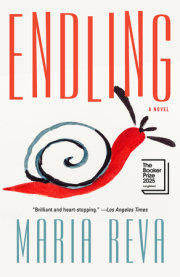
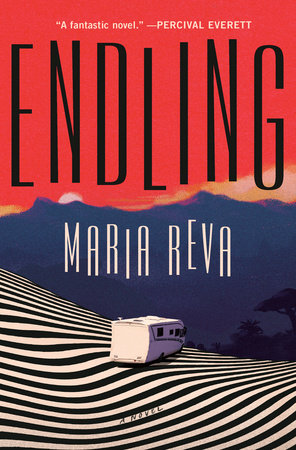
Endling

A Novel

Author Maria Reva
Look inside
Best Seller
Hardcover
$28.00 US
6.3"W x 9.5"H x 1.27"D   (16.0 x 24.1 x 3.2 cm) | 23 oz (646 g) | 12 per carton
On sale Jun 03, 2025 | 352 Pages | 9780385545310
Sales rights: US, Opn Mkt (no CAN)

See Additional Formats
LONGLISTED FOR THE BOOKER PRIZE WINNER OF THE ATWOOD GIBSON WRITERS' TRUST FICTION PRIZE • LONGLISTED FOR THE ASPEN WORDS LITERARY PRIZE • FINALIST FOR THE GOVERNOR GENERAL'S LITERARY AWARDS

Set in Ukraine, an eccentric scientist breeding rare snails crosses paths with sisters posing as members of the marriage industry to find their activist mother. As Russia invades, they embark on a wild journey with kidnapped bachelors and a last-of-its-kind snail. This darkly comic novel explores survival, love, and hope in times of encroaching darkness.

A BEST BOOK OF THE YEAR: THE WASHINGTON POST, THE NEW YORKER, NPR, GOOD HOUSEKEEPING, PUBLISHER'S WEEKLY, THE GUARDIAN, LIBRARY JOURNAL

“Startling and ambitious.”—New York Times • “Virtuosic.”—NPR, Fresh Air • “Brilliant and heart-stopping.”—Los Angeles Times


Ukraine, 2022. Yeva is a loner and a maverick scientist who lives out of her mobile lab.She scours the country’s forests and valleys, trying and failing to breed rare snails, while her relatives urge her to settle down and finally start a family of her own. What they don’t know: Yeva already dates plenty of men—not for love, but to fund her work—entertaining Westerners who come to Ukraine on guided romance tours believing they’ll find docile brides untainted by feminism and modernity.

Nastia and her sister, Solomiya, are also entangled in the booming marriage industry, posing as a hopeful bride and her translator while secretly searching for their missing mother, who vanished after years of fierce activism against the romance tours.

Together they embark across hundreds of miles: three angry women, a truckful of kidnapped bachelors, and Lefty, a last-of-his-kind snail with one final shot at perpetuating his species. But their plans come to a screeching halt when Russia invades. In a stunningly ambitious and achingly raw metafictional spiral, Endling brilliantly balances horror and comedy, drawing on Reva’s own experiences as a Ukrainian expat tracking her family’s delicate dance of survival behind enemy lines. As fiction and reality collide on the page, Reva probes the hard truths of war: What stories must we tell ourselves to survive? To carry on with the routines of life under military occupation? And for those of us watching from over-seas: Can our sense of normalcy and security ever be restored, or have they always been a fragile illusion?

Endling is a tour de force from an author who weaves a story of love, loss, humor, and devastation that only she can tell.
1

Anastasia, the girl called herself. Achingly young—too young, thought Yeva, to be taking part in the romance tours. Yeva would be getting talked at by some bachelor, and from across the banquet room or yacht deck she’d notice the girl watching her intently, round blank face trained on her like a telescope dish. That face, normally flat and deadened, as if the girl had long ago checked out, twitched, tried to wink, send a signal to Yeva, now that the girl’s handler had loosened her clutches. Help. Maybe the girl was being trafficked, who knew. Once, the girl followed her to the parking lot and watched as Yeva got into her trailer. She was probably longing to get in, too, be whisked away somewhere safe before her “interpreter” caught up with her, quick and officious, and yanked her away by the elbow.

Rumor had it the girl was into God. Of course she was, sad thing. The religious ones made the perfect victims, used to bowing under threat from above. In the past Yeva would have risen to the rescue, but she was done caring. All those earthly worries she used to have—mollusk conservation, romantic prospects, the Russian tanks amassing at the border and how no one believed anything would come of it except Yeva, who according to her family was always crying wolf and blowing everything out of proportion, prattling on about the collapse of this ecosystem or that, ruining all the fun, ruining, on behalf of barely there river turtles, the marriage agency’s balloon release over the Dnipro—blah blah blah. None of it mattered anymore. Even Yeva was tired of Yeva.

How Yeva became involved with the romance tours: a blue-eyed blonde had approached her at a gas station as she was refueling her mobile lab. The woman had seemingly materialized out of nowhere. This was on the dusty outskirts of some backwater town after another expedition (a success: two gastropod survivors found). As Yeva watched the numbers tick up on the diesel pump gauge, her tank taking forever to fill, the woman chatted on about the weather. Then she told Yeva about an “opportunity” to get free headshots.

When Yeva asked what in hell she’d need headshots for, the stranger seemed taken aback, like Yeva had just turned down a free lottery ticket. She recovered quickly. “Pardon me, I hope you don’t mind my saying so,” the woman said in a low secretive voice (which surely was part of her script, too), “I just thought you might be an aspiring model.”

Had Yeva’s family sent the woman, in their latest matchmaking scheme? Had they stooped as low as that, plotting to send portraits of her to any viable suitor?

When the fuel pump clicked off, Yeva tore her credit card from its slot (the payment authorized, she saw with relief) and began her usual maintenance check of the mobile lab. Some idiot had graffitied FREE CANDY on the expanse of white on the trailer’s side. Yeva swore under her breath, continued the check. Kneeling by the front wheel, she had already forgotten the woman when a chirping voice asked from above, “Nice RV. Are you on holiday?”

Yeva saw the way the high-heeled stranger peered at the piles of clothes strewn over the bench seat of the driver’s cabin, the crumpled-up sleeping bag, the slimy yellowed mouth retainer on the dash. The woman’s face sank with pity over Yeva’s itinerant life.

The woman told her about a party at the hotel in town that night. Did she want to come?

Yeva climbed into the driver’s seat, about to slam the door on the stranger.

“Free entry for the ladies. There’s a thousand-dollar raffle.” The woman emphasized, “USD.”

That Saturday night was the first time Yeva had ever won anything. She’d stayed through the entire party, waiting for the winner to be announced at 2:00 a.m., tipping back free rosé at an empty corner table as more blue-eyed blondes in tight club dresses and stilettos wriggled around her to the thumping music. The hotel: self-consciously second-tier, the faded carpet patterned with crowns and the letters VIP. The wine tasted like acid reflux; back in that golden time, Yeva was still full of hope and cared what alcohol tasted like. There were a few men there, foreigners dressed like they’d just come from a ball game, accompanied by interpreters. Some of them tried to yell words at Yeva over the crackling loudspeakers beside her. Their interpreters gestured, urging Yeva to follow them to a quieter place: Photo booth? Outside? Anywhere but beside these earsplitting speakers? Yeva stayed in her spot, ignoring whatever this was—an afterparty of diplomats? A corporate retreat?—eyes on her phone in case of an alarm from her lab, until at last the hall went silent and a matronly woman in a powder-blue pantsuit stood at a tippy lectern, introduced herself by an ancient-sounding name, Efrosinia, and began rattling off the raffle numbers.

Before the romance tours, Yeva had relied on government and NGO grants, which had dwindled in recent years. Who wants to fund the research on functionally extinct species? People like Yeva are never the stars of environmental summits and galas, prattling on and on about yet another battle lost, yet another species gone down the chute. Donors only want to fund winners.

That evening, holding the raffle money in her hands, for the first time in her life Yeva felt like a winner. Later she suspected that the raffle was rigged in favor of newcomers to pull them into more of these weird parties, but winning felt good at the time. And one thousand USD got her far: a new multi-stage filtration and misting system, specialized full-spectrum lighting with automated dimming, a sanitization chamber for soil (secondhand, but still good), more realistic terrarium landscaping that included live moss.

Soon Yeva started going on dates with the foreigners. The work—though she’d never admit it to the whiny interpreters—was easy. She quickly understood that the marriage agency didn’t expect her to actually marry any of the men it carted in from the West. Sure, a few women really were there to find love—“Needles,” they were unofficially called. But then there was everyone else, the shining golden hay, just there to populate the parties, show up for a date or two, keep the bride-to-bachelor ratio high. Yeva didn’t mind being the agency’s shimmering bait, her headshot plastered all over their website. Let these men come here to look for their Needles in the hay. The hunt must be part of the thrill, she figured, what kept some men coming back tour after tour. Meanwhile, women like Yeva—nicknamed “Brides”—could also return tour after tour and, without bending any rules, make decent money. In fact, the agency endorsed the practice: any gifts ordered by bachelors through the agency—gym membership, cooking class, customizable charm bracelet—could be redeemed by the brides for cash from the agency offices. And most reliably, the hourly interpreter fee had to be split with brides after each date (this, with a great condescending sigh from the interpreters, as if they were being charitable, as if they were doing all the work). Even if the brides spoke English, which Yeva and many others did, the bachelors were not allowed to converse with the brides without these middle-women present. Translation apps on phones were also no-nos. What’s less romantic than a lady and gentleman on a date, eyes glued to their phones? Translation apps drained transnational love of its mystique, Efrosinia and her assistants lamented. Yeva had heard of brides who went further than receiving and redeeming gifts, who outright scammed the men through kickbacks with overpriced restaurants, or through fake medical procedures they said they needed to fund, but in Yeva’s estimation this wasn’t worth the effort or the risk. She did fine just by showing up, date after date, racking up hours like in any other job.

Soon Yeva had refurbished her entire lab. New decontamination bath for foods introduced to the trailer, a backup generator, a solar panel for the summer months, upgraded software for alerting her phone whenever humidity, temperature, light levels rose or fell outside tolerance. She traveled around the country looking for survivors, knowing that when she ran low on funds she could dip into one of the many cities and towns that were part of the romance tours and top up. No more paperwork that ate into fieldwork, no more waiting for measly grants while species slipped through her fingers like sand.

(She should have been more careful, she knew. Should have waited to raise enough funds to establish a captive rearing lab with a dedicated staff, a stationary haven for gastropod populations while she conducted evacuations. She should have endured the slow grind of bureaucracy: applying for grants, collaborating with university labs, playing politics, and tiptoeing around the egos of the older researchers, many of whom still ascribed to an outdated Soviet-era taxonomy that didn’t even recognize some of the most endangered species as distinct. If only there had been time. But she’d had to go rogue, haul the lab with her.)

The greatest challenge for Yeva during her dates with the bachelors: her phone. The constant pinging, the alarms, drove the interpreters crazy and drew side-eyes from the administrators during socials, but Yeva told herself that the interruptions made her look desirable to the men. Like she had a rich social life, countless friends pulling her in all directions, suitors knocking. She wanted to believe this herself. Whenever she had to run out in the middle of a date to adjust humidity levels in the lab or open another air vent, she’d invent an excuse. A work call from some normal job a normal person would have. A cousin in need of relationship advice. A baby—her own! (This last being the nuclear option: a way to end not only that evening’s date but the possibility of future ones.) Never would the bachelors suspect what she was leaving them for: the bottomless needs of 276 snails.

Snails! There’d been a time when she would tell anyone who’d listen how amazing these creatures were.

How the many gastropod species have evolved to live anywhere on the planet, from deserts to deep ocean trenches. How they have gills to live in water, or have lungs to live on land—some, like the apple snail, possess one of each, to withstand both monsoons and droughts.

How some species can survive extreme temperatures, unsuitable for human life, with their highly reflective shells and the insulating properties of their spirals. How they can create a mucus seal between shell aperture and rock to minimize water evaporation, and can stay dormant for years before rains wake them up.

How a snail can possess both male and female parts and reproduce solo.

How the giant tritons can grow to up to a foot and a half, while some types of dot snails can fit through the eye of a needle.

How they represented, for the Mesoamericans, joy and rebirth, the shape of their shells the circle of life.

How some can crawl upside down along the surface of water, grabbing onto ripples of their own slime, or make rafts out of bubbles.

How some resemble medieval knights—shells reinforced with iron, soft flesh armored in thick metal plates—as they edge along toxic hydrothermal vents.

And yet, what did it matter now?

So what if every hour, another native Hawaiian snail perished at the jaws of the invasive wolfsnail?

So what if the tiny jelly-mantled Glutinous snail, once one of the most widespread snails in Europe, had been all but wiped out?

So what if every fifty-three hours, one of the most diverse animal groups on the planet lost yet another of its species?

Snails weren’t furry or cute. They weren’t interactive with humans.

Snails weren’t pandas—those oversize bumbling toddlers that sucked up national conservation budgets—or any of the other charismatic megafauna, like orcas or gorillas. Snails weren’t huggy koala bears, which in reality were vicious and riddled with chlamydia. Nor were snails otters, which looked like plush toys made for mascots by aquariums, despite the fact that they lured dogs from beaches to drown and rape them.

A crunch under the boot. A speck to flick off a lettuce leaf. Not much better than slugs. The genus name gastropod woefully uninspiring: stomach-foot. Dumb and slow. The woodland ones Yeva had been trying to save were not even colorful.

Snails were just that—snails.

On grant applications, before she self-funded through romance tours, Yeva wrote about the calcium cycle and the terrestrial mollusk’s pivotal role in regulating it. About turkeys that, during egg gestation, deliberately sought out snails like vitamin pills. About the role of gastropods in deadwood decomposition. How, due to their low mobility and sensitivity to environmental changes, gastropods served as barometers of a biome’s health. Birds and insects can fly, unwittingly lay eggs in outlying areas where their offspring can’t survive, but snails stay in place. It’s the snails that tell you which ravine to save, which patch of forest lies at the core of their own species alongside many others.

But that’s not why Yeva loved them, not really. Snails could’ve been useless, purely ornamental, and she’d still have scoured every leaf and grass blade for them. She could spend hours watching them in their terrariums, hours while her own mind slowed, slowed, emptied. When she lifted her eyes, the world seemed separate from her, a movie in comical fast motion, something she could turn off.
  • LONGLIST | 2025
    Man Booker Prize for Fiction
Endling’s brilliance lies in Reva’s willingness to yank on the dangling thread of the unanswerable, unraveling the whole genre, only to masterfully stitch it back together again. Written in vivid, clear-eyed prose, at times both hilarious and devastating, Endling is an astonishment.”
—2025 Atwood Gibson Writers' Trust Fiction Prize Jury

"Maria Reva is heartfelt and scalding in her tour de force. . . . An urgent tale of loss, camaraderie and holding on to even the smallest of hopes."
—BookPage (starred review)

"A thrilling ride."
—Financial Times

“Virtuosic…Starting out as a straightforward story about a Ukrainian biologist, this witty, shape-shifting book turns into something trickier and more interesting.”
—NPR, Fresh Air

“An impressive high-wire act—one that blends the horror of the war with all the bleak and unintended absurdity it has produced in its wake.”
—The Nation

“Undoubtedly one of the best books of the year.”
—Minnesota Star Tribune

“A startling and ambitious whirlwind of a debut novel.”
—New York Times

“[A] brilliantly bizarre novel . . . The smartest thing [you'll] read all year, but don’t forget the tissues.”
—Good Housekeeping

“Bold and blistering . . . A shape-shifting, snail-hugging, war-weary, fist-shaking blast of a book . . . It’s a rare debut novelist who can combine a seemingly random set of topics and make them cohere. Maria Reva wraps together serious subjects like war and extinction into an entertaining and meaningful book.”
—Christian Science Monitor

“Brilliant and heart-stopping…Maria Reva creates beautiful, purposeful chaos….Endling is a forceful mashup of storytelling modes that call attention to its interplay of reality and fiction — a Ukrainian tragicomedy of errors colliding with social commentary about the Russian invasion.”
—Los Angeles Times

“Remarkable….Reva tests the boundaries of storytelling with freshness and humor.”
—The Washington Post

“This work on feminist outrage, environmental destruction, and the inhumanity of war is not didactic; instead, it is a page-turning, genre-bending meta-novel as entertaining as it is gut-wrenching, whose experiments with literary form will keep readers on their toes.”
—Library Journal (starred review)

“Full of suspense and humor, while never letting go of what is really happening in the lives of Ukrainian people at home and abroad…A noteworthy literary achievement and also a good story, sure to be widely discussed and enjoyed.”
—Kirkus (starred review)

"Astonishing… this inspired and urgent novel is bound to make a major splash.”
—Publisher's Weekly (starred review)

“In Maria Reva's all-around brilliant novel Endling, the fate of some snails serves as a harbinger for the fate of Ukraine. The book is funny and smart, full of science, longing and adventure, all the while reminding us what the world stands to lose, and what it has already lost. This is essential reading.”
—Ann Patchett, bestselling author of Tom Lake

“Maria Reva has gifted us a lifeline. Wild, exhilarating, heartbreaking—Endling is a tale of perseverance and survival for dark times.
—Anelise Chen, author of Clam Down: A Metamorphosis

“Ironic, sharp, and wise, this is a big (meta)fictional achievement."
—Karan Mahajan, author of National Book Award finalist Association of Small Bombs

“Maria Reva has made a fantastic novel. It's about so much and yet is laser focused. A scientist who funds her research with sex work, a wild and, at the same time, sensible and normal move. This novel turns corners and tables. I love works that are smarter than I am, and this is one.”
—Percival Everett, author of National Book Award winner James

"Heartbreaking, hilarious, profound, and vital, Maria Reva’s debut novel Endling is a brilliant, visceral journey that pulses with a powerful sense of urgency and relevance to our times."
—Lara Prescott, author of The Secrets We Kept

"Maria Reva's dazzling debut novel Endling will take you on a ride you will never forget. Into this brilliant stew of a novel the fearless Reva stirs Ukraine's "romance tour" industry, feminist activists, a kidnapping caper, the fine science of snail conservation, the eternal mysteries of family dynamics, and Europe's first major land war since World War II. Only a supremely talented writer could handle material like this, and Reva–who seems incapable of writing a dud sentence–shows she's more than up to the task. Open this book, fasten your seatbelt, and brace for impact."
—Ben Fountain, National Book Award finalist and author of Billy Lynn’s Long Halftime Walk
© Anya Chibis
MARIA REVA was born in Ukraine and grew up in Canada. Her fiction has appeared in The Atlantic, McSweeney's, The Best American Short Stories, and elsewhere, earning a National Magazine Award. She also works as an opera librettist. 

mariareva.ca View titles by Maria Reva
Available for sale exclusive:
•     Guam
•     Minor Outl.Ins.
•     North Mariana
•     Philippines
•     Puerto Rico
•     Samoa,American
•     US Virgin Is.
•     USA

Available for sale non-exclusive:
•     Afghanistan
•     Aland Islands
•     Albania
•     Algeria
•     Andorra
•     Angola
•     Anguilla
•     Antarctica
•     Argentina
•     Armenia
•     Aruba
•     Austria
•     Azerbaijan
•     Bahrain
•     Belarus
•     Belgium
•     Benin
•     Bolivia
•     Bonaire, Saba
•     Bosnia Herzeg.
•     Bouvet Island
•     Brazil
•     Bulgaria
•     Burkina Faso
•     Burundi
•     Cambodia
•     Cameroon
•     Cape Verde
•     Centr.Afr.Rep.
•     Chad
•     Chile
•     China
•     Colombia
•     Comoro Is.
•     Congo
•     Cook Islands
•     Costa Rica
•     Croatia
•     Cuba
•     Curacao
•     Czech Republic
•     Dem. Rep. Congo
•     Denmark
•     Djibouti
•     Dominican Rep.
•     Ecuador
•     Egypt
•     El Salvador
•     Equatorial Gui.
•     Eritrea
•     Estonia
•     Ethiopia
•     Faroe Islands
•     Finland
•     France
•     Fren.Polynesia
•     French Guinea
•     Gabon
•     Georgia
•     Germany
•     Greece
•     Greenland
•     Guadeloupe
•     Guatemala
•     Guinea Republic
•     Guinea-Bissau
•     Haiti
•     Heard/McDon.Isl
•     Honduras
•     Hong Kong
•     Hungary
•     Iceland
•     Indonesia
•     Iran
•     Israel
•     Italy
•     Ivory Coast
•     Japan
•     Kazakhstan
•     Kyrgyzstan
•     Laos
•     Latvia
•     Lebanon
•     Liberia
•     Libya
•     Liechtenstein
•     Lithuania
•     Luxembourg
•     Macau
•     Macedonia
•     Madagascar
•     Maldives
•     Mali
•     Marshall island
•     Martinique
•     Mauritania
•     Mayotte
•     Mexico
•     Micronesia
•     Moldavia
•     Monaco
•     Mongolia
•     Montenegro
•     Morocco
•     Myanmar
•     Nepal
•     Netherlands
•     New Caledonia
•     Nicaragua
•     Niger
•     Niue
•     Norfolk Island
•     North Korea
•     Norway
•     Oman
•     Palau
•     Palestinian Ter
•     Panama
•     Paraguay
•     Peru
•     Poland
•     Portugal
•     Qatar
•     Reunion Island
•     Romania
•     Russian Fed.
•     Rwanda
•     Saint Martin
•     San Marino
•     SaoTome Princip
•     Saudi Arabia
•     Senegal
•     Serbia
•     Singapore
•     Sint Maarten
•     Slovakia
•     Slovenia
•     South Korea
•     South Sudan
•     Spain
•     St Barthelemy
•     St.Pier,Miquel.
•     Sth Terr. Franc
•     Suriname
•     Svalbard
•     Sweden
•     Switzerland
•     Syria
•     Tadschikistan
•     Taiwan
•     Thailand
•     Timor-Leste
•     Togo
•     Tokelau Islands
•     Tunisia
•     Turkey
•     Turkmenistan
•     Ukraine
•     Unit.Arab Emir.
•     Uruguay
•     Uzbekistan
•     Vatican City
•     Venezuela
•     Vietnam
•     Wallis,Futuna
•     West Saharan
•     Yemen

Not available for sale:
•     Antigua/Barbuda
•     Australia
•     Bahamas
•     Bangladesh
•     Barbados
•     Belize
•     Bermuda
•     Bhutan
•     Botswana
•     Brit.Ind.Oc.Ter
•     Brit.Virgin Is.
•     Brunei
•     Canada
•     Cayman Islands
•     Christmas Islnd
•     Cocos Islands
•     Cyprus
•     Dominica
•     Falkland Islnds
•     Fiji
•     Gambia
•     Ghana
•     Gibraltar
•     Grenada
•     Guernsey
•     Guyana
•     India
•     Iraq
•     Ireland
•     Isle of Man
•     Jamaica
•     Jersey
•     Jordan
•     Kenya
•     Kiribati
•     Kuwait
•     Lesotho
•     Malawi
•     Malaysia
•     Malta
•     Mauritius
•     Montserrat
•     Mozambique
•     Namibia
•     Nauru
•     New Zealand
•     Nigeria
•     Pakistan
•     PapuaNewGuinea
•     Pitcairn Islnds
•     S. Sandwich Ins
•     Seychelles
•     Sierra Leone
•     Solomon Islands
•     Somalia
•     South Africa
•     Sri Lanka
•     St. Helena
•     St. Lucia
•     St. Vincent
•     St.Chr.,Nevis
•     Sudan
•     Swaziland
•     Tanzania
•     Tonga
•     Trinidad,Tobago
•     Turks&Caicos Is
•     Tuvalu
•     Uganda
•     United Kingdom
•     Vanuatu
•     Western Samoa
•     Zambia
•     Zimbabwe

About

LONGLISTED FOR THE BOOKER PRIZE WINNER OF THE ATWOOD GIBSON WRITERS' TRUST FICTION PRIZE • LONGLISTED FOR THE ASPEN WORDS LITERARY PRIZE • FINALIST FOR THE GOVERNOR GENERAL'S LITERARY AWARDS

Set in Ukraine, an eccentric scientist breeding rare snails crosses paths with sisters posing as members of the marriage industry to find their activist mother. As Russia invades, they embark on a wild journey with kidnapped bachelors and a last-of-its-kind snail. This darkly comic novel explores survival, love, and hope in times of encroaching darkness.

A BEST BOOK OF THE YEAR: THE WASHINGTON POST, THE NEW YORKER, NPR, GOOD HOUSEKEEPING, PUBLISHER'S WEEKLY, THE GUARDIAN, LIBRARY JOURNAL

“Startling and ambitious.”—New York Times • “Virtuosic.”—NPR, Fresh Air • “Brilliant and heart-stopping.”—Los Angeles Times


Ukraine, 2022. Yeva is a loner and a maverick scientist who lives out of her mobile lab.She scours the country’s forests and valleys, trying and failing to breed rare snails, while her relatives urge her to settle down and finally start a family of her own. What they don’t know: Yeva already dates plenty of men—not for love, but to fund her work—entertaining Westerners who come to Ukraine on guided romance tours believing they’ll find docile brides untainted by feminism and modernity.

Nastia and her sister, Solomiya, are also entangled in the booming marriage industry, posing as a hopeful bride and her translator while secretly searching for their missing mother, who vanished after years of fierce activism against the romance tours.

Together they embark across hundreds of miles: three angry women, a truckful of kidnapped bachelors, and Lefty, a last-of-his-kind snail with one final shot at perpetuating his species. But their plans come to a screeching halt when Russia invades. In a stunningly ambitious and achingly raw metafictional spiral, Endling brilliantly balances horror and comedy, drawing on Reva’s own experiences as a Ukrainian expat tracking her family’s delicate dance of survival behind enemy lines. As fiction and reality collide on the page, Reva probes the hard truths of war: What stories must we tell ourselves to survive? To carry on with the routines of life under military occupation? And for those of us watching from over-seas: Can our sense of normalcy and security ever be restored, or have they always been a fragile illusion?

Endling is a tour de force from an author who weaves a story of love, loss, humor, and devastation that only she can tell.

Excerpt

1

Anastasia, the girl called herself. Achingly young—too young, thought Yeva, to be taking part in the romance tours. Yeva would be getting talked at by some bachelor, and from across the banquet room or yacht deck she’d notice the girl watching her intently, round blank face trained on her like a telescope dish. That face, normally flat and deadened, as if the girl had long ago checked out, twitched, tried to wink, send a signal to Yeva, now that the girl’s handler had loosened her clutches. Help. Maybe the girl was being trafficked, who knew. Once, the girl followed her to the parking lot and watched as Yeva got into her trailer. She was probably longing to get in, too, be whisked away somewhere safe before her “interpreter” caught up with her, quick and officious, and yanked her away by the elbow.

Rumor had it the girl was into God. Of course she was, sad thing. The religious ones made the perfect victims, used to bowing under threat from above. In the past Yeva would have risen to the rescue, but she was done caring. All those earthly worries she used to have—mollusk conservation, romantic prospects, the Russian tanks amassing at the border and how no one believed anything would come of it except Yeva, who according to her family was always crying wolf and blowing everything out of proportion, prattling on about the collapse of this ecosystem or that, ruining all the fun, ruining, on behalf of barely there river turtles, the marriage agency’s balloon release over the Dnipro—blah blah blah. None of it mattered anymore. Even Yeva was tired of Yeva.

How Yeva became involved with the romance tours: a blue-eyed blonde had approached her at a gas station as she was refueling her mobile lab. The woman had seemingly materialized out of nowhere. This was on the dusty outskirts of some backwater town after another expedition (a success: two gastropod survivors found). As Yeva watched the numbers tick up on the diesel pump gauge, her tank taking forever to fill, the woman chatted on about the weather. Then she told Yeva about an “opportunity” to get free headshots.

When Yeva asked what in hell she’d need headshots for, the stranger seemed taken aback, like Yeva had just turned down a free lottery ticket. She recovered quickly. “Pardon me, I hope you don’t mind my saying so,” the woman said in a low secretive voice (which surely was part of her script, too), “I just thought you might be an aspiring model.”

Had Yeva’s family sent the woman, in their latest matchmaking scheme? Had they stooped as low as that, plotting to send portraits of her to any viable suitor?

When the fuel pump clicked off, Yeva tore her credit card from its slot (the payment authorized, she saw with relief) and began her usual maintenance check of the mobile lab. Some idiot had graffitied FREE CANDY on the expanse of white on the trailer’s side. Yeva swore under her breath, continued the check. Kneeling by the front wheel, she had already forgotten the woman when a chirping voice asked from above, “Nice RV. Are you on holiday?”

Yeva saw the way the high-heeled stranger peered at the piles of clothes strewn over the bench seat of the driver’s cabin, the crumpled-up sleeping bag, the slimy yellowed mouth retainer on the dash. The woman’s face sank with pity over Yeva’s itinerant life.

The woman told her about a party at the hotel in town that night. Did she want to come?

Yeva climbed into the driver’s seat, about to slam the door on the stranger.

“Free entry for the ladies. There’s a thousand-dollar raffle.” The woman emphasized, “USD.”

That Saturday night was the first time Yeva had ever won anything. She’d stayed through the entire party, waiting for the winner to be announced at 2:00 a.m., tipping back free rosé at an empty corner table as more blue-eyed blondes in tight club dresses and stilettos wriggled around her to the thumping music. The hotel: self-consciously second-tier, the faded carpet patterned with crowns and the letters VIP. The wine tasted like acid reflux; back in that golden time, Yeva was still full of hope and cared what alcohol tasted like. There were a few men there, foreigners dressed like they’d just come from a ball game, accompanied by interpreters. Some of them tried to yell words at Yeva over the crackling loudspeakers beside her. Their interpreters gestured, urging Yeva to follow them to a quieter place: Photo booth? Outside? Anywhere but beside these earsplitting speakers? Yeva stayed in her spot, ignoring whatever this was—an afterparty of diplomats? A corporate retreat?—eyes on her phone in case of an alarm from her lab, until at last the hall went silent and a matronly woman in a powder-blue pantsuit stood at a tippy lectern, introduced herself by an ancient-sounding name, Efrosinia, and began rattling off the raffle numbers.

Before the romance tours, Yeva had relied on government and NGO grants, which had dwindled in recent years. Who wants to fund the research on functionally extinct species? People like Yeva are never the stars of environmental summits and galas, prattling on and on about yet another battle lost, yet another species gone down the chute. Donors only want to fund winners.

That evening, holding the raffle money in her hands, for the first time in her life Yeva felt like a winner. Later she suspected that the raffle was rigged in favor of newcomers to pull them into more of these weird parties, but winning felt good at the time. And one thousand USD got her far: a new multi-stage filtration and misting system, specialized full-spectrum lighting with automated dimming, a sanitization chamber for soil (secondhand, but still good), more realistic terrarium landscaping that included live moss.

Soon Yeva started going on dates with the foreigners. The work—though she’d never admit it to the whiny interpreters—was easy. She quickly understood that the marriage agency didn’t expect her to actually marry any of the men it carted in from the West. Sure, a few women really were there to find love—“Needles,” they were unofficially called. But then there was everyone else, the shining golden hay, just there to populate the parties, show up for a date or two, keep the bride-to-bachelor ratio high. Yeva didn’t mind being the agency’s shimmering bait, her headshot plastered all over their website. Let these men come here to look for their Needles in the hay. The hunt must be part of the thrill, she figured, what kept some men coming back tour after tour. Meanwhile, women like Yeva—nicknamed “Brides”—could also return tour after tour and, without bending any rules, make decent money. In fact, the agency endorsed the practice: any gifts ordered by bachelors through the agency—gym membership, cooking class, customizable charm bracelet—could be redeemed by the brides for cash from the agency offices. And most reliably, the hourly interpreter fee had to be split with brides after each date (this, with a great condescending sigh from the interpreters, as if they were being charitable, as if they were doing all the work). Even if the brides spoke English, which Yeva and many others did, the bachelors were not allowed to converse with the brides without these middle-women present. Translation apps on phones were also no-nos. What’s less romantic than a lady and gentleman on a date, eyes glued to their phones? Translation apps drained transnational love of its mystique, Efrosinia and her assistants lamented. Yeva had heard of brides who went further than receiving and redeeming gifts, who outright scammed the men through kickbacks with overpriced restaurants, or through fake medical procedures they said they needed to fund, but in Yeva’s estimation this wasn’t worth the effort or the risk. She did fine just by showing up, date after date, racking up hours like in any other job.

Soon Yeva had refurbished her entire lab. New decontamination bath for foods introduced to the trailer, a backup generator, a solar panel for the summer months, upgraded software for alerting her phone whenever humidity, temperature, light levels rose or fell outside tolerance. She traveled around the country looking for survivors, knowing that when she ran low on funds she could dip into one of the many cities and towns that were part of the romance tours and top up. No more paperwork that ate into fieldwork, no more waiting for measly grants while species slipped through her fingers like sand.

(She should have been more careful, she knew. Should have waited to raise enough funds to establish a captive rearing lab with a dedicated staff, a stationary haven for gastropod populations while she conducted evacuations. She should have endured the slow grind of bureaucracy: applying for grants, collaborating with university labs, playing politics, and tiptoeing around the egos of the older researchers, many of whom still ascribed to an outdated Soviet-era taxonomy that didn’t even recognize some of the most endangered species as distinct. If only there had been time. But she’d had to go rogue, haul the lab with her.)

The greatest challenge for Yeva during her dates with the bachelors: her phone. The constant pinging, the alarms, drove the interpreters crazy and drew side-eyes from the administrators during socials, but Yeva told herself that the interruptions made her look desirable to the men. Like she had a rich social life, countless friends pulling her in all directions, suitors knocking. She wanted to believe this herself. Whenever she had to run out in the middle of a date to adjust humidity levels in the lab or open another air vent, she’d invent an excuse. A work call from some normal job a normal person would have. A cousin in need of relationship advice. A baby—her own! (This last being the nuclear option: a way to end not only that evening’s date but the possibility of future ones.) Never would the bachelors suspect what she was leaving them for: the bottomless needs of 276 snails.

Snails! There’d been a time when she would tell anyone who’d listen how amazing these creatures were.

How the many gastropod species have evolved to live anywhere on the planet, from deserts to deep ocean trenches. How they have gills to live in water, or have lungs to live on land—some, like the apple snail, possess one of each, to withstand both monsoons and droughts.

How some species can survive extreme temperatures, unsuitable for human life, with their highly reflective shells and the insulating properties of their spirals. How they can create a mucus seal between shell aperture and rock to minimize water evaporation, and can stay dormant for years before rains wake them up.

How a snail can possess both male and female parts and reproduce solo.

How the giant tritons can grow to up to a foot and a half, while some types of dot snails can fit through the eye of a needle.

How they represented, for the Mesoamericans, joy and rebirth, the shape of their shells the circle of life.

How some can crawl upside down along the surface of water, grabbing onto ripples of their own slime, or make rafts out of bubbles.

How some resemble medieval knights—shells reinforced with iron, soft flesh armored in thick metal plates—as they edge along toxic hydrothermal vents.

And yet, what did it matter now?

So what if every hour, another native Hawaiian snail perished at the jaws of the invasive wolfsnail?

So what if the tiny jelly-mantled Glutinous snail, once one of the most widespread snails in Europe, had been all but wiped out?

So what if every fifty-three hours, one of the most diverse animal groups on the planet lost yet another of its species?

Snails weren’t furry or cute. They weren’t interactive with humans.

Snails weren’t pandas—those oversize bumbling toddlers that sucked up national conservation budgets—or any of the other charismatic megafauna, like orcas or gorillas. Snails weren’t huggy koala bears, which in reality were vicious and riddled with chlamydia. Nor were snails otters, which looked like plush toys made for mascots by aquariums, despite the fact that they lured dogs from beaches to drown and rape them.

A crunch under the boot. A speck to flick off a lettuce leaf. Not much better than slugs. The genus name gastropod woefully uninspiring: stomach-foot. Dumb and slow. The woodland ones Yeva had been trying to save were not even colorful.

Snails were just that—snails.

On grant applications, before she self-funded through romance tours, Yeva wrote about the calcium cycle and the terrestrial mollusk’s pivotal role in regulating it. About turkeys that, during egg gestation, deliberately sought out snails like vitamin pills. About the role of gastropods in deadwood decomposition. How, due to their low mobility and sensitivity to environmental changes, gastropods served as barometers of a biome’s health. Birds and insects can fly, unwittingly lay eggs in outlying areas where their offspring can’t survive, but snails stay in place. It’s the snails that tell you which ravine to save, which patch of forest lies at the core of their own species alongside many others.

But that’s not why Yeva loved them, not really. Snails could’ve been useless, purely ornamental, and she’d still have scoured every leaf and grass blade for them. She could spend hours watching them in their terrariums, hours while her own mind slowed, slowed, emptied. When she lifted her eyes, the world seemed separate from her, a movie in comical fast motion, something she could turn off.

Awards

  • LONGLIST | 2025
    Man Booker Prize for Fiction

Praise

Endling’s brilliance lies in Reva’s willingness to yank on the dangling thread of the unanswerable, unraveling the whole genre, only to masterfully stitch it back together again. Written in vivid, clear-eyed prose, at times both hilarious and devastating, Endling is an astonishment.”
—2025 Atwood Gibson Writers' Trust Fiction Prize Jury

"Maria Reva is heartfelt and scalding in her tour de force. . . . An urgent tale of loss, camaraderie and holding on to even the smallest of hopes."
—BookPage (starred review)

"A thrilling ride."
—Financial Times

“Virtuosic…Starting out as a straightforward story about a Ukrainian biologist, this witty, shape-shifting book turns into something trickier and more interesting.”
—NPR, Fresh Air

“An impressive high-wire act—one that blends the horror of the war with all the bleak and unintended absurdity it has produced in its wake.”
—The Nation

“Undoubtedly one of the best books of the year.”
—Minnesota Star Tribune

“A startling and ambitious whirlwind of a debut novel.”
—New York Times

“[A] brilliantly bizarre novel . . . The smartest thing [you'll] read all year, but don’t forget the tissues.”
—Good Housekeeping

“Bold and blistering . . . A shape-shifting, snail-hugging, war-weary, fist-shaking blast of a book . . . It’s a rare debut novelist who can combine a seemingly random set of topics and make them cohere. Maria Reva wraps together serious subjects like war and extinction into an entertaining and meaningful book.”
—Christian Science Monitor

“Brilliant and heart-stopping…Maria Reva creates beautiful, purposeful chaos….Endling is a forceful mashup of storytelling modes that call attention to its interplay of reality and fiction — a Ukrainian tragicomedy of errors colliding with social commentary about the Russian invasion.”
—Los Angeles Times

“Remarkable….Reva tests the boundaries of storytelling with freshness and humor.”
—The Washington Post

“This work on feminist outrage, environmental destruction, and the inhumanity of war is not didactic; instead, it is a page-turning, genre-bending meta-novel as entertaining as it is gut-wrenching, whose experiments with literary form will keep readers on their toes.”
—Library Journal (starred review)

“Full of suspense and humor, while never letting go of what is really happening in the lives of Ukrainian people at home and abroad…A noteworthy literary achievement and also a good story, sure to be widely discussed and enjoyed.”
—Kirkus (starred review)

"Astonishing… this inspired and urgent novel is bound to make a major splash.”
—Publisher's Weekly (starred review)

“In Maria Reva's all-around brilliant novel Endling, the fate of some snails serves as a harbinger for the fate of Ukraine. The book is funny and smart, full of science, longing and adventure, all the while reminding us what the world stands to lose, and what it has already lost. This is essential reading.”
—Ann Patchett, bestselling author of Tom Lake

“Maria Reva has gifted us a lifeline. Wild, exhilarating, heartbreaking—Endling is a tale of perseverance and survival for dark times.
—Anelise Chen, author of Clam Down: A Metamorphosis

“Ironic, sharp, and wise, this is a big (meta)fictional achievement."
—Karan Mahajan, author of National Book Award finalist Association of Small Bombs

“Maria Reva has made a fantastic novel. It's about so much and yet is laser focused. A scientist who funds her research with sex work, a wild and, at the same time, sensible and normal move. This novel turns corners and tables. I love works that are smarter than I am, and this is one.”
—Percival Everett, author of National Book Award winner James

"Heartbreaking, hilarious, profound, and vital, Maria Reva’s debut novel Endling is a brilliant, visceral journey that pulses with a powerful sense of urgency and relevance to our times."
—Lara Prescott, author of The Secrets We Kept

"Maria Reva's dazzling debut novel Endling will take you on a ride you will never forget. Into this brilliant stew of a novel the fearless Reva stirs Ukraine's "romance tour" industry, feminist activists, a kidnapping caper, the fine science of snail conservation, the eternal mysteries of family dynamics, and Europe's first major land war since World War II. Only a supremely talented writer could handle material like this, and Reva–who seems incapable of writing a dud sentence–shows she's more than up to the task. Open this book, fasten your seatbelt, and brace for impact."
—Ben Fountain, National Book Award finalist and author of Billy Lynn’s Long Halftime Walk

Author

© Anya Chibis
MARIA REVA was born in Ukraine and grew up in Canada. Her fiction has appeared in The Atlantic, McSweeney's, The Best American Short Stories, and elsewhere, earning a National Magazine Award. She also works as an opera librettist. 

mariareva.ca View titles by Maria Reva

Rights

Available for sale exclusive:
•     Guam
•     Minor Outl.Ins.
•     North Mariana
•     Philippines
•     Puerto Rico
•     Samoa,American
•     US Virgin Is.
•     USA

Available for sale non-exclusive:
•     Afghanistan
•     Aland Islands
•     Albania
•     Algeria
•     Andorra
•     Angola
•     Anguilla
•     Antarctica
•     Argentina
•     Armenia
•     Aruba
•     Austria
•     Azerbaijan
•     Bahrain
•     Belarus
•     Belgium
•     Benin
•     Bolivia
•     Bonaire, Saba
•     Bosnia Herzeg.
•     Bouvet Island
•     Brazil
•     Bulgaria
•     Burkina Faso
•     Burundi
•     Cambodia
•     Cameroon
•     Cape Verde
•     Centr.Afr.Rep.
•     Chad
•     Chile
•     China
•     Colombia
•     Comoro Is.
•     Congo
•     Cook Islands
•     Costa Rica
•     Croatia
•     Cuba
•     Curacao
•     Czech Republic
•     Dem. Rep. Congo
•     Denmark
•     Djibouti
•     Dominican Rep.
•     Ecuador
•     Egypt
•     El Salvador
•     Equatorial Gui.
•     Eritrea
•     Estonia
•     Ethiopia
•     Faroe Islands
•     Finland
•     France
•     Fren.Polynesia
•     French Guinea
•     Gabon
•     Georgia
•     Germany
•     Greece
•     Greenland
•     Guadeloupe
•     Guatemala
•     Guinea Republic
•     Guinea-Bissau
•     Haiti
•     Heard/McDon.Isl
•     Honduras
•     Hong Kong
•     Hungary
•     Iceland
•     Indonesia
•     Iran
•     Israel
•     Italy
•     Ivory Coast
•     Japan
•     Kazakhstan
•     Kyrgyzstan
•     Laos
•     Latvia
•     Lebanon
•     Liberia
•     Libya
•     Liechtenstein
•     Lithuania
•     Luxembourg
•     Macau
•     Macedonia
•     Madagascar
•     Maldives
•     Mali
•     Marshall island
•     Martinique
•     Mauritania
•     Mayotte
•     Mexico
•     Micronesia
•     Moldavia
•     Monaco
•     Mongolia
•     Montenegro
•     Morocco
•     Myanmar
•     Nepal
•     Netherlands
•     New Caledonia
•     Nicaragua
•     Niger
•     Niue
•     Norfolk Island
•     North Korea
•     Norway
•     Oman
•     Palau
•     Palestinian Ter
•     Panama
•     Paraguay
•     Peru
•     Poland
•     Portugal
•     Qatar
•     Reunion Island
•     Romania
•     Russian Fed.
•     Rwanda
•     Saint Martin
•     San Marino
•     SaoTome Princip
•     Saudi Arabia
•     Senegal
•     Serbia
•     Singapore
•     Sint Maarten
•     Slovakia
•     Slovenia
•     South Korea
•     South Sudan
•     Spain
•     St Barthelemy
•     St.Pier,Miquel.
•     Sth Terr. Franc
•     Suriname
•     Svalbard
•     Sweden
•     Switzerland
•     Syria
•     Tadschikistan
•     Taiwan
•     Thailand
•     Timor-Leste
•     Togo
•     Tokelau Islands
•     Tunisia
•     Turkey
•     Turkmenistan
•     Ukraine
•     Unit.Arab Emir.
•     Uruguay
•     Uzbekistan
•     Vatican City
•     Venezuela
•     Vietnam
•     Wallis,Futuna
•     West Saharan
•     Yemen

Not available for sale:
•     Antigua/Barbuda
•     Australia
•     Bahamas
•     Bangladesh
•     Barbados
•     Belize
•     Bermuda
•     Bhutan
•     Botswana
•     Brit.Ind.Oc.Ter
•     Brit.Virgin Is.
•     Brunei
•     Canada
•     Cayman Islands
•     Christmas Islnd
•     Cocos Islands
•     Cyprus
•     Dominica
•     Falkland Islnds
•     Fiji
•     Gambia
•     Ghana
•     Gibraltar
•     Grenada
•     Guernsey
•     Guyana
•     India
•     Iraq
•     Ireland
•     Isle of Man
•     Jamaica
•     Jersey
•     Jordan
•     Kenya
•     Kiribati
•     Kuwait
•     Lesotho
•     Malawi
•     Malaysia
•     Malta
•     Mauritius
•     Montserrat
•     Mozambique
•     Namibia
•     Nauru
•     New Zealand
•     Nigeria
•     Pakistan
•     PapuaNewGuinea
•     Pitcairn Islnds
•     S. Sandwich Ins
•     Seychelles
•     Sierra Leone
•     Solomon Islands
•     Somalia
•     South Africa
•     Sri Lanka
•     St. Helena
•     St. Lucia
•     St. Vincent
•     St.Chr.,Nevis
•     Sudan
•     Swaziland
•     Tanzania
•     Tonga
•     Trinidad,Tobago
•     Turks&Caicos Is
•     Tuvalu
•     Uganda
•     United Kingdom
•     Vanuatu
•     Western Samoa
•     Zambia
•     Zimbabwe