Shortlisted for the Baillie Gifford Prize
A Most Anticipated Book from Library Journal
Named a Best Book of the Year by the Times, Daily Telegraph, Spectator, Financial Times, and Observer
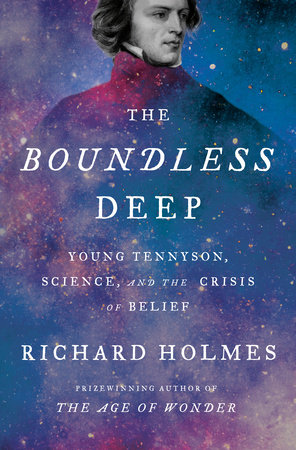
"Absorbing. . . . The Boundless Deep is partly a retelling of the emotional cataclysm of the death of Arthur Hallam, Tennyson's beloved friend . . . But it is also the story of how what Tennyson called the "terrible Muses" of astronomy and geology alchemized this personal grief into a profound reckoning. Eventually, these twin crises of faith—theological and metaphysical—produced a poem, 'In Memoriam A.H.H.', that secured Tennyson's place at the pinnacle of Victorian culture—where he remains in popular memory, as a titled, lavishly bearded eminence. But for anxious, aimless years at a time, Holmes demonstrates, he seemed doomed to loneliness, doubt and willful eccentricity. . . . Holmes' empathetic rendering of the sadness and isolation of the first half of Tennyson's life makes it hard to begrudge him the cushioned respectability of the second. . . . [It] invites us to appreciate the remarkable fruits of his protracted estrangement."
—The New York Times
"[The Boundless Deep] tracks [Tennyson's] metabolic absorption of the most disturbing, displacing ideas that contemporary science had to offer; their effect on his personality; and their manifestation in his poetry. . . . [Holmes is a] master scholar-biographer. . . . In prose so lucid that you barely notice when it has slipped into a stream of profound interiority, into the hidden life-current of his subject, Holmes gives us what feels like the whole man."
—The Atlantic
"[Holmes is] a master of his craft."
—The New Yorker
"Enthralling. . . . Biography is serious, yes, and surely edifying, but who can call it lively, let alone fun? Holmes—our greatest living biographer, I’d argue, and certainly the finest, most vivid writer in the genre—is that rare author who can make it so. . . . The Boundless Deep makes Tennyson’s youth a palpable presence, a time full of golden promise and undergraduate enthusiasm. . . . Readers usually encounter the poet as already bereaved, a shaggy sage ushered into literature courses with a cloud hovering over his head. . . . Holmes has resurrected that young 'old' Tennyson and made him unforgettable."
—Laura Miller, Slate
"Holmes is a renowned biographer. . . [He] traces Tennyson's path through an imaginative world shaped as much by leading scientists of the day as by his literary contemporaries. . . . An emblem of Victorian respectability. . . . Tennyson has been happily forgotten by many 21st-century readers. The Boundless Deep succeeds in turning back the clock."
—Science
“Brilliant. . . . Holmes depicts an intense, charismatic, intellectually curious young man whose poetry was infused with the revolutionary scientific discoveries of the day. . . . This shrewd, sensitive, beautifully written portrait provides a much-needed restoration of the human being beneath a barnacle-encrusted reputation. A must for poetry readers and a treat for anyone who enjoys fine literary biography.”
—Kirkus Reviews, starred review
“[Holmes] replaces the dusty usual portraits of the poet laureate . . . with a sparkling vision of him as an intelligent and imaginative man who welcomed in the new scientific age. Truly enriching.”
—Sunday Times (London)
“Holmes is probably our greatest chronicler of the Romantic poets. . . . The Boundless Deep is a dazzling and tireless work of advocacy.”
—The Times (London)
“Compelling. . . . A fascinating insight into a great British poet whose depths . . . remain boundless.”
—Daily Telegraph
“A spryly written but deeply learned biography.”
—Spectator
“There is an unusual, gentle mixture of imagination and empiricism in everything Holmes writes: a poetic sense of human psychology combined with a meticulous organized mind.”
—New Statesman
“The Boundless Deep shakes off the poet’s fusty image to reveal a young man grappling with the doubts of his age. . . . Holmes presents Tennyson as more interesting, more clever, more elusive and downright peculiar than modern readers may imagine.”
—Observer