Close Modal

Formal Methods for Multi-Agent Feedback Control Systems

Look inside
Paperback
$90.00 US
6"W x 9"H x 0.81"D   (15.2 x 22.9 x 2.1 cm) | 13 oz (374 g) | 30 per carton
On sale Apr 29, 2025 | 312 Pages | 9780262049719
Sales rights: World

additional book photo
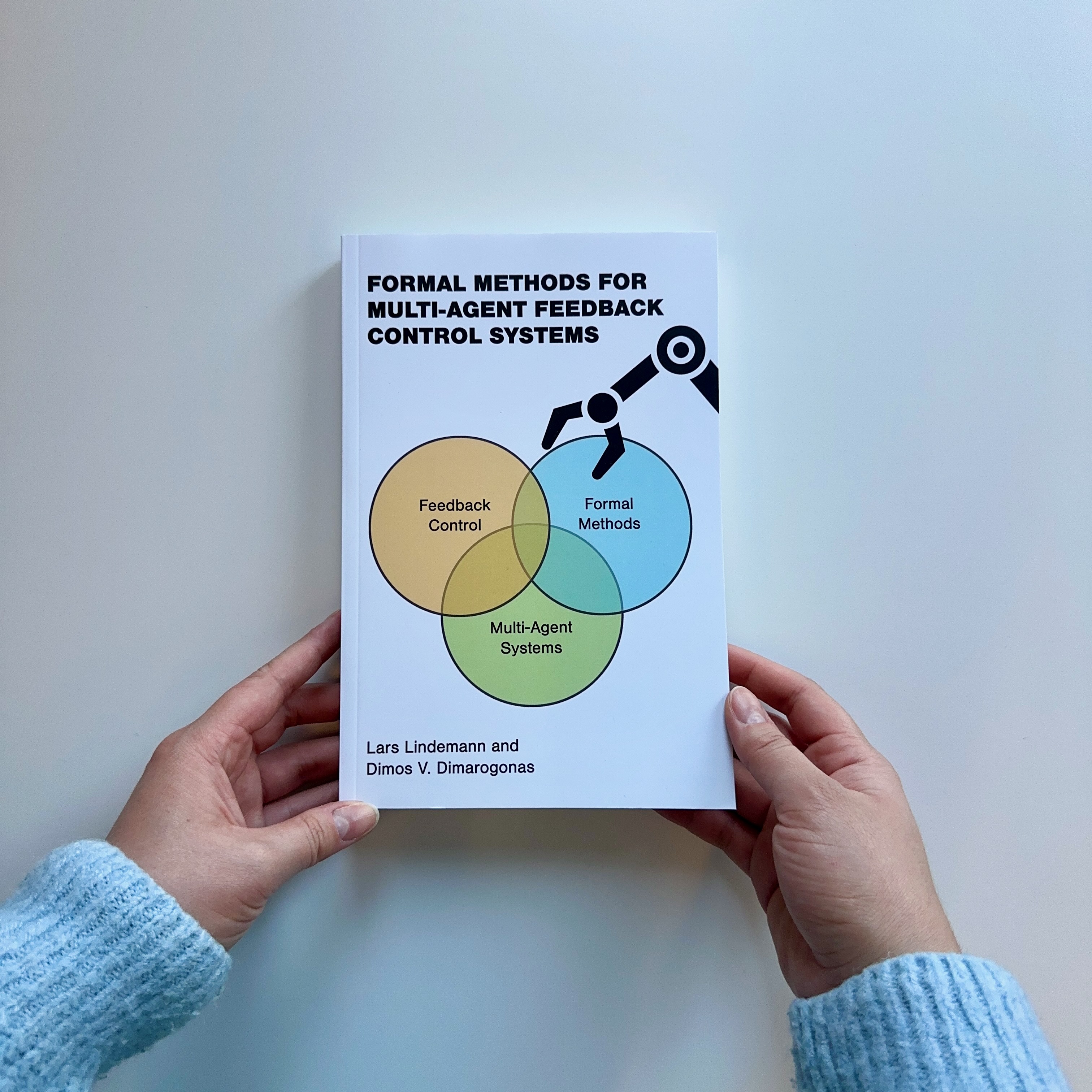
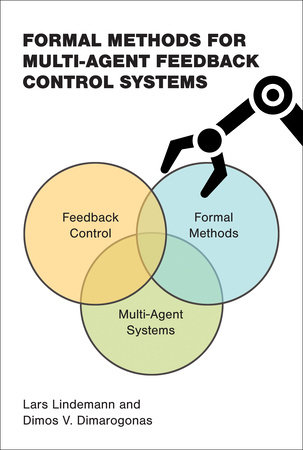
An introduction to formal methods for feedback control of multi-agent systems with safety and performance guarantees.

Multi-agent control systems can accomplish tasks that single-agent systems cannot address, such as aerial surveillance of large areas by a group of drones. In Formal Methods for Multi-Agent Feedback Control Systems, Lars Lindemann and Dimos Dimarogonas provide an accessible introduction to formal methods for feedback control of multi-agent systems. Their book is the first to bridge the gap between formal methods and feedback control for the scalable design of cyber-physical systems. The material covered is intended for scientists, engineers, and students, and no background in formal methods or control theory is required. The authors also highlight future research directions for those working at the intersection of formal methods and control.

In control theory, the goal is to design feedback control laws for dynamical systems that achieve control objectives such as stability or forward invariance of sets. Formal methods, on the other hand, provide verification and design techniques for more complex system specifications using temporal logics. However, their high computational cost limits scaling beyond a small number of agents. Besides scalability, another central challenge is to achieve robustness in the system design. Thus, the authors focus on the design of scalable and robust feedback control algorithms for multi-agent control systems under temporal logic specifications.
Lars Lindemann is Assistant Professor in the Thomas Lord Department of Computer Science within the School of Advanced Computing at the University of Southern California.

Dimos V. Dimarogonas is Professor of Automatic Control and Head of Division at the Division of Decision and Control Systems within the School of Electrical Engineering and Computer Science at KTH Royal Institute of Technology.
Available for sale exclusive:
•     Afghanistan
•     Aland Islands
•     Albania
•     Algeria
•     Andorra
•     Angola
•     Anguilla
•     Antarctica
•     Antigua/Barbuda
•     Argentina
•     Armenia
•     Aruba
•     Australia
•     Austria
•     Azerbaijan
•     Bahamas
•     Bahrain
•     Bangladesh
•     Barbados
•     Belarus
•     Belgium
•     Belize
•     Benin
•     Bermuda
•     Bhutan
•     Bolivia
•     Bonaire, Saba
•     Bosnia Herzeg.
•     Botswana
•     Bouvet Island
•     Brazil
•     Brit.Ind.Oc.Ter
•     Brit.Virgin Is.
•     Brunei
•     Bulgaria
•     Burkina Faso
•     Burundi
•     Cambodia
•     Cameroon
•     Canada
•     Cape Verde
•     Cayman Islands
•     Centr.Afr.Rep.
•     Chad
•     Chile
•     China
•     Christmas Islnd
•     Cocos Islands
•     Colombia
•     Comoro Is.
•     Congo
•     Cook Islands
•     Costa Rica
•     Croatia
•     Cuba
•     Curacao
•     Cyprus
•     Czech Republic
•     Dem. Rep. Congo
•     Denmark
•     Djibouti
•     Dominica
•     Dominican Rep.
•     Ecuador
•     Egypt
•     El Salvador
•     Equatorial Gui.
•     Eritrea
•     Estonia
•     Ethiopia
•     Falkland Islnds
•     Faroe Islands
•     Fiji
•     Finland
•     France
•     Fren.Polynesia
•     French Guinea
•     Gabon
•     Gambia
•     Georgia
•     Germany
•     Ghana
•     Gibraltar
•     Greece
•     Greenland
•     Grenada
•     Guadeloupe
•     Guam
•     Guatemala
•     Guernsey
•     Guinea Republic
•     Guinea-Bissau
•     Guyana
•     Haiti
•     Heard/McDon.Isl
•     Honduras
•     Hong Kong
•     Hungary
•     Iceland
•     India
•     Indonesia
•     Iran
•     Iraq
•     Ireland
•     Isle of Man
•     Israel
•     Italy
•     Ivory Coast
•     Jamaica
•     Japan
•     Jersey
•     Jordan
•     Kazakhstan
•     Kenya
•     Kiribati
•     Kuwait
•     Kyrgyzstan
•     Laos
•     Latvia
•     Lebanon
•     Lesotho
•     Liberia
•     Libya
•     Liechtenstein
•     Lithuania
•     Luxembourg
•     Macau
•     Macedonia
•     Madagascar
•     Malawi
•     Malaysia
•     Maldives
•     Mali
•     Malta
•     Marshall island
•     Martinique
•     Mauritania
•     Mauritius
•     Mayotte
•     Mexico
•     Micronesia
•     Minor Outl.Ins.
•     Moldavia
•     Monaco
•     Mongolia
•     Montenegro
•     Montserrat
•     Morocco
•     Mozambique
•     Myanmar
•     Namibia
•     Nauru
•     Nepal
•     Netherlands
•     New Caledonia
•     New Zealand
•     Nicaragua
•     Niger
•     Nigeria
•     Niue
•     Norfolk Island
•     North Korea
•     North Mariana
•     Norway
•     Oman
•     Pakistan
•     Palau
•     Palestinian Ter
•     Panama
•     PapuaNewGuinea
•     Paraguay
•     Peru
•     Philippines
•     Pitcairn Islnds
•     Poland
•     Portugal
•     Puerto Rico
•     Qatar
•     Reunion Island
•     Romania
•     Russian Fed.
•     Rwanda
•     S. Sandwich Ins
•     Saint Martin
•     Samoa,American
•     San Marino
•     SaoTome Princip
•     Saudi Arabia
•     Senegal
•     Serbia
•     Seychelles
•     Sierra Leone
•     Singapore
•     Sint Maarten
•     Slovakia
•     Slovenia
•     Solomon Islands
•     Somalia
•     South Africa
•     South Korea
•     South Sudan
•     Spain
•     Sri Lanka
•     St Barthelemy
•     St. Helena
•     St. Lucia
•     St. Vincent
•     St.Chr.,Nevis
•     St.Pier,Miquel.
•     Sth Terr. Franc
•     Sudan
•     Suriname
•     Svalbard
•     Swaziland
•     Sweden
•     Switzerland
•     Syria
•     Tadschikistan
•     Taiwan
•     Tanzania
•     Thailand
•     Timor-Leste
•     Togo
•     Tokelau Islands
•     Tonga
•     Trinidad,Tobago
•     Tunisia
•     Turkey
•     Turkmenistan
•     Turks&Caicos Is
•     Tuvalu
•     US Virgin Is.
•     USA
•     Uganda
•     Ukraine
•     Unit.Arab Emir.
•     United Kingdom
•     Uruguay
•     Uzbekistan
•     Vanuatu
•     Vatican City
•     Venezuela
•     Vietnam
•     Wallis,Futuna
•     West Saharan
•     Western Samoa
•     Yemen
•     Zambia
•     Zimbabwe

Preface ix
I Foundations 1
1 Introduction 3
1.1 Multi-Agent Control Systems...................... 3
1.2 Formal Methods for Multi-Agent Control Systems.......... 5
1.3 Outlook.................................. 6
1.4 Notes and References........................... 7
1.5 Notation.................................. 8
2 Multi-Agent Systems and Control Theory 11
2.1 Dynamical Systems............................ 12
2.2 Selected Topics from Nonlinear Control Theory............ 27
2.3 Multi-Agent Control Systems...................... 39
2.4 Notes and References........................... 42
3 Formal Methods and Spatiotemporal Logics 45
3.1 Formal Methods............................. 46
3.2 Spatiotemporal Logics.......................... 54
3.3 Timed Automata Theory........................ 64
3.4 Notes and References........................... 72
II Multi-Agent Control Barrier Functions for Spatiotemporal
Constraints 75
4 Centralized Time-Varying Control Barrier Functions 77
4.1 Time-Varying Control Barrier Functions................ 78
4.2 Encoding Signal Temporal Logic.................... 80
4.3 Control Laws based on Time-Varying Control Barrier Functions... 86
4.4 Constructing Valid Time-Varying Control Barrier Functions..... 93
4.5 Unicycle Models and Unknown Dynamics............... 102
4.6 Notes and References........................... 105
4.7 Additional Proofs............................. 106
5 Decentralized Time-Varying Control Barrier Functions 109
5.1 Decentralized Collaborative Control.................. 110
5.2 Decentralized Control under Conflicting Local Specifications..... 120
5.3 Notes and References........................... 129
5.4 Additional Proofs............................. 131
III Multi-Agent Funnel Control for Spatiotemporal Constraints
137
6 Centralized Funnel Control 139
6.1 Encoding Signal Temporal Logic.................... 141
6.2 Control Laws based on a Single Funnel................. 145
6.3 Control Laws based on Multiple Funnels................ 151
6.4 Notes and References........................... 160
6.5 Additional Proofs............................. 162
7 Decentralized Funnel Control 165
7.1 Decentralized Collaborative Funnel Control.............. 166
7.2 Decentralized Funnel Control under Conflicting Local Specifications 170
7.3 Experiments and Practical Considerations............... 178
7.4 Notes and References........................... 183
IV Planning under Spatiotemporal Logic Specifications 185
8 Timed Automata-based Planning 187
8.1 Encoding Signal Interval Temporal Logic............... 188
8.2 Timed Abstraction of Dynamical Control Systems.......... 194
8.3 Dynamically Feasible Plan Synthesis.................. 197
8.4 Notes and References........................... 200
V Moving Forward 203
9 Outlook and Open Problems 205
Bibliography 212
Index 240

Photos

additional book photo

About

An introduction to formal methods for feedback control of multi-agent systems with safety and performance guarantees.

Multi-agent control systems can accomplish tasks that single-agent systems cannot address, such as aerial surveillance of large areas by a group of drones. In Formal Methods for Multi-Agent Feedback Control Systems, Lars Lindemann and Dimos Dimarogonas provide an accessible introduction to formal methods for feedback control of multi-agent systems. Their book is the first to bridge the gap between formal methods and feedback control for the scalable design of cyber-physical systems. The material covered is intended for scientists, engineers, and students, and no background in formal methods or control theory is required. The authors also highlight future research directions for those working at the intersection of formal methods and control.

In control theory, the goal is to design feedback control laws for dynamical systems that achieve control objectives such as stability or forward invariance of sets. Formal methods, on the other hand, provide verification and design techniques for more complex system specifications using temporal logics. However, their high computational cost limits scaling beyond a small number of agents. Besides scalability, another central challenge is to achieve robustness in the system design. Thus, the authors focus on the design of scalable and robust feedback control algorithms for multi-agent control systems under temporal logic specifications.

Author

Lars Lindemann is Assistant Professor in the Thomas Lord Department of Computer Science within the School of Advanced Computing at the University of Southern California.

Dimos V. Dimarogonas is Professor of Automatic Control and Head of Division at the Division of Decision and Control Systems within the School of Electrical Engineering and Computer Science at KTH Royal Institute of Technology.

Rights

Available for sale exclusive:
•     Afghanistan
•     Aland Islands
•     Albania
•     Algeria
•     Andorra
•     Angola
•     Anguilla
•     Antarctica
•     Antigua/Barbuda
•     Argentina
•     Armenia
•     Aruba
•     Australia
•     Austria
•     Azerbaijan
•     Bahamas
•     Bahrain
•     Bangladesh
•     Barbados
•     Belarus
•     Belgium
•     Belize
•     Benin
•     Bermuda
•     Bhutan
•     Bolivia
•     Bonaire, Saba
•     Bosnia Herzeg.
•     Botswana
•     Bouvet Island
•     Brazil
•     Brit.Ind.Oc.Ter
•     Brit.Virgin Is.
•     Brunei
•     Bulgaria
•     Burkina Faso
•     Burundi
•     Cambodia
•     Cameroon
•     Canada
•     Cape Verde
•     Cayman Islands
•     Centr.Afr.Rep.
•     Chad
•     Chile
•     China
•     Christmas Islnd
•     Cocos Islands
•     Colombia
•     Comoro Is.
•     Congo
•     Cook Islands
•     Costa Rica
•     Croatia
•     Cuba
•     Curacao
•     Cyprus
•     Czech Republic
•     Dem. Rep. Congo
•     Denmark
•     Djibouti
•     Dominica
•     Dominican Rep.
•     Ecuador
•     Egypt
•     El Salvador
•     Equatorial Gui.
•     Eritrea
•     Estonia
•     Ethiopia
•     Falkland Islnds
•     Faroe Islands
•     Fiji
•     Finland
•     France
•     Fren.Polynesia
•     French Guinea
•     Gabon
•     Gambia
•     Georgia
•     Germany
•     Ghana
•     Gibraltar
•     Greece
•     Greenland
•     Grenada
•     Guadeloupe
•     Guam
•     Guatemala
•     Guernsey
•     Guinea Republic
•     Guinea-Bissau
•     Guyana
•     Haiti
•     Heard/McDon.Isl
•     Honduras
•     Hong Kong
•     Hungary
•     Iceland
•     India
•     Indonesia
•     Iran
•     Iraq
•     Ireland
•     Isle of Man
•     Israel
•     Italy
•     Ivory Coast
•     Jamaica
•     Japan
•     Jersey
•     Jordan
•     Kazakhstan
•     Kenya
•     Kiribati
•     Kuwait
•     Kyrgyzstan
•     Laos
•     Latvia
•     Lebanon
•     Lesotho
•     Liberia
•     Libya
•     Liechtenstein
•     Lithuania
•     Luxembourg
•     Macau
•     Macedonia
•     Madagascar
•     Malawi
•     Malaysia
•     Maldives
•     Mali
•     Malta
•     Marshall island
•     Martinique
•     Mauritania
•     Mauritius
•     Mayotte
•     Mexico
•     Micronesia
•     Minor Outl.Ins.
•     Moldavia
•     Monaco
•     Mongolia
•     Montenegro
•     Montserrat
•     Morocco
•     Mozambique
•     Myanmar
•     Namibia
•     Nauru
•     Nepal
•     Netherlands
•     New Caledonia
•     New Zealand
•     Nicaragua
•     Niger
•     Nigeria
•     Niue
•     Norfolk Island
•     North Korea
•     North Mariana
•     Norway
•     Oman
•     Pakistan
•     Palau
•     Palestinian Ter
•     Panama
•     PapuaNewGuinea
•     Paraguay
•     Peru
•     Philippines
•     Pitcairn Islnds
•     Poland
•     Portugal
•     Puerto Rico
•     Qatar
•     Reunion Island
•     Romania
•     Russian Fed.
•     Rwanda
•     S. Sandwich Ins
•     Saint Martin
•     Samoa,American
•     San Marino
•     SaoTome Princip
•     Saudi Arabia
•     Senegal
•     Serbia
•     Seychelles
•     Sierra Leone
•     Singapore
•     Sint Maarten
•     Slovakia
•     Slovenia
•     Solomon Islands
•     Somalia
•     South Africa
•     South Korea
•     South Sudan
•     Spain
•     Sri Lanka
•     St Barthelemy
•     St. Helena
•     St. Lucia
•     St. Vincent
•     St.Chr.,Nevis
•     St.Pier,Miquel.
•     Sth Terr. Franc
•     Sudan
•     Suriname
•     Svalbard
•     Swaziland
•     Sweden
•     Switzerland
•     Syria
•     Tadschikistan
•     Taiwan
•     Tanzania
•     Thailand
•     Timor-Leste
•     Togo
•     Tokelau Islands
•     Tonga
•     Trinidad,Tobago
•     Tunisia
•     Turkey
•     Turkmenistan
•     Turks&Caicos Is
•     Tuvalu
•     US Virgin Is.
•     USA
•     Uganda
•     Ukraine
•     Unit.Arab Emir.
•     United Kingdom
•     Uruguay
•     Uzbekistan
•     Vanuatu
•     Vatican City
•     Venezuela
•     Vietnam
•     Wallis,Futuna
•     West Saharan
•     Western Samoa
•     Yemen
•     Zambia
•     Zimbabwe

Table of Contents

Preface ix
I Foundations 1
1 Introduction 3
1.1 Multi-Agent Control Systems...................... 3
1.2 Formal Methods for Multi-Agent Control Systems.......... 5
1.3 Outlook.................................. 6
1.4 Notes and References........................... 7
1.5 Notation.................................. 8
2 Multi-Agent Systems and Control Theory 11
2.1 Dynamical Systems............................ 12
2.2 Selected Topics from Nonlinear Control Theory............ 27
2.3 Multi-Agent Control Systems...................... 39
2.4 Notes and References........................... 42
3 Formal Methods and Spatiotemporal Logics 45
3.1 Formal Methods............................. 46
3.2 Spatiotemporal Logics.......................... 54
3.3 Timed Automata Theory........................ 64
3.4 Notes and References........................... 72
II Multi-Agent Control Barrier Functions for Spatiotemporal
Constraints 75
4 Centralized Time-Varying Control Barrier Functions 77
4.1 Time-Varying Control Barrier Functions................ 78
4.2 Encoding Signal Temporal Logic.................... 80
4.3 Control Laws based on Time-Varying Control Barrier Functions... 86
4.4 Constructing Valid Time-Varying Control Barrier Functions..... 93
4.5 Unicycle Models and Unknown Dynamics............... 102
4.6 Notes and References........................... 105
4.7 Additional Proofs............................. 106
5 Decentralized Time-Varying Control Barrier Functions 109
5.1 Decentralized Collaborative Control.................. 110
5.2 Decentralized Control under Conflicting Local Specifications..... 120
5.3 Notes and References........................... 129
5.4 Additional Proofs............................. 131
III Multi-Agent Funnel Control for Spatiotemporal Constraints
137
6 Centralized Funnel Control 139
6.1 Encoding Signal Temporal Logic.................... 141
6.2 Control Laws based on a Single Funnel................. 145
6.3 Control Laws based on Multiple Funnels................ 151
6.4 Notes and References........................... 160
6.5 Additional Proofs............................. 162
7 Decentralized Funnel Control 165
7.1 Decentralized Collaborative Funnel Control.............. 166
7.2 Decentralized Funnel Control under Conflicting Local Specifications 170
7.3 Experiments and Practical Considerations............... 178
7.4 Notes and References........................... 183
IV Planning under Spatiotemporal Logic Specifications 185
8 Timed Automata-based Planning 187
8.1 Encoding Signal Interval Temporal Logic............... 188
8.2 Timed Abstraction of Dynamical Control Systems.......... 194
8.3 Dynamically Feasible Plan Synthesis.................. 197
8.4 Notes and References........................... 200
V Moving Forward 203
9 Outlook and Open Problems 205
Bibliography 212
Index 240