A nineteenth-century novel about a bisexual, biracial vampire, written by a forgotten legend of Victorian horror
A Penguin Classic
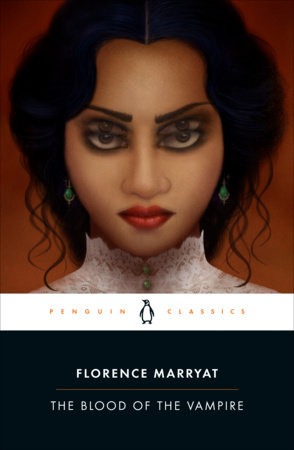
Published the same year as Bram Stoker’s Dracula, Florence Marryat’s The Blood of the Vampire introduced readers to one of the most revolutionary protagonists of her time: the biracial, bisexual, feminist psychic vampire Harriet Brandt. Feeding off life force rather than blood, Harriet is a charming, caring young woman in search of love who is accused of killing those who get too close. Harriet’s ostracization mirrors that of the author, Florence Marryat, whose thrilling plots about women eschewing the norms of Victorian womanhood were widely read during her time but reviled by critics and overlooked for more than a century. Recontextualizing Marryat’s place at the vanguard of Victorian horror, The Blood of the Vampire is a timeless critique of gender norms, racism, and medical discrimination—a fresh, century-old spin on the expanding canon of vampire fiction.
Penguin Classics is the leading publisher of classic literature in the English-speaking world, representing a global bookshelf of the best works throughout history and across genres and disciplines. Readers trust the series to provide authoritative texts enhanced by introductions and notes by distinguished scholars and contemporary authors, as well as up-to-date translations by award-winning translators.
Florence Marryat (1833-1899) was an actress and an author of close to seventy novels, several short story collections, plays, newspaper articles, and works of nonfiction. Scholars believe with reasonable certainty that Marryat was born in 1833, but like many Victorian women writers who were not appreciated during their lifetime, some of her history cannot be confirmed. The daughter of the famous maritime novelist Captain Frederick Marryat, she wrote works of “sensation fiction,” a genre of her time akin to thrillers. Publishing her first novel, Love’s Conflict, in 1865, the English writer’s works were widely popular and often explored social topics considered taboo during her lifetime, such as domestic abuse, feminism, racism, and sexuality. Marryat not only wrote about controversial women, but she was also one herself: Married and divorced twice, she lived with other men out of wedlock, was accused of adultery, supported herself financially without a husband, and involved herself with social movements such as spiritualism, among other minor societal transgressions. Plagued with chronic health issues her entire life, Marryat died from pneumonia in 1899, the same year her final three novels were published.
Rachel Stewart (introduction) is a graduate teaching associate at Ohio State University studying Victorian popular fiction and culture, specializing in horror, the Gothic, and vampires. Stewart is actively engaged in the recovery of work by overlooked female Victorian authors of popular fiction, including Florence Marryat and has worked extensively with Marryat’s archives of work.
A nineteenth-century novel about a bisexual, biracial vampire, written by a forgotten legend of Victorian horror
A Penguin Classic
Published the same year as Bram Stoker’s Dracula, Florence Marryat’s The Blood of the Vampire introduced readers to one of the most revolutionary protagonists of her time: the biracial, bisexual, feminist psychic vampire Harriet Brandt. Feeding off life force rather than blood, Harriet is a charming, caring young woman in search of love who is accused of killing those who get too close. Harriet’s ostracization mirrors that of the author, Florence Marryat, whose thrilling plots about women eschewing the norms of Victorian womanhood were widely read during her time but reviled by critics and overlooked for more than a century. Recontextualizing Marryat’s place at the vanguard of Victorian horror, The Blood of the Vampire is a timeless critique of gender norms, racism, and medical discrimination—a fresh, century-old spin on the expanding canon of vampire fiction.
Penguin Classics is the leading publisher of classic literature in the English-speaking world, representing a global bookshelf of the best works throughout history and across genres and disciplines. Readers trust the series to provide authoritative texts enhanced by introductions and notes by distinguished scholars and contemporary authors, as well as up-to-date translations by award-winning translators.
Author
Florence Marryat (1833-1899) was an actress and an author of close to seventy novels, several short story collections, plays, newspaper articles, and works of nonfiction. Scholars believe with reasonable certainty that Marryat was born in 1833, but like many Victorian women writers who were not appreciated during their lifetime, some of her history cannot be confirmed. The daughter of the famous maritime novelist Captain Frederick Marryat, she wrote works of “sensation fiction,” a genre of her time akin to thrillers. Publishing her first novel, Love’s Conflict, in 1865, the English writer’s works were widely popular and often explored social topics considered taboo during her lifetime, such as domestic abuse, feminism, racism, and sexuality. Marryat not only wrote about controversial women, but she was also one herself: Married and divorced twice, she lived with other men out of wedlock, was accused of adultery, supported herself financially without a husband, and involved herself with social movements such as spiritualism, among other minor societal transgressions. Plagued with chronic health issues her entire life, Marryat died from pneumonia in 1899, the same year her final three novels were published.
Rachel Stewart (introduction) is a graduate teaching associate at Ohio State University studying Victorian popular fiction and culture, specializing in horror, the Gothic, and vampires. Stewart is actively engaged in the recovery of work by overlooked female Victorian authors of popular fiction, including Florence Marryat and has worked extensively with Marryat’s archives of work.